
On this page
Start here
Quick answer
A Candy washing machine that does not complete a cycle is usually waiting on a condition it cannot satisfy: water is not entering or draining, the door lock is not confirmed, a load is too sudsy or unbalanced for spin, or a model-specific alert needs attention. Note exactly where the cycle stops and any flashing lights or code, then check the door, water supply, drain hose, and pump filter using the exact manual. Candy warns that options such as anti-crease, stop-water-in-drum, or night modes can intentionally omit final spin or drainage on some models. Disconnect power before filter work, do not force a locked door or open a filter with a full drum, and stop for smoke, burning odor, a hot or damaged cord, a leak near electrical parts, or repeated breaker trips.
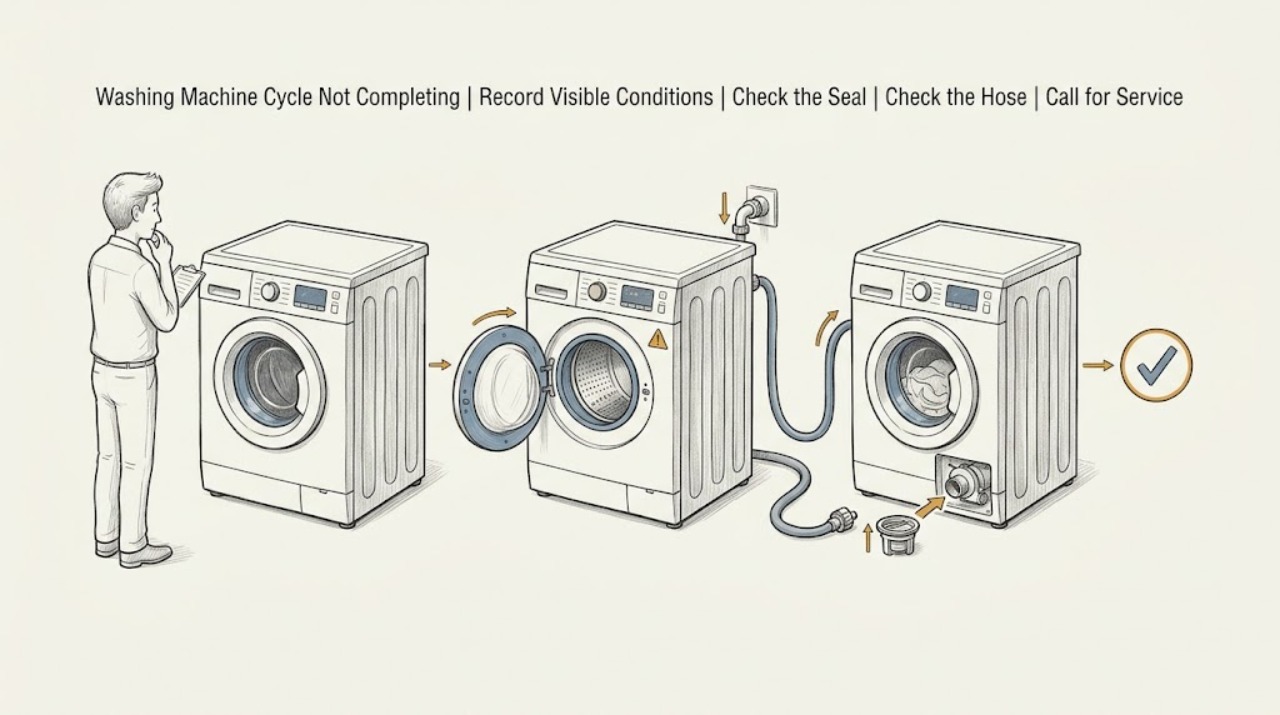
Work through in order
Diagnostic checks
Use only checks that match the exact appliance or system and its official guide.
-
Check 1
Write down the programme, the last stage shown, how long the machine waits, whether the drum contains water, and every flashing light or displayed code. Do not change the dial repeatedly while observing.
Expected result: The machine stops before filling, during washing or heating, before draining, during spin, or at the end with water or a locked door.
Next step: Use the branch matching the stop stage and find the exact model manual through Candy's manual service. If the display shows a fault that returns, stop resetting and arrange service.
Why this matters
Why: The stop stage changes the likely path: inlet or door checks before filling, drain checks when water remains, and balance or spin-option checks before final spin. A code or light pattern is model-specific evidence, not a universal Candy diagnosis.
-
Check 2
Check that the door is fully closed, no clothing is caught in the seal, and the door-lock indicator behaves normally. If the door remains locked, do not pull it open; first determine whether water or heat remains inside.
Expected result: The door was obstructed or not latched, the lock releases after a completed drain and safe wait, or the lock stays engaged with no safe explanation.
Next step: Remove only a visible door obstruction when the machine is off. If the lock stays engaged, water remains, or the lock indicator faults, keep the machine off and arrange model-specific service rather than bypassing the lock.
Why this matters
Why: A washer may keep the door locked while water or unsafe temperature remains, and an unconfirmed lock can prevent a programme from advancing. Forcing the door can damage the seal or release water unexpectedly.
-
Check 3
If water remains in the drum, turn the machine off and unplug it. Check the external drain hose and household drain connection for a kink or blockage. Open the pump-filter access only when the exact manual permits it, the water is cool, and you can safely collect residual water.
Expected result: The hose or household drain is blocked or bent, the filter contains lint or a small object, the pump does not drain after the permitted cleanout, or the drum was already empty.
Next step: Clear only an accessible obstruction using the model instructions and refit the filter securely. If water cannot be drained safely, the pump will not run, or the issue returns, stop and call a qualified technician.
Why this matters
Why: Candy identifies a blocked pump or filter, bent or blocked hose, obstructed household drain, and excessive suds as causes of water remaining after a cycle. A failed drain can prevent final spin and keep the door locked.
-
Check 4
Check the water inlet tap is open and the inlet hose is not kinked or crushed. If the machine stops while filling, inspect only the external hose connection and the model's permitted inlet-filter procedure; do not loosen a pressurized connection.
Expected result: The tap was closed, the hose was kinked, the inlet filter is visibly obstructed where the manual allows access, or filling is normal.
Next step: Restore the external water path and retry once. If the tap, hose, and permitted filter check are normal but the machine still stops filling, arrange service rather than opening valves or controls.
Why this matters
Why: Insufficient water entry can leave a Candy programme waiting indefinitely or trigger a tap-related alert. A normal fill shifts attention to drainage, load balance, or a control fault.
-
Check 5
If the cycle reaches rinse or spin but does not finish, check whether an option such as anti-crease, stop-water-in-drum, or night mode was selected. Reduce excessive detergent residue and redistribute an overloaded or single-heavy-item load before trying a suitable spin programme.
Expected result: The option intentionally omits final drainage or spin, the load is unbalanced or over-sudsing, or the machine still stops with a normal load and programme.
Next step: Cancel the hold option according to the manual, use the correct spin or drain programme, and load smaller balanced groups. If the machine cannot spin or complete with a normal load, record any code and arrange service.
Why this matters
Why: Candy states that some programme options exclude final spin or drainage, and that too much detergent can compromise drainage and spin. An unbalanced load can also prevent safe high-speed spinning.
-
Check 6
After the door, inlet, drain, option, and load checks, run one short supervised programme with a small balanced load. Stop immediately if the machine leaks, smells of burning, becomes unusually hot, sparks, shows damaged wiring, or trips the breaker.
Expected result: The programme completes after one external correction, stops at the same stage, or displays a recurring fault.
Next step: Use the machine only when it completes normally without warning signs. Otherwise unplug it when safe, keep the door closed if water remains, and arrange Candy or qualified appliance service with the recorded symptoms.
Why this matters
Why: A repeatable improvement after correcting a blockage, option, water path, or load supports that condition as the immediate cause. A recurring stop with normal external conditions points to a lock, pump, valve, heater, sensor, motor, or control fault that cannot be confirmed safely from outside.
Use your observations
Decision map
Find the observation that best matches what you see, then follow the next safe action.
-
PATH 01Next step
What you see
The programme stops before filling and the tap is closed or the inlet hose is kinked.
Do this next
Restore the external water path and retry once. Arrange service if filling still fails or the same alert returns.
-
PATH 02Next step
What you see
The drum contains water at the stop point or the door remains locked because drainage has not completed.
Do this next
Do not force the door. Unplug and follow the exact manual's safe drain and filter procedure only when the water is cool and controllable; call service if it cannot be drained safely.
-
PATH 03Next step
What you see
An anti-crease, stop-water-in-drum, night, rinse-hold, or similar option is holding the cycle before final spin or drainage.
Do this next
Cancel the option or select the model-approved drain or spin programme. Escalate if the machine still cannot finish with the option cleared.
-
PATH 04Next step
What you see
The machine stops before spin with an overloaded, tangled, single-heavy, or over-sudsing load.
Do this next
Reduce and redistribute the load, use the correct detergent amount, and retry once. Persistent failure with a balanced load needs service.
-
PATH 05Next step
What you see
A fault code or repeated flashing pattern returns after the manual's permitted reset or external checks.
Do this next
Stop using the machine, record the model and code, and arrange qualified Candy appliance service. Do not substitute a code list from another model.
-
PATH 06Next step
What you see
Smoke, burning odor, abnormal heat, sparks, visible electrical damage, a water leak near electrical parts, or repeated breaker trips occur.
Do this next
Stop immediately, disconnect power only if safe, keep clear of damaged wiring or water, and seek qualified appliance or electrical service. Do not run another test.
Helpful context
Understand the symptom
Identify the stage where the cycle stops
Do not start by repeatedly resetting the machine. Note whether it stops while filling, washing, heating, draining, spinning, or unlocking, and whether water remains in the drum. A cycle that ends with water inside follows a drain path; a cycle that never begins follows a door, power, or water-inlet path. Candy provides model-specific manuals, so record the model or product code before interpreting a flashing light.
Use the stop boundary
Never force the door, reach into a moving drum, or remove a pump filter while the drum may contain hot or pressurized water. Unplug before permitted filter or hose checks and keep water away from the plug and controls. A persistent fault, electrical warning, leak, or repair beyond the model manual belongs with a qualified technician.
When checks do not resolve it
Need a professional?
Book service for a recurring stop, unresolved door lock or drainage condition, returning alert, or any repair beyond the exact Candy user manual.
Common questions
FAQ
Why does my Candy washing machine stop before the cycle finishes?
Note the stop stage and check the door lock, water inlet, drain hose and filter, selected hold options, suds, and load balance. A returning code or unresolved stop needs model-specific service.
Why is the Candy washer door still locked after the cycle stops?
Water or unsafe temperature may remain, or the lock may not be releasing. Do not force the door; check whether water remains and follow only the exact manual's safe drain procedure.
Can a programme option prevent the Candy washer from completing?
Yes. Candy notes that options such as anti-crease, stop-water-in-drum, and night modes can exclude final spin or drainage on some models. Clear the option according to the manual and run the appropriate drain or spin programme.
When should I stop using the Candy washing machine?
Stop for smoke, a burning odor, abnormal heat, sparks, electrical damage, a leak near electrical parts, repeated breaker trips, a returning fault, or a door that cannot be safely released. Disconnect power only if safe and seek qualified service.
Read the exact guide
Official sources
- The washing machine won't drain, what should I do?Candy · Use for Candy washing-machine cycle stops involving retained water or omitted final spin and drainage; exact models vary.
- User manualCandy · Use to retrieve the exact Candy washer or washer-dryer manual by product line, model, or code before interpreting controls or alerts.
- La lavatrice si blocca e lampeggia: cosa fareCandy Italia · General Candy guidance for a washer that stops and flashes; use the exact model manual and local-language instructions for the appliance.
- Technical assistance for our appliancesCandy · Use for Candy service escalation after model-specific external checks; support availability varies by location.
Community feedback
Share a repair observation
Share a plain-text repair observation. Accepted observations are published automatically; this page may take a moment to update.