
On this page
Start here
Quick answer
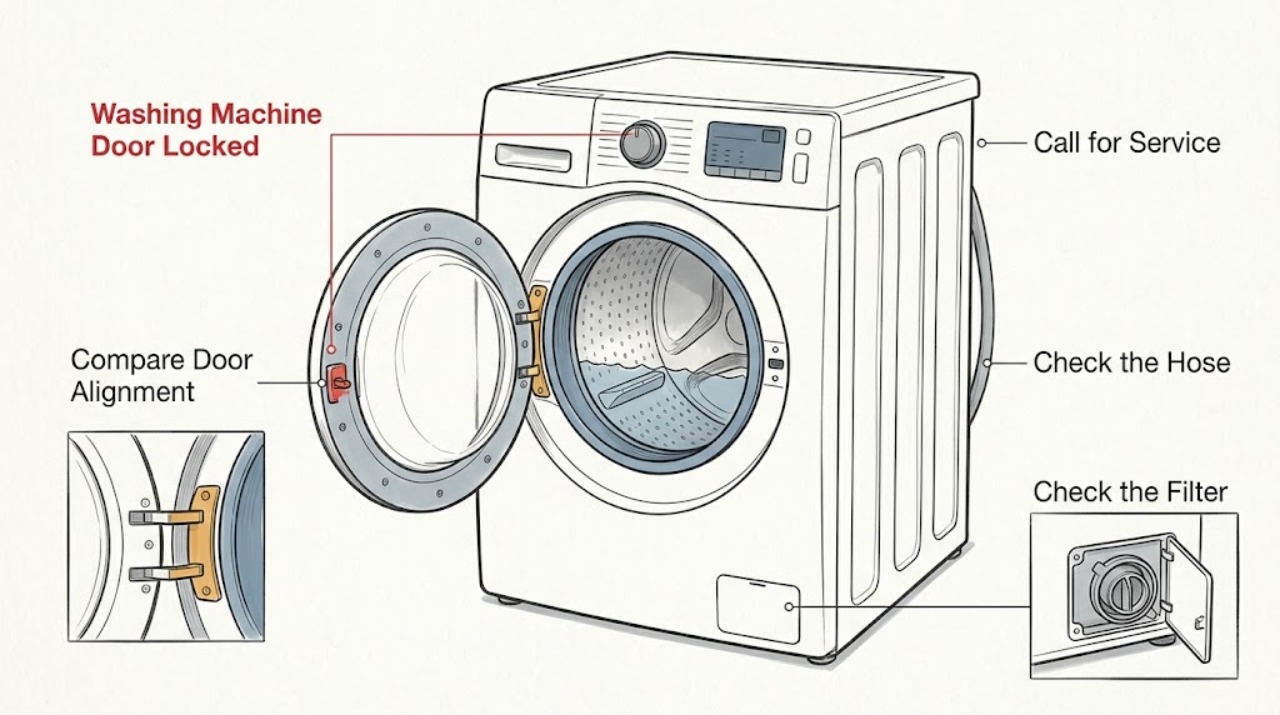
If a Candy washing machine door is locked, do not pull or pry it open. First wait for the programme to finish and the drum to stop, then check whether water remains in the drum, whether the machine is still hot, and whether the display shows a lock or drain warning. Candy explains that the safety lock prevents the door opening during a cycle and that remaining water or a blocked drain filter or pump can keep it locked. If the model permits it, use the normal drain or spin programme and inspect only the accessible drain filter with power disconnected, a basin, and towels. A single power reset may help a temporary control fault, but it does not make it safe to force the door. Stop for hot water, a leak, a damaged handle or seal, a door that is under pressure, smoke, a burning smell, or an electrical warning; arrange qualified appliance service if the drum is empty and cool but the lock remains engaged.
Work through in order
Diagnostic checks
Use only checks that match the exact appliance or system and its official guide.
-
Check 1
Press Stop or Pause once if the controls respond, keep hands away from the door gap, and wait until the programme has ended and the drum has completely stopped. Note the display, lock symbol, remaining time, water level visible through the window, and whether the door or surrounding glass is hot.
Expected result: A recently completed cycle can leave the safety lock engaged briefly. Water in the drum, a hot load, or a programme still running explains why the door is being held closed; a stopped, cool, empty drum with no release points toward a lock or control fault.
Next step: Wait for the normal release if the cycle is still finishing. If water remains, continue to the drain-path check; if the drum is empty and cool but remains locked, continue only with the model's reset or service boundary.
Why this matters
Why: The door interlock is a safety control, not a handle jam to overcome. Opening while the drum moves or water is hot can cause injury or a flood.
-
Check 2
If the drum contains water or the machine stopped before draining, inspect the display for a drain warning and check the visible drain hose for a sharp kink without pulling the appliance forward. Do not open the door or loosen a hose while water may be hot or pressurized.
Expected result: Water left in the drum supports a drain, filter, pump, or programme branch. An empty drum with no drain warning makes a door interlock, handle, seal, or control issue more likely.
Next step: Use only the model-approved drain or spin programme if the controls permit it and there is no leak or hot-water hazard. If the machine will not drain, proceed to the accessible filter check or arrange service.
Why this matters
Why: Candy identifies water remaining in the drum and blocked drainage components as reasons the safety lock can remain engaged. The door should not be treated as the first route for removing laundry.
-
Check 3
If the exact manual identifies a user-accessible drain filter, disconnect the plug, place a shallow basin and towels at the filter, and follow the manual's slow-drain and cleaning procedure. Keep the door closed, do not reach into a moving pump, and stop if water is hot, the filter cap is stuck, or water approaches electrical parts.
Expected result: A blocked filter or pump with trapped water can explain both the drain failure and the locked door. If the filter is clear and the drum still will not empty, the pump, hose, level sensing, or control needs further diagnosis.
Next step: Reinstall the filter correctly, keep the floor dry, and run one permitted drain or spin attempt. If the drain fails, the lock remains engaged, or the filter cannot be safely accessed, stop and arrange qualified service.
Why this matters
Why: Candy says drain-filter or pump blockage can prevent door release and that water may need to be emptied through the filter. This is a model-specific access check, not permission to dismantle the pump or door lock.
-
Check 4
With power disconnected and the door still closed, inspect only the visible door handle, latch area, and rubber seal edge for a broken handle, trapped clothing, foreign object, torn seal, or an item pressing against the door. Do not pull the door against resistance or remove the seal or lock.
Expected result: A visibly broken handle or object in the seal can prevent the latch from releasing. If the seal and handle look normal but the drum is empty and cool, the lock mechanism, water-level signal, or control remains a service possibility.
Next step: Remove only a loose object that is fully accessible without force. If the handle is damaged, the seal is torn, the latch is jammed, or the obstruction is behind the door, stop and arrange service.
Why this matters
Why: Candy lists handle damage and obstructions around the seal among causes of a stuck door. External inspection can identify a simple obstruction without defeating the safety interlock.
-
Check 5
Check the display for a control lock, fault code, or flashing drain or door indicator and consult the exact Candy manual for its meaning. Do not interpret a generic lock symbol as permission to bypass the lock, and do not disconnect connectors or test the interlock with live power.
Expected result: A code or indicator can show that the machine still believes water is present, a programme is active, or an electronic fault has occurred. No code does not prove the latch is safe to force.
Next step: Record the exact code and continue only with the manual's external reset or drain steps. If the indication returns, the lock remains engaged with no water, or the controls are unresponsive, arrange qualified service.
Why this matters
Why: Door release depends on the appliance's programme, water-level signal, and lock circuit. Model-specific codes are more useful to service than a guessed replacement part.
-
Check 6
For a temporary control symptom only, disconnect the appliance from power for about ten minutes, or use the model's off control as described by Candy. Keep the door closed during the reset and reconnect only when the floor is dry and there is no water or electrical hazard.
Expected result: If the lock releases after a single reset and the drum is empty and cool, a temporary electronic state may have cleared. If it stays locked, relocks immediately, or the machine shows the same fault, the reset did not resolve the cause.
Next step: Do not repeat the reset as a loop. If the door remains locked after the one controlled reset, arrange service and provide the code, water level, filter result, and handle or seal observations.
Why this matters
Why: Candy presents a power or control reset as a possible response to an electronic fault, not as a substitute for draining water or repairing a lock. Repeated cycling can obscure a fault and does not make a flooded machine safe.
-
Check 7
Before any service visit, record the full model and product code, programme, time the lock began, whether water was visible, whether the machine drained or spun, the display or indicator pattern, filter result, handle and seal condition, and any leak, odor, smoke, or breaker event. Do not use a wire, card, tool, or emergency release unless the exact manual authorizes it and the drum is empty and cool.
Expected result: A complete record distinguishes a normal post-cycle lock from a drain, handle, interlock, level-sensor, or control fault and helps the technician avoid repeating unsafe tests.
Next step: Stop using the washer-dryer and arrange qualified appliance service for a persistent lock, a damaged door assembly, trapped water, repeated fault, leak, or any safety warning.
Why this matters
Why: Candy advises professional help when basic checks do not resolve the problem or internal parts are unfamiliar. The door lock and its wiring are not ordinary user-service parts.
Use your observations
Decision map
Find the observation that best matches what you see, then follow the next safe action.
-
PATH 01Next step
What you see
The programme is still running, the drum is moving, or water is visible in the drum.
Do this next
Keep the door closed and use only the model-approved stop, drain, or spin control. Do not force the handle or open a filter while water is hot or the machine is moving.
-
PATH 02Next step
What you see
The programme ended, the drum is empty and cool, and the door releases after the normal delay.
Do this next
Treat the lock as a normal safety delay and monitor the next cycle. If it repeats, record the drain, display, and load conditions before arranging service.
-
PATH 03Next step
What you see
Water remains and an accessible filter or drain path is blocked.
Do this next
Disconnect power, use the model's basin-and-towel filter procedure, clear only accessible debris, reinstall the filter, and run one permitted drain attempt. Escalate if water remains or the lock persists.
-
PATH 04Next step
What you see
The handle, latch area, seal, or clothing is visibly damaged or obstructed.
Do this next
Remove only a loose, accessible object without force. Do not pull the door, remove the seal, or dismantle the lock; arrange qualified service for damage or a trapped obstruction.
-
PATH 05Next step
What you see
The drum is empty and cool but a door or fault indicator remains after the single permitted reset.
Do this next
Stop using the machine and arrange qualified appliance service for the interlock, level-sensing, drain, or control diagnosis. Do not bridge the lock or test it with live power.
-
PATH 06Next step
What you see
There is hot water, a leak near electrics, a door under pressure, smoke, a burning smell, a damaged cord, or a repeated breaker trip.
Do this next
Stop immediately, isolate power only when safe, keep clear of the hazard, and arrange qualified appliance or electrical service. Do not force the door or continue a drain attempt.
Helpful context
Understand the symptom
A locked door is often a safety state
The interlock is meant to keep the door closed while the drum can move or water is inside. A short delay after the programme ends may be normal, while a full drum, failed drain, hot water, or a door under load requires a different decision. Read the display and keep the door closed until the cause is clear.
Protect against a sudden water release
Do not force the handle, insert a card or wire, remove the door seal, bridge the lock, or open the drain filter without first checking the model procedure and preparing for water. Disconnect power before an approved accessible filter check, keep the floor dry, and stop if water is hot, the drum is moving, or the machine is leaking near electrical parts.
When checks do not resolve it
Need a professional?
Professional diagnosis is appropriate for a persistent locked door, trapped water after accessible drainage, a damaged handle or seal, a failed latch or interlock, a recurring drain or level-sensor fault, or any electrical or water-safety symptom.
Common questions
FAQ
Why is my Candy washing-machine door still locked after the cycle?
Wait for the drum to stop and check whether water remains. Candy says a blocked drain filter or pump, trapped water, a damaged handle or seal, or an electronic fault can keep the safety lock engaged.
Can I force open a locked Candy washing-machine door?
No. Do not pull, pry, bridge, or defeat the door interlock. If the drum is empty and cool but the door does not release after the model-approved checks, arrange qualified appliance service.
What if there is water in my Candy washing machine and the door is locked?
Keep the door closed and use only the model's permitted drain or filter procedure. Disconnect power, prepare a basin and towels, and stop if water is hot, the filter is stuck, or a leak approaches electrical parts.
Will resetting a Candy washing machine unlock the door?
Candy describes a single power or control reset as a possible response to a temporary electronic fault. It will not safely replace draining water or repairing a damaged lock, and repeated resets should not be used as a loop.
When should I call a technician for a Candy locked door?
Call qualified service when the drum is empty and cool but the lock remains engaged after accessible drain checks and one controlled reset, or whenever the handle, seal, pump, lock, water-level system, or control needs internal access. Stop for hot water, leaks near electrics, smoke, burning smell, or a repeated breaker trip.
Read the exact guide
Official sources
- Pourquoi le hublot de la machine à laver ne s'ouvre pas : que faire ?Candy · Official Candy France support article; the safety-lock, water, drain, seal, handle, electronic-reset, and service concepts apply to Candy washing machines, while access details must follow the exact model manual.
- The washing machine won't drain, what should I do?Candy · Official Candy support article for drain failures; it supports the water-left-in-drum branch and accessible filter precautions for Candy washing machines, subject to the exact model procedure.
Community feedback
Share a repair observation
Share a plain-text repair observation. Accepted observations are published automatically; this page may take a moment to update.