
On this page
Start here
Quick answer
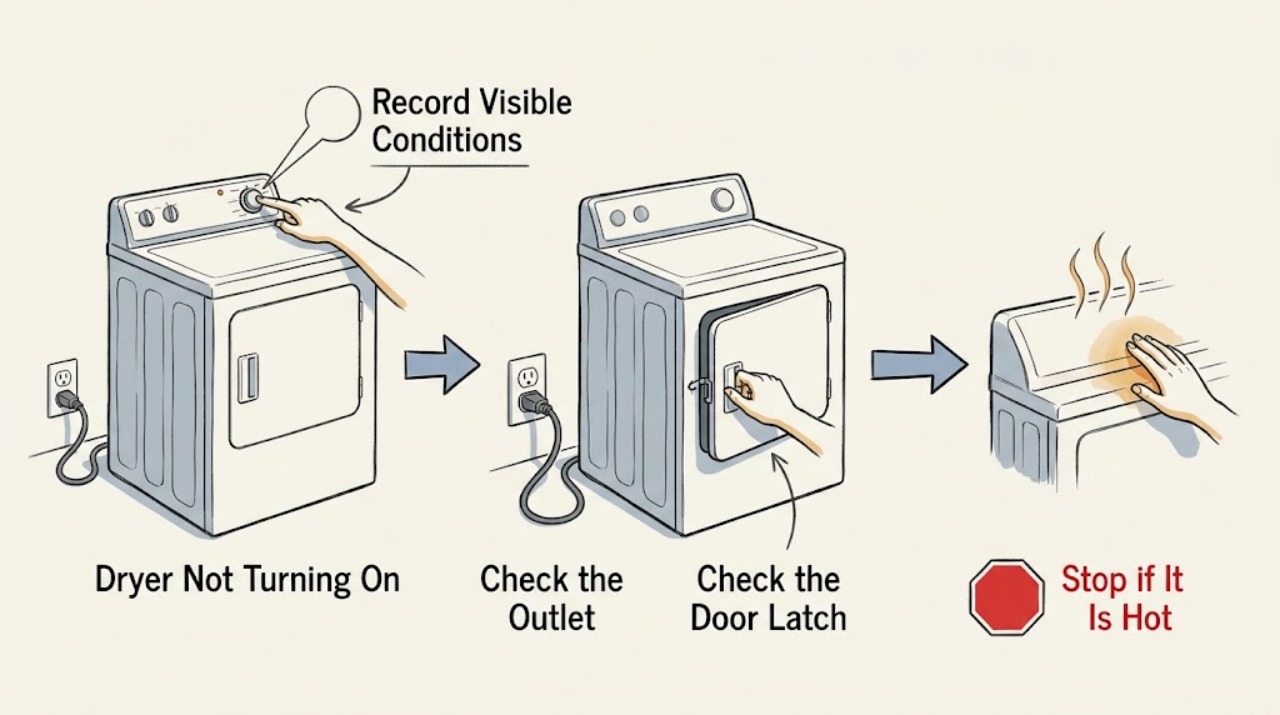
When a dryer is not turning on, first separate a completely blank appliance from a dryer whose display or drum light works but will not start. For no power, inspect only the accessible plug, cord, outlet, and breaker or fuse status; major appliances should use a direct wall connection. For a powered no-start, check the door or latch, control lock, delay or wrinkle setting, selected program, and the model-specific Start action. Record any error or icon instead of borrowing a code explanation from another brand. Electric, gas, vented, condenser, and heat-pump dryers have different supply and operating paths. Stop for smoke, burning smell, excessive heat, arcing, a hot or damaged plug or outlet, water near electrical parts, gas odor, or repeated breaker trips.
Work through in order
Diagnostic checks
Use only checks that match the exact appliance or system and its official guide.
-
Check 1
Press Power once and note whether the display, panel indicators, or drum light are completely blank, partially lit, or fully responsive. Record any error code, lock symbol, delay indicator, or flashing pattern before clearing it.
Expected result: A completely blank dryer points toward power or control supply; a responsive display with no cycle points toward a control, door, program, or start condition. A code or lock indicator selects the model-manual path.
Next step: For a blank unit continue to the external power check. For a powered unit record the exact message and use the matching owner's guide before attempting a start.
Why this matters
Why: This separates no power from powered no-start without assuming a failed part or testing energized wiring.
-
Check 2
If the dryer is blank, inspect the accessible plug, cord, receptacle, and breaker or fuse status with the dryer off. Confirm the major appliance is connected directly to its intended wall outlet and not an extension cord or power strip; do not install a larger fuse or breaker.
Expected result: A loose, hot, wet, melted, discolored, smoking, or sparking connection, damaged cord, or breaker that trips again indicates an electrical hazard. A normal connection and stable breaker indicate only that the external supply appears intact.
Next step: Stop using the dryer for any damage, heat, water, smoke, arc, or repeat trip and call a qualified electrician or appliance technician. If the connection is sound, use only the model's documented power-restoration step once.
Why this matters
Why: A dryer can be completely unresponsive because of an external supply issue, but an unsafe connection must not be repaired by repeated resetting or improvised wiring.
-
Check 3
For a powered dryer, close the door firmly and check the accessible latch area for clothing, lint, or an object preventing engagement. Select a normal documented program, cancel delay or wrinkle options if the manual says they prevent starting, and press or hold Start exactly as the model instructions specify.
Expected result: A cycle that starts after the obstruction or control state is corrected points to a door or selection condition. A door that will not align, a latch that is visibly damaged, or a start command that remains ignored points toward service.
Next step: Do not defeat the latch or repeatedly force the door. If the correct model sequence is ignored, leave the dryer off and arrange qualified appliance service.
Why this matters
Why: Door and control interlocks prevent operation in some models, but their indicators and Start timing are not universal.
-
Check 4
Check the control panel for a control-lock or child-lock indicator, delayed-start or wrinkle setting, and any code or icon. Compare the exact symbol and model number with the owner's guide; do not use a lock sequence from another brand.
Expected result: A lock or delay indicator can make a healthy dryer appear unresponsive. A code that returns after the manual's documented clear action indicates an unresolved condition rather than a successful repair.
Next step: Perform only the one manual-authorized unlock or clear step. If the display remains locked, returns the code, or loses power, keep the dryer off and call qualified service.
Why this matters
Why: Control interfaces are model-specific, and a generic button combination can change settings or fail to clear the fault.
-
Check 5
Identify whether the dryer is electric, gas, vented, condenser, or heat-pump and note whether the drum turns, hums, clicks, or stays still when the correct Start command is used. Do not open the heater, burner, motor, terminal block, water system, or cabinet.
Expected result: A drum that turns but has no heat is a different problem from a completely still drum. A gas model may require fuel supply, while a condenser or heat-pump model may have a water or filter condition; electric models may depend on more than one supply path.
Next step: Use the exact manual for any accessible model-specific filter, container, or supply check. If the dryer hums, overheats, smells, or stops immediately, do not continue running it.
Why this matters
Why: Dryer type and behavior choose the next professional diagnostic path; they do not identify a replaceable part by themselves.
-
Check 6
After the dryer is cool and only if no stop condition is present, inspect the lint screen and visible exhaust or room-air path for heavy lint, a crushed duct, clutter, or water around a condenser or heat-pump unit. Record any unusual noise, heat, odor, or error and perform no more than the single reset authorized by the manual.
Expected result: Heavy lint or restricted exhaust can trigger protection or contribute to overheating; water near electrical parts, smoke, scorching, or a returning no-start condition requires service. A clean visible path does not certify the internal chassis.
Next step: Correct only an obvious accessible issue according to the manual. If the dryer still will not start or any safety symptom appears, leave it off and arrange qualified appliance, electrical, or vent service.
Why this matters
Why: Maintenance and airflow can affect operation, but a no-start dryer should not be made to run by bypassing a safety device or opening the cabinet.
Use your observations
Decision map
Find the observation that best matches what you see, then follow the next safe action.
-
PATH 01Next step
What you see
The display and drum light are blank, and the plug, outlet, breaker, or cord is damaged, hot, wet, smoking, sparking, or repeatedly trips.
Do this next
Stop using the dryer and do not reset or retest it. Obtain qualified electrical or appliance help, using emergency help for smoke, fire, or immediate danger.
-
PATH 02Next step
What you see
The display is blank but the accessible connection appears intact and the breaker remains on.
Do this next
Use the exact model's power-restoration guidance once. If the display stays blank, arrange qualified diagnosis rather than opening the cabinet.
-
PATH 03Next step
What you see
The display is powered but a door, control lock, delay, program, Start prompt, or error indicator is present.
Do this next
Follow only the exact owner's guide for that model, then escalate if the door will not latch, the control remains locked, or the code returns.
-
PATH 04Next step
What you see
The dryer type is electric and the drum turns but does not start a heated or normal cycle, or the home supply appears incomplete.
Do this next
Do not access the terminal block or measure voltage. Check only the manual-permitted external supply status and use a qualified electrician or appliance technician if the symptom remains.
-
PATH 05Next step
What you see
The dryer is gas-powered and there is a gas odor, hissing, ignition concern, or suspected fuel interruption.
Do this next
Stop immediately; leave the area and contact emergency or gas service from a safe location. Do not operate switches, relight, or search for the leak.
-
PATH 06Next step
What you see
The dryer is condenser or heat-pump type and shows a water, filter, drain, or airflow condition, or it has water near electrical parts.
Do this next
Follow only the model-specific external procedure. Stop for a leak near controls or a returning fault and arrange qualified appliance service.
Helpful context
Understand the symptom
Start by checking whether the dryer has power
A blank display and no drum light suggest a power or control-supply problem. A lit display, response to buttons, or drum light means the dryer has at least some power and the no-start path is more likely to involve the door, control lock, delay or wrinkle setting, cycle selection, Start action, or an error state. Do not open the cabinet to decide which one.
Use the exact model instructions
Start buttons may require a press or hold, and lock or delay controls vary. Write down the full brand and model, dryer type, displayed code or icon, and when the problem began. A gas dryer, electric dryer, vented dryer, condenser dryer, or heat-pump dryer can have different supply and safety behavior, so do not transfer a reset or code explanation between models.
Keep the inspection external
With the dryer off and cool, inspect only the accessible cord, plug, outlet, door, lint screen, and visible vent area. Do not bypass a door switch or thermal device, remove panels, reach into the motor or heater, open a gas connection, or perform a live voltage test.
When checks do not resolve it
Need a professional?
Call a qualified appliance technician when a powered dryer will not start after the exact door, control, program, and manual-authorized reset checks, when the display stays blank despite a sound external connection, or when a motor, belt, thermal device, control, heater, gas component, water path, or door interlock may be involved. Call a qualified electrician for a hot, damaged, wet, sparking, or repeatedly tripping connection. For gas odor or a carbon-monoxide alarm, leave first and contact emergency or gas service from a safe location.
Common questions
FAQ
How do I tell whether my dryer has no power or simply will not start?
Check whether the display or drum light responds. A blank appliance points to the external supply or control supply; a lit display with no cycle points to the door, lock, program, Start action, or a model-specific error.
Can a dryer run on part of its electrical supply?
Some electric designs can show partial operation while the heating or another circuit is unavailable. Do not open the terminal block or measure live voltage; follow the installation guide and use a qualified electrician for supply questions.
What should I do if a gas dryer will not start?
If you smell gas or hear hissing, do not operate switches, flames, motors, or a phone indoors. Leave and call emergency or gas service from a safe location. Without a gas warning, use only the exact model's external checks and arrange qualified service if it remains unresponsive.
Read the exact guide
Official sources
- Overheated Clothes Dryers Can Cause FiresU.S. Consumer Product Safety Commission · Clothes dryer lint, exhaust blockage, overheating, fire prevention, and volatile-contamination safety
- Recognizing and Responding to Pipeline EmergenciesU.S. Department of Transportation Pipeline and Hazardous Materials Safety Administration · Natural gas odor and suspected gas emergency response in homes and workplaces
- CPSC Guide to Home Wiring HazardsU.S. Consumer Product Safety Commission · Appliance cord, plug, outlet, overheating, smoke, sparks, arcing, and breaker-trip safety
- Basement and Garage Fire SafetyU.S. Fire Administration · Washer and dryer lint, vent duct, outlet, clutter, and laundry-area fire safety
- Appliance and Electrical Fire SafetyU.S. Fire Administration · Major appliance outlet, extension-cord, damaged-cord, and residential fire safety
Community feedback
Share a repair observation
Share a plain-text repair observation. Accepted observations are published automatically; this page may take a moment to update.