
On this page
Start here
Quick answer
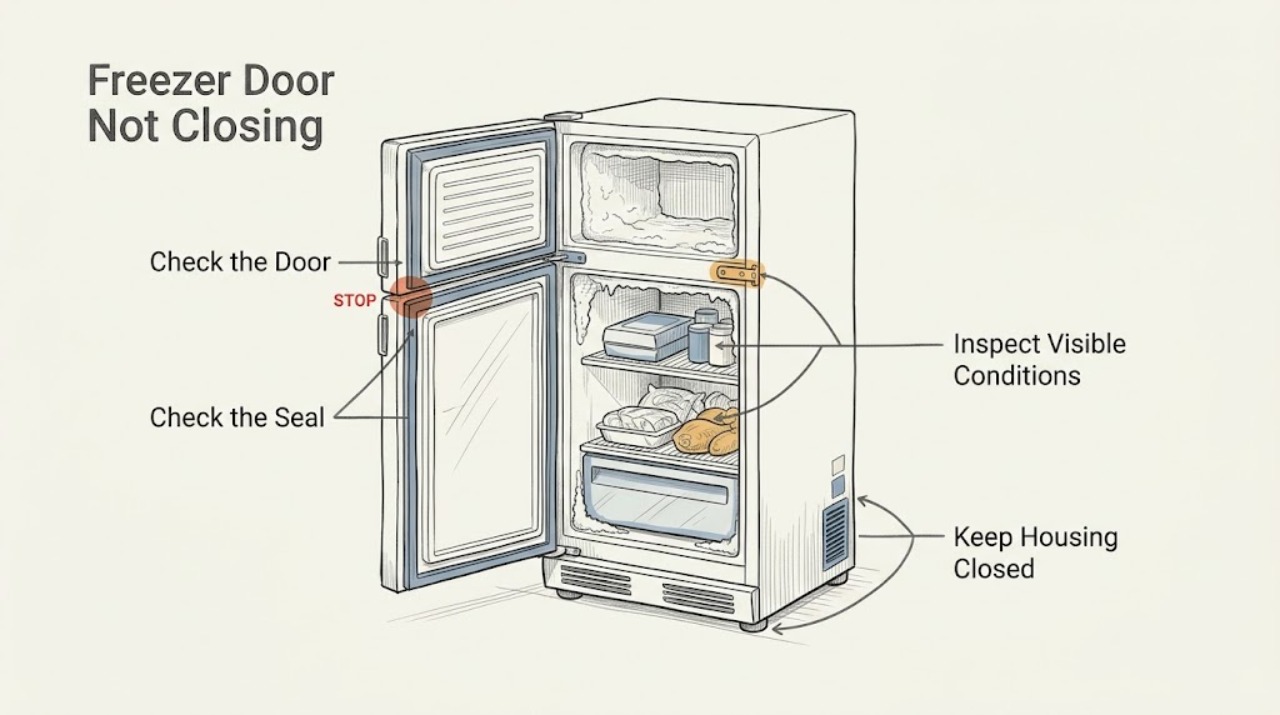
Start by checking for food, shelves, ice, or a chute or vent obstruction that prevents the door or lid from reaching the frame. Clean the gasket with warm soapy water, check that the cabinet is level and stable, and look for frost or a warped gasket or door. Electrolux says a chest-freezer lid can sometimes need to be raised and allowed to reseat when one corner is wrapping, but use the exact model guidance and never force a hinge or latch. If the gasket, hinge, door, frame, or cabinet is damaged, frost returns, the door cannot seal, or the freezer warms or alarms, stop forcing it and arrange qualified service.
Before you begin
Safety first
- The user may remove obvious loose obstructions, clean the gasket, inspect frost and airflow, and check accessible leveling or model-specific lid fit. Do not force or slam the door, bend hinges, chip frost, remove panels, alter the closure system, or operate the freezer with a persistent unsafe gap.
Work through in order
Diagnostic checks
Use only checks that match the exact appliance or system and its official guide.
-
Check 1
Open the freezer only as far as needed and inspect the full door or lid path for packages, baskets, shelves, ice, the ice-chute flap where fitted, or a vent obstruction. Reposition only loose items that the model instructions identify as user-movable.
Expected result: An item or ice buildup is holding the door open, or the path is clear but the door still will not reach the frame.
Next step: Remove the obvious obstruction, close the door gently, and verify that the gasket contacts the frame around the perimeter. If it still springs open or leaves a gap, continue without forcing it.
Stop if: Stop for a jammed or fused item, broken shelf, sharp ice, a damaged door, or any need to pry the door or remove fixed parts.
Why this matters
Why: A physical obstruction can mimic a warped door or failed gasket; a clear path shifts attention to frost, seal fit, leveling, or door hardware.
-
Check 2
With the door or lid open, inspect the gasket for dirt, tears, gaps, twisting, or a section pulled out of its channel; clean it with warm soapy water and dry it, without stretching, gluing, or replacing it by guesswork.
Expected result: The gasket is dirty or slightly displaced, or it remains torn, warped, loose, or unable to contact the frame evenly.
Next step: Reseat only an obvious loose edge if the model manual permits, then close the door gently and check for an even contact. Arrange service if a gap remains or the gasket will not stay seated.
Stop if: Stop for a torn gasket, distorted frame, loose door liner, sharp edge, or any need to remove the door or gasket carrier.
Why this matters
Why: A dirty or poorly fitting gasket can prevent a proper seal and let warm air enter; persistent deformation or damage needs a model-specific replacement or door diagnosis.
-
Check 3
Look for frost or ice around the door edge, gasket, shelves, vents, and air path, and check whether stored items are blocking a vent or pressing against the door; do not chip ice with a knife or heat the cabinet with an improvised device.
Expected result: Frost or ice prevents closure, the vents or door path are blocked, or there is no visible frost or airflow obstruction.
Next step: Remove only loose items and follow the exact manual’s safe defrosting procedure. If frost quickly returns, the gasket does not seal, or the door remains open, arrange service.
Stop if: Stop for thick ice fused to components, a damaged liner or vent, water near electrical parts, or any need to puncture ice or remove panels.
Why this matters
Why: Electrolux identifies over-frosting as a cause of a door not shutting correctly and blocked airflow as a contributor to frost; no visible obstruction makes seal or hardware alignment more likely.
-
Check 4
Check from a safe standing position that the freezer cabinet is level and stable and that the door or lid sits evenly relative to the frame; do not lift a loaded appliance or adjust hinges without the model instructions.
Expected result: The cabinet rocks, the door sits low or high, the frame is visibly distorted, or the cabinet and door appear level but closure is still poor.
Next step: Correct only an obvious user-accessible leveling adjustment covered by the manual. If the door remains misaligned or the frame is damaged, arrange service rather than bending hardware.
Stop if: Stop for a leaning or unstable appliance, bent hinge, cracked frame, damaged floor, or any need to remove structural panels.
Why this matters
Why: Electrolux recommends checking that the freezer is level and that its door closes freely with a proper seal; a misaligned or damaged frame can prevent gasket contact even when the path is clear.
-
Check 5
If the appliance is a chest freezer with a flexible lid, observe whether one corner wraps or fails to conform to the cabinet; use the exact model guidance and allow the lid to reseat only as described, without slamming, bending, or holding it down.
Expected result: One corner is wrapped or the lid does not tightly fit, or the lid is rigid, damaged, or still leaves a gap after it reseats.
Next step: If the model guidance does not restore a complete seal, stop using force and arrange service for the lid, gasket, hinge, or cabinet.
Stop if: Stop for a cracked lid, sprung hinge, sharp edge, distorted cabinet, or any need to slam or restrain the lid.
Why this matters
Why: Electrolux says a flexible lid can sometimes need to be raised and allowed to close to reestablish a tight fit; a damaged or persistent gap is not a normal fit adjustment.
-
Check 6
Arrange qualified Electrolux appliance service when the door or lid still will not close after safe obstruction, gasket, frost, airflow, leveling, and model-specific lid-fit checks, or when the freezer temperature rises or an alarm persists.
Expected result: A visible seal gap remains, the gasket or hardware is damaged, frost returns quickly, the freezer is warming, or the door alarm remains active.
Next step: Keep the door closed as far as it can safely go, limit openings, protect food according to applicable food-safety guidance if temperature rises, and provide the technician with the model and observed gap or frost pattern.
Stop if: Stop for a damaged door or frame, electrical or water hazard, rapidly rising temperature, or any need to force or dismantle the closure system.
Why this matters
Why: The remaining cause may be a gasket carrier, hinge, frame, latch or magnet, defrost or airflow fault, or another model-specific condition that cannot be identified by pushing the door closed.
Use your observations
Decision map
Find the observation that best matches what you see, then follow the next safe action.
-
PATH 01Next step
What you see
Food, shelves, baskets, ice, a chute flap, or another loose item blocks the door or lid.
Do this next
Arrange qualified service and follow the exact model guidance.
Why this path and its safety boundary
Why it matters: Remove or reposition only the accessible obstruction, close gently, and verify even gasket contact. Do not force the door against a trapped object.
-
PATH 02Next step
What you see
The gasket is dirty, twisted, torn, warped, or leaves a visible gap around the frame.
Do this next
Arrange qualified service and follow the exact model guidance.
Why this path and its safety boundary
Why it matters: Clean it with warm soapy water and use only the model manual’s reseating guidance. A persistent gap or damaged gasket needs qualified service.
-
PATH 03Next step
What you see
Frost or blocked airflow prevents closure or presses the door outward.
Do this next
Arrange qualified service and follow the exact model guidance.
Why this path and its safety boundary
Why it matters: Clear loose items and follow the exact manual’s safe defrost procedure. Do not chip ice with sharp tools or use improvised heat; arrange service if frost returns quickly.
-
PATH 04Next step
What you see
The cabinet is unstable or the door sits unevenly against the frame.
Do this next
Arrange qualified service and follow the exact model guidance.
Why this path and its safety boundary
Why it matters: Use only the manual’s accessible leveling guidance. A bent hinge, distorted frame, or persistent misalignment requires service rather than forced adjustment.
-
PATH 05Next step
What you see
A chest-freezer lid wraps at one corner and does not conform tightly.
Do this next
Arrange qualified service and follow the exact model guidance.
Why this path and its safety boundary
Why it matters: Follow Electrolux’s model-appropriate lid-fit guidance and allow it to reseat without slamming or bending. If a gap remains, arrange service.
-
PATH 06Next step
What you see
The door or frame is damaged, the seal remains open, frost returns, temperature rises, or a door alarm persists.
Do this next
Arrange qualified service and follow the exact model guidance.
Why this path and its safety boundary
Why it matters: Stop forcing the closure and arrange qualified Electrolux appliance service. Keep the door closed as far as safe and protect food if the freezer is warming.
Helpful context
Understand the symptom
Find what is stopping the door
A package, basket, shelf, ice buildup, or vent obstruction can stop the door before the gasket reaches the frame. Remove or reposition only loose items that the model manual allows, and do not overload the compartment. If the door closes but springs back, leaves a visible gap, or the gasket is distorted, treat it as a sealing or alignment problem rather than simply pushing harder.
Check the gasket and frost together
Electrolux links a poor door seal with unstable temperature and identifies frost, a warped gasket or door, and blocked airflow as contributors. Wipe the gasket with warm soapy water and inspect it for gaps, tears, or deformation. Never chip frost with a sharp tool or use an unapproved heat source; follow the model’s defrosting instructions.
Use a professional boundary for door hardware
A user can remove an obvious loose obstruction, clean the gasket, check a visible seal gap, and verify that the cabinet is level. Hinge adjustment, a distorted frame, a damaged gasket carrier, a latch or magnet problem, and any panel removal require model-specific diagnosis. Do not force the door, bend hinges, or keep the freezer running with a persistent open gap.
Safety boundary
Stop conditions
- A torn or distorted gasket, cracked door or lid, bent hinge, damaged frame, or closure that cannot seal.
- Thick or fused frost, water near electrical parts, a blocked fixed vent, or any need to chip ice or use improvised heat.
- Rapid temperature rise, persistent high-temperature or door alarm, or food-safety concern from an open freezer.
- An unstable or leaning cabinet, damaged floor, exposed wiring, or any electrical or water hazard.
- Any need to force, slam, restrain, dismantle, or realign the door, hinge, latch, gasket carrier, or cabinet.
Only after diagnosis
Potential parts
- freezer door or lid gasket
Consider this category only if the exact gasket is torn, warped, loose, or cannot seal after cleaning and a technician confirms it is the cause.
Confirm the exact appliance model and manufacturer fit information; do not assume a similar-looking gasket will seal. - door hinge or hinge hardware
This category is conditional on a door that sits unevenly or binds after obstructions and leveling are ruled out and a qualified diagnosis identifies hinge damage or wear.
Hinge geometry and hardware are model-specific; do not bend or shim the hinge as a user repair. - door latch, magnet, or closure assembly
Consider only when the gasket and frame are sound but the door cannot remain closed and a technician confirms a closure-component fault.
Confirm exact model fit and safe installation through qualified service. - defrost or airflow component
Consider only if frost repeatedly rebuilds after a documented safe defrost and clear airflow, with service diagnosis linking it to a defrost or airflow fault.
The open-door symptom does not identify a defrost component; confirm model-specific diagnosis before replacement.
When checks do not resolve it
Need a professional?
Arrange qualified Electrolux appliance service when safe obstruction, gasket cleaning, frost, airflow, leveling, and model-specific lid-fit checks do not restore a complete seal, or immediately for damaged hardware, persistent alarms, or rising freezer temperature.
Safety scope: The user may remove obvious loose obstructions, clean the gasket, inspect frost and airflow, and check accessible leveling or model-specific lid fit. Do not force or slam the door, bend hinges, chip frost, remove panels, alter the closure system, or operate the freezer with a persistent unsafe gap.
Common questions
FAQ
Why will my Electrolux freezer door not close?
Check for food, shelves, baskets, ice, a chute flap, or vent obstruction, then inspect and clean the gasket. Frost, an unlevel cabinet, a warped gasket or door, and damaged hardware can also prevent a complete seal.
Can frost stop an Electrolux freezer door from closing?
Yes. Electrolux identifies over-frosting as a cause of incorrect door closure. Follow the exact model’s safe defrost instructions and never chip ice with a sharp tool or improvise heat.
How do I check an Electrolux freezer door gasket?
Look for dirt, tears, twists, deformation, and gaps around the frame. Clean it with warm soapy water and dry it. If it remains damaged or cannot seal evenly, arrange model-specific service.
What if my Electrolux chest-freezer lid is open at one corner?
Electrolux says some flexible lids can be raised and allowed to reseat when a corner wraps. Follow the exact model guidance without slamming, bending, or restraining the lid; a persistent gap needs service.
When should I call service for an Electrolux freezer door problem?
Arrange service for a damaged gasket, hinge, frame, latch, or door; a gap that remains after safe checks; recurring frost; persistent alarms; or rising temperature. Do not force the closure system or remove panels.
Read the exact guide
Official sources
- What can I do if the lid on my freezer won’t close?Electrolux · Official Electrolux support article applying to freezers and refrigerators; exact model instructions control for lid construction and adjustment.
- Refrigerators / Freezer - Frost Build UpElectrolux · Official Electrolux support article for refrigerator/freezer frost conditions; exact appliance design and defrost instructions vary by model.
- What does the alarm or “buzzer sound” mean?Electrolux · Official Electrolux support article applying to some freezer and refrigerator models; alarm thresholds and controls vary by model.
- Freezer - Not Freezing or Not CoolingElectrolux · Official Electrolux support article for freezers and refrigerators with freezers; model manuals control installation and service details.
Community feedback
Share a repair observation
Share a plain-text repair observation. Accepted observations are published automatically; this page may take a moment to update.