
On this page
Start here
Quick answer
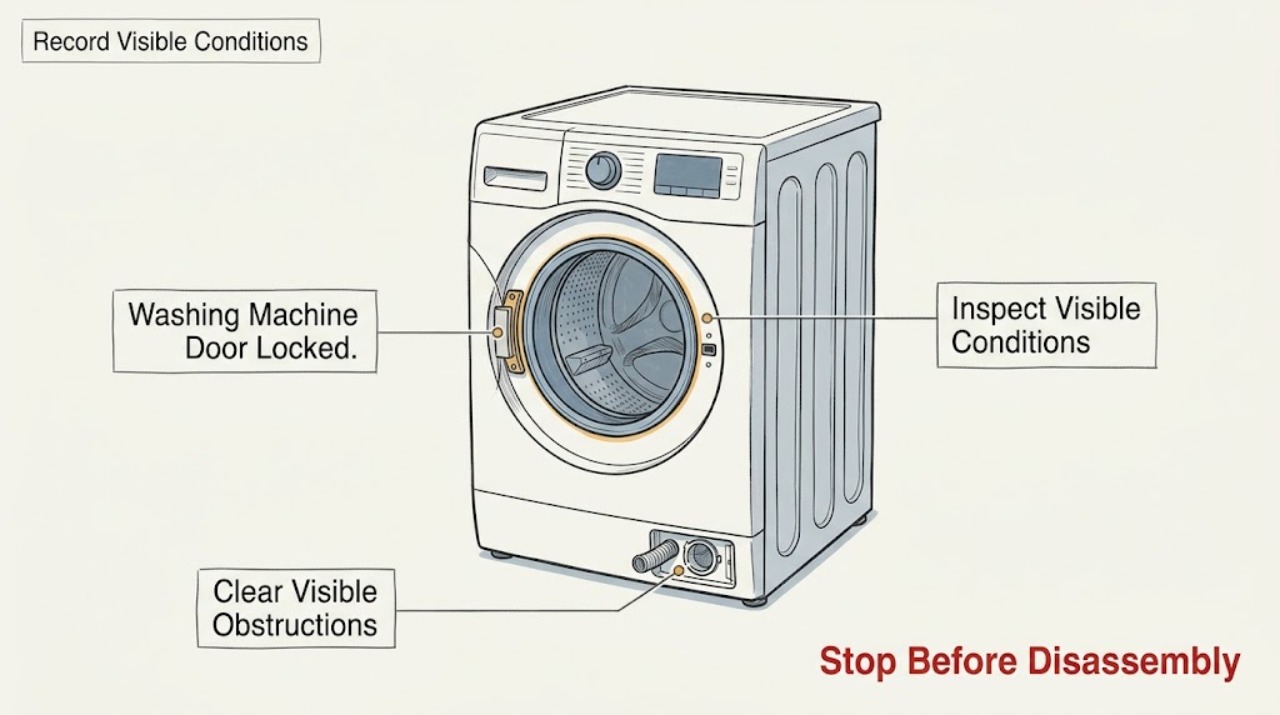
An Electrolux washing-machine door can remain locked briefly after a cycle while the lock cools, or it can stay locked because water remains in the drum, the lock icon or child lock is active, the door is obstructed, or the appliance has detected a fault. Wait for the normal post-cycle unlock period, check the display and water level, and use the exact model's drain or reset procedure. Remove only visible laundry caught in the seal and reduce an overloaded drum; never pull the handle or force the door. If water remains, the door will not unlock after safe draining, the lock or error returns, or the machine leaks, smells hot, trips power, or the drum can still move, leave it off and arrange qualified Electrolux service.
Work through in order
Diagnostic checks
Use only checks that match the exact appliance or system and its official guide.
-
Check 1
Wait a few minutes after the cycle ends and observe the lock icon, display, and drum without pulling the handle. If the drum is still rotating, the water or laundry is hot, or the machine is mid-cycle, keep the door closed.
Expected result: The door unlocks after the normal post-cycle delay, the lock icon remains active, or the machine shows water or a fault while the door stays locked.
Next step: If it unlocks, inspect the seal and load before the next cycle. If it remains locked, continue with the water-level and display check without forcing the door.
Why this matters
Why: A brief lock after a cycle can be normal cooling; a persistent lock indicates water, heat, a running cycle, a lock state, or a fault that needs a different check.
-
Check 2
Look through the door or opening for standing water and record any drain, door, or other displayed code. Do not open the door while water is high or hot, and do not place hands into the drum.
Expected result: Water remains, the drum is empty, or a code such as a door-lock or drain code is displayed.
Next step: For water, run the model's documented drain cycle or follow its safe residual-water procedure. For a door-lock code, check closure and trapped laundry; do not bypass the lock.
Why this matters
Why: Electrolux prevents opening when water is present; a code identifies the branch to follow, while an empty drum shifts attention toward the lock, control, or door mechanism.
-
Check 3
With the washer stopped, inspect the visible door seal, glass, and latch area for clothing, a foreign object, or an overloaded drum pressing against the door. Remove only a visible obstruction and close the door normally; do not force the handle or insert a tool into the lock.
Expected result: Laundry is trapped, the drum is overloaded, the seal or latch is visibly damaged, or the door area is clear and undamaged.
Next step: Remove excess laundry and retry only as the model guide permits. If the latch or seal is damaged, or the lock indication remains wrong with a clear door area, request service.
Why this matters
Why: Trapped laundry or overload can keep the door from closing or locking and can create a leak; a clear and intact door area makes an internal lock or control fault more likely.
-
Check 4
Check whether a key or padlock symbol indicates a child or control lock, and use only the exact model manual's button sequence to release it. If the washer is powered but unresponsive, perform the model's documented power reset after stopping the cycle; do not reset around a leak, smoke, or hot electrical odor.
Expected result: The lock symbol clears and the door unlocks, the same symbol or error returns, or the appliance remains unresponsive.
Next step: Retry once after the documented release or reset. If the lock remains active or the appliance does not respond, leave it off and arrange qualified service.
Why this matters
Why: A control lock or temporary control state can prevent normal operation; a recurring lock or no response indicates a fault or a model-specific condition.
-
Check 5
If water remains and the exact model documents an emergency drain or emergency door release, turn the appliance off, disconnect power when safe, protect the floor, and follow that manual procedure exactly. Do not attempt an undocumented release or open cabinet panels.
Expected result: The documented drain removes the water and the door unlocks, the emergency procedure is not available, or the door remains locked after safe draining.
Next step: Close the filter or cover securely and run only the model-prescribed verification. If water returns, the door stays locked, or the procedure risks a spill or burn, stop and request qualified service.
Why this matters
Why: Removing retained water can restore the safety condition, but an unavailable or unsuccessful procedure points to a drain, lock, control, or mechanical issue requiring service.
Use your observations
Decision map
Find the observation that best matches what you see, then follow the next safe action.
-
PATH 01Next step
What you see
The door unlocks after the normal short delay at the end of a completed cycle, with no water, heat, code, or damage.
Do this next
Use the washer normally and monitor for a change. If the delay becomes persistent or the lock icon remains, continue diagnosis.
Why this path and its safety boundary
Why it matters: The lock was likely completing its normal cooling period.
-
PATH 02Next step
What you see
Water remains in the drum or a drain condition is displayed.
Do this next
Use the exact model's drain cycle or documented emergency-drain procedure. Do not force the door; request service if the water will not leave.
Why this path and its safety boundary
Why it matters: The door is being held closed by the water-level safety condition.
-
PATH 03Next step
What you see
A door-lock code or lock symbol remains after the door is clear, not overloaded, and fully closed.
Do this next
Do not bypass the interlock. Leave the appliance off and arrange qualified Electrolux service if one documented reset does not restore normal operation.
Why this path and its safety boundary
Why it matters: A lock mechanism, control, or door-detection fault is possible.
-
PATH 04Next step
What you see
The seal, latch, hinge, or door is visibly damaged, or clothing is trapped and the door cannot close without force.
Do this next
Remove only visible clothing or packaging obstruction. Stop using the washer and request service for damage; do not pull the handle or continue a cycle that can leak.
Why this path and its safety boundary
Why it matters: The door cannot safely establish a seal or lock.
-
PATH 05Next step
What you see
There is a leak, smoke, burning smell, sparking, repeated power trip, hot water risk, or a drum that is still moving while the door appears open.
Do this next
Stop the appliance, isolate power and water only when safe, keep clear of the door and wet electrical areas, and obtain qualified service. Do not operate the machine until the problem is resolved.
Why this path and its safety boundary
Why it matters: This is a water, electrical, and mechanical safety stop.
Helpful context
Understand the symptom
A locked door is often a safety decision
Electrolux front-load washers and washer dryers keep the door locked when the drum is rotating, the water level is too high, or the water or laundry is hot. A short wait after a completed cycle can be normal while the lock cools. The key or lock icon, an error code, or water visible through the door changes the next check.
Drain before trying to open
If water remains in the machine, do not force the door. Use only the exact model's drain cycle or documented emergency-drain procedure, preparing for residual water and possible heat. Filter and emergency-release locations vary, and some models do not provide the same access.
Protect the lock, seal, and floor
A trapped garment, overloaded drum, unlevel appliance, or damaged seal can prevent correct locking and can also cause a leak. Clear only visible obstructions and follow the model manual. Do not pry the door, pull the handle, bypass the interlock, open cabinet panels, or work on live wiring.
Only after diagnosis
Potential parts
- door lock or interlock assembly
Consider this category only if the door area is clear and a qualified diagnosis confirms that the lock does not detect or release the door correctly.
Confirm the complete Electrolux model and manufacturer's fit information before ordering; a locked door alone does not identify the assembly. - drain pump or drain-path component
Consider this category only if water remains after the exact model's safe drain procedure and service confirms a pump or drain-path fault.
Verify model-specific compatibility and access through qualified service; residual water can be hot and heavy. - door seal or hinge hardware
Consider this category only if inspection confirms a torn seal, misaligned door, or hinge problem that prevents safe closure or causes a leak.
Confirm the complete model and manufacturer's fit information before ordering; do not use a damaged door or seal.
When checks do not resolve it
Need a professional?
Call qualified Electrolux service when the door remains locked after the normal delay and safe drain or reset checks, a door-lock or drain code returns, the latch, hinge, gasket, or door is damaged, or an emergency release would require undocumented access. Stop immediately for a leak, hot water, smoke, burning odor, sparking, repeated power trips, or a moving drum with an unsafe door condition.
Common questions
FAQ
How long should an Electrolux washing machine door stay locked after a cycle?
A short delay can be normal while the door lock cools. If the lock remains active, check for water, a code, trapped laundry, or a control-lock state without forcing the door.
Why will my Electrolux washer door not unlock when there is water inside?
The door is kept locked as a safety condition. Use the exact model's drain cycle or documented emergency-drain procedure; residual water may be hot, so stop and request service if draining is not safe or does not work.
Can I force open an Electrolux washer door that is locked?
No. Do not pull the handle, pry the door, or bypass the interlock. Clear only visible obstructions and follow the exact manual for any emergency release; request qualified service if the lock remains active.
Read the exact guide
Official sources
- Washing machine displays an error code, how to fix it?Electrolux · Electrolux door-lock, drain, leakage, power, and escalation branches
- Washing Machine Error Code E40, E41 (4 Beeps / 4 Flashes): Causes & FixesElectrolux · Electrolux door or lid closure, trapped laundry, overload, child-lock, and service branches
- The washing machine door does not close properlyElectrolux · Electrolux door leveling, overload, trapped laundry, seal, leak, and lock checks
- The door of the washing machine cannot be openedElectrolux · Electrolux front-loader door lock, water-level, cooling delay, reset, drain, and emergency-opening guidance
- Opening washing machine's door at the beginning of wash cycleElectrolux · Electrolux lock icon, draining, hot-water, rotating-drum, and service stop guidance
- Washing Machine Not Working or Turning On? Fix Power & Start IssuesElectrolux · Electrolux washer dryer power, reset, door closure, child lock, error, and service checks
Community feedback
Share a repair observation
Share a plain-text repair observation. Accepted observations are published automatically; this page may take a moment to update.