
On this page
Start here
Quick answer
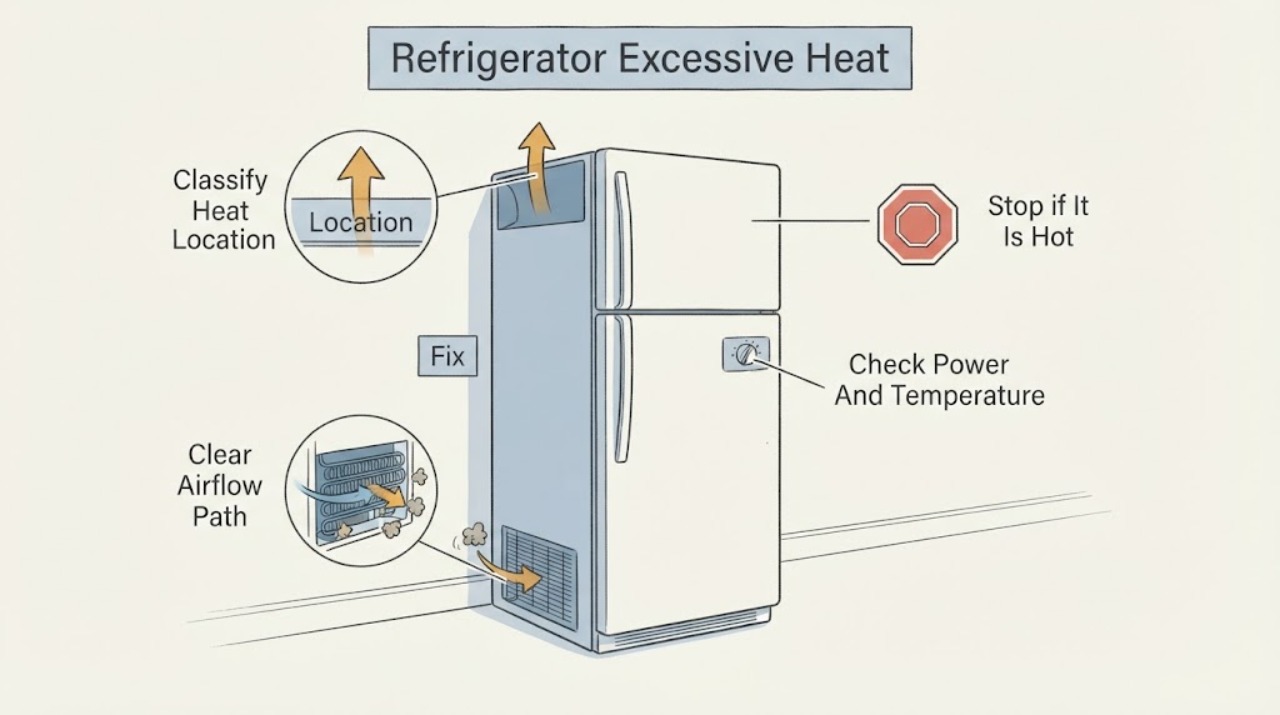
First separate outside heat from an inside temperature problem. If the food compartment is too warm, check power, the recent-installation or power-outage timeline, the temperature setting, blocked interior vents, and whether the door gasket seals. If the cabinet or rear area feels hot while the refrigerator is still cooling, check the room conditions, rear clearance, and visible dust at the rear vent; Frigidaire says warm environments and restricted airflow can make the compressor work harder. Do not diagnose a compressor or refrigerant fault by touch. Stop using the refrigerator and arrange service if the heat comes with a burning smell, smoke, sparking, melted material, a tripped breaker, or temperatures that remain unsafe after the official external checks.
Work through in order
Diagnostic checks
Use only checks that match the exact appliance or system and its official guide.
-
Check 1
Record whether the heat is on the cabinet or rear area, inside the fresh-food compartment, or both; also record the compressor runtime pattern, any display/alarm, and whether the unit was recently installed or lost power.
Expected result: Only the exterior feels warm, the inside is too warm, both conditions occur, or the heat includes smoke, odor, sparks, melted material, or a tripped breaker.
Next step: Use the corresponding branch below. Keep the refrigerator off and arrange service for smoke, burning odor, sparking, melted material, repeated breaker trips, or a damaged cord.
Why this matters
Why: Exterior heat with long runtime points first to environment and airflow checks, while an excessively warm interior needs the cooling, power, setting, vent and door-seal path; a burning or electrical sign is a stop condition.
-
Check 2
If the cabinet or rear feels hot, check the room conditions, confirm that the refrigerator is not pushed tightly against the wall, and look from outside for dust blocking the rear vent; do not remove covers or touch internal components.
Expected result: The room is hot, the unit lacks the clearance specified by its installation guide, or the visible rear vent is dusty; alternatively, the airflow and placement appear clear.
Next step: Restore the model-required clearance and clean only the externally accessible area as the owner guide permits, then observe cooling and runtime. If excessive heat persists or cooling is poor, arrange service.
Why this matters
Why: Frigidaire says warm surroundings and restricted or dusty rear airflow can make the refrigerator work harder and run longer, but a clear exterior check does not rule in a specific internal failure.
-
Check 3
If the inside is too warm, confirm the interior light or control display has power, verify the temperature setting against the complete model's owner guide, and allow the model's documented stabilization time after installation or power loss.
Expected result: The display or light is off, the setting is warmer than the model recommendation, the unit was recently installed or power-cycled, or power and settings appear normal.
Next step: Correct only an accessible setting or power issue identified by the manual. If the refrigerator remains too warm after the documented stabilization period, keep perishable contents protected and arrange service.
Why this matters
Why: Frigidaire identifies power, settings, recent installation or outage, and stabilization time as relevant to a warm refrigerator; these checks do not diagnose sealed-system or control components.
-
Check 4
Make sure food is not blocking the interior vents and that no item prevents the door or drawer from closing; inspect the gasket and perform Frigidaire's dollar-bill resistance check without removing the gasket.
Expected result: A vent is blocked, the door cannot close fully, or the bill slides out with little resistance; alternatively, airflow and the gasket appear normal.
Next step: Clear only the accessible obstruction and clean the gasket with warm soapy water as directed. If the seal remains weak, the door is damaged, or the compartment stays warm, arrange model-matched service.
Why this matters
Why: Frigidaire says blocked vents prevent proper airflow and a non-sealing door causes unstable temperature; a failed external check does not identify the correct replacement part.
-
Check 5
Read the complete model and serial label from the refrigerator interior, record the measured symptom and any alarm, and provide those details when requesting support; do not open the rear cover or sealed system.
Expected result: A complete model is available and matches the refrigerator, or the label is incomplete or the symptom persists after the official external checks.
Next step: Use the matching owner manual or arrange qualified Frigidaire appliance service. Stop using the refrigerator for smoke, burning odor, sparking, melted parts, a repeated breaker trip, or electrical damage.
Why this matters
Why: Frigidaire's model-location guidance varies by refrigerator type, and unresolved heat or temperature problems need model-specific documentation and service diagnosis.
Use your observations
Decision map
Find the observation that best matches what you see, then follow the next safe action.
-
PATH 01Next step
What you see
The cabinet or rear is warm, the inside is holding the expected temperature, and the compressor runs more in a hot room or with restricted rear airflow.
Do this next
Check the model-required clearance and externally visible dust, then monitor operation. Arrange service if the heat becomes extreme, cooling changes, or the runtime remains abnormal after airflow is corrected.
Why this path and its safety boundary
Why it matters: Frigidaire identifies warm surroundings and blocked or restricted airflow as conditions that can make a refrigerator work harder; this pattern does not establish a failed compressor.
-
PATH 02Next step
What you see
The fresh-food compartment or freezer is too warm, the display or interior light indicates a power issue, or the temperature setting and stabilization timeline are not correct.
Do this next
Correct only the documented accessible condition and allow the model's stabilization period. If temperature does not recover, arrange service and protect perishable food.
Why this path and its safety boundary
Why it matters: The official Frigidaire warm-refrigerator path points to power, setting, recent installation or outage, and stabilization checks before internal diagnosis.
-
PATH 03Next step
What you see
Interior vents are blocked or the door gasket fails the resistance check, and the refrigerator is too warm.
Do this next
Clear accessible blockage and clean the gasket as directed. If the door remains unsealed or the temperature stays high, use model-matched service rather than guessing a part.
Why this path and its safety boundary
Why it matters: Frigidaire says blocked airflow and a non-sealing door can prevent proper cooling or make the temperature unstable.
-
PATH 04Next step
What you see
Excessive heat is accompanied by smoke, burning odor, sparking, melted material, a damaged cord, or repeated breaker trips.
Do this next
Stop using the refrigerator, isolate power only when safe, and obtain qualified appliance or electrical help. Do not restore power for a test or open the cabinet.
Why this path and its safety boundary
Why it matters: The symptom has crossed from a cooling or operating-condition question into an electrical or fire-safety boundary.
-
PATH 05Next step
What you see
The model is unknown or the refrigerator remains excessively hot after the applicable external checks.
Do this next
Record the complete model and measured symptoms and arrange qualified service; do not order a part or open the sealed system based on the adjective excessive.
Why this path and its safety boundary
Why it matters: The general Frigidaire sources support external checks but cannot identify a compressor, fan, sensor, control, refrigerant, or other internal cause from heat alone.
Helpful context
Understand the symptom
Identify where the excessive heat is occurring
Use the words outside heat and inside heat separately. Note whether the cabinet sides, rear area, or floor near the appliance feels warm, or whether food and the air inside the fresh-food compartment are warmer than expected. Also note whether the compressor appears to run for long periods, whether the unit was recently installed or lost power, and whether any alarm or display message is present. A warm exterior and a warm food compartment can have different next checks.
Check the refrigerator's operating conditions
Frigidaire says a warm room can make the refrigerator work harder, while a clogged rear vent or placement too close to the wall can restrict airflow. Look from outside for obvious dust at the rear vent and confirm that the refrigerator has the clearance required by its installation guide. Do not remove covers or reach toward the compressor, fan, wiring, or refrigerant circuit.
Check temperature, power and airflow when the inside is warm
For an inside temperature complaint, confirm that the interior light or control display has power, verify the setting against the model's owner guide, and make sure food is not blocking the interior vents. Frigidaire's general refrigerator guidance lists 37°F for the fresh-food compartment and 0°F for the freezer as factory suggested settings for the covered electronic-control families, while a newly installed or recently power-cycled unit may need time to stabilize.
Inspect the door seal without dismantling the door
Check that nothing prevents the door or drawer from closing and inspect the gasket for a visible gap, fold, or contamination. Frigidaire suggests closing the door on a dollar bill and feeling for resistance when pulling it out, then cleaning the gasket with warm soapy water. A weak seal can let warm air enter and make the temperature unstable; it does not identify a specific gasket or cooling component replacement.
Stop when heat signals a safety or service problem
Keep the refrigerator out of service if excessive heat is accompanied by a burning odor, smoke, sparking, melted plastic, a repeatedly tripped breaker, a damaged power cord, or a leak near electrical parts. Isolate power only when it is safe to do so and arrange qualified appliance or electrical service. Do not keep testing the unit, open the sealed system, or select a compressor, fan, sensor, or control board from the symptom alone.
When checks do not resolve it
Need a professional?
Arrange qualified Frigidaire appliance service when the refrigerator remains too warm after power, setting, airflow, vent and gasket checks; when the cabinet or rear heat persists with abnormal cooling or runtime; or when model-specific diagnosis of a fan, control, compressor, sensor, sealed system or wiring is needed.
Common questions
FAQ
Is it normal for a Frigidaire refrigerator to feel warm outside?
Outside warmth cannot be judged safely from touch alone. First check whether the inside temperature is also too warm and whether the refrigerator is working harder because the room is hot or rear airflow is restricted. Frigidaire says those conditions can increase compressor runtime; persistent excessive heat, poor cooling, or any burning or electrical sign needs service.
What temperature should my Frigidaire refrigerator use?
Frigidaire lists 37°F for the fresh-food compartment and 0°F for the freezer as factory suggested settings for the electronic-control refrigerator families covered by its support page. Use the complete model's owner guide for your unit, especially after a new installation or power loss when stabilization can take time.
What should I check if the inside of my Frigidaire refrigerator is too warm?
Confirm power, the model's temperature setting and stabilization timeline, clear blocked interior vents, make sure the door closes, and check the gasket with the official dollar-bill resistance check. If the temperature stays high after those external checks, arrange service instead of opening the refrigerator or guessing a component.
Where can I find the Frigidaire refrigerator model number?
Frigidaire says the label location depends on the type: top-freezer models commonly show it on the upper-left interior wall, while French-door and side-by-side models commonly show it on the upper-right interior wall. Record the complete model before selecting a manual or ordering any part.
Read the exact guide
Official sources
- Refrigerators - Not CoolingFrigidaire · Official Frigidaire support page applying to all refrigerators; used for power, stabilization, settings, vents, door closure, gasket and service checks.
- Refrigerators - Why does my refrigerator run most of the time? Is this normal?Frigidaire · Official Frigidaire support page applying to refrigerators, French-door, side-by-side and top-freezer families; used for runtime, warm-environment and visible rear-airflow checks, not a component diagnosis.
- Where can I find my model and serial number? | FrigidaireFrigidaire · Official Frigidaire support page used to identify the exact refrigerator model needed for matching manuals and service diagnosis.
- Refrigerators - What is the recommended temperature settings for my refrigerator?Frigidaire · Official Frigidaire support page applying to refrigerator families; used for recommended settings and the initial stabilization window, with the model manual controlling differences.
Community feedback
Share a repair observation
Share a plain-text repair observation. Accepted observations are published automatically; this page may take a moment to update.