
On this page
Start here
Quick answer
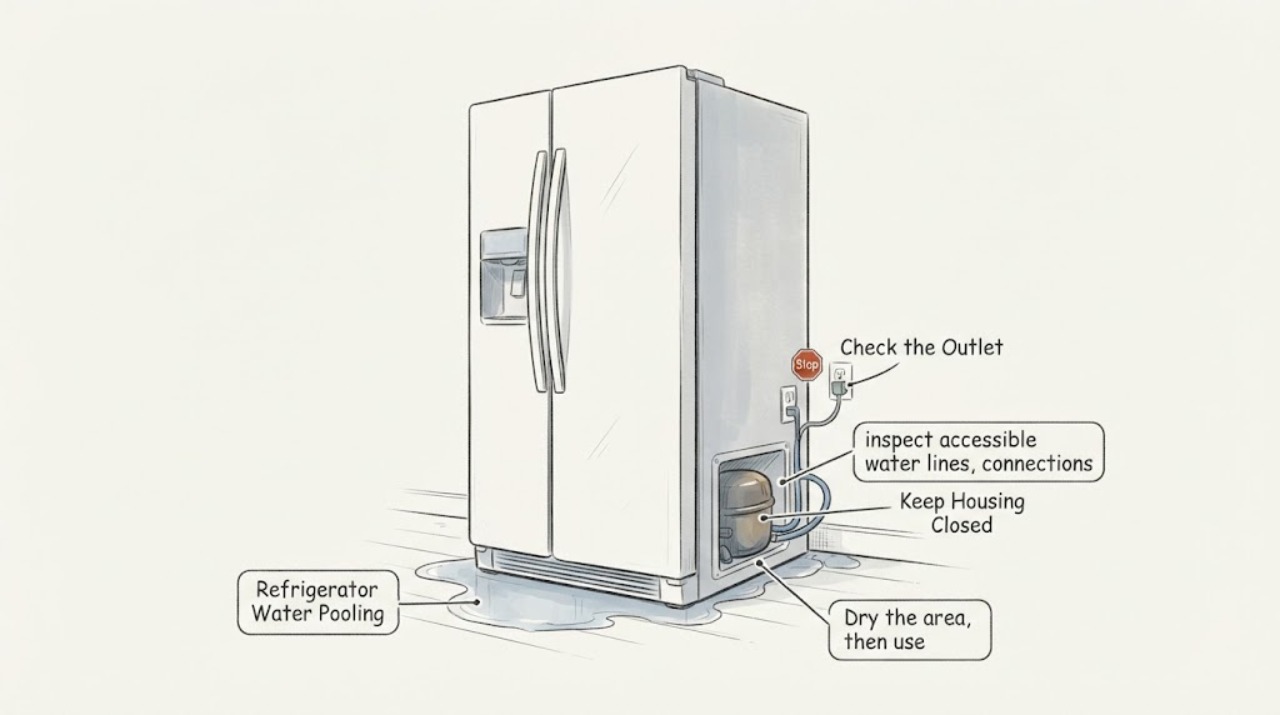
Do not diagnose a Frigidaire refrigerator water pool by appearance alone. First contain the water and record whether it is on the floor behind the unit, inside the cabinet, below the ice maker, or at the dispenser. With the refrigerator kept stable and power isolated if water reaches electrical parts, check only accessible water-line connections, the filter seat, dispenser chute/tip, door seal and visible vents. Frigidaire's guidance treats those locations differently; a continuing leak, unsafe water near electricity, or any hidden-line or cabinet access needs service.
Work through in order
Diagnostic checks
Use only checks that match the exact appliance or system and its official guide.
-
Check 1
Stop dispensing water or ice, place a towel or shallow container where water is pooling, and keep food and people clear of a wet floor. If water reaches an outlet, cord, plug or other electrical connection, do not touch the wet area; isolate power only when safe and arrange service.
Expected result: The water is contained away from electrical parts, or it is spreading toward an electrical connection, producing an odor, or accompanied by sparking.
Next step: For an electrical or rapidly worsening leak, leave the refrigerator out of service and contact qualified appliance/electrical service. Otherwise continue with the location check without moving the cabinet unsafely.
Why this matters
Why: A contained pool can be mapped to an external water-path check; water near electricity or a safety symptom is not a routine filter or door adjustment.
-
Check 2
Dry the area, then use a clean paper towel to identify the first wet location: floor or rear water line, inside the cabinet, below the ice maker, dispenser chute, or dispenser tip. Do not rely on the largest pool as the leak source.
Expected result: The first wet point is outside/behind the unit, inside the cabinet or ice-maker area, or at the dispenser.
Next step: Use the matching branch below and record the model number before any model-specific manual step. If the first wet point cannot be found, keep the area dry and request service rather than opening panels.
Why this matters
Why: Frigidaire gives different checks for those locations; an inside pool is not automatically a household drain issue, and a floor pool is not automatically a cabinet leak.
-
Check 3
If the first wet point is behind or below the refrigerator and it is safe to see, inspect accessible water lines, connections and the rear valve with a dry paper towel. Do not pull a built-in unit, kink the line, disconnect a fitting, or use tools on a wet connection.
Expected result: A paper towel becomes wet at a water-line connection or valve, or all accessible connections remain dry.
Next step: Close the refrigerator water shutoff if a supply leak is present and arrange service or installer help; do not keep dispensing water. If the rear path is dry, continue only with the inside/dispenser location branch.
Why this matters
Why: Frigidaire identifies loose or wet water connections as a possible outside leak. Dry accessible connections do not clear hidden tubing, a cabinet leak or an internal fault.
-
Check 4
If water is inside the cabinet or below the ice maker, check whether the water filter was recently changed, whether it is seated as the exact manual shows, and whether the filter is cracked. Also note whether a door was left open long enough for frost to form; do not remove a filter or ice-maker cover if the model procedure is unknown.
Expected result: The filter is newly installed, loose, cracked or wet, or the cabinet/ice-maker area shows no filter issue but has frost or meltwater.
Next step: Stop using a cracked or leaking filter and follow the exact model manual or arrange service. For frost or meltwater, close the door and verify the gasket and airflow; recurring water requires service rather than an assumed drain repair.
Why this matters
Why: Frigidaire says an incorrectly installed or cracked filter can leak in the cabinet, while prolonged door opening can ice the evaporator and allow water to leak from the bottom of the ice maker.
-
Check 5
If the pool starts at the dispenser, look for ice or frost blocking the chute and for droplets or wetness at the dispenser tip. Do not insert tools into the chute or dismantle the dispenser.
Expected result: Ice/frost is visible in the chute, the tip is wet or dripping, or the dispenser area stays dry while water appears elsewhere.
Next step: Use only the cleaning and use instructions for the exact model; stop dispensing if the leak continues. If the source is not the chute or tip, return to the location check and arrange service for a hidden water path.
Why this matters
Why: Frigidaire says melting ice in the chute can run down the door and air in the water line can cause a wet or dripping dispenser tip.
-
Check 6
Arrange service when the pool returns after the accessible checks, the wet point is hidden, a water line or filter housing is cracked, the refrigerator cannot be moved safely, or water reaches electrical parts.
Expected result: The leak persists, returns, cannot be traced without opening the cabinet, or creates a water/electrical or slip hazard.
Next step: Keep water supply and appliance use stopped as appropriate, provide the model/serial, pool location, filter history and photos of accessible wet points, and let an authorised technician determine the repair.
Why this matters
Why: Frigidaire routes unresolved refrigerator leaks to installer or service support and does not establish a component diagnosis from the pool alone.
Use your observations
Decision map
Find the observation that best matches what you see, then follow the next safe action.
-
PATH 01Next step
What you see
Water reaches an outlet, cord, plug, control area or other electrical connection, or there is sparking, smoke or a burning odor.
Do this next
Do not touch the wet area or continue testing; isolate power only if safe and arrange qualified appliance/electrical service.
Why this path and its safety boundary
Why it matters: The leak has become an electrical safety condition.
-
PATH 02Next step
What you see
The first wet point is an accessible rear water connection or valve.
Do this next
Stop water at the shutoff, avoid tools or disconnection on the wet line, and arrange installer or appliance service.
Why this path and its safety boundary
Why it matters: Frigidaire identifies loose or wet water connections as a possible outside leak.
-
PATH 03Next step
What you see
Water is inside the cabinet or below the ice maker, and the filter is recently changed/cracked or frost follows prolonged door opening.
Do this next
Use the exact model manual for filter seating and door/gasket checks; if the leak repeats, keep the unit dry and book service.
Why this path and its safety boundary
Why it matters: The observation matches Frigidaire's filter-installation or frost/meltwater paths, but it does not identify a hidden component.
-
PATH 04Next step
What you see
Water starts at the dispenser chute or tip.
Do this next
Stop dispensing, follow the exact model's exterior care instructions, and arrange service if droplets continue or the source is uncertain.
Why this path and its safety boundary
Why it matters: Frigidaire associates chute ice/frost with meltwater and a wet tip with possible air in the water line.
-
PATH 05Next step
What you see
The first wet point cannot be found, the refrigerator cannot be moved safely, or the pool returns after accessible checks.
Do this next
Keep the water source and appliance use controlled, document the location and model, and request authorised service.
Why this path and its safety boundary
Why it matters: A hidden water path or internal fault remains possible, and the symptom alone cannot identify a part.
Helpful context
Understand the symptom
Start with the location, not a part name
Water on the floor behind the refrigerator, water inside the cabinet, and droplets at the dispenser can have different first checks. Frigidaire's opened water-leak guidance separates those cases. The task has no model, so the article stays at the accessible observation and model-manual boundary rather than naming a drain pan, valve, filter housing, or tubing failure.
Keep water away from electricity
Do not pull a built-in or unstable refrigerator, strain a connected water line, remove panels, or reach behind wet electrical parts. If water is at an outlet, cord, control area, or other electrical connection, stop handling it, isolate power only if that can be done without contact with water, and arrange qualified service.
When checks do not resolve it
Need a professional?
Call authorised appliance service for a recurring or untraceable pool, a cracked filter housing or water line, or any leak requiring cabinet access., Call the installer for a newly installed unit or an installation-related supply connection problem., Use qualified electrical help when water reaches electrical parts; use emergency services for active smoke, fire or sparking.
Have this ready
- complete model and serial number
- first wet location and whether the pool is inside, below the ice maker, at the dispenser or behind the unit
- recent filter change or installation history
- whether the water supply was shut off and whether water reached electrical parts
Common questions
FAQ
Does water on the floor always mean the refrigerator drain is blocked?
No. Frigidaire separates outside supply connections, meltwater after prolonged door opening, filter leaks inside the cabinet, and dispenser chute or tip leaks. Find the first wet point before choosing a check.
What should I check after replacing a Frigidaire water filter?
With the model instructions available, verify that the filter is seated correctly and inspect it for cracks or wetness. Frigidaire says an incorrectly installed or cracked filter can leak inside the cabinet; a persistent leak needs service.
Can I pull the refrigerator out to inspect the water line?
Only if the unit is stable, the line will not be strained, and the area is dry and safe. Do not move a built-in or heavy unit through water; arrange installer or appliance service instead.
Read the exact guide
Official sources
- Delivery and Installation Guide - RefrigeratorFrigidaire · Opened the official Frigidaire installation guide. It confirms that refrigerators with ice/water features require an accessible shutoff valve and water line; it is used only for installation and movement boundaries, not as a universal repair procedure.
- Refrigerators / Freezer - Frost Build UpFrigidaire · Opened the official Frigidaire frost guide. It supports checks for door closure, gasket seal, ice-chute closure and blocked vents; it does not support a refrigerator-specific internal repair diagnosis.
- Refrigerator Water LeaksFrigidaire · Opened the official Frigidaire support article. It applies to refrigerators and separates rear connection leaks, inside filter/ice-maker leaks, and dispenser chute/tip leaks; it does not identify a component without model-specific evidence.
Community feedback
Share a repair observation
Share a plain-text repair observation. Accepted observations are published automatically; this page may take a moment to update.