
On this page
Start here
Quick answer
A Frigidaire washing machine that appears not to complete a cycle may be paused for load sensing, balancing, soaking, or the normal transition between wash and spin, but a stop with standing water, no fill, an open-lid condition, or a recurring error needs a different check. Note the exact stage, display or light pattern, water level, and whether the tub is trying to drain or spin. Check that the lid or door is closed, water supplies are available, the washer is level, the drain hose is not kinked or blocked, and the load is not badly unbalanced. If the cycle still stops after these model-appropriate checks, or there is a leak, burning odor, repeated breaker trip, or visible damage, stop using the washer and arrange qualified service.
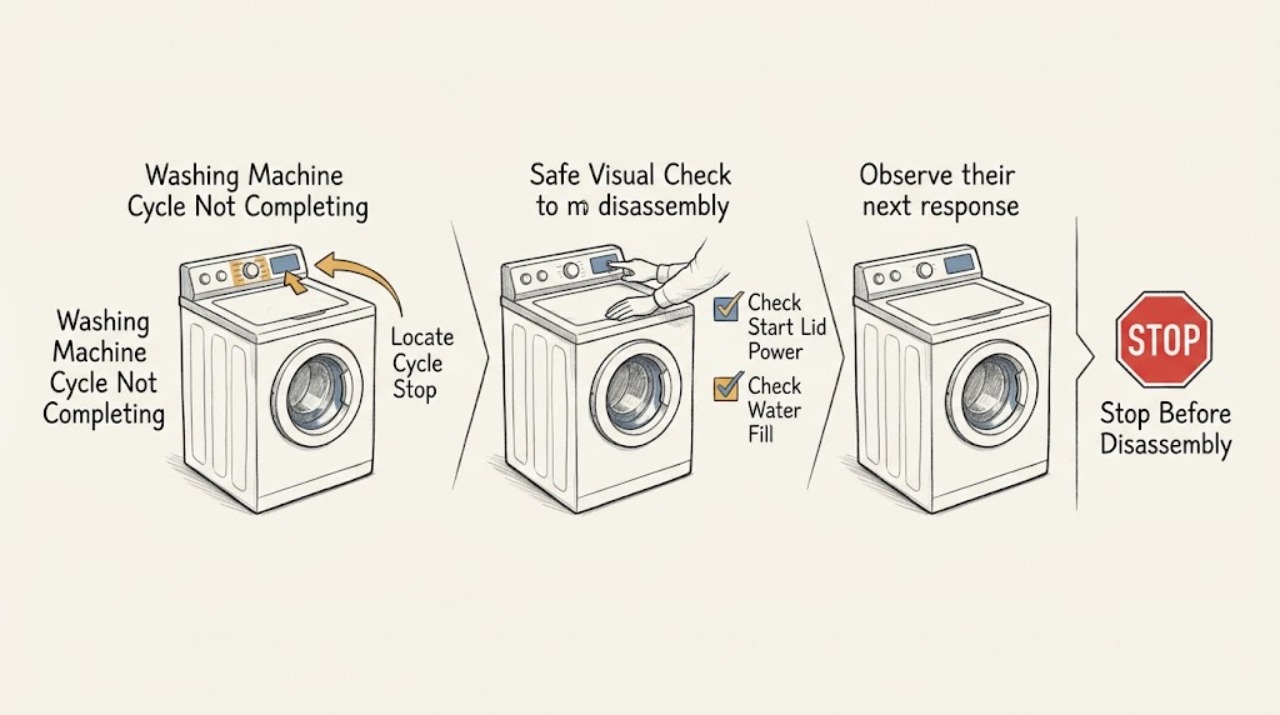
Work through in order
Diagnostic checks
Use only checks that match the exact appliance or system and its official guide.
-
Check 1
Record the selected cycle, the point where the timer or lights stop, whether the washer is filling, washing, draining, or spinning, and whether water or laundry remains in the tub. Wait briefly through a displayed sensing or pause stage rather than immediately cancelling it.
Expected result: The washer resumes after sensing or a normal wash-to-spin pause; it repeatedly pauses at the same stage; or it stops with water, no water, or a blinking message.
Next step: Continue to the stage-specific check that matches the observation. If the washer stops with an error, record the exact code before trying any reset or restart.
Why this matters
Why: A short pause can be normal, especially during load sensing, soaking, or rebalancing. A repeatable stop at fill, drain, or spin narrows the next check to water supply, drainage, lid or door closure, or load balance.
-
Check 2
Confirm the power cord is firmly connected, the washer has power, the lid or door is fully closed, and Start or Start/Pause was pressed after the cycle was selected. Check the breaker or fuse only from the normal household access point; do not increase fuse capacity or use an extension cord.
Expected result: The cycle starts after the lid or door is closed and Start is pressed; the panel turns off before starting; or the breaker trips or power is lost again.
Next step: If the cycle starts, observe whether it later stops at fill, drain, or spin. If power drops again, stop using the washer and arrange qualified electrical or appliance service.
Why this matters
Why: Frigidaire identifies an unclosed lid or door, a missed Start command, delay or pause state, loose power connection, and a tripped breaker as possible no-start causes. A repeat power loss is not a normal cycle pause.
-
Check 3
If the cycle stops before or during filling, confirm the hot and cold supply faucets are open, the visible fill hoses are not kinked, and the lid or door is closed. Observe whether water begins after the model's sensing period; do not remove hoses or clean inlet screens unless the owner manual gives the exact procedure.
Expected result: Water enters after sensing; water is absent or very slow; a hose is kinked; the supply is closed; or the washer reports a fill-related light or code.
Next step: Correct only a closed faucet or visible kink, then run one supervised cycle. If filling remains abnormal or a code returns, stop and request service with the model and code.
Why this matters
Why: A delayed fill can be the normal sensing stage on some Frigidaire laundry centers. No or slow water with an open supply points toward a hose, pressure, inlet, or model-specific fault rather than a cycle-timer problem.
-
Check 4
If water remains when the cycle stops or the washer pauses at drain, inspect the visible drain hose for kinks, crushing, a tight seal, or an obvious blockage and confirm the drain opening is clear. Do not reach into the pump, open the cabinet, or alter hidden plumbing.
Expected result: The hose is kinked or restricted; the drain opening is blocked; the hose connection is sealed too tightly; or the visible drain path is clear but water still remains.
Next step: Correct a visible hose position or obstruction only as described by the model instructions and run one supervised drain or cycle. If water remains, the drain is slow, or leakage appears, keep the washer off and arrange service.
Why this matters
Why: Frigidaire lists a kinked or obstructed hose, a restricted drain, and incorrect standpipe conditions as causes of water remaining in a top-load washer. A clear visible path with persistent standing water makes a pump or internal drain fault more likely.
-
Check 5
If the stop occurs before or during spin, turn the washer off using its normal control and wait for the lid or door to unlock. Redistribute a load that has gathered on one side; for a single bulky item, follow the model guidance for balancing rather than forcing the spin.
Expected result: The washer resumes and completes after the load is redistributed; it repeatedly adds rinse time or pauses to rebalance; or the tub will not spin with a balanced load and closed lid or door.
Next step: Run one supervised cycle with a suitable balanced load. If it stops again, makes abnormal noise, leaks, or cannot spin, stop and arrange qualified service rather than opening the cabinet.
Why this matters
Why: Frigidaire explains that a single large item or uneven load can trigger an out-of-balance pause and extra rinsing. A balanced load that still cannot spin points toward a lid lock, drive, control, or other model-specific fault.
Use your observations
Decision map
Find the observation that best matches what you see, then follow the next safe action.
-
PATH 01Next step
What you see
The washer pauses briefly during sensing, soaking, or the wash-to-spin transition and then resumes.
Do this next
Allow the cycle to continue and compare its behavior with the model manual; no part is indicated by a normal pause alone.
-
PATH 02Next step
What you see
The cycle stops before filling or the lid or door is not closed.
Do this next
Confirm supply faucets, visible hoses, power, and lid or door closure, then press Start once. If the washer still will not fill or start, arrange service.
-
PATH 03Next step
What you see
The cycle stops with water remaining or a drain-related code or light.
Do this next
Inspect the visible drain hose and drain opening for kinks or restrictions without opening the cabinet. Persistent standing water or slow draining needs qualified service.
-
PATH 04Next step
What you see
The stop occurs at spin and the load is gathered on one side or consists of one bulky item.
Do this next
Wait for the lid to unlock, redistribute the load, and run one supervised cycle. Repeated out-of-balance stops with a reasonable load need service.
-
PATH 05Next step
What you see
The washer repeatedly stops after visible checks, shows a recurring error, leaks, trips power, smells burning, smokes, or shows damage.
Do this next
Stop using the washer and arrange qualified appliance or electrical service. Keep the model, stage, error message, and water level available for the technician.
Helpful context
Understand the symptom
Identify where the cycle stops
Write down whether the washer stops during fill, wash, drain, or spin, and whether water remains. A pause between wash and spin or a short load-sensing period can be normal on some Frigidaire configurations. A stop with a full tub points toward drainage, while a stop before water enters points toward supply, lid or door closure, controls, or power. The exact model and top-load or laundry-center configuration determine which instructions apply.
The most useful checks are visible and separate
Check one cause at a time: confirm the lid or door is closed and Start has been pressed, look for a kinked or restricted drain hose, confirm the water supply is available, and redistribute a load that has collected on one side. Do not change several conditions at once, because the next result is what tells you whether the pause was sensing, balancing, filling, draining, or a real fault.
Stop when the symptom is no longer a simple pause
A recurring stop, standing water after a clear drain path, a locked lid or door, repeated breaker trips, leakage, burning odor, smoke, or visible damage is not a reason to keep restarting the cycle. Keep the washer off when continued operation could cause flooding or electrical risk and provide service with the model, stage, error message, and observations.
Only after diagnosis
Potential parts
- drain pump or drain hose component
Consider this category only if qualified diagnosis confirms persistent standing water or slow draining after the visible drain path is clear.
Verify the complete model and manufacturer fit information before ordering any drain component. - lid or door lock assembly
Consider this category only if the lid or door is correctly closed but the washer still will not permit fill or spin and service confirms an interlock fault.
Top-load and front-load configurations use different mechanisms; confirm the exact model and approved fitment. - water inlet valve
Consider this category only if service confirms inadequate fill with open supplies and clear visible hoses, rather than a normal sensing delay.
Confirm the exact model, valve configuration, and manufacturer's compatibility information before purchase.
When checks do not resolve it
Need a professional?
Arrange qualified service when the cycle repeatedly stops after the model-appropriate power, fill, drain, lid or door, and balance checks; water remains or leaks; a fill or drain code returns; the tub will not spin with a balanced load; the breaker trips; or there is smoke, burning odor, unusual heat, or visible damage. Do not open the cabinet, bypass a lid or door safety, or continue restarting a washer that may flood or has an electrical symptom.
Common questions
FAQ
Why does my Frigidaire washing machine stop before the cycle finishes?
It may be in a normal sensing, soaking, wash-to-spin, or rebalancing pause. If it stops repeatedly, check the stage: no fill points to supply or lid closure, water left in the tub points to drainage, and a spin stop points to balance or lid safety.
What should I check if my Frigidaire washer stops with water inside?
Inspect the visible drain hose for kinks or restrictions and confirm the drain opening is clear, without opening the cabinet or changing hidden plumbing. If water remains after the visible path is clear, stop and arrange service.
Can an unbalanced load make a Frigidaire washer take too long?
Yes. Frigidaire says a single bulky item or uneven load can trigger rebalancing and add an extra rinse or time. Wait for the lid to unlock, redistribute the load, and supervise one retry.
When should I call for Frigidaire washer service?
Arrange service for repeated stops after visible checks, standing water or leakage, recurring fill or drain messages, failure to spin with a balanced load, repeated breaker trips, smoke, burning odor, unusual heat, or visible damage.
Read the exact guide
Official sources
- Laundry top loading washer is not draining.Frigidaire Owner Support · Frigidaire top-load washer drain-path troubleshooting
- Laundry Centers - How do I avoid Out-Of-Balance problems during the spin cycle?Frigidaire Owner Support · Frigidaire laundry-center out-of-balance spin behavior
- What should I do if my Frigidaire Laundry Center is not starting?Frigidaire Owner Support · Frigidaire laundry-center washer start, sensing, and pause behavior
- Laundry top loading washer displaying Error Code E2 water takes too long to drain.Frigidaire Owner Support · Frigidaire top-load washer drain-time and E2 guidance
- What should I do if my washer does not start?Frigidaire Owner Support · Frigidaire washer start, pause, lid, power, water, and breaker checks
Community feedback
Share a repair observation
Share a plain-text repair observation. Accepted observations are published automatically; this page may take a moment to update.