
On this page
Start here
Quick answer
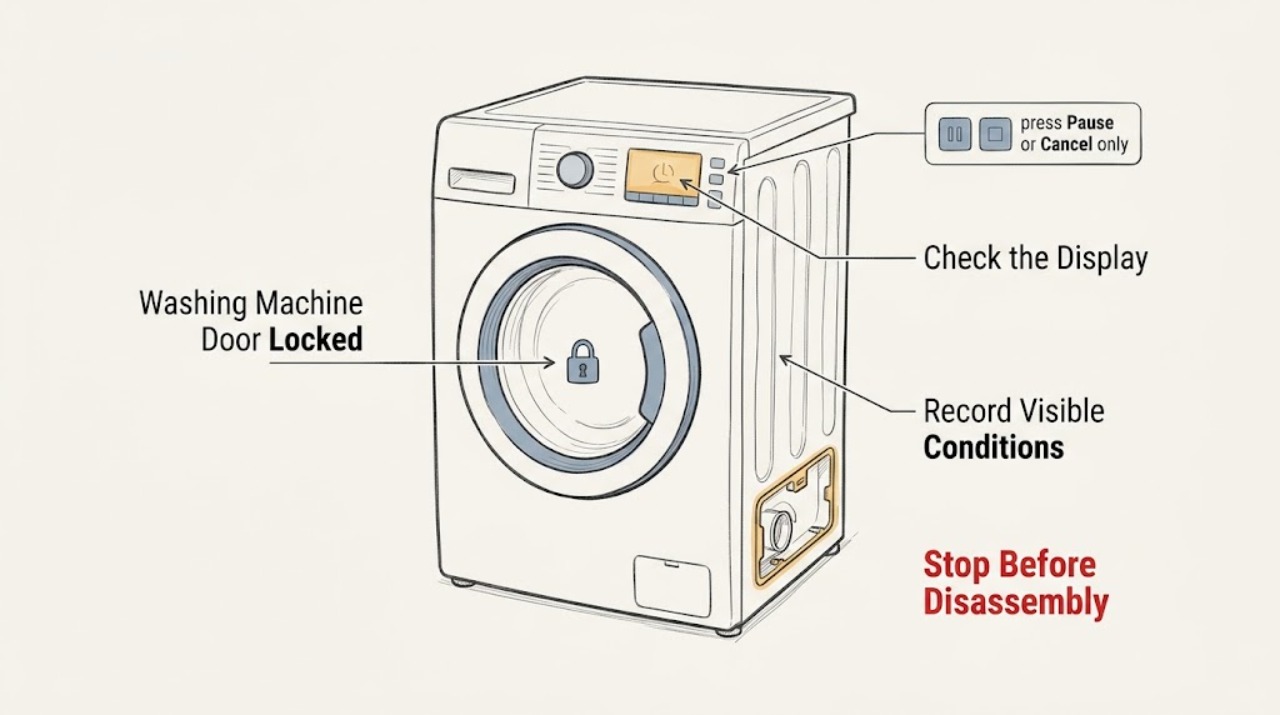
A KitchenAid washer may keep its door locked while water remains in the tub, the water is too hot, the drum is still spinning, or a model-specific option is tumbling the load. Do not pull, pry, or bypass the lock. First note the model and display, press Pause or Cancel as the exact manual directs, and allow the washer to stop and drain. If water remains and the controls respond, use the model-approved Drain & Spin or drain routine, placing a container for residual water if the manual requires access to a hose or filter. Check for a control lock, Fresh Hold or TumbleFresh-type option, and visible clothing or soap buildup around the latch. A single model-appropriate power reset is reasonable only when there is no leak, broken glass, smoke, burning smell, or wet electrical hazard. If the door remains locked after the tub is empty and cool, or the lock, drain, or control fault returns, arrange qualified service.
Work through in order
Diagnostic checks
Use only checks that match the exact appliance or system and its official guide.
-
Check 1
Before pressing release controls, check from outside for active leaking, water near the plug or controls, broken door glass, exposed wiring, smoke, a burning smell, unusual heat, or a machine that is still spinning violently.
Expected result: A leak, wet electrical area, broken glass, smoke, burning smell, exposed wiring, excessive heat, or violent motion is present.
Next step: Stop the cycle if it can be done without touching wet equipment, keep people away, and shut off water and power only from a safe, dry location. Arrange qualified appliance or electrical help; leave a suspected electrical or fire hazard untouched.
Stop if: Do not touch a wet plug or control, pry the door, run another cycle, or bypass the lock.
Why this matters
Why: The immediate risk is water damage, shock, fire, or impact injury; opening the door is not the priority.
-
Check 2
Record the exact KitchenAid model and serial information, washer type, display message or lock light, selected cycle, and whether the door locked during washing, spinning, draining, or after the cycle ended.
Expected result: The model and cycle state are known, or the display and identity cannot be read.
Next step: Use KitchenAid's model lookup and the manual for that exact machine. If identity is incomplete, limit checks to safety and visible observations and provide the model and display record to service.
Why this matters
Why: KitchenAid documentation is model-specific, and a front-load, compact, top-load, or washer-dryer control can use different lock behavior and button sequences.
-
Check 3
If a cycle is active, press Pause or Cancel only as named by the exact manual and wait without pulling the handle while the washer stops tumbling, spins down, cools, and completes any normal drain sequence.
Expected result: The lock light goes out after the cycle stops, or the washer continues to show a lock while spinning, draining, or cooling.
Next step: Wait for the model's safe release state. If the drum stops and the lock remains, continue to the water-level and option checks; do not force the door or reach into the tub.
Why this matters
Why: A locked door during motion, high water level, or high temperature can be normal and may not release immediately after Pause.
-
Check 4
Look through the door for standing water and check whether the controls offer a model-approved Drain, Drain & Spin, or Rinse & Spin routine; use that routine only when there is no leak or electrical hazard and the washer can operate normally.
Expected result: Water remains in the tub, the routine drains it and unlocks the door, or the pump runs without removing water.
Next step: If the manual permits it, let the drain routine finish and catch residual water where directed. If water remains, the pump runs continuously, or the routine fails, stop and arrange service; do not open a filter or hose without following the model's power and water-containment procedure.
Stop if: Do not tip the washer, reach through the door seal, or remove a drain component with power connected or water uncontrolled.
Why this matters
Why: A water level that has not cleared can keep the safety lock engaged. A pump that runs without draining points toward the drain path, pump, hose, or control and is not fixed by pulling the door.
-
Check 5
Check the display and controls for a Control Lock, Fresh Hold, TumbleFresh, or similar hold option, then cancel it only using the exact model's documented control; do not assume a generic three-second key sequence.
Expected result: A control lock or hold option is active, or no such option is shown while the door remains locked.
Next step: Clear the documented option and wait for the normal unlock. If the control remains unresponsive or the lock returns, preserve the display state and request service.
Why this matters
Why: Some options intentionally keep controls or the door unavailable after a cycle, while an unexplained lock after the tub is safe and empty points toward a door-sensing or control fault.
-
Check 6
With the washer empty, stopped, cool, and dry externally, inspect only the visible door seal, latch opening, and door edge for clothing, a foreign object, or soap buildup that prevents normal closure; remove only what is loose and visible.
Expected result: A visible obstruction is removed and the door closes normally, or the latch, hinge, glass, or seal is damaged or misaligned.
Next step: If the door closes normally, run no more than the model-approved release or drain check. If damage or misalignment is present, leave the washer off and arrange service; do not bypass the interlock.
Stop if: Do not slam, pry, wedge, or remove the door or lock assembly as a user workaround.
Why this matters
Why: A physical obstruction can prevent the lock from engaging or releasing. Damage or a misaligned lock assembly is a service condition, not a reason to apply force.
-
Check 7
If there is no leak, wet electrical area, broken glass, or active motion, perform one power reset exactly as the model manual directs, then wait for the control to initialize before trying the documented drain or unlock sequence.
Expected result: The lock clears after the reset, or the door remains locked, the control is unresponsive, or the same condition returns.
Next step: If the door remains locked after the safe reset and the tub is empty and cool, stop user troubleshooting and arrange qualified service with the model, serial, display, cycle stage, water level, and actions already tried.
Stop if: Do not repeat resets, operate the washer with the interlock defeated, or dismantle the cabinet to release the door.
Why this matters
Why: A single reset can clear a transient control state. A recurring lock with an empty, cool tub suggests a door-lock, drain, sensor, or control fault.
Use your observations
Decision map
Find the observation that best matches what you see, then follow the next safe action.
-
PATH 01Next step
What you see
Water is near electrical parts, there is a leak, broken glass, smoke, burning smell, exposed wiring, excessive heat, or violent motion
Do this next
Stop safely from a dry location, keep clear, and arrange qualified appliance or electrical help. Never touch wet energized equipment or force the door.
-
PATH 02Next step
What you see
The washer is still tumbling, spinning, draining, or cooling after Pause or Cancel
Do this next
Wait for the normal safe stop and release state; do not pull the handle or reach into the drum.
-
PATH 03Next step
What you see
Water remains in the tub after the cycle
Do this next
Use the exact model's Drain or Drain & Spin routine if safe. If it cannot drain, stop and arrange service rather than opening the lock.
-
PATH 04Next step
What you see
Control Lock or a Fresh Hold/TumbleFresh-type option is active
Do this next
Cancel it with the exact manual's control sequence and wait for the documented release; do not guess a sequence from another model.
-
PATH 05Next step
What you see
A visible obstruction prevents the door from closing or the latch is damaged
Do this next
Remove only a loose visible obstruction. Stop for damaged glass, hinge, seal, or latch and arrange service without bypassing the interlock.
-
PATH 06Next step
What you see
The tub is empty and cool but the door remains locked after the one model-approved reset
Do this next
Stop troubleshooting and request qualified service for the door lock, drain, sensor, or control fault; provide the full model, serial, display, and cycle history.
Helpful context
Understand the symptom
A locked door is often a safety state
The lock protects against opening while water, heat, or drum motion could spill or injure someone. The correct response depends on whether the cycle is active, the tub contains water, the washer is cooling, or an option is continuing to tumble. KitchenAid directs owners to model-number documentation, so button names and release procedures should be confirmed before using them.
Keep water and electrical work separate
Only inspect visible controls, the door opening, and accessible hoses or filters exactly as the manual permits. Stop if water is near a plug or control, the door glass is broken, there is smoke or a burning smell, or the washer leaks continuously. Never defeat the interlock or reach into a moving, hot, or water-filled drum.
Only after diagnosis
Potential parts
- door lock assembly
Only consider this category after the exact model's door, drain, and control observations and qualified testing point to a failed lock assembly; a locked door alone does not prove the lock is defective.
Confirm the full model number and manufacturer fit information before ordering; never bypass the interlock. - drain pump or drain-path component
Only consider this category when water remains and qualified diagnosis confirms a pump or drain-path fault after the model-approved drain checks.
Confirm exact model compatibility and use the manual's water-containment and electrical-isolation procedure. - door gasket or latch strike
Only consider this category if visible damage or qualified testing shows that the seal, strike, or alignment prevents safe locking.
Confirm the exact model and approved replacement information; do not use a damaged door or force alignment. - washer control or water-level sensor
Only consider this category after the tub is safely empty and qualified diagnosis links a recurring lock state to control or level sensing rather than a simple hold option.
These components are model-specific and cabinet-level electrical work should be performed by qualified personnel.
When checks do not resolve it
Need a professional?
Have this ready
- The full KitchenAid model and serial numbers, display or lock light, selected cycle, cycle stage, whether water remains, whether the drum is hot or moving, active hold or control-lock indication, drain result, and the single reset or manual step already attempted.
Common questions
FAQ
Why is my KitchenAid washer door still locked after the cycle?
The tub may still contain water, be too hot, or be completing a normal stop, drain, or hold option. Wait for the safe state, use the exact model's Drain or Drain & Spin routine if appropriate, and never pry the door.
Can I reset a KitchenAid washer with a locked door?
Only perform one model-approved power reset when the washer is stopped, cool, dry externally, and free of leaks or electrical hazards. If the door remains locked after the tub is empty and cool, arrange service rather than repeating resets or bypassing the interlock.
What if there is water inside the washer and the door will not open?
Use the exact model's documented drain routine if the controls respond and there is no hazard. If it cannot drain, the pump runs without removing water, or water is near electrical parts, stop and request qualified service; do not open the door by force.
Read the exact guide
Official sources
- Owner's ManualKitchenAid · Model-specific manual evidence: its troubleshooting table covers a door-lock code, drain-pump error, and checking the drain path; do not generalize its code meanings to another model.
- CPSC Urges Flood Victims to Take Steps to Prevent CO Poisoning, Electrocution, Explosion and FiresU.S. Consumer Product Safety Commission · General safety guidance: do not touch wet plugged-in equipment and obtain professional evaluation before reuse.
- Door will not unlock - Front Load WasherWhirlpool Product Help · Official manufacturer-family guidance only; confirm the exact KitchenAid model manual before applying control names or timings.
- Product LookupKitchenAid Product Help · Official KitchenAid lookup tool for locating manuals and product resources by model number.
- Kitchen Appliance Manuals | KitchenAidKitchenAid · Official KitchenAid manuals page; use the full model number to obtain the applicable washer manual.
Community feedback
Share a repair observation
Share a plain-text repair observation. Accepted observations are published automatically; this page may take a moment to update.