
On this page
Start here
Quick answer
First separate poor cleaning from a dishwasher that never starts or never circulates water. If the cycle runs but dishes remain dirty, LG points to large food scraps, overlapping or incorrectly oriented dishes, blocked spray nozzles, a dirty filter, unsuitable detergent or a cycle that does not match the soil level. Scrape or pre-rinse heavy soil, load dishes so water can reach them and spray arms can rotate, use the detergent type and amount in the model manual, and clean the filter and spray arms with non-abrasive tools. LG also recommends running hot water at the sink before starting so the dishwasher receives warmer inlet water. If the unit will not start, has no water circulation, leaks, leaves standing water or still cleans poorly after the documented checks, stop repeated cycles and arrange LG or qualified service rather than guessing a pump, heater or control part.
Before you begin
Safety first
- Limit owner checks to loading, detergent selection, hot-water preparation, and model-documented filter, spray-arm and machine-clean maintenance with the dishwasher off. Do not open the cabinet, bypass the door latch, change wiring or water-valve settings, or replace a pump, heater, inlet valve or control from poor washing alone.
Work through in order
Diagnostic checks
Use only checks that match the exact appliance or system and its official guide.
-
Check 1
Record whether the LG dishwasher starts, fills, circulates water, completes the cycle and leaves dirty dishes, standing water or an error display.
Expected result: The cycle runs but cleaning is poor, or the dishwasher does not start, circulate, drain or complete.
Next step: Use the cleaning-performance branch only when the cycle runs; stop repeated trials and arrange service for a no-start, no-circulation, leak, error or standing-water condition.
Why this matters
Why: Poor cleaning has an owner-level loading, spray, filter, detergent and water path; no-start or no-circulation symptoms need a model-specific service path.
-
Check 2
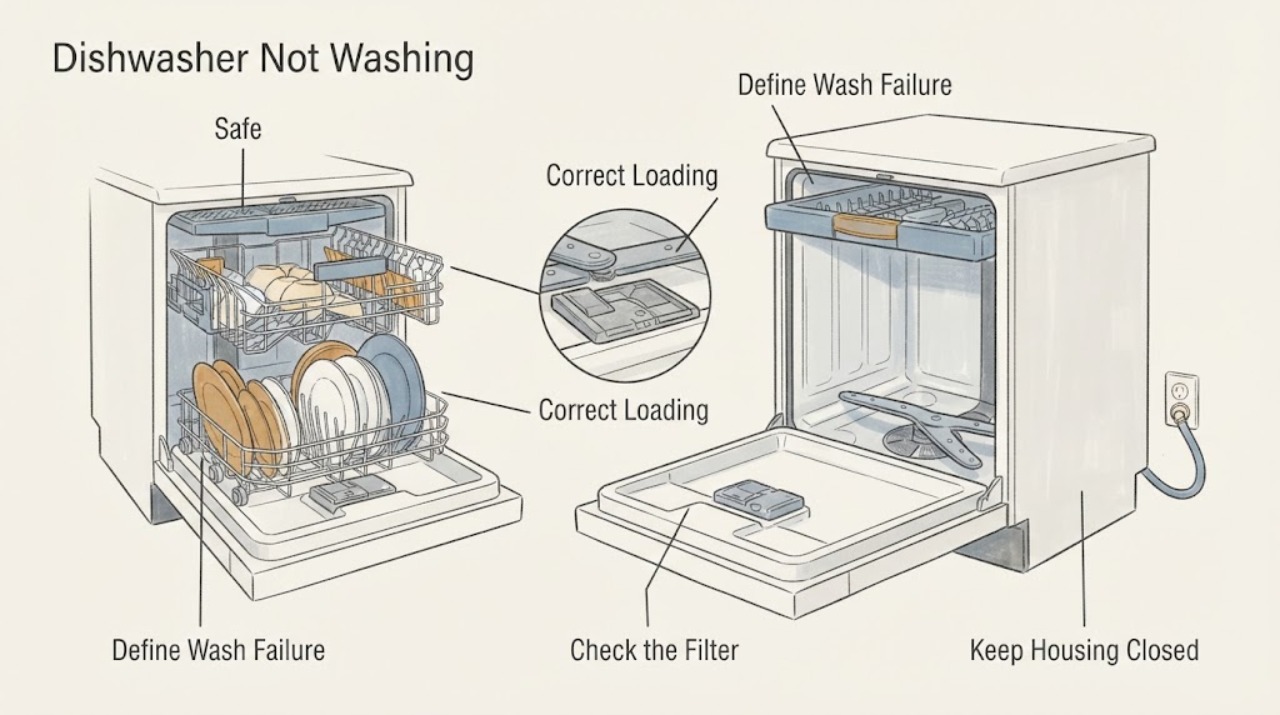
Scrape large scraps, pre-rinse baked-on soil as needed, stand plates upright, turn bowls and pots toward the spray, avoid overlap and keep dishes away from spray arms and the detergent lid.
Expected result: Dishes overlap, curved surfaces face up, a tall item touches a spray arm or heavy soil was loaded without pre-cleaning.
Next step: Reload the dishwasher for clear water access and use a cycle matched to the soil; if a correctly loaded load remains dirty, continue to filter and spray checks.
Why this matters
Why: LG identifies inaccessible soil, incorrect orientation, overlap and blocked spray-arm circulation as common causes of poor washing.
-
Check 3
With the dishwasher off, follow the exact model manual to remove the filter, rinse it with warm running water and clean it with a soft brush or sponge; reinstall it in the correct orientation.
Expected result: Food debris or mineral soil is present, or the filter is clean and correctly seated.
Next step: Run the next appropriate cycle only after correct reassembly; arrange service if poor washing or standing water persists.
Why this matters
Why: LG says filter buildup can reduce performance and improper assembly can affect wash results; a clean filter does not prove a failed pump.
-
Check 4
Inspect the spray arms and their water-jet holes for food residue, and clean or remove them only as the model manual permits; refit them so they rotate freely.
Expected result: Nozzles are blocked and clear after cleaning, or an arm is damaged, loose or cannot be refitted safely.
Next step: Run a cycle only after secure reassembly; use LG or qualified service for a damaged arm or continuing no-circulation symptom.
Why this matters
Why: LG says blocked spray holes can prevent proper water spray; damage or an inaccessible arm is outside routine cleaning.
-
Check 5
Use the detergent type and amount specified in the owner's manual, never kitchen sink dish soap, and run hot sink water briefly before starting the dishwasher.
Expected result: The wrong detergent, excessive suds, a damp or blocked dispenser, or cold incoming water is present.
Next step: Correct the detergent and supply conditions without changing internal settings; stop for suds or a leak and arrange service if the problem persists.
Why this matters
Why: LG links detergent choice and incoming water temperature with cleaning performance and warns that hand dish soap can create suds and leaks.
-
Check 6
Give LG support or a qualified servicer the model number, cycle, whether the tub filled and sprayed, filter/spray findings, detergent used, error display and any leak or standing water.
Expected result: The unit will not start or circulate, an error or leak appears, or cleaning remains poor after the documented external checks.
Next step: Keep the dishwasher off for leaks, electrical symptoms or standing water and arrange model-matched service; do not open the cabinet or bypass the latch.
Why this matters
Why: The public LG guidance supports maintenance and operating checks but does not identify a failed circulation pump, heater, inlet valve or control from “not washing” alone.
Use your observations
Decision map
Find the observation that best matches what you see, then follow the next safe action.
-
PATH 01Next step
What you see
The cycle runs, but dishes overlap, face the wrong direction, contain heavy baked-on soil or touch a spray arm.
Do this next
Scrape or pre-rinse as appropriate, reload with clear spray-arm movement and choose a cycle matched to the soil.
Why this path and its safety boundary
Why it matters: LG identifies poor water access and loading as common causes of dirty dishes.
-
PATH 02Next step
What you see
Food or mineral debris is present in the filter or spray-arm holes, and those parts can be safely removed and refitted by the model instructions.
Do this next
Clean with warm water and non-abrasive tools, reinstall correctly and reassess the next cycle.
Why this path and its safety boundary
Why it matters: Buildup can reduce cleaning performance and block water spray; this is a maintenance finding rather than proof of an internal part failure.
-
PATH 03Next step
What you see
Kitchen sink dish soap was used, the dispenser is blocked or damp, or incoming water is not warmed before the cycle.
Do this next
Use the manual-specified dishwasher detergent, correct the dispenser condition and run hot sink water briefly before starting; stop for suds or leaks.
Why this path and its safety boundary
Why it matters: LG links detergent choice and water temperature with washing performance and warns that hand dish soap can create suds and leaks.
-
PATH 04Next step
What you see
The dishwasher will not start or circulate, shows an error, leaks, leaves standing water or remains dirty after loading, filter, spray and detergent checks.
Do this next
Keep the dishwasher off as appropriate and arrange LG or qualified service with the model and observed cycle behavior; do not open the cabinet or bypass the latch.
Why this path and its safety boundary
Why it matters: The issue is outside the supported owner-level cleaning path, and the symptom does not establish which internal component is at fault.
-
PATH 05Next step
What you see
Suds fill the tub or a leak appears after an incorrect detergent or loading condition.
Do this next
Stop the cycle, keep power and water conditions safe, clean only as the model guidance permits and arrange service for a continuing leak; do not run repeated cycles to clear it.
Why this path and its safety boundary
Why it matters: LG warns that kitchen sink dish soap can create suds and cause the unit to leak, while utensils caught in the door can cause leaks or performance issues.
Helpful context
Understand the symptom
Define what not washing means
Note whether the dishwasher starts and fills, whether you hear or see normal spray circulation, and whether the result is dirty dishes, a dry tub, standing water or a cycle that stops. “Not washing” can describe poor cleaning or a no-start/no-circulation fault, and LG's public guidance supports different checks for those situations.
Load for water access
Scrape large food scraps and pre-rinse baked-on residue as the model guidance requires. Stand plates upright, place bowls and pots so their dirty surfaces face the spray, avoid overlapping dishes and keep tall items away from the spray arms and detergent dispenser. LG says blocked spray-arm movement prevents water from circulating properly.
Clean the filter and spray nozzles
With the dishwasher off, remove and clean the filter only as the exact model manual shows. LG supports warm running water and a soft brush or sponge, warns against steel wool or abrasive brushes, and says food residue blocking spray nozzles should be removed with the model-appropriate method. Reassemble the filter correctly before another cycle.
Check detergent and incoming water
Use the detergent type and amount specified in the owner's manual; LG warns never to use kitchen sink dish soap because suds can fill the dishwasher and cause a leak. Before starting, run hot water at the sink briefly so the dishwasher receives warmer water. Do not change wiring, water valves or heater settings based on dirty dishes alone.
Use a model-matched cleaning cycle
If residue or odor is present inside the tub, use the machine-clean or tub-clean procedure in the exact LG manual and cleaner instructions, with no dishes. LG's standard maintenance page shows that controls vary by product, so do not copy a button sequence from another model. A cleaning cycle can address buildup; it does not diagnose a circulation pump or heater.
Escalate a no-start or persistent wash failure
Keep the dishwasher off and arrange LG or qualified service if it will not start, fills but never circulates, leaks, leaves standing water, shows an error, makes an abnormal sound or still leaves dishes dirty after the documented loading, filter, spray-arm, detergent and water checks. Do not open the cabinet, bypass the door latch or replace a pump, heater or control from the symptom alone.
When checks do not resolve it
Need a professional?
Use LG support or qualified service for no-start or no-circulation symptoms, recurring errors, leaks, standing water, damaged spray arms or persistent poor cleaning after the documented checks.
Safety scope: Limit owner checks to loading, detergent selection, hot-water preparation, and model-documented filter, spray-arm and machine-clean maintenance with the dishwasher off. Do not open the cabinet, bypass the door latch, change wiring or water-valve settings, or replace a pump, heater, inlet valve or control from poor washing alone.
Common questions
FAQ
Why is my LG dishwasher running but not washing dishes clean?
LG points first to food scraps, loading, blocked spray arms, filter buildup, detergent choice and cycle selection. Correct those externally documented conditions before assuming a pump or heater has failed.
Can a dirty LG dishwasher filter stop it from washing properly?
A dirty or incorrectly assembled filter can reduce wash performance. LG says to clean it with warm running water and a soft brush or sponge, avoid abrasive tools and reinstall it correctly; persistent poor washing needs service rather than a guessed part.
Can I use regular dish soap in an LG dishwasher?
No. LG says never to use kitchen sink dish soap because it can create suds, fill the dishwasher and cause a leak. Follow the owner's manual for the correct dishwasher detergent and amount.
When should I stop troubleshooting an LG dishwasher that is not washing?
Stop for no-start or no-circulation behavior, errors, leaks, standing water, damaged parts or persistent poor cleaning after the documented external checks. Arrange LG or qualified service instead of opening the cabinet or bypassing the latch.
Read the exact guide
Official sources
- Why Your LG Dishwasher Isn't Cleaning Dishes Well and How to Fix ItLG USA Support · Direct LG cleaning-performance guidance; used for food soil, loading, spray-arm clearance, detergent and model-dependent cleaning-cycle advice.
- LG Dishwasher - MaintenanceLG USA Support · Direct LG maintenance guidance; used for filter, spray-nozzle, loading, hot-water and model-dependent machine-clean steps.
- LG Dishwashers – How to Clean Your Dishwasher FilterLG USA Support · Direct LG filter-cleaning guidance; used for safe filter access, non-abrasive cleaning and correct reassembly.
- LG Dishwasher – Using Detergent and AdditivesLG USA Support · Direct LG detergent guidance; used for manual-matched detergent and the prohibition on kitchen sink dish soap.
Community feedback
Share a repair observation
Share a plain-text repair observation. Accepted observations are published automatically; this page may take a moment to update.