
On this page
Start here
Quick answer
A portable air conditioner with a bad smell usually needs moisture and filter management before it needs a part. Ventilate, run a cooling and drying cycle as the model allows, then clean and completely dry the washable filter. Do not spray cleaner or air freshener into the unit. A burning or chemical odor that persists, visible mold deep inside, or a water leak needs service.
Work through in order
Diagnostic checks
Use only checks that match the exact appliance or system and its official guide.
-
Check 1
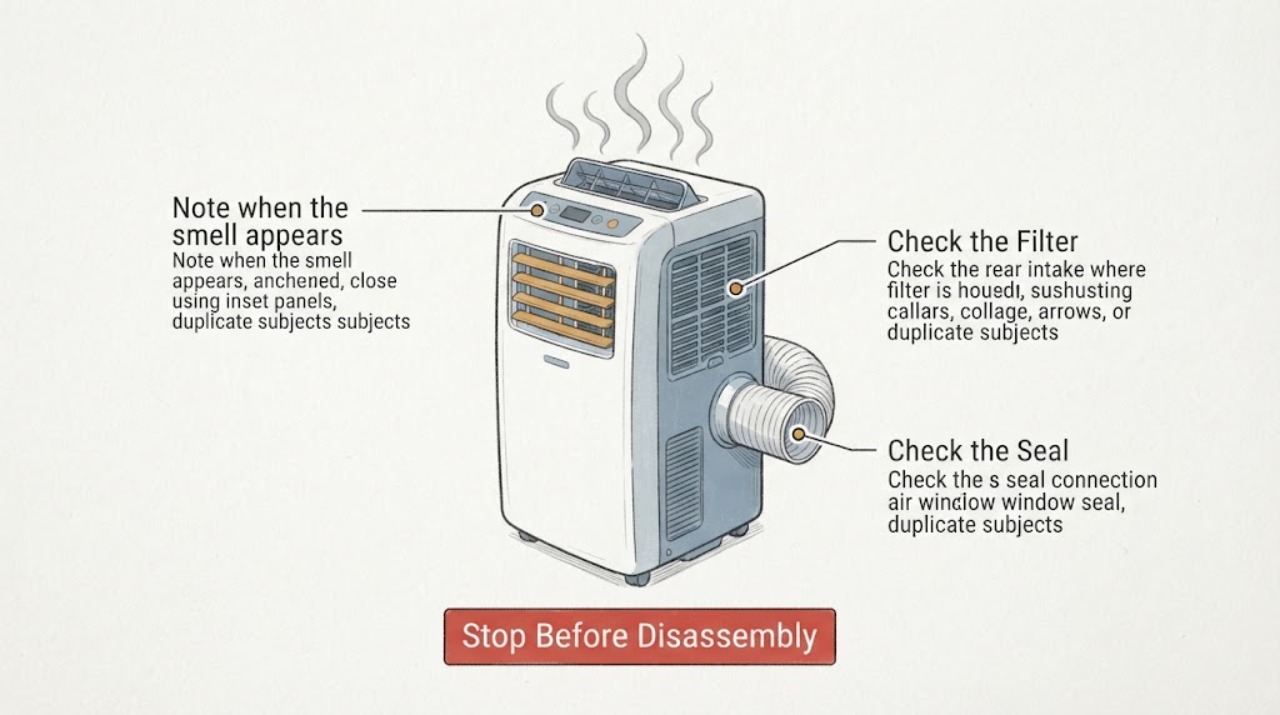
Note when the smell appears: during cooling, during fan-only operation, after shutdown, or immediately when a burning odor begins. Stop the unit and ventilate the room if the smell is acrid, electrical, or accompanied by smoke.
Expected result: The odor is strongest in fan mode or after cooling, or it is burning/electrical and persistent.
Next step: Use the cleaning sequence only for a normal musty odor; isolate power and seek service for burning or electrical odor.
Why this matters
Why: Fan-mode odor is consistent with retained moisture and particles becoming airborne; a burning or electrical odor may indicate an unsafe component or wiring condition.
-
Check 2
Turn the portable unit off and unplug it before removing the accessible filter. Inspect for dust, dampness, or visible mold, and wash only a washable filter with the model-approved method.
Expected result: The filter is dirty or damp, or it is clean and fully dry.
Next step: Dry the filter completely in a shaded ventilated place and reinstall it only when dry; do not wet a non-washable filter.
Why this matters
Why: Dust and moisture at the filter can carry odor into the room. A clean filter with persistent odor points toward the drain path or deeper heat exchanger.
-
Check 3
After cleaning, run cooling with outdoor ventilation as the model permits, then use fan or auto-dry to dry the interior. Check the visible condensate drain and hose for a kink or leak without opening sealed refrigeration parts.
Expected result: The odor decreases after drying and condensate drains normally, or the smell and moisture remain.
Next step: Stop if water leaks, the hose is damaged, or the odor persists after the documented cleaning cycle.
Why this matters
Why: Improvement after drying supports retained condensate as the source. Persistent odor, standing water, or deep contamination may require professional cleaning or drain repair.
Use your observations
Decision map
Find the observation that best matches what you see, then follow the next safe action.
-
PATH 01Next step
What you see
The odor is musty and strongest in fan mode, then improves after cooling, filter cleaning, and drying
Do this next
Keep the filter dry and use the model’s auto-dry or post-cooling fan routine.
Why this path and its safety boundary
Why it matters: Retained moisture and odor particles are the most likely cause.
-
PATH 02Next step
What you see
The filter is clean but water remains or odor persists deep inside
Do this next
Do not spray into the unit or disassemble it; arrange qualified service.
Why this path and its safety boundary
Why it matters: The drain path or heat exchanger may need service-level cleaning.
-
PATH 03Next step
What you see
The smell is burning, electrical, or accompanied by smoke
Do this next
Stop, unplug if safe, ventilate, and seek appliance or electrical service.
Why this path and its safety boundary
Why it matters: This is a safety symptom rather than ordinary moisture odor.
Helpful context
Understand the symptom
Portable units can retain condensate and dust around the filter and heat exchanger. A smell that is strongest in fan mode points toward retained moisture and odor particles; a burning smell or odor with smoke is a different safety problem.
Filter access and cleaning temperatures vary by model. Keep water away from controls and reinstall a filter only after it is completely dry.
When checks do not resolve it
Need a professional?
If the safe external checks do not restore normal operation, arrange qualified appliance service using the complete model information.
Common questions
FAQ
Can I spray disinfectant into the portable air conditioner?
No. LG specifically warns against spraying cleaners or air fresheners directly inside. Use the model’s filter and drying procedure instead.
Why does the smell get worse in fan mode?
Fan mode may circulate odor particles without creating condensation to wash them toward the drain. Drying and cleaning the accessible filter can reduce this pattern.
Read the exact guide
Official sources
- Why does my air conditioner smell in fan mode and how can I fix it?LG USA Support · portable air conditioner odor troubleshooting
Community feedback
Share a repair observation
Share a plain-text repair observation. Accepted observations are published automatically; this page may take a moment to update.