
On this page
Start here
Quick answer
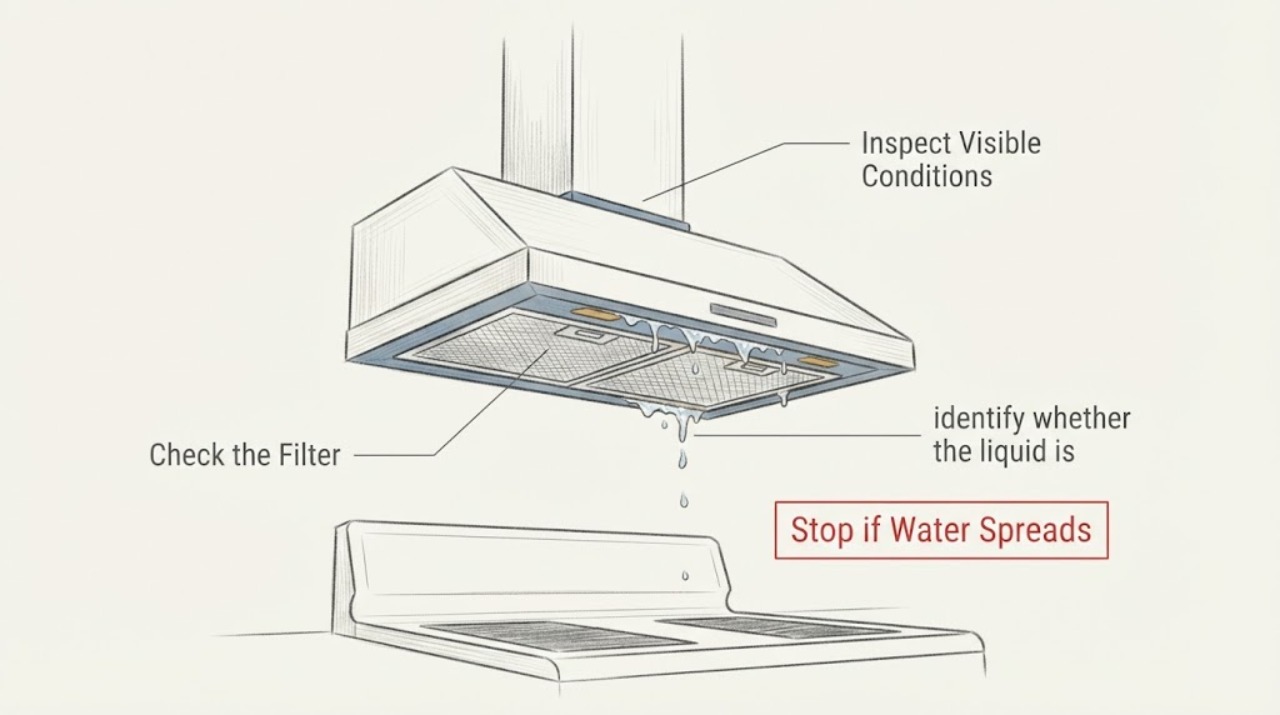
A range hood that drips should first be classified as water condensation or grease, then checked for filter condition, recirculation/ducting, and steam capture. Turn the hood off and isolate power before cleaning accessible filters. Cover pots, lower heat, use the hood before and during cooking, and arrange service for water inside the housing, electrical damage, an external roof/wall leak, or a leak that persists with normal ventilation.
Work through in order
Diagnostic checks
Use only checks that match the exact appliance or system and its official guide.
-
Check 1
With cooking stopped, identify whether the liquid is clear water, greasy residue, or dirty water, and note whether it appears only during cooking, after cooling, or during rain.
Expected result: Clear droplets follow steam, grease accumulates at filters, or water appears during rain/without cooking.
Next step: Keep the hood off and arrange building/qualified service when water reaches wiring or the pattern is not tied to cooking.
Stop if: Stop for sparks, burning odor, wet switches, or water entering electrical parts.
Why this matters
Why: Steam timing supports condensation; greasy liquid points to filter/cleaning; rain or no-cooking water raises duct/roof/building leak concerns.
-
Check 2
After power is isolated, remove only the accessible grease filters and check whether they are saturated, damaged, or incorrectly seated; clean according to the manual.
Expected result: Filters are saturated or clear, and the hood is recirculating or externally ducted.
Next step: Refit clean filters and use the correct recirculation/duct configuration; do not remove the blower housing.
Stop if: Do not clean energized parts or use flammable solvent.
Why this matters
Why: Restricted or poorly maintained filters reduce capture and can increase condensation; duct configuration determines where moisture goes.
-
Check 3
During one supervised cooking session, cover pots, reduce excess boil, and run the hood before and during cooking; observe whether droplets return.
Expected result: Dripping reduces when steam is captured, or returns despite normal capture.
Next step: Follow the exact installation guidance for duct route and outlet; have persistent leakage inspected.
Stop if: Do not access a roof/wall duct or alter electrical wiring yourself.
Why this matters
Why: Improvement supports condensation and capture conditions; persistence suggests ducting, insulation, installation, or internal service.
-
Check 4
Inspect only visible external duct joints and the ceiling/wall around the hood for staining, disconnected sections, or rain entry.
Expected result: A visible external/building leak exists, or the area is dry and the housing still leaks.
Next step: Keep the hood off until the source is corrected and surfaces are dry; document timing and photos for service.
Stop if: Stop if the ceiling is wet, sagging, or electrical parts are exposed.
Why this matters
Why: External moisture requires building/duct repair; dry surroundings with internal water needs hood service diagnosis.
Use your observations
Decision map
Find the observation that best matches what you see, then follow the next safe action.
-
PATH 01Next step
What you see
Drips are clear and appear after steam or induction cooking, then stop when capture improves.
Do this next
Improve pot coverage, hood timing, filters, and approved duct/recirculation setup; service if it persists.
Why this path and its safety boundary
Why it matters: Condensation is the leading explanation.
-
PATH 02Next step
What you see
Liquid is greasy and filters are saturated.
Do this next
Isolate power, clean/refit accessible filters, and arrange service if airflow remains poor.
Why this path and its safety boundary
Why it matters: Grease loading and restricted filtration are more likely.
-
PATH 03Next step
What you see
Water appears during rain or when no cooking occurs.
Do this next
Keep the hood off and have the building/duct route inspected.
Why this path and its safety boundary
Why it matters: Duct, roof, wall, or external condensation intrusion is possible.
-
PATH 04Next step
What you see
Water reaches switches, wiring, or the motor housing.
Do this next
Disconnect power if safe and seek qualified service; do not operate until dry and repaired.
Why this path and its safety boundary
Why it matters: The leak is an electrical safety issue.
Helpful context
Understand the symptom
What to check first
Electrolux describes dripping as commonly caused by steam condensing on a cold hood, especially when moisture is not exhausted effectively. A range hood can also collect grease or receive water from ducting or the building envelope, so the liquid type and timing matter. Do not treat a ceiling or wall leak as a hood-only repair.
When checks do not resolve it
Need a professional?
Arrange qualified appliance or electrical service when the safe external checks do not resolve the symptom. Provide the exact model and what you observed; do not open sealed, gas, high-voltage, or refrigerant systems yourself.
Common questions
FAQ
Why does my hood drip after cooking?
Steam can condense on a cold hood or duct, especially when moisture capture/exhaust is poor. Improve capture and filters, then service persistent dripping.
Should I wash the whole hood?
Only clean accessible filters and surfaces as the exact manual allows, with power isolated. Do not spray into the motor or controls.
Could rain be entering the hood?
Yes, if water appears without cooking or during rain. The duct termination, roof, or wall may need qualified inspection.
Read the exact guide
Official sources
- The cooker hood is dripping waterElectrolux · Electrolux cooker/range hoods
Community feedback
Share a repair observation
Share a plain-text repair observation. Accepted observations are published automatically; this page may take a moment to update.