
On this page
Start here
Quick answer
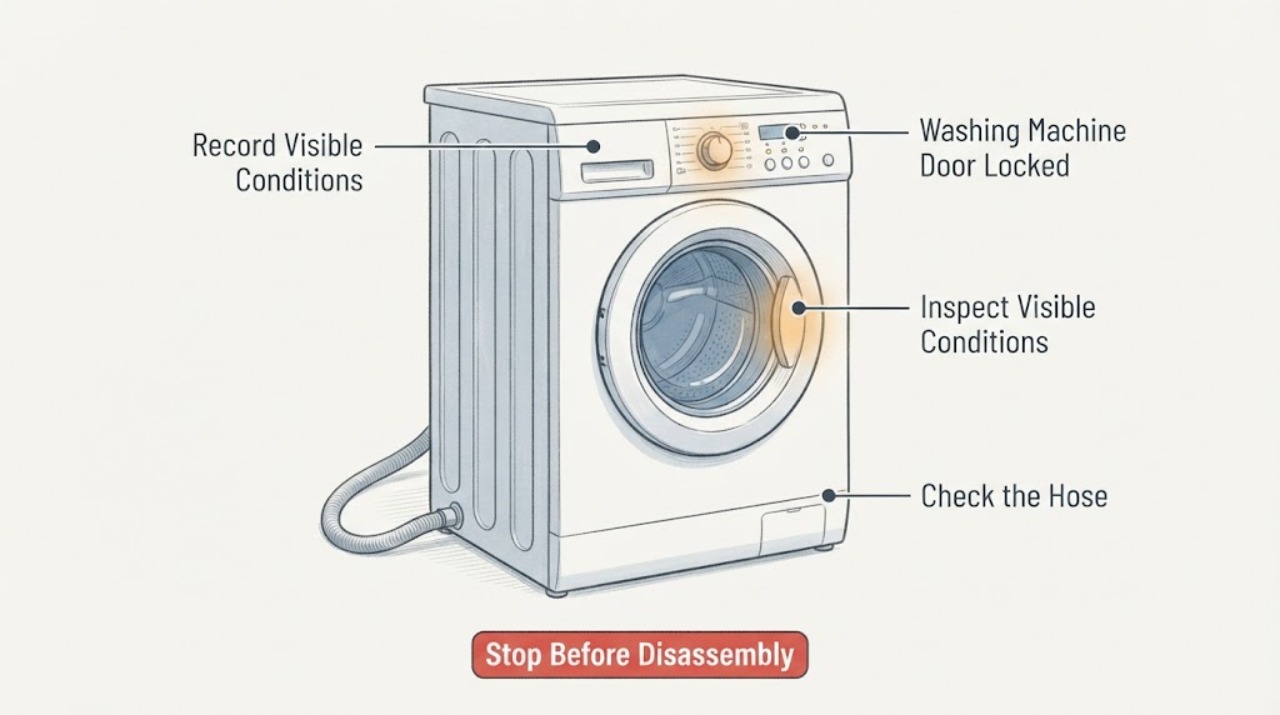
A Russell Hobbs washing-machine door can stay locked normally while the drum is moving, the water is hot, or water remains in the tub. Do not pull the handle. Record the exact model and display, wait for the drum to stop, and use only the model manual's cancel or drain procedure. Then check for visible water, a blocked drain path, a child or control lock, and an accessible obstruction at the seal or latch. A single model-approved power reset may clear a control interruption, but it cannot make an unsafe door safe. Stop for hot water, a leak near electrics, smoke, a burning smell, arcing, repeated tripping, a damaged latch, or a door that remains locked after the machine is cool and drained; arrange qualified service.
Work through in order
Diagnostic checks
Use only checks that match the exact appliance or system and its official guide.
-
Check 1
Record the complete Russell Hobbs model number, cycle or phase, displayed code or symbol, lock or key indicator, and whether the drum is moving, the water is visibly hot, or water is visible through the door.
Expected result: The drum is moving, the cycle is still active, the water is hot or visible, a padlock or key symbol is lit, or a code is present; alternatively the machine is cool, stopped, and apparently empty.
Next step: Keep the door closed and use the matching branch below. Find the exact Russell Hobbs manual before using any release, drain, or button sequence.
Why this matters
Why: An active movement, heat, or water condition can be a normal safety lock. A padlock points to a model-specific control-lock path, while a cool, stopped, empty machine with a persistent lock needs a different diagnosis.
-
Check 2
If the drum has stopped and the machine is safe to approach, press the model-documented pause or cancel control once and observe without pulling the handle. Wait for the lock click and for any normal drain or cool-down behavior to finish.
Expected result: The lock clears after the documented cancel or pause action, the pump drains and the lock remains until draining finishes, or there is no response and the machine remains locked.
Next step: Do not repeat controls rapidly. If water remains, continue with the model-approved drain path; if the machine is empty and unresponsive, check the control-lock indicator and then use one documented reset if permitted.
Why this matters
Why: A normal delay can reflect movement, temperature, or water level. Continued locking with water present points to the drain path; no response points to a control-lock, control, or interlock branch.
-
Check 3
With the machine off, cool, and safe, inspect only the visible drain hose route and the accessible household drain for kinks, a displaced hose, backup, or water escaping. Do not tilt the washer, open a pump filter over hot water, or reach into a wet cabinet.
Expected result: Water is present, the hose is visibly kinked or displaced, the household drain is backing up, the pump runs without removing water, or the visible route is clear and the tub is empty.
Next step: Correct only a plainly visible hose position or external drain obstruction when the model instructions permit it. If water remains, do not force the door; arrange service if the approved drain procedure does not complete.
Why this matters
Why: Retained water can keep a safety interlock engaged. A visible hose or drain problem is a low-risk installation clue; a clear route with no drainage suggests a pump, filter, sensor, or control issue that should follow the exact manual or service path.
-
Check 4
From outside, inspect the door seal, latch opening, and door edge for a trapped garment, visible debris, soap buildup, a torn seal, a bent catch, or a door that is visibly misaligned. Remove only a cool, loose obstruction that does not require force.
Expected result: A garment or debris blocks the latch, the seal is damaged or displaced, the catch or frame looks bent, or the visible door path is clear and even.
Next step: After a single gentle closure, use the manual's normal start or lock check only if the machine is empty, cool, and dry. Stop and arrange service for damage, resistance, an uneven door, or a lock that still will not engage.
Why this matters
Why: An accessible obstruction may prevent the lock from sensing a closed door. A damaged seal, catch, frame, or persistent alignment problem is not a force-adjustment problem and can make the lock or water containment unsafe.
-
Check 5
Check the display for a padlock, key, child-lock, or control-lock indication and use only the Russell Hobbs model manual's deactivation instruction. Do not guess a button combination or treat a locked control panel as a broken latch.
Expected result: The indicator clears using the documented method, the controls remain locked, no lock indicator is shown, or an error returns immediately.
Next step: If the documented method does not work, save the exact code and stop experimenting. Continue to the service branch rather than trying random sequences or opening the cabinet.
Why this matters
Why: A control lock can inhibit input without proving that the mechanical door interlock failed. A persistent or returning error after the correct model-specific procedure shifts suspicion toward the control, interlock, or another documented fault.
-
Check 6
Only when the floor and plug area are dry, there is no water near electrics, and no burning or smoke symptom exists, perform one model-permitted power reset using the owner's instructions. Wait through the documented interval, then observe the display and lock without forcing the door.
Expected result: The control recovers and the door releases after the safe drain or cool-down state, the machine remains locked, or the breaker trips or an abnormal smell appears.
Next step: If the lock persists after the single reset and the machine is cool and empty, keep it out of use and arrange qualified service. Do not repeatedly unplug, re-energize, or bypass the lock.
Why this matters
Why: A reset can clear a temporary control interruption but cannot repair a blocked drain, damaged interlock, unsafe wiring, or a hot-water condition. A trip or abnormal smell is a stop condition, not a reason to repeat the reset.
-
Check 7
After an approved correction, verify once that the machine is cool, empty of standing water, the door closes without resistance, the lock indicator responds normally, and the appliance does not leak, smell hot, or trip protection.
Expected result: The door releases and closes normally with no safety symptom, or the lock remains abnormal, water returns, the door leaks, or an electrical or heat symptom appears.
Next step: Stop troubleshooting and give the service professional the model, code, cycle stage, water level, drain observations, lock behavior, and any photos. Do not run another cycle to prove the fault.
Why this matters
Why: A normal unforced release supports a cleared state or temporary control interruption. Any persistent lock, leak, abnormal heat, smell, noise, or electrical event requires diagnosis rather than another test cycle.
Use your observations
Decision map
Find the observation that best matches what you see, then follow the next safe action.
-
PATH 01Next step
What you see
The drum is moving, the cycle is active, the water is hot, or water is visible through the door.
Do this next
Keep the door closed, allow the documented cycle, cool-down, or drain behavior to finish, and follow the exact Russell Hobbs manual. Never pull the handle or insert a tool.
Why this path and its safety boundary
Why it matters: The lock may be performing its normal movement, temperature, or water-level safety function.
-
PATH 02Next step
What you see
The cycle has stopped but water remains, the pump runs without removing water, or the external drain route is visibly kinked or backed up.
Do this next
Use only the model-approved drain procedure and keep the door closed until water is safely gone and cool. Arrange service if the approved procedure does not drain the machine; do not tilt or dismantle it.
Why this path and its safety boundary
Why it matters: A drain or water-level condition can keep the door interlock engaged to limit flooding risk.
-
PATH 03Next step
What you see
A padlock, key, or child-lock indicator is shown and there is no unsafe heat, leak, or electrical symptom.
Do this next
Use the exact model manual to clear the control lock. Do not guess a button sequence; escalate if the indicator will not clear.
Why this path and its safety boundary
Why it matters: A control-lock state may be preventing input rather than indicating a failed door latch.
-
PATH 04Next step
What you see
The machine is cool and apparently empty, the visible seal and latch path is clear, and one documented reset does not release the door.
Do this next
Keep the washer out of use and arrange qualified Russell Hobbs or appliance service with the full model number, display, cycle stage, and observations. Do not open the cabinet or bypass the lock.
Why this path and its safety boundary
Why it matters: An interlock, drain sensor, control, wiring, or another model-specific fault remains possible.
-
PATH 05Next step
What you see
The door or seal is visibly damaged, the door is misaligned, it resists, or the machine leaks at the door.
Do this next
Stop using the washer and arrange model-specific service. Do not bend the catch, pull the seal, force the door, or run a test cycle.
Why this path and its safety boundary
Why it matters: A mechanical or sealing fault can prevent reliable locking or water containment.
Helpful context
Understand the symptom
Identify the machine before trying a release procedure
Russell Hobbs has a model-number manual search, and the correct door and drain instructions vary by model and market. Photograph or write down the full model number, the display or lock symbol, the cycle stage, and whether the machine is a front-load or another configuration. Treat the lock as intentional until the drum has stopped and the water condition is known.
A locked door is often a water or movement decision
During a cycle, the interlock protects against a moving drum and hot or retained water. If the porthole shows water, the machine has stopped before draining, or the pump keeps trying to run, do not open the door. Follow the exact Russell Hobbs manual's drain or cancel path; do not improvise a filter opening or emergency release.
Separate a control lock from a mechanical fault
A padlock or key indicator may be a child or control-lock state rather than a failed latch, but the button combination is model-specific. If the door area is clear, the machine is cool and drained, and the documented control and reset steps do not restore normal behavior, the interlock, wiring, drain system, or control may need qualified diagnosis.
Only after diagnosis
Potential parts
- door interlock or lock assembly
Consider only after model-specific diagnosis confirms that the interlock is not sensing or opening correctly after water, obstruction, control-lock, and reset causes are excluded.
Lock assemblies are model- and revision-specific safety parts; confirm the complete model and the manufacturer's fit information before ordering. - drain pump or drain-path component
Consider only when the approved drain procedure and safe external checks confirm a persistent drainage fault that is keeping the door locked.
Pump, filter, hose, and sensor arrangements vary by model; do not open or replace a wet component without qualified procedure and exact fit confirmation. - door seal or latch hardware
Consider only when inspection confirms visible seal, catch, or alignment damage that prevents safe closure or water containment.
Seal and latch geometry is model-specific; a damaged door boundary should be serviced rather than forced or reshaped.
When checks do not resolve it
Need a professional?
Arrange qualified service when the door remains locked after the machine is cool and safely drained, the model-approved control or reset path fails, water will not drain, the latch or seal is damaged, the door is misaligned, an error returns, or any leak, smoke, burning smell, arcing, unusual heat, or repeated trip occurs.
Common questions
FAQ
Why is my Russell Hobbs washing machine door locked after the cycle?
The lock may be waiting for the drum to stop, the water to cool, or the tub to drain. Check the display and water level, use the model's cancel or drain instruction, and never force the handle. If it remains locked when cool and empty, arrange qualified service.
Can a child lock keep a Russell Hobbs washer door locked?
A child or control lock can prevent the controls from responding, but its indicator and button sequence vary by model. Identify the full model and follow its manual instead of guessing a sequence or bypassing the door interlock.
Should I unplug the washer to open a locked door?
Only use a power reset if the exact model instructions allow it, the floor and plug area are dry, and there is no leak, burning smell, smoke, arcing, or other hazard. A reset cannot make a hot, water-filled, damaged, or mechanically blocked door safe.
Read the exact guide
Official sources
- How to Reset a WasherWhirlpool Product Help · Manufacturer guidance on a controlled washer power cycle, control-lock checks, and model-manual dependence
- Search User ManualsRussell Hobbs · Russell Hobbs model-number manual lookup and product support
- Front Load Washer Door Will Not OpenWhirlpool Product Help · Manufacturer guidance on movement, hot water, residual water, drain behavior, and safe front-load door unlocking
- Latching a Front Load Washer DoorWhirlpool Product Help · Manufacturer guidance on front-load washer door latching, safe unlocking, drain state, and external obstruction checks
Community feedback
Share a repair observation
Share a plain-text repair observation. Accepted observations are published automatically; this page may take a moment to update.