
On this page
Start here
Quick answer
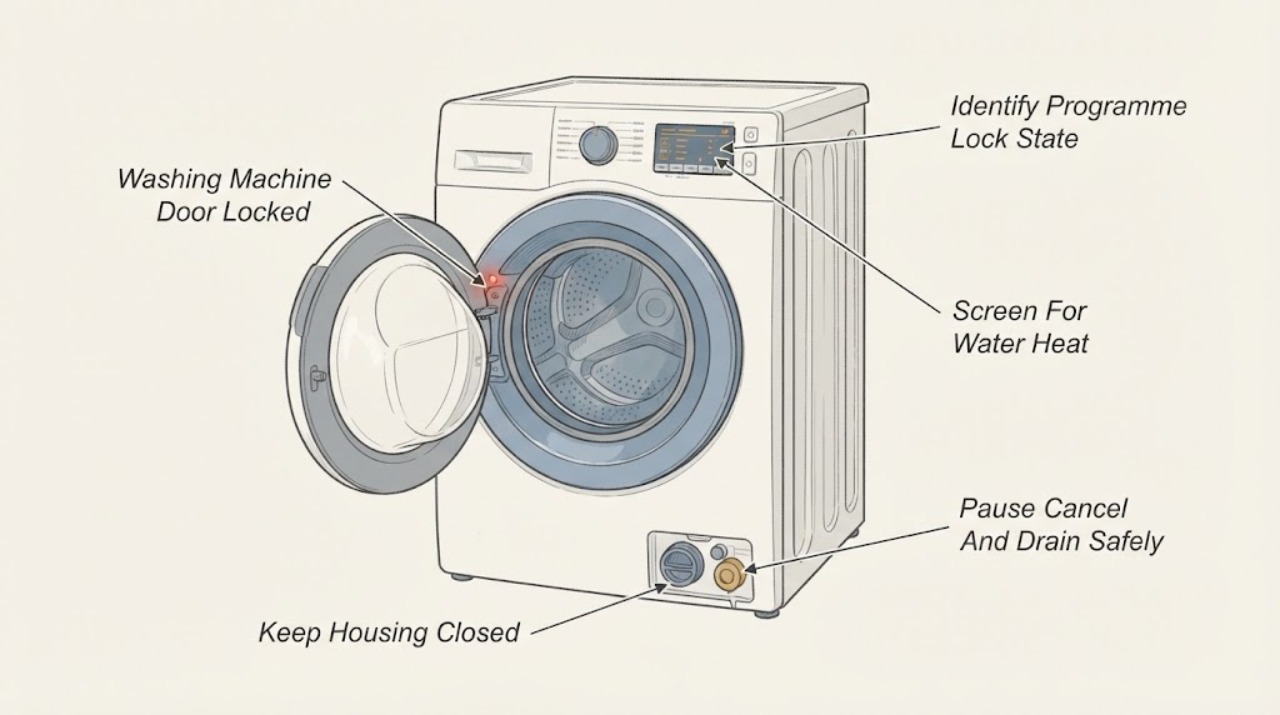
A locked Smeg washing-machine door is often a normal safety state while a programme is running, while the water level is unsuitable, or while the water is still hot. Do not pull or pry the door. Record whether the programme is running, paused, cancelled, complete, or interrupted by a power cut; check the display for a lock, child-lock, delay, temperature, water-level, or error indication. Use the exact model's pause, cancel, drain, or spin procedure and wait for the lock symbol to clear. If water remains, the machine is hot, there is active leaking, the cord or appliance is damaged, or an error returns, stop and isolate water or power only when safe. An emergency release is not universal and should be used only when the exact Smeg manual provides it, the drum is stopped, the appliance is isolated, and residual water and heat are safely managed.
Before you begin
Safety first
- This article supports ordinary-access observation and exact-manual controls only. Do not force or bypass the door lock, open a wet pump area, reach into motion, touch wet electrics, or use an unverified emergency release.
Work through in order
Diagnostic checks
Use only checks that match the exact appliance or system and its official guide.
-
Check 1
Before touching the locked Smeg washer, look from ordinary access for active leaking, water near the plug or electrical connection, a damaged cord, smoke, burning odor, sparks, an unusually hot machine, or a drum that is still moving.
Expected result: Record whether water is pooling, whether the water may be hot, whether the appliance or cord is damaged, and whether smoke, odor, sparks, or motion is present.
Next step: Stop the programme. If safe without touching wet electrics, turn off the water tap and isolate power at the normal disconnect; keep clear and arrange qualified appliance, electrical, plumbing, or emergency help as appropriate.
Stop if: Do not touch wet electrical parts, reach into the drum, force the door, or retry the programme after a hazard sign.
Why this matters
Why: A water, heat, fire, electrical, or moving-drum hazard overrides door access. Opening the door or continuing the programme could cause burns, shock, flooding, or injury.
-
Check 2
Without pulling the handle, record the Smeg model or product code, the lock symbol, the selected programme, and whether the cycle is running, paused, complete, cancelled, or interrupted by a power cut.
Expected result: Note whether the drum is moving, the display shows a step or End state, the lock symbol is steady or flashing, and whether water or a temperature warning is indicated.
Next step: Use the exact Smeg manual for the recorded model and wait for the programme or lock symbol to clear before attempting access.
Stop if: Do not force the door or use tools to defeat the lock.
Why this matters
Why: A steady lock during a cycle can be normal; a flashing or persistent lock can reflect water level, heat, pause, cancellation, or a model-specific fault. The display stage determines whether waiting, draining, or service is appropriate.
-
Check 3
If the exact manual allows it and there is no hazard, press the model's Pause or Start / Pause control once; after a cancellation, use only the documented Pump, Spin, or Drain programme to lower the water level.
Expected result: Record whether the drum stops, the lock symbol changes, water drains, the door becomes ready, or the machine continues to show a high-water or temperature state.
Next step: Wait for the model's unlock indication after a successful drain or cool-down. If water will not drain, the pump warning remains, or the machine is hot or leaking, leave the door closed and call service.
Stop if: Do not open a pump or filter area with water or heat present unless the exact manual makes that procedure safe, and do not reach into a moving drum.
Why this matters
Why: A running or paused programme may release the door only when its safety conditions are met. Water above the opening, hot water, a rinse-hold state, or a blocked drain can keep it locked.
-
Check 4
When the machine is stopped and safe, inspect only the visible door edge and rubber seal for trapped clothing or an obvious obstruction, then use the exact Smeg manual to check Child Lock and normal door closure.
Expected result: Record whether clothing is caught, the door closes without force, the lock indicator clears through the documented control, and the machine accepts a new programme.
Next step: Remove only visibly trapped fabric while the drum is stopped and the door is not under pressure; clear Child Lock only with the matching manual, then try the normal control once.
Stop if: Do not pry, kick, force, or repeatedly slam the door, and do not bypass the door lock or interlock.
Why this matters
Why: Trapped laundry, excessive loading, an active Child Lock, or door alignment can prevent a programme from starting or keep the lock state. A damaged latch, hinge, glass, or seal needs service.
-
Check 5
If a power failure or control freeze is suspected, isolate the appliance only at a dry, safe disconnect and follow the exact model manual; consider an emergency release only when that manual provides one and the drum, water, and temperature are safe.
Expected result: Record whether power returns, the display changes, the door lock symbol clears, residual water is present, and the model manual identifies a release mechanism for this exact appliance.
Next step: Drain and cool only as the exact manual directs, then use its release sequence once. If no model-specific release is documented or the door remains locked, arrange authorised service.
Stop if: Do not insert tools, pull an unknown cable, bypass the lock, or attempt a release with water, heat, leakage, or electrical damage present.
Why this matters
Why: A power interruption can leave a normal safety lock engaged. An emergency release can expose hot water, sharp or moving parts, or a flooded drum if used before the safety conditions are met.
-
Check 6
Compare any complete error or lock message with the exact Smeg manual, then stop troubleshooting if the door remains locked after the documented programme, drain, and cool-down steps, or if the message returns.
Expected result: Provide the exact model or product code, complete error or symbol, programme stage, water and temperature state, power result, Child Lock state, door obstruction result, and any manual-authorized cancellation or drain step attempted.
Next step: Arrange Smeg authorised appliance service and keep the washer unused if the lock is persistent, water remains, the appliance leaks, the cord is damaged, or any electrical or mechanical hazard was observed.
Stop if: Do not operate through a recurring warning, bypass the lock, or repeat a cycle after a leak, hot water, smoke, odor, sparks, or violent movement.
Why this matters
Why: This record lets service separate a normal safety lock from drain, water-level, temperature, door-lock, control, or power faults without asking the user to open the machine.
Use your observations
Decision map
Find the observation that best matches what you see, then follow the next safe action.
-
PATH 01Safety boundary
What you see
Active leaking, water near electrics, hot water, damaged cord, smoke, burning odor, sparks, or drum motion is present.
Do this next
Stop the programme, isolate water and power only when safe without touching wet electrics, keep clear, and arrange qualified or emergency help.
Why this path and its safety boundary
Why it matters: This is outside a safe door-access check.
Safety stop: Do not touch wet electrical parts, reach into motion, or open the door.
-
PATH 02Safety boundary
What you see
The cycle is still running or paused, the drum may move, and there is no hazard sign.
Do this next
Use the model's Pause or cancellation control and wait for the lock symbol to clear; do not pull the door.
Why this path and its safety boundary
Why it matters: The lock is likely performing its normal safety role.
Safety stop: Do not force or defeat the lock.
-
PATH 03Safety boundary
What you see
The display or observations indicate high temperature or water above the safe door level.
Do this next
Allow cooling and use the exact manual's drain or cancellation path; request service if water will not drain or the state persists.
Why this path and its safety boundary
Why it matters: The machine is preventing access to reduce burn or flooding risk.
Safety stop: Do not open the door, filter, or pump area while hot or full.
-
PATH 04Safety boundary
What you see
Child Lock is shown, clothing is caught at the door, or the door will not close normally.
Do this next
Remove only visible trapped fabric with the drum stopped and clear Child Lock using the exact manual; service a damaged latch, hinge, glass, or seal.
Why this path and its safety boundary
Why it matters: A control lock or physical door condition may be preventing a safe programme transition.
Safety stop: Do not pry, slam, or bypass the lock.
-
PATH 05Safety boundary
What you see
The machine lost power during a cycle and the lock remains after power returns.
Do this next
Use the exact manual's dry, safe recovery steps and only its emergency release if all stated conditions are met.
Why this path and its safety boundary
Why it matters: The safety controller may still require a documented cancellation, drain, cool-down, or model-specific recovery.
Safety stop: Do not insert tools or pull an unknown release while water, heat, or damage is present.
-
PATH 06Safety boundary
What you see
The lock remains after the exact manual's safe steps, or an error returns.
Do this next
Keep the appliance off, record the code and E-Nr., and arrange Smeg authorised service.
Why this path and its safety boundary
Why it matters: A drain, water-level, temperature, door-lock, or control fault needs model-specific diagnosis.
Safety stop: Do not operate through the warning or bypass the door interlock.
Helpful context
Understand the symptom
A locked door may be normal during the programme
Smeg says the loading door is locked while a washing or washer-dryer programme is in progress and unlocks after the cycle has finished. The lock also protects against opening when the water level is too high or the water is too hot. Note the programme stage, display symbol, water level, and whether the drum is moving before doing anything else. A lock symbol that is still present is a reason to wait or use the exact model control, not to pull the handle.
Drain and cool before considering access
If a programme was cancelled, interrupted, or left in rinse hold, water can remain above the door opening and keep the lock engaged. Use the matching Smeg manual to select Pump, Spin, Drain, or a cancellation sequence. Do not open a filter or pump area with hot or pressurised water, and do not reach into a moving drum. If the machine is leaking or water is near electricity, stop and arrange service.
Child Lock and power interruption are separate checks
A Child Lock can prevent changes to a running programme, while a power cut can leave the machine in an incomplete state. The unlock control differs by Smeg model, so use the exact manual rather than trying random button combinations. If the door stays locked after the safe programme, temperature, water-level, and lock checks, treat it as a door-lock or control fault.
Emergency release is a last, model-specific procedure
Some Smeg manuals provide an emergency release, but its location and sequence are not universal. It is not a way to bypass an active safety condition. Only consider it when the exact manual says it applies, the appliance is isolated, the drum has stopped, water and heat are safely controlled, and there is no leak or electrical danger. Otherwise, leave the door closed and call qualified service.
Safety boundary
Stop conditions
- Stop for active leaking, water near a plug or electrical connection, hot water, smoke, burning odor, sparks, damaged cord, violent movement, or a moving drum.
- Do not force, pry, slam, or bypass the loading-door lock or interlock; do not reach into a moving drum.
- Do not open a pump or filter area with water or heat present unless the exact model manual makes it safe; arrange service when uncertain.
- Do not insert tools, pull an unknown emergency-release cable, or use a release procedure from another Smeg model.
- Do not repeatedly reset the machine or run a new cycle after a persistent lock, leak, damaged door, or recurring error.
Only after diagnosis
Potential parts
- model-specific door-lock assembly
Consider this category only when the exact model diagnosis confirms a failed lock or door-sensing assembly after water, temperature, programme, and Child Lock states are excluded.
Match the exact Smeg product code and safety circuit through authorised service; never bypass the lock. - model-specific drain pump or filter assembly
Consider only when water remains and qualified diagnosis confirms a pump or drain-path fault rather than a normal rinse-hold or hose condition.
Residual water and electrical safety must be managed according to the exact manual; use authorised service when the pump area is wet or inaccessible. - door seal, hinge, or latch hardware
Consider only if inspection confirms visible damage, misalignment, or a seal obstruction and the exact model procedure supports the repair.
Confirm the exact model and door design; do not force or operate a machine with damaged glass, hinge, latch, or seal.
When checks do not resolve it
Need a professional?
Arrange Smeg authorised service when the door stays locked after the exact model's safe programme, drain, cool-down, Child Lock, and power checks; water will not drain; the lock or error returns; the latch, hinge, glass, seal, cord, or appliance is damaged; or the machine leaks, overheats, sparks, walks, or makes metal contact. Use qualified electrical or plumbing help for household supply and drainage issues, and emergency help for smoke, fire, or immediate electrical danger.
Safety scope: This article supports ordinary-access observation and exact-manual controls only. Do not force or bypass the door lock, open a wet pump area, reach into motion, touch wet electrics, or use an unverified emergency release.
Common questions
FAQ
Why is my Smeg washing-machine door locked during a cycle?
Smeg says the loading door is locked while a programme is in progress for safety. The lock can also remain while water is too high or hot. Wait for the lock symbol to clear and never pull or pry the door.
How do I open a Smeg washer door after cancelling a programme?
Use the exact model manual's cancellation and drain or Pump+Spin procedure, then wait until water and temperature are safe and the lock symbol clears. Do not open a full or hot machine.
Can Child Lock keep my Smeg washer door locked?
Child Lock can prevent changes to a programme, and its control sequence varies by model. Use the matching manual; do not bypass the door lock or force the handle.
What if the Smeg washing-machine lock stays on after the cycle ends?
Check whether water remains, the machine is still hot, a rinse-hold or drain state is active, or an error is displayed. Use only the exact manual's safe drain and cool-down steps. A persistent lock needs authorised service.
Can I use an emergency release on a Smeg washing machine?
Only if the exact Smeg manual provides an emergency release for that model and the drum is stopped, water and heat are safely controlled, and the appliance is isolated. Do not use a release method from another model or improvise with tools.
What should I do if the locked washer is leaking?
Stop the programme and, only if safe without touching wet electrics, turn off the water tap and isolate power at the normal disconnect. Keep the door closed and arrange qualified service. Do not touch wet electrical parts or continue the cycle.
Read the exact guide
Official sources
- User manualsSmeg · Official Smeg manual-download page; select the product code and country or language for the appliance.
- WM127IN Washing Machine User's ManualSmeg · Official Smeg manual for WM127IN; controls and emergency procedures vary by exact model.
- FAQ Washing machines and dryersSmeg · Official Smeg FAQ for washing machines and washer-dryers; exact door controls and release behavior vary by model.
- WHT914LUK1 Washing Machine User's ManualSmeg · Official Smeg manual for WHT914LUK1; symbols and controls vary by exact model.
Community feedback
Share a repair observation
Share a plain-text repair observation. Accepted observations are published automatically; this page may take a moment to update.