
On this page
Start here
Quick answer
First record the exact stage: fill, wash or agitate, rinse, drain, or final spin. A pause before wash or rinse spin can be normal, but a cycle that remains stopped, leaves water, or ends with dripping clothes needs a focused check. With the washer cool, dry, and stable, confirm the selected cycle and Start input, close the door or lid, check accessible hot and cold supply hoses, inspect the visible drain path, and redistribute an unbalanced load after the basket stops. Excess suds, a motor overload protector, or a model-specific error can also interrupt a cycle. Stop for smoke, burning odor, sparks, water near electricity, violent movement, a hot connection, a leak, or a repeated electrical trip. Do not bypass a lock, reach into a moving tub, open panels, or keep restarting the same fault.
Before you begin
Safety first
- This article covers safe external observation and only exact-model user checks when the washer and connection are dry and intact. Do not touch wet electricity, force or bypass an interlock, move a water-filled appliance, open panels, or perform live work.
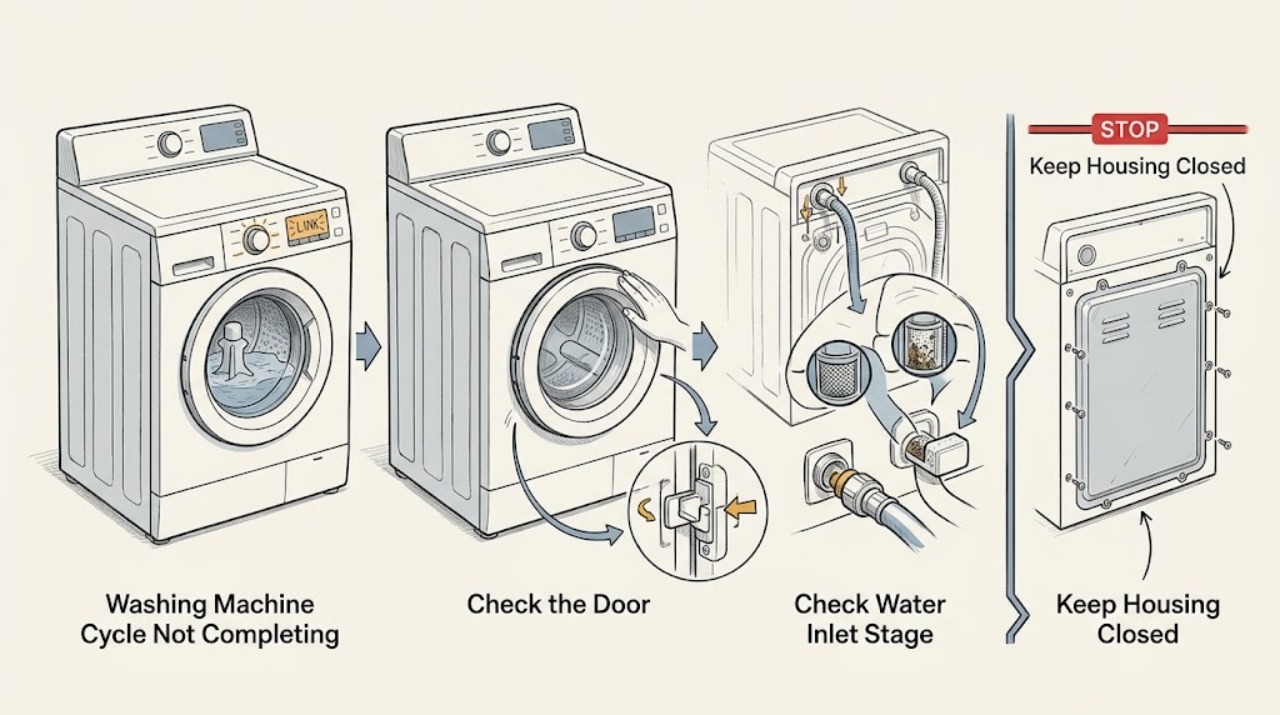
Work through in order
Diagnostic checks
Use only checks that match the exact appliance or system and its official guide.
-
Check 1
From a safe dry position, record the exact programme, remaining time, stage light or display, and whether the washer is filling, tumbling or agitating, rinsing, draining, or spinning. Note if the drum or basket is still, if water remains, and whether the door or lid is locked.
Expected result: The stop occurs before fill, during wash or agitation, before or during drain, at spin, or after the washer appears complete but remains locked or wet.
Next step: Follow the matching fill, control, drain, lock, balance, or service branch and keep the full model and display record. Do not run another cycle if a hazard is present.
Stop if: Stop for smoke, burning odor, sparks, exposed wiring, water near electricity, a hot connection, violent movement, or a repeated breaker or safety-switch trip.
Why this matters
Why: The stage separates supply and control conditions from drain, lock, balance, motor, or cycle-completion conditions. A brief pause can be normal, while a stage that never advances is not explained by the word cycle alone.
-
Check 2
With the tub stopped, compare the chosen cycle and options with the exact Speed Queen guide. Confirm the Start or Start/Pause input, check for a pause or delay state, and close the front door or top lid normally so the lock or lid switch can engage; do not hold or bypass the interlock.
Expected result: The washer is paused, the door or lid is not fully closed, a lock indicator or door message is present, the selected cycle has an intentional soak or hold, or the controls appear ready but the stage does not advance.
Next step: Clear only a documented pause, delay, or option and make one normal Start attempt when no hazard exists. If the lock does not engage or the cycle remains stalled, leave the washer off and continue with water or service checks.
Stop if: Do not force a door or lid, insert tools into a lock, prop an interlock, or guess another model's control sequence.
Why this matters
Why: A control state or an unconfirmed door or lid can intentionally prevent fill, tumble, drain, or spin. Cycle names and lock behavior vary across Speed Queen models, so a ready-looking panel does not prove an internal failure.
-
Check 3
If the washer stopped while filling or rinsing, check from a dry position that the accessible hot and cold taps are open and the inlet hoses are not kinked, twisted, or visibly leaking. Do not remove hose screens unless the exact manual describes that user-maintenance step and the supply is safely isolated.
Expected result: One tap is closed, an inlet hose is kinked or leaking, the washer has no visible water entry, the cycle is using a spray rinse, or fill appears normal but the next stage never begins.
Next step: Correct only a plainly visible tap or hose position issue and make one normal cycle attempt. For a leak, no fill after safe supply checks, or a recurring fill indication, leave the washer off and request service.
Stop if: Do not disconnect a pressurised hose, handle a wet plug or control, or run the washer with an active leak.
Why this matters
Why: A supply or inlet restriction can prevent the control from reaching the next stage. Some high-efficiency or model-specific programmes use less visible rinse water, so water level alone does not prove a fault.
-
Check 4
If water remains or the cycle stopped before spin, inspect only the visible drain hose, standpipe or drain receptacle for a kink, crushing, blockage, or poor routing. Use a pump filter or trap only when the exact model guide gives an owner procedure; keep water contained and never tilt a full washer.
Expected result: Water remains, the drain hose is kinked or blocked, the drain receptacle is backed up, a model-approved trap is obstructed, or the visible drain path is clear.
Next step: Correct only a visible hose or outlet issue permitted by the manual, then use one documented drain or Spin Only path if safe. Request service for retained water, a harsh pump sound, an internal blockage, or any need to open the cabinet.
Stop if: Do not open a hot or locked door, reach into a pump, disconnect a wet hose, or move a water-filled appliance.
Why this matters
Why: Speed Queen links a no-drain state with hose routing, a blocked drain, a blocked receptacle, or a pump path. A washer may not progress to spin until it confirms that water has left; a clear external path does not rule out an internal pump or sensor fault.
-
Check 5
After the basket has fully stopped, redistribute clothing evenly. Remove a single bulky item or add compatible items only as the exact guide allows, avoid overloading, and check from outside that the washer stands level and firm. Do not reach into a moving tub.
Expected result: The load is bunched, very small, bulky, or overloaded; the cabinet rocks or walks; or the load is even and the washer is stable but the cycle still will not complete.
Next step: Run one suitable Rinse & Spin or normal cycle only when the appliance is stable, dry, and free of hazards. If it stops again, walks, or leaves clothes dripping wet, stop use and arrange service.
Stop if: Stop for violent movement, a leak, a damaged hose, sharp metal contact, or any need to lift or crawl under the washer.
Why this matters
Why: Speed Queen uses load-balance protection that can limit or retry spin to prevent damage. Uneven levelling can amplify movement, while a stable balanced washer with a recurring stop points beyond the load itself.
-
Check 6
Look for heavy foam, an unusually hot cabinet area, an overload indication, or a motor that stopped after a large load. If the washer is dry and intact, stop adding detergent and follow the exact model guidance for detergent quantity and the single documented motor cool-down or reset behavior.
Expected result: Foam is excessive, the motor protection stops and later recovers, the washer is overloaded, no foam is present, or the same interruption returns.
Next step: Use only the model's one safe cool-down or empty-care instruction if applicable. If the motor becomes hot again, the stage does not advance, or the fault returns, leave the washer off and request service.
Stop if: Do not touch a hot motor area, add unapproved chemicals, open panels, or keep cycling a washer with heat, odor, smoke, or a power trip.
Why this matters
Why: Excess suds and load stress can extend or interrupt a cycle, while an overload protector can stop the motor temporarily. A repeated stop may indicate a drive, control, motor, or sensing fault rather than a need for more restarts.
-
Check 7
Record the exact model and serial information, programme, stage, display or blink pattern, water state, door or lid behavior, load description, detergent amount, hose and level observations, and the result of one safe documented check before arranging help.
Expected result: The washer completes one appropriate cycle with no hazard, or the same stage stop, code, wet load, leak, unusual noise, heat, or lock condition returns.
Next step: Monitor only a fully completed cycle with no warning symptom. Keep the washer out of use and request qualified service for a recurring or unsafe condition through the Speed Queen service path.
Stop if: Do not open panels, perform live measurements, bypass a lock, bridge a sensor, or replace a pump, motor, belt, or control as a trial.
Why this matters
Why: A stage-specific record lets a technician match the correct Speed Queen manual and distinguish supply, control, lock, water, balance, motor, and drive symptoms. A recurring interruption is not safely diagnosed by replacing a part from a generic symptom.
Use your observations
Decision map
Find the observation that best matches what you see, then follow the next safe action.
-
PATH 01Safety boundary
What you see
Smoke, burning odor, sparks, exposed wiring, a hot or damaged plug or outlet, water near electricity, violent movement, a leak, or a repeated electrical trip occurs.
Do this next
Keep clear and isolate power or water only from a dry, safe position if possible. Use local emergency help for smoke or fire and request qualified appliance or electrical service.
Why this path and its safety boundary
Why it matters: Treat the symptom as an immediate electrical, water, or fire risk, not as a routine cycle delay.
Safety stop: Do not touch wet connections, pull a hot plug, reset protection again, or restart the washer.
-
PATH 02Safety boundary
What you see
The washer pauses briefly before a wash or rinse spin, is in a documented soak or hold state, or the Start, door, lid, or cycle selection has not been accepted.
Do this next
Use the exact model guide to identify the pause or option and make one normal Start or resume input. Persistent lack of progress needs service.
Why this path and its safety boundary
Why it matters: The control sequence or normal cycle design may account for the apparent stop.
Safety stop: Do not defeat the door or lid interlock or repeatedly press controls on a wet or damaged panel.
-
PATH 03Safety boundary
What you see
The cycle stops during fill or rinse, no water enters, a tap is closed, or an inlet hose is kinked or leaking.
Do this next
Correct only a visible safe tap or hose position issue and retry once. Leave the washer off for a leak, no fill after checks, or a returning indication.
Why this path and its safety boundary
Why it matters: Water supply, inlet restriction, or a model-specific fill condition is more likely than a spin fault.
Safety stop: Do not disconnect a pressurised hose or operate with water near electricity.
-
PATH 04Safety boundary
What you see
Water remains, the washer stops before spin, the drain hose or receptacle is blocked, or a drain indication appears.
Do this next
Inspect the visible drain path and use only a model-approved drain or Spin Only procedure. Request service for retained water or internal pump work.
Why this path and its safety boundary
Why it matters: The washer may be waiting for a safe empty state; hose routing, pump, receptacle, or sensing is implicated.
Safety stop: Do not open a hot or locked door, reach into a pump, tilt the washer, or handle wet electrical parts.
-
PATH 05Safety boundary
What you see
The washer repeatedly redistributes, limits spin, leaves clothes dripping wet, produces heavy foam, or stops after a large load.
Do this next
Wait for full stop, redistribute the load, use the model's detergent guidance, and make one safe cycle attempt. Persistent protection response needs service.
Why this path and its safety boundary
Why it matters: Load imbalance, excess suds, or motor overload protection may be preventing the next stage.
Safety stop: Stop for walking, severe vibration, unusual heat, smoke, burning odor, or a leak.
-
PATH 06Safety boundary
What you see
The washer has safe power and correct controls, the door or lid closes, water and drain paths appear appropriate, and one balanced load still will not complete.
Do this next
Keep the washer out of use and request qualified Speed Queen service with the stage record, model, code, and water or load observations.
Why this path and its safety boundary
Why it matters: A lock, pump, sensor, motor, drive, control, or wiring fault remains possible.
Safety stop: Do not open the cabinet, perform live tests, bypass a safety device, or fit an internal component without diagnosis.
Helpful context
Understand the symptom
Identify the stage, not just the symptom
Write down whether the washer stopped during fill, wash, rinse, drain, or final spin. Note the remaining time, lit status indicators, exact display or blink pattern, and whether water remains. Some Speed Queen controls pause briefly as part of normal wash or spin operation; an unchanged stage, repeated stop, or wet load at the end needs a different path.
Front-load and top-load checks are not identical
A front loader uses a loading-door lock and may limit spin when it detects an unbalanced load. A top loader relies on a closed lid and may stop its motor overload protector before restarting. Use the exact model guide from Speed Queen's document portal instead of applying a button sequence or error meaning from another series.
A safe stop is part of the diagnosis
Do not open a locked door against water or heat, reach into a moving tub, or remove a pump cover without the model's owner procedure. A leak near a connection, smoke, electrical odor, severe vibration, or a repeated trip is a stop-use event. Keep the appliance off and use qualified help for internal or energized work.
Safety boundary
Stop conditions
- Stop immediately for smoke, burning odor, sparks, exposed wiring, a hot or damaged electrical connection, water near electricity, violent movement, a leak, or a repeated electrical trip.
- Do not reach into a moving drum or basket, force or bypass a door or lid lock, open the cabinet, or perform live electrical work.
- Do not open a hot or locked door, disconnect a wet or pressurised hose, tilt a water-filled washer, or reach into a pump.
- Do not repeatedly restart a stalled cycle, reset electrical protection, add unapproved chemicals, or run a harsh vibration or overheating symptom to reproduce it.
- Keep the washer out of use and request qualified Speed Queen service when safe model-specific checks do not restore cycle progress or a fault returns.
Only after diagnosis
Potential parts
- washing-machine drain pump or pump trap assembly
Consider this category only when retained water or a persistent drain symptom is confirmed and qualified diagnosis identifies the pump or trap assembly.
Confirm the exact Speed Queen model and service diagnosis; do not open or replace the pump from a cycle symptom alone. - washing-machine door or lid lock and switch assembly
Consider this category only when the door or lid aligns, visible obstructions are absent, and qualified diagnosis confirms that the interlock does not engage.
Front-load and top-load lock designs differ by model; never bypass the interlock or install a lock as a start test. - washing-machine motor, drive, or control assembly
Consider this category only after water, drain, lock, balance, and supply checks and a qualified diagnosis of a recurring motor, drive, or control fault.
Confirm the exact model and diagnosis before selecting a component; cabinet access and electrical tests require qualified service.
When checks do not resolve it
Need a professional?
Request qualified Speed Queen appliance service when the cycle remains at one stage after safe checks of the programme, Start input, door or lid, water supply, drain path, load balance, level, suds, and one model-approved reset or cool-down. Call sooner for a recurring code, retained water, lock failure, leak, severe vibration, unusual heat or odor, smoke, sparks, or an electrical trip.
Safety scope: This article covers safe external observation and only exact-model user checks when the washer and connection are dry and intact. Do not touch wet electricity, force or bypass an interlock, move a water-filled appliance, open panels, or perform live work.
Common questions
FAQ
Why does my Speed Queen washer stop before the cycle finishes?
Record the exact stage and check the programme, Start input, door or lid, water supply, drain path, load balance, and any exact display or blink pattern. A brief pause can be normal, but a stage that never advances or a returning fault needs qualified service.
Why is there water left in my Speed Queen washer?
Check only the visible drain hose and drain receptacle for a kink, blockage, or poor routing, and use a model-approved drain procedure if safe. Retained water can prevent the next stage; do not open a hot or locked door, reach into a pump, or tilt the washer.
Can an unbalanced load stop a Speed Queen cycle?
Yes. Speed Queen guides describe spin protection that can limit or retry extraction for an unbalanced load. Wait for full stop, redistribute the load, and use one suitable Rinse & Spin or normal cycle only if the washer is stable and hazard-free.
Can too much detergent make a Speed Queen washer stop?
Excess suds can extend or interrupt operation on applicable models, and a large load can trigger motor protection. Follow the exact model guide for detergent quantity and one safe cool-down or care step; stop if heat, odor, smoke, or a repeated stop occurs.
When should I stop using a Speed Queen washer?
Stop for smoke, burning odor, sparks, a hot or damaged connection, water near electricity, a leak, violent movement, exposed wiring, or a repeated electrical trip. Keep the washer off and request qualified appliance or electrical help.
Read the exact guide
Official sources
- Speed Queen | Manuals & DownloadsSpeed Queen · Official Speed Queen support page; the exact model document decides the applicable cycle, code, and user-maintenance steps.
- User's GuideSpeed Queen · Official Speed Queen top-load washer guide for the listed series; exact lid, control, and regional model behavior varies.
- Speed Queen, User's Guide For Your Frontload WasherAlliance Laundry Systems / Speed Queen · Official Alliance Laundry Systems PDF branded for a Speed Queen front-load washer; exact model controls and installation instructions take precedence.
- Speed Queen | Find ServiceSpeed Queen · Official Speed Queen service page; service availability and regional process depend on location and appliance.
Community feedback
Share a repair observation
Share a plain-text repair observation. Accepted observations are published automatically; this page may take a moment to update.