
On this page
Start here
Quick answer
Treat the smell as a safety signal until its type and source are clear. A gas odor on a Whirlpool gas cooktop is different from food or grease smoke, cleaner residue, or a temporary first-use odor on a new electric or induction unit. If the odor is gas-like when no burner is intentionally running, do not light anything, operate switches, or use electronics in the building: leave and contact the local gas authority from outside. For a burning-plastic or electrical smell, smoke, sparking, melting, a cracked glass surface, or a repeated protective-device trip, switch the cooktop off only if safe, stop using it, and arrange qualified service. Once the surface is fully cool and there is no active hazard, identify residue or a spill without opening the appliance.
Work through in order
Diagnostic checks
Use only checks that match the exact appliance or system and its official guide.
-
Check 1
Stop the cooktop and identify whether the smell is gas-like, electrical or melting-plastic, smoke/grease, chemical/cleaner, or a mild new-appliance odor. If gas is suspected, do not light a burner, touch switches, use a phone or other electronics inside, or attempt to locate the leak with a flame.
Expected result: The odor is gas-like while no burner should be running, or its source cannot be distinguished from fuel.
Next step: Leave the building immediately and contact local gas authorities from outside. Follow their instructions and do not return or relight the appliance until it is declared safe.
Why this matters
Why: A possible fuel leak takes priority over diagnosis. A smell that is difficult to classify should not be tested by reigniting the cooktop.
-
Check 2
If there is a burning-plastic or electrical smell, smoke, sparking, visible melting, a cracked glass surface, a damaged cord, or a breaker trip, switch the cooktop off or isolate its power only when the controls and path are dry and safe. Do not reset the protective device repeatedly.
Expected result: The odor is accompanied by smoke, arc marks, heat damage, a crack, repeated trips, or a fault that returns as soon as power is restored.
Next step: Keep the cooktop isolated and arrange qualified appliance or electrical service. Do not open the control area, probe wiring, bypass protection, or run another test cycle.
Why this matters
Why: The smell may indicate an energized or overheated component, not a removable cooking residue. A broken glass surface can also allow spills to reach electrical parts.
-
Check 3
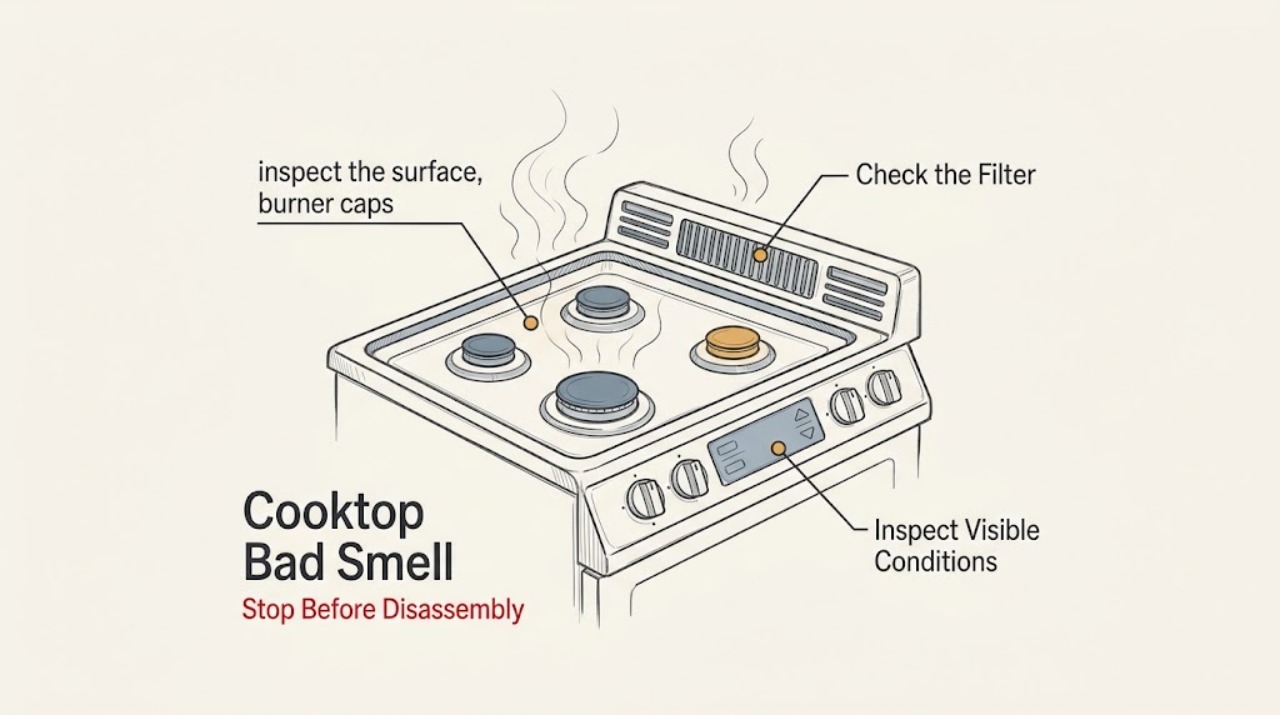
After the cooktop is fully cool and no gas or electrical hazard is present, inspect the surface, burner caps if it is a gas model, pan bottoms, and nearby vent area for spilled food, grease, plastic, packaging film, or cleaner residue. Do not lift a built-in cooktop or remove panels.
Expected result: A visible spill, food film, melted plastic, misplaced packaging, or residue is located where it was heated.
Next step: Let the area cool completely, remove only accessible residue using the matching Whirlpool care instructions, and dry it. If residue is under the glass, in a vent, or the smell returns after cleaning, stop and arrange service.
Why this matters
Why: Material on or near a hot surface can smoke or smell without proving an internal failure. Residue can continue to odor until it is removed using the model's cool-surface cleaning instructions.
-
Check 4
For a Whirlpool gas cooktop only, look from a safe position at the controls and burner area after cooling. If a burner may have been turned on accidentally, do not relight or keep testing; note whether the odor happened with a flame, without a flame, or after a spill. Never use a match or flame to search for a leak.
Expected result: A flame was unintentionally on, the odor appears only during ignition or cooking, the flame is unusually yellow or sooty, or gas odor remains with all controls off.
Next step: If gas odor remains or the flame behavior is abnormal, stop and leave the area as appropriate, then contact qualified gas service. Do not adjust a regulator, burner orifice, or gas line yourself.
Why this matters
Why: An intentional brief combustion odor, a burner-cap or gas-supply issue, and an unexplained odor with the controls off are different branches. Whirlpool directs owners to check burner-cap placement and the fuel type for flame problems, while persistent gas odor requires emergency handling.
-
Check 5
For a radiant electric or induction Whirlpool cooktop, check whether the smell began on the first use, after a spill, after cleaning, or only when a particular zone or control was used. Once fully cool, follow the model manual's cleaning method and remove cleaner film with a clean damp cloth; do not heat an unverified residue to see whether it disappears.
Expected result: The odor is mild and limited to first use or an identifiable cool-surface residue, or it returns from a particular zone after cleaning.
Next step: A mild first-use odor should fade after the manual's initial cleaning and normal use. If the smell is strong, persists, returns from one zone, or includes smoke or heat damage, stop using the cooktop and arrange service.
Why this matters
Why: Whirlpool notes that some first-use smoke or odor can be normal, while a recurring odor from one zone suggests a control, element, sensor, or wiring issue that cannot be identified from smell alone.
-
Check 6
Record the model number, cooktop type, exact odor description, first time it occurred, affected zone or burner, whether the controls were on, any spill or cleaner used, and any display or breaker event. Take photos of safe, cool, visible residue or damage without removing parts.
Expected result: The smell is repeatable but not explained by gas, an accessible spill, first-use residue, or a clearly documented cleaning issue.
Next step: Keep the cooktop out of service and provide the record to Whirlpool or a qualified technician. Do not continue operating it to collect more observations.
Why this matters
Why: A repeatable unexplained odor needs model-specific diagnosis. The record helps distinguish the user-facing symptom from an internal part or installation fault without encouraging hazardous testing.
Use your observations
Decision map
Find the observation that best matches what you see, then follow the next safe action.
-
PATH 01Next step
What you see
A fuel-like smell is present while no gas burner should be on, or the source is uncertain.
Do this next
Leave immediately, avoid switches and electronics inside, and contact local gas authorities from outside. Do not relight or re-enter until directed.
Why this path and its safety boundary
Why it matters: Treat it as a possible gas leak.
-
PATH 02Next step
What you see
The smell is smoke, melting plastic, or electrical odor, especially with sparks, visible damage, a crack, or a protective-device trip.
Do this next
Isolate power only if safe, leave the cooktop unused, and arrange qualified service. Do not reset and retest.
Why this path and its safety boundary
Why it matters: Treat it as a possible electrical or fire fault.
-
PATH 03Next step
What you see
A cool-surface inspection finds food, grease, plastic, packaging, or cleaner residue and there is no active hazard.
Do this next
Clean only after the surface is cool and only by the exact Whirlpool care instructions. Escalate if residue is underneath the glass or the smell returns.
Why this path and its safety boundary
Why it matters: An accessible heated residue is a plausible source.
-
PATH 04Next step
What you see
A new radiant electric or induction cooktop has a mild odor or light smoke during first use, with no damage or worsening symptom.
Do this next
Follow the model's initial cleaning and use instructions, ventilate normally, and monitor. Stop if the odor is strong, persists, or changes to electrical or melting-plastic odor.
Why this path and its safety boundary
Why it matters: Initial manufacturing or shipping residue may be burning off.
-
PATH 05Next step
What you see
A gas cooktop has a flame that is unusually yellow or sooty, or the burner-cap arrangement is visibly wrong.
Do this next
Stop if gas odor persists, and arrange qualified gas service to check the installation, fuel type, and burner assembly. Do not alter the gas supply or regulator.
Why this path and its safety boundary
Why it matters: Combustion or burner assembly needs attention; the odor is not a reason to keep adjusting it.
-
PATH 06Next step
What you see
The odor returns from one zone or the control area after safe cleaning and a cool-down.
Do this next
Keep the cooktop out of service and arrange qualified appliance service. Do not remove the glass or continue operating other zones to compare them.
Why this path and its safety boundary
Why it matters: An internal component, sensor, wiring, or installation issue is possible.
Helpful context
Understand the symptom
Name the odor before troubleshooting
A rotten-egg or fuel-like smell points to gas safety, even if the cooktop seems off. A sharp electrical or melting-plastic smell points to a possible overheating component or wiring fault. A food, grease, or cleaner odor can come from a spill on a hot surface. A mild smell or smoke during the first use of a new appliance may be shipping residue, but it should fade rather than intensify. The model label and manual determine whether the Whirlpool cooktop is gas, radiant electric, or induction.
Do not use odor as a reason to keep testing
Do not run another burner or cycle to reproduce an unexplained odor. Whirlpool's safety material reserves servicing and electrical work for qualified people, and a cooktop with a cracked surface must not be used. A controlled visual inspection after cooling is enough to separate an obvious spill from a fault that needs service.
Safety boundary
Stop conditions
- For suspected gas, leave immediately and do not light appliances, touch switches, or operate electronics inside; contact local gas authorities from outside.
- Stop for smoke, sparks, burning-plastic or electrical odor, visible melting, a cracked surface, damaged wiring, or repeated breaker trips.
- Do not use a flame to locate a gas leak, bypass a protective device, open the cooktop, probe live wiring, or repeatedly run the appliance to reproduce an odor.
- Do not clean a hot surface with a wet cloth, and do not heat unknown cleaner or plastic residue to test it.
Only after diagnosis
Potential parts
- burner cap or burner assembly
Only consider this after a qualified diagnosis finds a damaged or incorrect gas burner component and the exact odor is not an unresolved fuel leak.
Confirm the full Whirlpool model and the manufacturer's fit information before ordering. - radiant element or induction zone component
Only consider this when a recurring odor is localized to one electric or induction zone and a qualified technician identifies the failed component.
Zone assemblies and control electronics vary by model; confirm fitment through Whirlpool or qualified service. - touch-control or power-control assembly
Only consider this when the odor comes from the control area or follows a protection trip and a technician confirms a control or wiring fault.
Do not order from odor alone; use the model number and a confirmed diagnosis.
When checks do not resolve it
Need a professional?
Arrange qualified Whirlpool or electrical/gas service when a gas odor remains, a flame is abnormal, a burning or electrical odor returns, smoke or damage is present, a zone causes the smell, the cooktop has tripped protection, or a residue cannot be safely reached from the cool surface.
Have this ready
- The Whirlpool model number and whether the cooktop is gas, radiant electric, or induction
- The exact odor description and whether it was present with controls off
- The affected burner or zone and whether smoke, sparks, melting, a crack, or a breaker event occurred
- Recent installation, first use, spill, cleaning product, burner-cap removal, or electrical work
- Photos of cool, visible residue or damage without removing panels
Common questions
FAQ
What should I do if my Whirlpool cooktop smells like gas?
Do not light anything, touch switches, or use electronics inside. Leave immediately and contact local gas authorities from outside. Do not return or relight the cooktop until the source is cleared.
Is a smell from a new Whirlpool induction cooktop normal?
Whirlpool notes that some smoke or odor on first use can be normal. It should be mild and fade. Stop for a strong or persistent odor, smoke, melting-plastic smell, sparking, or heat damage.
Could a food spill cause a Whirlpool cooktop odor?
Yes. After the surface is completely cool and no gas or electrical hazard is present, look for food, grease, plastic, packaging, or cleaner residue and clean it using the exact model instructions. Do not heat unknown residue to test it.
Why does my Whirlpool gas cooktop smell when the burners are off?
An odor with all controls off should be treated as a possible gas leak. Leave the area and contact local gas authorities from outside rather than checking the line or relighting a burner.
Should I keep using the cooktop if the smell returns from one zone?
No. A recurring odor from one zone or the control area needs qualified diagnosis, especially if it is electrical, plastic-like, smoky, or accompanied by a trip. Keep the cooktop out of service until checked.
Read the exact guide
Official sources
- How to Install an Induction Cooktop or RangeWhirlpool · Whirlpool induction installation, first-use odor, cookware, and professional electrical guidance
- CPSC Warns of Generator, Carbon Monoxide and Fire Hazards Ahead of Hurricane SeasonU.S. Consumer Product Safety Commission · Gas-leak evacuation and wet-appliance electrical safety
- 30" and 36" Electric Induction Cooktop Owner's ManualWhirlpool · Whirlpool electric induction cooktop safety, cool-surface cleaning, and qualified-service boundaries
- Odors or SmellsWhirlpool Product Help · Whirlpool gas cooktop odor, burner-cap, fuel-type, and service guidance
- Use & Care GuideWhirlpool · Whirlpool gas and glass-ceramic cooktop safety, gas-odor, flame, and service guidance
Community feedback
Share a repair observation
Share a plain-text repair observation. Accepted observations are published automatically; this page may take a moment to update.