
On this page
Start here
Quick answer
Treat a Samsung cooktop smell as a safety triage first, not a cleaning problem. A gas odor, smoke, arcing, or a persistent burning or electrical smell means turn the appliance off, do not operate switches or flames, leave the area as appropriate, and get qualified help from a safe location. If there is no hazard, let the cooktop cool, look for spilled food or grease, and clean it using the instructions for your gas, electric, or induction model. Gas burners must be dry, correctly seated, and free of blocked ports; a smell that returns after the surface and burners are clean needs Samsung or qualified service.
Before you begin
Safety first
- User checks are limited to turning controls Off, recognizing gas or fire hazards, cool-surface visual inspection, model-appropriate cleaning of accessible parts, and documenting observations. A qualified technician must test gas delivery, ignition, heating elements, controls, wiring, grounding, glass integrity, and internal components.
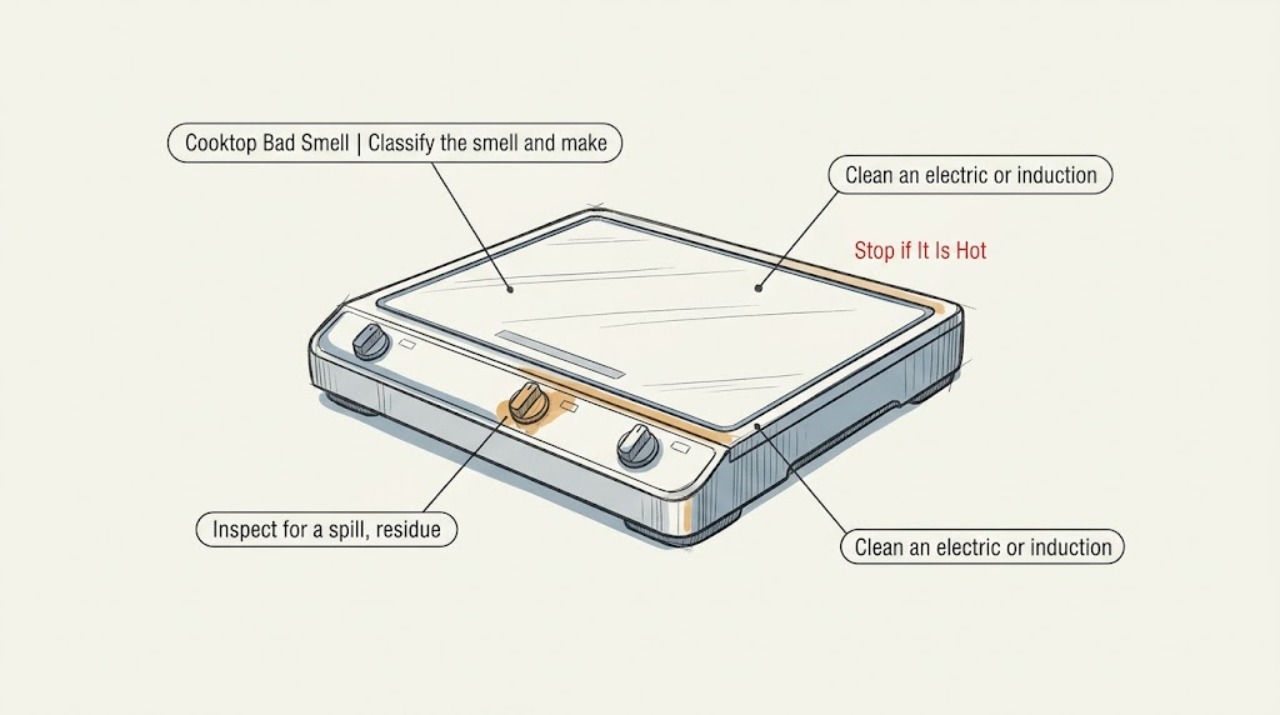
Work through in order
Diagnostic checks
Use only checks that match the exact appliance or system and its official guide.
-
Classify the smell and make the area safe
Turn every control to Off and step back long enough to identify the symptom without leaning over the cooktop. Note whether the smell is raw gas, burning plastic or wiring, smoke or scorched food, chemical cleaner, or a mild residue smell, and whether flames, sparking, heat with controls Off, or visible damage are present.
Expected result: There is a gas odor, smoke, arcing, a burning electrical smell, uncontrolled heat, or visible damage, or the smell is limited to a recent spill with no hazard signs.
Next step: For gas odor, do not light or turn on appliances or electrical switches; clear the area and contact the gas supplier or emergency service from a safe location. For smoke, arcing, burning electrical odor, or visible damage, stay away and arrange qualified help. Otherwise continue with the cool-surface inspection.
Why this matters
Why: A gas or electrical/fire warning cannot be safely diagnosed by continued cooking. A localized food or grease spill is a lower-risk cleaning lead only after the cooktop is off and cool.
-
Inspect for a spill, residue, or packaging source after cooling
After all surfaces are cool, inspect the glass, burner grates, caps, pan bottoms, control area, and the accessible edge of the cooktop for food, oil, melted plastic, protective film, or cleaner residue. Do not lift the built-in cooktop or reach into the manifold, vents, or electrical enclosure.
Expected result: A visible residue or foreign material lines up with the odor, or the cooktop is clean and the smell has no visible source.
Next step: If the source is visible and non-hazardous, clean it with the correct model instructions. If no source is visible, do not create a test burn; use the gas/flame, electric/induction, or service branch below.
Why this matters
Why: Samsung's care pages emphasize prompt removal of spills and removal of protective packing before initial operation. A clean surface with a recurring odor makes an internal or fuel-system cause more plausible.
-
Clean an electric or induction glass surface safely
For an electric or induction Samsung cooktop, turn the controls off and wait until the glass is cool. Wipe ordinary food or grease residue with a clean soft cloth and a cooktop-appropriate cleaner, keeping liquid out of the control area. Follow the model manual for any scraper or stain-specific method and do not use the surface as a cutting board.
Expected result: The odor disappears after the residue is removed and the surface dries, or the smell returns with a clean, dry glass surface.
Next step: If the smell has cleared and there are no hazard signs, resume cautiously according to the manual. If it returns, or if the surface is cracked, hot with controls Off, or accompanied by smoke or arcing, stop use and arrange service.
Why this matters
Why: Samsung identifies spills and food debris as care issues on glass cooktops, but a recurring odor after cleaning is not explained by visible surface residue alone.
-
Clean and reseat gas burner parts only when there is no gas odor
For a Samsung gas cooktop with no raw-gas smell and no active flame problem, turn all knobs Off, shut down power as the model instructions require, and wait for the surfaces to cool. Clean removable burner caps and heads as directed, keep water out of the burner base and gas orifices, dry every piece completely, and reinstall each piece in its original position so it lies flat.
Expected result: The odor was associated with food or grease around a burner and disappears after correct dry reassembly, or the odor persists or the flame is yellow, uneven, lifting, or repeatedly goes out.
Next step: If the smell persists or the flame remains abnormal, stop using that burner and arrange qualified gas-appliance service. Never use a flame to search for a leak and never spray cleaner into the manifold or ignition openings.
Why this matters
Why: Samsung says burner ports and components must be clean, dry, and correctly assembled for proper operation. Abnormal flame behavior or an odor that persists after cleaning can indicate a gas-pressure, burner, ignition, or service issue.
-
Separate ignition moisture or control contamination from a smell
If the gas cooktop clicks continuously, the smell started after cleaning or a spill, or the controls behave oddly, keep all knobs Off and do not continue to ignite burners. Let accessible surfaces dry naturally as directed by the model manual; do not spray, blow hot air into, or dismantle the ignition area.
Expected result: Clicking and the odor stop after the cooktop is fully dry, or clicking, odor, or abnormal ignition remains with dry parts.
Next step: If the symptom remains, leave the cooktop out of service and arrange Samsung or qualified gas-appliance service. Report the spill or cleaning event and which burner or control was involved.
Why this matters
Why: Samsung identifies moisture around ignition switches and moisture in burner or manifold areas as causes of abnormal operation, while persistent symptoms need support rather than more ignition attempts.
-
Use the service boundary for a recurring or unexplained odor
Record the model, cooktop type, affected burner or zone, when the odor begins, whether controls are Off, any display or flame change, and what safe cleaning or cool-down changed. Do not remove the cooktop, inspect live wiring, adjust gas pressure, or keep repeating a heat test.
Expected result: The odor is gone after a confirmed safe cleanup, or it returns without visible residue or is accompanied by abnormal heating, flame, clicking, smoke, or damage.
Next step: Keep the cooktop out of service and request Samsung support or a qualified appliance/gas technician. For a gas odor, follow the emergency gas-safety response from a safe location instead of booking a routine visit while the odor is active.
Why this matters
Why: A resolved residue smell is different from a recurring odor that could involve ignition, gas delivery, heating elements, controls, or wiring. Samsung directs damaged or malfunctioning appliances to service rather than unqualified repair.
Use your observations
Decision map
Find the observation that best matches what you see, then follow the next safe action.
-
PATH 01Next step
What you see
There is a raw-gas odor, smoke, arcing, or a burning electrical smell.
Do this next
Stop using the cooktop. Do not operate electrical switches or flames for a gas odor, clear the area, and contact the gas supplier or emergency service from a safe location. For smoke, arcing, or burning electrical odor, arrange qualified help and do not re-energize the appliance.
-
PATH 02Next step
What you see
The smell follows a visible food, oil, plastic, or cleaner residue and disappears after the cool, model-appropriate cleaning.
Do this next
Keep the surface and cookware clean and dry, and monitor normal use. If the odor returns without a new spill or residue, stop and use the service branch.
-
PATH 03Next step
What you see
A gas cooktop has abnormal flame color, shape, ignition, or continuous clicking after its parts are dry and correctly seated.
Do this next
Stop using the affected burner and arrange qualified gas-appliance service. Do not adjust gas pressure, test with an open flame, or spray into the burner or ignition openings.
-
PATH 04Next step
What you see
An electric or induction cooktop smells after the glass is clean and dry, or it heats with controls Off.
Do this next
Stop using the cooktop and arrange Samsung or qualified appliance service; do not lift the cooktop or open its electrical enclosure.
-
PATH 05Next step
What you see
The odor is recurring, unexplained, or accompanied by a damaged surface, cable, control, or other malfunction.
Do this next
Leave the appliance out of service and provide the model, odor timing, affected area, photos when safe, and every low-risk check already completed to Samsung support or a qualified technician.
Helpful context
Understand the symptom
The useful clue is what the smell resembles and when it occurs. Food or grease residue usually follows a spill and fades after a cool-down and correct cleaning. A gas odor, burning electrical odor, smoke, or odor accompanied by abnormal flames is a stop condition. Electric and induction glass surfaces need a different cleaning approach from gas burner heads and ports, so identify the cooktop type before removing anything.
Do not keep heating an unknown residue to see whether it goes away. Do not spray cleaner into burner openings or controls, lift or uninstall the cooktop, open its electrical connection, test gas with a flame, or continue using a cooktop with cracked glass, damaged wiring, smoke, arcing, or a gas odor.
Safety boundary
Stop conditions
- For a gas odor, do not light or turn on appliances, operate electrical switches, or use a phone in the affected area; clear occupants and contact the gas supplier or emergency service from a safe location.
- Stop for smoke, arcing, a burning electrical or plastic smell, heat with controls Off, visible flame damage, a damaged cable, liquid in the controls, or cracked glass. Do not re-energize or continue testing.
- Do not lift or uninstall the cooktop, open the electrical connection, adjust gas pressure, use an open flame to search for leaks, or spray cleaner into burner ports, manifolds, or controls.
- Do not keep heating an unidentified residue or repeatedly ignite a burner when an odor or abnormal flame persists.
Only after diagnosis
Potential parts
- gas burner cap or burner-head component
Consider this category only when the correct dry cleaning and reseating do not restore normal flame behavior and a qualified technician confirms a damaged or incompatible burner component.
Burner pieces are model- and position-specific; confirm the exact Samsung model and part fit before ordering. - ignition component
Consider this category only when persistent clicking, failed ignition, or an abnormal flame remains after safe drying and the technician confirms an ignition fault.
Do not access or replace ignition parts near gas connections without qualified diagnosis and exact model confirmation. - electric heating or induction control component
Consider this category only for a recurring odor or abnormal heating on a clean, dry electric or induction cooktop after a technician identifies the failed internal component.
Internal cooktop parts require exact model and revision matching; do not order from smell alone or open the electrical enclosure.
When checks do not resolve it
Need a professional?
Arrange Samsung or qualified appliance service for a recurring or unexplained odor, a smell from a clean and dry electric or induction cooktop, persistent clicking or abnormal gas flames, heating with controls Off, a damaged cable or glass surface, or any diagnosis requiring access below the cooktop. Treat raw-gas odor, smoke, arcing, or burning electrical smell as an immediate stop and safety response rather than a routine cleaning visit.
Safety scope: User checks are limited to turning controls Off, recognizing gas or fire hazards, cool-surface visual inspection, model-appropriate cleaning of accessible parts, and documenting observations. A qualified technician must test gas delivery, ignition, heating elements, controls, wiring, grounding, glass integrity, and internal components.
Common questions
FAQ
Is a mild smell from a Samsung cooktop always dangerous?
No smell should be dismissed without triage. A food or grease residue smell may clear after the cool, model-appropriate cleanup, but raw gas, smoke, burning electrical odor, arcing, or an odor that returns from a clean surface is a stop condition.
What should I do if my Samsung gas cooktop smells like gas?
Do not light or turn on appliances or electrical switches. Clear the area and contact the gas supplier or emergency service from a safe location. Do not test for a leak with a flame or keep trying to ignite a burner.
Can spilled food cause a Samsung electric or induction cooktop to smell?
Yes, food and grease residue can create an odor when heated. Turn the cooktop off, let it cool, and follow Samsung's glass-cleaning instructions. If the odor returns after the glass is clean and dry, stop using the cooktop and arrange service.
Why does my Samsung gas cooktop smell after cleaning?
Moisture around ignition switches or burner areas, a burner part that is not fully dry or correctly seated, or an abnormal flame can be involved. Keep controls Off, do not spray into burner openings, and arrange qualified service if clicking, odor, or abnormal flames persist.
Read the exact guide
Official sources
- Home Appliance Terms and ConditionsSamsung · Samsung appliance gas, fire, electrical, glass, damage, service, and qualified-repair safety boundaries
- Clean and care for your Samsung electric cooktopSamsung Support US · Samsung electric and induction cooktop glass care, spill cleanup, cookware dryness, and cool-surface cleaning
- Samsung cooktop and range: common sounds and operational noisesSamsung Support US · Samsung gas cooktop ignition moisture, continuous clicking, and service escalation
- Flame issues on Samsung gas cooktop or rangeSamsung Support US · Samsung gas cooktop flame appearance, burner cleanliness, assembly, gas pressure, and support guidance
- How to clean your Samsung gas cooktopSamsung Support US · Samsung gas cooktop cooling, burner cleaning, dry reassembly, port care, and cleaning safety
Community feedback
Share a repair observation
Share a plain-text repair observation. Accepted observations are published automatically; this page may take a moment to update.