
On this page
Start here
Quick answer
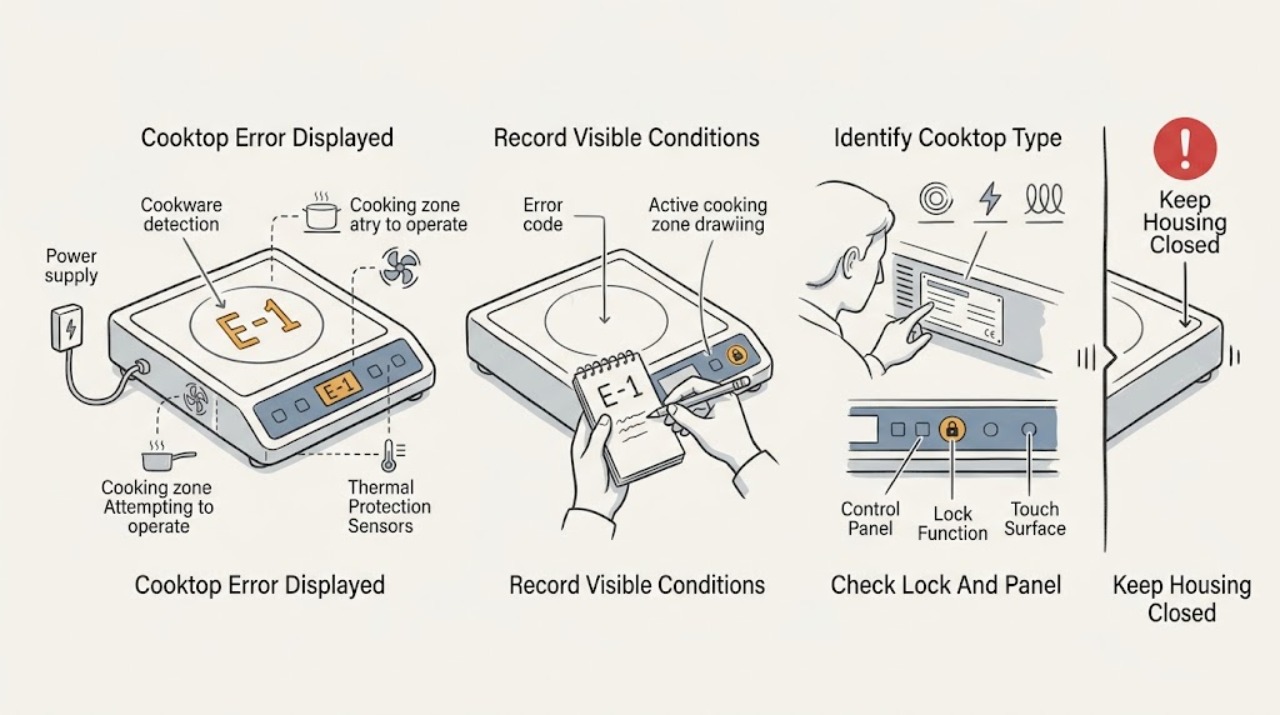
Do not diagnose a Whirlpool cooktop code from a photo or a partial character. Record the exact display, model number, and whether the appliance is gas, radiant electric, or induction before applying any code guidance. For an electric or induction cooktop with no smoke, arcing, scorching, cracked glass, gas odor, or repeated breaker trip, keep the surface dry, check the accessible control-lock state and supply, and use only the model's documented one-time power reset. On induction models, a pan or U-shaped indicator can mean unsuitable, misplaced, or undersized cookware rather than an electronic failure. A hot-surface or heat-related indication can be expected after cooking, while a recurring code, a code on every zone, or a code with abnormal heat needs qualified service. Never open the cooktop, test live wiring, bypass a lock or thermal device, or apply an induction code to a gas or radiant model.
Work through in order
Diagnostic checks
Use only checks that match the exact appliance or system and its official guide.
-
Check 1
With all cooking controls off and the surface safe to approach, record every displayed character or symbol, whether it flashes or alternates, which zone shows it, the model number, and whether the cooktop is gas, radiant electric, or induction. Note what happened immediately before the code, including a spill, power event, pan change, high heat, or cleaning.
Expected result: The display shows a complete alphanumeric code, a lock or pan symbol, a hot-surface indicator, a partial or alternating code, or the display is blank.
Next step: Keep the exact record and model at hand, then open the Whirlpool documentation for the matching appliance type. If any smoke, arc, scorch, cracked glass, gas odor, hot connection, or repeated trip occurred, keep the cooktop off and use service guidance.
Stop if: Stop immediately for smoke, flame, gas odor, sparks, arcing, scorching, cracked glass, exposed conductors, a hot or damaged connection, or a breaker that opens again.
Why this matters
Why: The display type determines the next branch. A lock, pan, or heat indicator may be a state message; a complete code needs model-specific lookup; a blank display points toward supply, controls, or an internal fault. A partial code cannot be safely mapped to a different code.
-
Check 2
Confirm from the model label and manual whether the cooktop is gas, radiant electric, or induction before interpreting the display. Do not use induction pan-detection guidance on a gas or radiant cooktop, and do not use a radiant-element explanation for an induction symbol.
Expected result: The model is confirmed as gas, electric radiant, induction, or cannot be confirmed.
Next step: Use only the matching Whirlpool code and manual path. If the type or model cannot be confirmed, stop at identification and arrange model-based support rather than guessing.
Stop if: Stop for a missing or damaged label, altered wiring, gas odor, wet controls, cracked glass, or any need to remove a panel to identify the type.
Why this matters
Why: The same-looking symbol can have different meanings by technology and model. An induction pan indicator concerns cookware detection; gas models have a different flame and ignition system; radiant models can show residual heat or element behavior without pan detection.
-
Check 3
For a touch-control electric or induction model, inspect the control-lock indicator and make sure the panel is dry and clear of objects or soil. Use only the exact model instruction to release Control Lock; do not force a key, scrape the panel, or remove the control console.
Expected result: A lock is displayed, the keys are inactive except for power or off, the panel is wet or obstructed, or the panel is dry and unlocked but the code remains.
Next step: Dry the panel and hands, clear only accessible objects, and release the lock using the model procedure. If the code or unresponsive control remains, record the exact state and continue to the one-time reset or service decision.
Stop if: Stop for wetness entering the controls, a stuck or hot panel, smoke, arcing, a cracked surface, or any need to bypass the lock or open the console.
Why this matters
Why: Whirlpool states that Control Lock can prevent the cooking areas from being turned on and can restrict keypads. Moisture or an object on the panel can also affect touch controls. A dry, unlocked panel with a recurring code needs the code and supply branches, not repeated tapping.
-
Check 4
Only for a confirmed induction model showing a pan or U-shaped indicator, switch the affected zone off, place one clean, dry, flat-bottomed pan centered on the zone, and confirm that its base is suitable for induction. Use the model's size guidance; do not heat an empty pan or place metal utensils on the surface.
Expected result: The pan indicator clears and the zone accepts a setting, the indicator remains with a suitable centered pan, the pan is too small or off-center, or the pan is not suitable for induction.
Next step: Use a suitable pan for one supervised moderate-setting test only. If the indicator returns with a known suitable pan, stop using that zone and arrange service rather than reaching under the glass.
Stop if: Stop for cracked or chipped glass, unstable cookware, smoke, scorching, arcing, a dangerously hot surface, or any need to insert an object below the glass.
Why this matters
Why: Whirlpool identifies pan material, position, and size as causes of the indicator. If no suitable pan is detected, the zone can switch off. A suitable pan that remains unrecognized on one zone points toward the zone sensor or control after supply and lock checks.
-
Check 5
If the model guidance permits and there is no hazard, check the accessible household breaker or fuse and whether the main display returns. If power is present, perform the Whirlpool one-time power reset for the matching cooktop guidance, then wait and observe the display before selecting a zone.
Expected result: The breaker or fuse is open, the display returns after one reset, the same code returns, or the breaker opens again.
Next step: Correct only one obvious accessible breaker or fuse condition if safe, then verify operation once. If the code returns or supply appears miswired, keep the cooktop off and arrange qualified electrical or appliance service.
Stop if: Stop for a repeated trip, hot outlet or connection, wetness, damaged supply, smoke, arcing, or any need to access live wiring.
Why this matters
Why: An accessible supply interruption can create a dark display or transient code, but a repeated code may indicate a supply or appliance fault. A breaker that opens again is not a reset opportunity; it is a stop condition.
-
Check 6
If the code appeared during high heat or while several induction zones were active, switch all controls off, let the surface cool, keep cooling openings clear, and compare one zone at a moderate setting only after the model instructions allow it. Do not hold empty cookware at maximum power.
Expected result: The display shows a hot-surface state, a zone reduces power with other zones active, the cooktop recovers after cooling, or the same code returns quickly.
Next step: If the display is a documented normal state and one zone works after cooling, follow the model's zone and cookware limits. If the code returns, all zones fail, or heat remains abnormal, keep the unit off and request service.
Stop if: Stop for smoke, scorching, arcing, a surface that remains dangerously hot, a cracked surface, or any need to remove a panel or cooling cover.
Why this matters
Why: Residual heat and power sharing can look like an error, and some induction manuals describe automatic shutoff or reduced power when heat or load limits are reached. A rapid repeat code, abnormal heat, or failure to recover is not normal use behavior.
-
Check 7
When the exact code returns after the model-specific lock, cookware, supply, and one-time reset checks, write a service handoff containing the model, code, zone, appliance type, pan details if induction, breaker behavior, recent power event, temperature, and every safe step already taken.
Expected result: The code returns, multiple zones show it, the main display is blank, the cooktop cannot be safely tested, or the code clears and then returns during normal use.
Next step: Keep the cooktop off and arrange qualified Whirlpool appliance or electrical service as appropriate. Do not order an internal component, remove the glass, bypass a safety device, or keep resetting the code.
Stop if: Stop for any recurring code with smoke, odor, arcing, scorching, cracked glass, unusual heat, a repeated trip, or a request to test live circuits.
Why this matters
Why: A recurring code may involve the control, power module, zone sensor, temperature protection, wiring, or installation supply. The display alone cannot identify a compatible component, and internal cooktop diagnosis is not a user repair.
Use your observations
Decision map
Find the observation that best matches what you see, then follow the next safe action.
-
PATH 01Next step
What you see
Smoke, flame, gas odor, sparks, arcing, scorching, cracked glass, a hot connection, exposed wiring, or a breaker that opens again is present.
Do this next
Arrange qualified service and follow the exact model guidance.
Why this path and its safety boundary
Why it matters: Switch off if safe, keep clear, leave the area for gas or smoke, and contact the appropriate emergency, electrical, or qualified appliance service provider from a safe location. Do not reset or operate the cooktop again.
-
PATH 02Next step
What you see
The model or gas, radiant electric, or induction type cannot be confirmed.
Do this next
Arrange qualified service and follow the exact model guidance.
Why this path and its safety boundary
Why it matters: Stop at identification and obtain the exact Whirlpool manual or qualified support. Do not apply an induction pan-code explanation or an electric reset procedure to an unconfirmed appliance.
-
PATH 03Next step
What you see
Control Lock is active, the panel is wet or obstructed, or the touch keys are inactive.
Do this next
Arrange qualified service and follow the exact model guidance.
Why this path and its safety boundary
Why it matters: Dry and clear only the accessible panel and use the exact model unlock method. A recurring code or unresponsive panel after that check needs service without console access.
-
PATH 04Next step
What you see
A confirmed induction model displays a pan or U-shaped indicator and does not detect the cookware.
Do this next
Arrange qualified service and follow the exact model guidance.
Why this path and its safety boundary
Why it matters: Use one clean, dry, flat, magnetic pan centered and sized for the zone. If it remains undetected, stop using that zone and request service; do not reach under the glass.
-
PATH 05Next step
What you see
The display is dark, a recent power event occurred, or the code appears transiently and the accessible supply protection is open.
Do this next
Arrange qualified service and follow the exact model guidance.
Why this path and its safety boundary
Why it matters: Use only the matching Whirlpool one-time power reset if safe. A returning code, suspected miswired supply, or breaker that opens again requires qualified service.
-
PATH 06Next step
What you see
The display appeared after prolonged high heat, several induction zones, or a hot surface and clears after cooling.
Do this next
Arrange qualified service and follow the exact model guidance.
Why this path and its safety boundary
Why it matters: Follow the model's heat, zone, and cookware limits and make one moderate single-zone test after cooling. A repeat code, abnormal heat, or failure to recover needs service.
-
PATH 07Next step
What you see
The exact code returns after the correct model-specific checks, or the code does not match the appliance type documentation.
Do this next
Arrange qualified service and follow the exact model guidance.
Why this path and its safety boundary
Why it matters: Keep the cooktop off and arrange qualified Whirlpool appliance or electrical diagnosis. Provide the exact display and model; do not guess a part or continue resetting.
Helpful context
Understand the symptom
Record the display before touching controls
Write the code exactly, including letters, numbers, spaces, dashes, a flashing pattern, or a symbol that resembles a letter. Photograph the display if safe, and record the model label and whether the cooktop is gas, radiant electric, or induction. Whirlpool has separate code families and model documentation; a code that looks similar can have a different meaning on another appliance type.
An indicator is not always a fault code
A lock symbol, a hot-surface H, a pan-detection symbol, or a power-level change can describe a normal control state or a cookware condition. An induction zone may refuse a setting when it cannot detect a suitable pan. A hot-surface indication can remain after a zone is off. Use the exact model manual before treating an indicator as a failed control.
Use one safe reset, then stop if the code returns
If the model guidance allows it and there is no hazard, use the accessible breaker reset once and observe whether the same code returns. Do not keep cycling power, remove the cooktop, or probe terminals. A recurring code, a miswired-supply concern, or a code that returns with one zone or all zones requires qualified service.
Safety boundary
Stop immediately for smoke, sparks, arcing, scorching, a cracked glass surface, a hot or damaged connection, repeated breaker operation, or gas odor. For gas odor, do not ignite the appliance or operate nearby switches; leave the area and contact the appropriate emergency or qualified service provider from a safe location. This article does not turn an induction or electric diagnostic into a gas repair procedure.
Safety boundary
Stop conditions
- Smoke, flame, gas odor, sparks, arcing, scorch marks, or a breaker that opens again.
- Cracked, chipped, or broken glass, or liquid entering a damaged surface.
- A hot, damaged, loose, wet, or discolored cord, plug, outlet, control, or supply connection.
- A surface or control area that remains dangerously hot, or a code that returns immediately after cooling.
- Any need to remove the glass or console, test live circuits, bypass a lock or thermal device, or alter gas or electrical wiring.
- A code that recurs after one safe model-specific lock, cookware, supply, and reset check.
Only after diagnosis
Potential parts
- cooktop control or display assembly
Consider this category only after qualified testing confirms a recurring display or control fault with the correct supply, model procedure, and lock state.
Confirm the complete Whirlpool model, control revision, connector, and manufacturer fit information; a code or blank display alone does not identify the assembly. - induction zone sensor or power module
Consider this category only for a confirmed induction model after a suitable pan, lock, supply, and one-time reset check and qualified diagnosis of a zone fault.
Confirm the complete model, zone position, electrical specification, connector, and manufacturer fit information; do not access the module or bypass protection. - cooktop thermal protection component
Consider this category only after qualified testing confirms repeated thermal shutdown or an incorrect temperature signal with clear vents and correct use.
Confirm the exact Whirlpool model and approved component fit with the manufacturer or technician; a single hot-surface indicator is not proof of a failed component.
When checks do not resolve it
Need a professional?
The display shows a recurring code, multiple zones fail, the main display stays dark, or the code does not match the exact model documentation., The breaker trips again, the supply may be miswired, or an electrical connection is hot or damaged., A suitable induction pan is not detected on one zone, or the cooktop repeatedly reports a pan, heat, or control condition after safe checks., The cooktop overheats, shuts down again quickly, cannot be unlocked or canceled, or shows smoke, arcing, scorching, cracked glass, or gas odor., The appliance type, model manual, or safe one-time reset procedure cannot be confirmed.
Common questions
FAQ
What should I do first when my Whirlpool cooktop displays a code?
Record the exact characters and model, identify whether the cooktop is gas, radiant electric, or induction, and note which zone is affected. Then use only the matching Whirlpool code page and manual. Stop for smoke, arcing, scorching, cracked glass, gas odor, unusual heat, or a repeated breaker trip.
Can I reset a Whirlpool cooktop error code?
Some Whirlpool electric and induction guidance permits one accessible breaker reset, followed by an observation period. Use the exact model procedure and do not repeat the reset if the code returns, the breaker opens again, or a hazard appears. A recurring code needs service.
Why does my Whirlpool induction cooktop show a pan symbol?
The pan may not be suitable for induction, may be off-center, or may be too small for the selected zone. Use one clean, dry, flat, magnetic pan centered on the zone. If it remains undetected, stop using that zone and arrange service.
Is an H or hot-surface indicator an error?
A hot-surface indication can remain after a zone is turned off because the glass is still hot. Let the surface cool and follow the model manual. If the indicator is accompanied by abnormal heat, a returning code, smoke, scorching, or a control that will not turn off, stop using the cooktop and request service.
Should I use an induction error-code guide on a gas or radiant Whirlpool cooktop?
No. Confirm the appliance type and exact model first. Induction pan detection, radiant residual heat, and gas ignition have different systems and different safety decisions. Use the corresponding Whirlpool manual or arrange model-based support when the type is uncertain.
Read the exact guide
Official sources
- U u - Error Code - Induction CooktopWhirlpool · Supports interpreting the U-shaped pan indicator as cookware material, position, or size evidence on induction models.
- Manuals & LiteratureWhirlpool · Supports finding the exact appliance documentation before interpreting an error code or applying a reset.
- Owner's ManualWhirlpool · Supports model-family examples only; the reader must use the manual for the exact cooktop model before applying a control or reset instruction.
- Not Powering On - Electric CooktopWhirlpool · Supports external supply and control checks for electric cooktops; it is not a code map for gas appliances.
- Lock - Electric and Induction CooktopWhirlpool · Supports checking Control Lock and following one model-appropriate breaker reset before service.
- Error Code or Indicator LightWhirlpool · Supports recording the exact induction code or symbol and selecting the matching model-specific page; it does not generalize codes to gas or radiant cooktops.
Community feedback
Share a repair observation
Share a plain-text repair observation. Accepted observations are published automatically; this page may take a moment to update.