
On this page
Start here
Quick answer
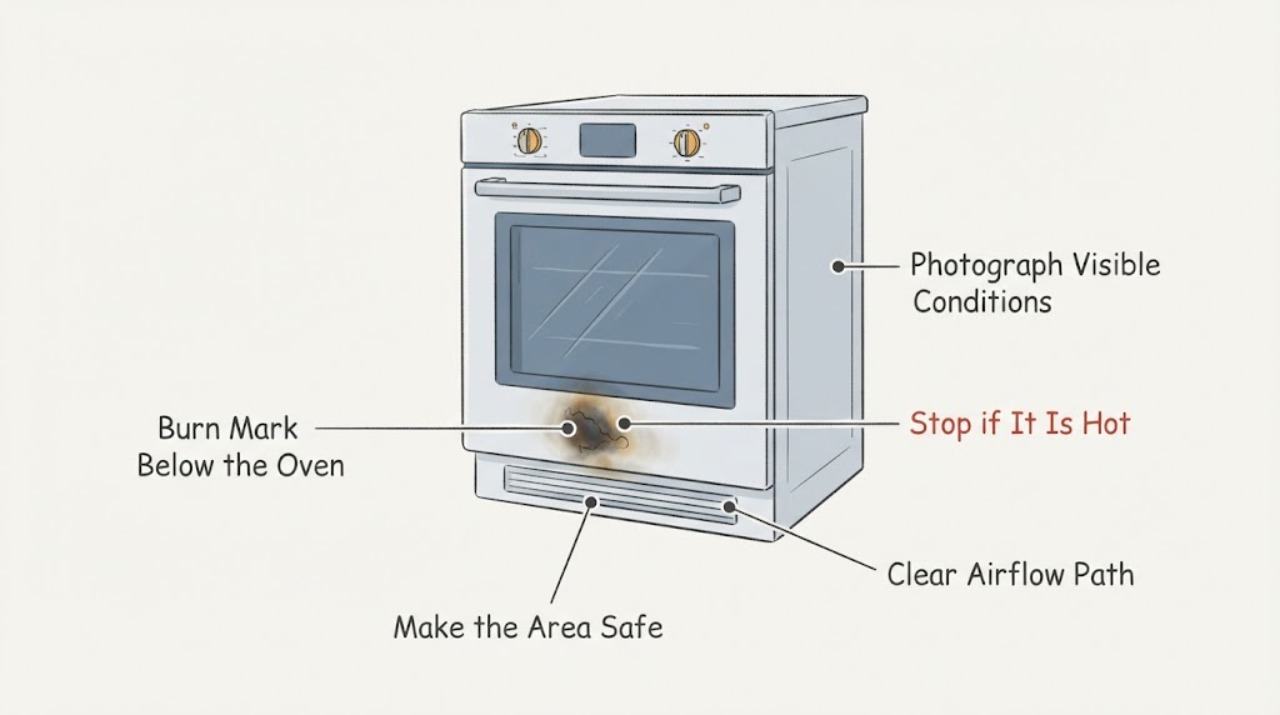
A permanent burn mark or scorching below the oven door after only a few uses should not be dismissed as normal new-oven smoke. Wolf identifies the GR304 as a gas range and says some exterior warmth can be normal, but excessive residual heat, a door or handle too hot to touch, smoke, a gas odor, or a repeatable new discoloration requires stopping use and contacting Factory Certified Service. Turn the oven and burners off, keep the oven door closed while it cools, and do not remove the front panel or inspect the igniter, burner, wiring, or gas fittings. Once the range is completely cool, make only an external observation of the mark and confirm that the cool-air intake above the door and exhaust below the door are unobstructed. Wolf's first-use burn-in can create temporary smoke and odor, but it does not establish a permanent front-panel burn mark as acceptable.
Work through in order
Diagnostic checks
Use only checks that match the exact appliance or system and its official guide.
-
Check 1
Stop using the oven and burners if the mark is actively darkening, the panel is too hot to touch, smoke is present, the finish is blistered or melted, flames look abnormal, or a gas odor is present. Turn controls off; if there is no immediate danger and the shutoff is safely accessible, isolate the range's gas supply and electrical power before service. Do not reach behind a hot range or move it.
Expected result: The mark is accompanied by smoke, a gas smell, hissing, abnormal flame, persistent heat after the control is Off, or a tripped breaker; alternatively, the surface is only normally warm and no hazardous symptom is present.
Next step: For a gas odor, do not use electrical switches or a phone inside the building; leave and follow the gas supplier or emergency instructions. Otherwise keep the range unused and arrange Factory Certified Service. Do not relight or run another cycle to reproduce the mark.
Why this matters
Why: Smoke, gas, abnormal flame, persistent heat, or electrical interruption makes continued testing unsafe. Wolf requires gas and electricity to be shut off before service and gives emergency gas-smell instructions in its safety guide.
-
Check 2
After the range is fully cool, photograph the mark from outside without removing trim or opening panels. Note whether it is a wipeable food/grease residue, a brown or black change in the finish, bubbling or distortion, or a mark that is centered at the lower edge below the door. Do not scrape, sand, polish aggressively, or apply cleaner while the surface is warm.
Expected result: The mark wipes away with the gentle, model-appropriate cleaning method, or the finish remains discolored, blistered, warped, or visibly scorched.
Next step: If the finish is permanently changed or damaged, keep the appliance out of service and send the photos, date of installation, and model/serial information to Wolf service or the installing dealer. Do not order a panel or burner based only on the mark.
Why this matters
Why: A removable surface residue is a cleaning issue; permanent finish change or deformation is evidence of an abnormal heat or material event that cannot be assigned to an igniter from appearance alone.
-
Check 3
From the front, confirm that nothing blocks the cool-air intake above the door or the oven exhaust below the door: no foil, towel, stored item, packaging, spilled cleaner, or trim pushed into the gap. Do not remove the lower front panel or place a hand near the exhaust to measure heat.
Expected result: An obstruction is visible, or both airflow openings are clear while the burn mark or excessive heat remains.
Next step: With the appliance cool and unused, remove only loose external items without touching hot surfaces. If the openings were already clear or the mark recurs, stop troubleshooting and request service; do not open the panel to inspect the burner or igniter.
Why this matters
Why: Wolf identifies those openings as part of the oven's airflow path and requires them to remain unobstructed. Clearing a visible external obstruction may remove one possible contributor, but it does not prove the cause of a permanent mark.
-
Check 4
Record the complete rating-plate model and serial numbers, installation date, gas type if shown, oven mode, approximate setting and duration, whether the mark appeared after the first-use burn-in, and whether the door or control panel was too hot to touch. The Wolf GR304 product resource confirms the GR304/GR304-LP model family but service still needs the rating-plate identity.
Expected result: The label confirms GR304 or GR304-LP and the symptom can be tied to a particular mode, or the exact suffix/serial remains unknown.
Next step: Give the complete rating-plate information and photographs to Wolf Factory Certified Service. Do not substitute an R-series or another GR-series procedure, part, or panel.
Why this matters
Why: The gas type and exact serial can affect installation and service scope. The model name alone cannot identify whether a finish panel, airflow component, gasket, burner, or control fault is involved.
Use your observations
Decision map
Find the observation that best matches what you see, then follow the next safe action.
-
PATH 01Next step
What you see
There is a gas smell, hissing, abnormal flame, smoke, active scorching, or the panel/door is too hot to safely touch.
Do this next
Do not operate the range. Leave the area for a gas odor and follow gas-supplier or emergency instructions; otherwise isolate gas and electricity only when safely accessible and arrange Wolf Factory Certified Service.
Why this path and its safety boundary
Why it matters: The symptom exceeds ordinary exterior heat transfer and may involve a gas-combustion, airflow, or electrical hazard.
-
PATH 02Next step
What you see
The panel is only warm, the mark is a removable surface residue, there is no smoke or gas smell, and the lower exhaust and upper intake are unobstructed.
Do this next
Allow the range to cool completely, use only the gentle cleaning method in the GR guide for the confirmed surface, and monitor without repeating a high-heat test. Escalate a recurring mark or excess heat to service.
Why this path and its safety boundary
Why it matters: Wolf considers some exterior warmth normal, but a residue is not evidence of a failed igniter or burner and the condition should not be confused with permanent scorching.
-
PATH 03Next step
What you see
The finish remains brown/black, blistered, warped, or scorched after cooling, or the mark appeared again during normal cooking after the initial burn-in.
Do this next
Keep the oven unused, document the mode and duration, and contact Wolf Factory Certified Service or the installing dealer for a model-specific inspection. Do not remove the panel or continue burn-in cycles.
Why this path and its safety boundary
Why it matters: A permanent or recurring finish change is not established as normal by Wolf's initial smoke-and-odor procedure and cannot be attributed to the igniter from the visible mark alone.
-
PATH 04Next step
What you see
The mark was noticed during the first few uses but there was only the expected initial smoke/odor, no permanent discoloration, no abnormal flame, and no excessive heat.
Do this next
Do not repeat the burn-in to test the appliance. If a permanent mark exists, submit the photos and rating-plate information for service or warranty review; if no mark remains, follow the normal cleaning and unobstructed-vent guidance.
Why this path and its safety boundary
Why it matters: Wolf's guide allows some smoke and odor during the specified manufacturing-oil burn-in; that limited fact does not authorize treating an actual burn mark as normal.
Helpful context
Understand the symptom
Normal warmth is not the same as a new burn mark
Wolf explains that oven temperature and cooking time can warm the door, handle, bullnose, knobs, control panel, and surrounding cabinetry. That describes heat transfer, not a permanent brown or black mark. Wolf also gives a deliberate prior-to-use procedure in which some smoke and odor are normal while manufacturing oil is removed. A visible scorch, melted finish, smoke during ordinary cooking, or a panel that becomes too hot to touch needs a service decision instead of another burn-in cycle.
The lower front area is part of the oven's airflow boundary
The GR Series guide identifies a cool-air intake above the door and an oven exhaust vent below the door and says they must remain unobstructed. Do not cover the gap with foil, a towel, trim, or cleaner residue, and do not remove the panel to see whether an igniter or burner is behind it. The guide reserves repair or part replacement for instructions that specifically recommend it and directs service to a qualified provider.
When checks do not resolve it
Need a professional?
Provide the full GR304 or GR304-LP rating-plate identity, serial number, installation date, gas type, selected oven mode and setting, number of uses, whether the mark is permanent, whether the surface was too hot to touch, any smoke/gas odor, and photographs taken only after the range is cool and safe.
Common questions
FAQ
Is a burn mark below a Wolf GR304 oven door normal after three uses?
Wolf says some exterior warmth and some smoke or odor during the specified first-use burn-in can be normal, but those statements do not establish a permanent brown/black or blistered front-panel mark as normal. Stop using the range if the mark is permanent, recurring, or accompanied by excessive heat, smoke, or gas odor, and request Factory Certified Service.
Could the GR304 igniter be causing the mark behind the lower front panel?
The mark alone cannot identify an igniter or burner fault. Wolf's public GR304 and GR Series material supports keeping the vents clear and using qualified service; it does not authorize opening the front panel or testing gas or ignition components from this symptom.
Should I repeat the initial burn-in to see whether the mark goes away?
No. Wolf's guide describes the initial procedure as a one-time removal of manufacturing oil and says some smoke and odor are normal during it. Do not use another high-heat cycle to reproduce a permanent mark; document the condition and arrange service if discoloration or excessive heat remains.
What should I check before calling Wolf?
When the range is fully cool, photograph the mark, confirm that nothing blocks the cool-air intake above the door or exhaust below it, and record the rating-plate model/serial, gas type, selected mode, and duration. Do not remove the lower panel or move the hot range.
Read the exact guide
Official sources
- Gas Range Use and Care GuideSub-Zero, Wolf, and Cove · Wolf GR Series gas range safety, airflow, first-use burn-in, cleaning, operation, and service guidance; includes GR304 family context
- Wolf Oven: Burn Mark in Front of Panel (Brand New)Reddit / r/appliancerepair · Exact owner post for a Wolf GR304 gas range used three times, reporting a burn mark below the oven door
- GR Series and R Series Gas Range Electrical and Gas ConnectionsSub-Zero, Wolf, and Cove · Wolf GR-series gas/electrical installation boundaries, accessible gas shutoff, and qualified installation/service requirements
- Wolf Oven Exterior Is HotSub-Zero, Wolf, and Cove · Wolf wall-oven and range-oven exterior heat, door, handle, bullnose, knob, and control-panel guidance
- GR304 | Wolf Trade Resources | Specs & ManualsSub-Zero, Wolf, and Cove · Wolf GR304 30-inch gas range product identity, model options, and model-specific guides
Community feedback
Share a repair observation
Share a plain-text repair observation. Accepted observations are published automatically; this page may take a moment to update.