
On this page
Start here
Quick answer
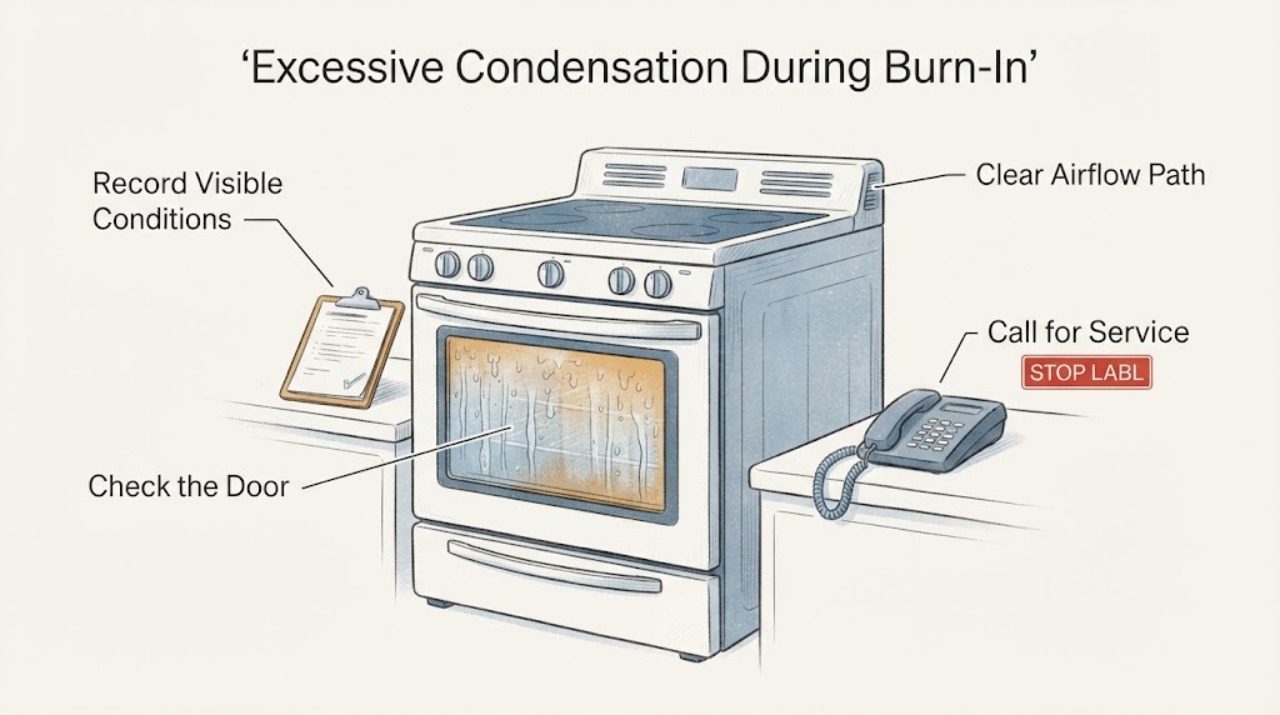
Wolf identifies water as a normal combustion byproduct and says condensation can appear on a gas range door, glass, bullnose, or backsplash during preheat, especially when cold surfaces meet the exhaust; it should dissipate after the setpoint is reached. The exact GR366 guide also requires ventilation for burn-in and says to stop for gas odor, blocked exhaust, abnormal flame, damage, or moisture that remains excessive or damages the installation. Use the model-specific burn-in sequence once with the hood running, do not redirect the flue or repeat burn-in to chase a puddle, and arrange Wolf Factory Certified Service when condensation is excessive, persistent, or accompanied by a gas or combustion concern.
Work through in order
Diagnostic checks
Use only checks that match the exact appliance or system and its official guide.
-
Check 1
Stop the burn-in or preheat cycle, turn the oven control to Off, and let the range cool with the door closed. From a safe, dry position, record where moisture appears: inside the cavity, on the glass or bullnose, on the backsplash, under the range, or on cabinetry.
Expected result: A light film on cold glass or backsplash disappears after the setpoint, or water drips, pools under the range, remains after cooling, or reaches cabinetry/walls.
Next step: Do not run another burn-in to see whether a puddle repeats. Dry only accessible surfaces after complete cool-down and contact Wolf Factory Certified Service for persistent, pooling, or damaging moisture.
Why this matters
Why: Transient surface condensation can fit Wolf’s gas-combustion and cold-surface explanation. Pooling, persistent wetness, or property exposure exceeds the normal observation described by Wolf and needs service assessment.
-
Check 2
Verify the unit is the exact Wolf GR366 or GR366-LP and use the official GR366 gas-range guide. For the documented first-use sequence, clean the oven with mild detergent, turn on ventilation, use the specified bake/broil burn-in once, then turn the oven Off and let it cool with the door closed.
Expected result: The sequence was performed with the hood on and no food or broiler pan inside, or the oven was run repeatedly/with different settings while investigating moisture.
Next step: Stop improvised burn-in. If the exact model or fuel setup differs from GR366/GR366-LP, use that unit’s guide and have Wolf service or a qualified installer verify the installation before further testing.
Why this matters
Why: The official guide supports one model-specific burn-in with ventilation; repeated or improvised cycles add heat and moisture without identifying the cause. GR366 and GR366-LP are the listed model options, but the gas type and installation still need to match the rating plate.
-
Check 3
Check from outside the appliance, only after it is cool, that the oven cool-air intake above the door and exhaust vent below the door are unobstructed and that the hood is operating. Do not cover, extend, tape, or redirect the flue toward or away from the backsplash.
Expected result: The intake or exhaust is blocked, the hood does not operate, a custom deflector has been added, or the airflow path is clear and unchanged.
Next step: Remove only loose items that are plainly obstructing the user-accessible area after the unit is cool; leave installed ventilation or cabinetry changes to a qualified installer. Arrange service if airflow or condensation remains abnormal.
Why this matters
Why: Blocked or altered airflow can affect combustion, ventilation, and condensation behavior. Wolf specifically says the flue is designed for hot air to rise and does not recommend a deflector that changes its direction.
-
Check 4
Observe one normal preheat only if there is no gas odor, smoke, abnormal flame, water damage, or active leak concern. Watch the flame and exhaust from a safe distance; do not open the burner compartment, alter gas settings, or place a hand in the exhaust.
Expected result: The flame is stable and the moisture dissipates at setpoint, or the flame is erratic/yellow, smoke is heavy or unusual, gas odor is present, or condensation keeps forming/pooling.
Next step: Turn the oven Off. For gas odor, do not operate switches or light anything; leave and call the gas supplier or emergency service from outside. For abnormal flame, smoke, or persistent pooling without gas odor, keep the range off and request Wolf Factory Certified Service.
Why this matters
Why: Stable operation with dissipating moisture is consistent with Wolf’s normal preheat explanation. Abnormal combustion signs, gas odor, or persistent water require a gas/combustion or appliance diagnosis rather than more burn-in.
-
Check 5
Prepare the rating-plate details and installation history for service: GR366 or GR366-LP, serial number, natural gas or LP setup, whether the issue appeared only during first burn-in, moisture locations, whether the backsplash or cabinetry was damaged, hood operation, and whether any installer or service provider has inspected it.
Expected result: The model/fuel and installation are confirmed, but moisture remains excessive or the surrounding material is being damaged.
Next step: Keep the oven out of service until Wolf Factory Certified Service or a qualified gas appliance professional evaluates the combustion, ventilation, installation, and moisture path.
Why this matters
Why: The exact product is identified but the official guidance does not support a user diagnosis of gas pressure, burner adjustment, flue design, or a hidden leak from condensation alone.
Use your observations
Decision map
Find the observation that best matches what you see, then follow the next safe action.
-
PATH 01Next step
What you see
Moisture appears on cold glass or backsplash during preheat and dissipates once the oven reaches its setpoint, with stable flames and no damage.
Do this next
Use the hood during operation, keep the designed intake/exhaust path clear, and monitor without adding a deflector or repeating burn-in.
Why this path and its safety boundary
Why it matters: This matches Wolf’s documented explanation for water produced by gas combustion and cold-surface condensation.
-
PATH 02Next step
What you see
Water drips or pools, remains after cool-down, reaches cabinetry/walls, or damages the backsplash even after the specified burn-in/preheat.
Do this next
Stop further burn-in and schedule Wolf Factory Certified Service; document the location and extent of moisture and any installation changes.
Why this path and its safety boundary
Why it matters: The moisture is excessive or persistent rather than the transient condensation Wolf describes.
-
PATH 03Next step
What you see
The exhaust/intake is obstructed, a custom deflector or vent alteration is present, or the hood does not run.
Do this next
Keep the oven Off and have the ventilation or installation checked by a qualified installer/service provider; do not modify the gas range airflow yourself.
Why this path and its safety boundary
Why it matters: Ventilation or altered airflow may be affecting combustion and moisture behavior, and the official guidance does not support redirecting the flue.
-
PATH 04Next step
What you see
There is gas odor, an erratic or abnormal flame, unusual smoke, or another sign of combustion trouble.
Do this next
Do not touch electrical switches or light an appliance; leave and call the gas supplier or emergency service from outside. Keep the range out of service until qualified personnel clear it.
Why this path and its safety boundary
Why it matters: This is a gas or combustion safety event, not a burn-in adjustment problem.
Helpful context
Understand the symptom
Separate transient preheat moisture from a defect
Wolf says gas combustion produces water and that condensation may appear during preheat on the cold door, glass, bullnose, or backsplash, then dissipate once the oven reaches the setpoint. That explanation does not make a large puddle, moisture that persists, cabinet or backsplash damage, or an abnormal flame automatically acceptable; Wolf directs excessive condensation to Factory Certified Service.
Keep the GR366 exhaust path in its designed configuration
The GR366 guide says the oven cool-air intake and exhaust vent must remain unobstructed. Wolf’s condensation FAQ says it does not offer or recommend a deflector that pushes vented air away from the backsplash because changing airflow can affect product performance. Do not tape, cover, extend, or redirect the flue while testing.
When checks do not resolve it
Need a professional?
Use Wolf Factory Certified Service or a qualified gas-appliance installer when condensation is excessive/persistent, the exhaust or installation is altered, the flame is abnormal, or gas/combustion is suspected.
Have this ready
- Provide GR366/GR366-LP and serial number, fuel type, burn-in/preheat settings, hood status, exact moisture locations, whether moisture dissipates at setpoint, any pooling or material damage, and any installer/service findings.
Common questions
FAQ
Is some water or condensation normal on a Wolf GR366 during preheat?
Wolf says gas combustion produces water and condensation may appear on the outer door, glass, bullnose, or backsplash when cold surfaces meet hot exhaust. It should dissipate at the setpoint; dripping, pooling, persistent wetness, or material damage needs Factory Certified Service.
Can I install a deflector to push the hot exhaust away from the backsplash?
Wolf says it does not offer or recommend a deflector for this purpose because the flue is designed to let hot air rise and changing airflow may affect performance. Have the installation assessed instead.
Should I repeat the GR366 burn-in until the condensation stops?
No. The official guide gives a model-specific first-use sequence with ventilation and then says to turn the oven off and let it cool. Repeating improvised burn-in does not diagnose persistent pooling or damage; stop and request service.
Read the exact guide
Official sources
- Tons of condensation from gas ovenReddit r/Appliances · Exact community thread for Wolf burn-in condensation and GR366 identity; reports are not treated as manufacturer diagnosis or modification instructions.
- Wolf Gas Range Use and Care GuideSub-Zero, Wolf, and Cove · Opened guide includes GR-series gas-range safety, burn-in, ventilation, gas-odor, service, and troubleshooting boundaries; exact fuel/model rating plate must still be confirmed.
- Wolf Oven First Time Use Burn-In ProcessSub-Zero, Wolf, and Cove · Use the linked GR Series path after confirming the product model; it supports ventilation, residue/odor expectations, cooling and model lookup, not a cure for excessive pooling.
- GR366 Wolf Trade Resources, Specs & ManualsSub-Zero, Wolf, and Cove · Directly identifies the assigned GR366 model and links its official use-and-care and installation documents; it does not by itself diagnose condensation.
- Gas Range Moisture or CondensationSub-Zero, Wolf, and Cove · Directly relevant to Wolf gas ranges and condensation during preheat; it does not authorize user gas-path repair.
Community feedback
Share a repair observation
Share a plain-text repair observation. Accepted observations are published automatically; this page may take a moment to update.