
On this page
Start here
Quick answer
When cockroach signs are in a food area, protect food and people first. Do not eat or serve food that has been exposed to droppings, bodies, shed skins, or an insecticide, and separate clean dishes and utensils from the affected surface. Photograph the signs without assuming a species, then map their location near cabinets, sink plumbing, refrigerator, stove, dishwasher, and food storage. Use dated sticky traps to confirm activity while sealing food, removing crumbs and cardboard, drying leaks, and cleaning safely. Do not spray or mix chemicals, fog the kitchen, apply pesticide to food-contact surfaces, or move a heavy appliance. Repeated signs, egg cases, nymphs, live roaches, multiple monitor catches, or contamination that cannot be safely isolated calls for prompt pest-control service.
Before you begin
Safety first
- The professional confirms the pest, sets a food and occupant safety boundary, inspects food, water, shelter, plumbing, appliance, and entry conditions, and selects a coordinated integrated pest-management plan. Product choice and application must follow the label and the actual site.
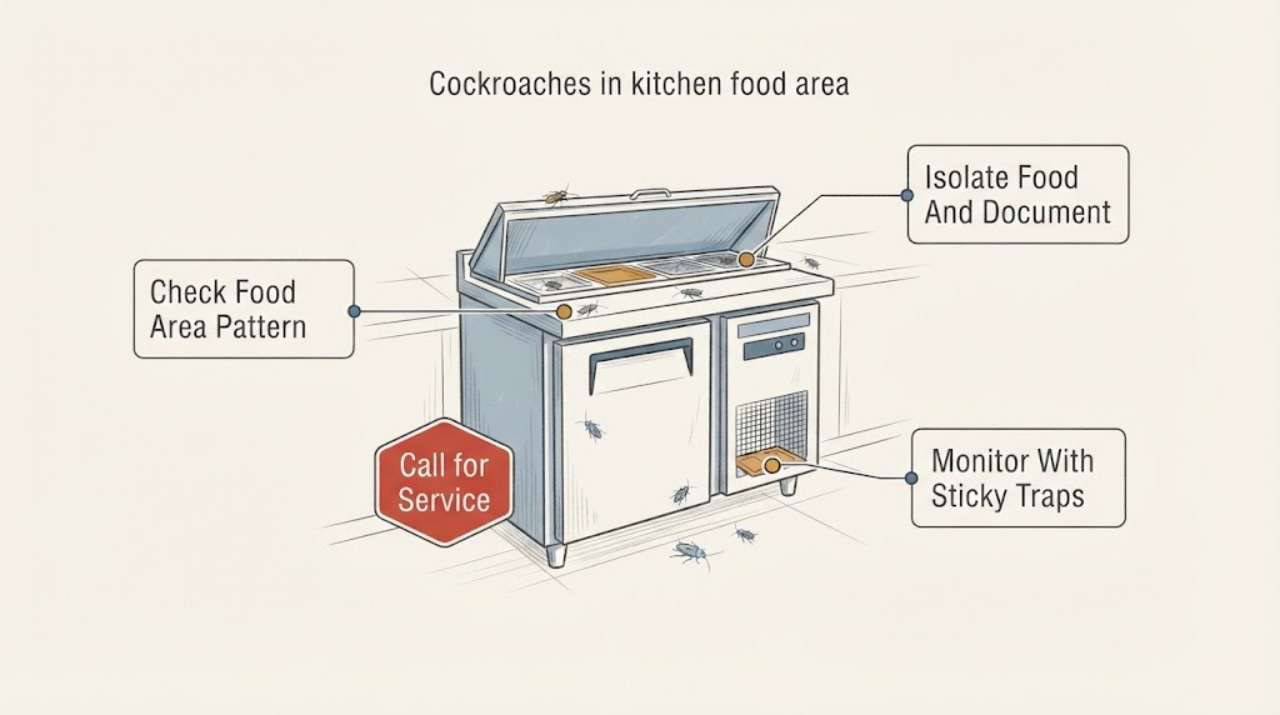
Work through in order
Diagnostic checks
Use only checks that match the exact appliance or system and its official guide.
-
Check 1
Keep food, dishes, utensils, and clean preparation surfaces away from the affected spot. Photograph the sign and record whether it is a pellet, smear, shed skin, egg case, dead insect, or live insect, plus the exact location and date. Do not touch, smear, dry-sweep, or declare a species from the mark alone.
Expected result: No food or food-contact item was exposed; food or utensils were exposed; or residue is on a preparation or storage surface.
Next step: Bag or set aside visibly affected food as appropriate, keep utensils out of use, and provide photos and surface details to a pest professional or local food-safety resource.
Stop if: Stop cleaning if residue becomes airborne, an occupant has respiratory sensitivity, contamination is extensive, or the surface cannot be safely isolated.
Why this matters
Why: An isolated non-food sign can be documented while monitoring begins. Exposed food or food-contact surfaces require containment and safe cleaning or disposal before normal use, regardless of which insect produced the residue.
-
Check 2
Inspect only visible, reachable edges of pantry shelves, cabinet joints, drawers, sink cabinet, backsplash, baseboards, and trash or recycling areas. Note fresh signs, grease-like smears, odor, egg cases, shed skins, or live insects without emptying built-in cavities or removing panels.
Expected result: Signs are limited to one isolated surface; appear in several food-storage or preparation locations; or are concentrated near a sink, plumbing opening, dishwasher, refrigerator, stove, or counter appliance.
Next step: Mark each location on a simple kitchen sketch or photo set and continue with nonchemical monitoring; do not chase signs into an appliance or wall.
Stop if: Stop for leaking plumbing, standing water, exposed wiring, hot equipment, unstable shelving, or any need to move a heavy appliance.
Why this matters
Why: A localized mark may be misidentified. Multiple food-area locations or a cluster near a moisture, warmth, or access route makes active harboring more likely and determines where monitors and professional inspection should focus.
-
Check 3
Place dated sticky monitors tightly against accessible edges near the original sign, pantry or cabinet edge, sink, refrigerator, stove, and dishwasher area, without placing anything on food-contact surfaces or applying pesticide. Record each monitor location and catch count.
Expected result: Monitors remain empty; one edge catches activity; or several monitors catch roaches or other insects across the kitchen or adjacent rooms.
Next step: Keep the monitor map and request identification if the insect is unclear; use the pattern rather than one trap to decide whether service is needed.
Stop if: Keep monitors away from food, utensils, children, pets, and appliance controls, and stop if safe placement is not possible.
Why this matters
Why: An empty monitor lowers confidence but does not rule out hidden activity. A concentrated catch identifies a useful inspection zone; multiple catches or catches near food storage raise the urgency and scope of professional treatment.
-
Check 4
Seal food and pet food, remove crumbs and garbage, dry the sink and counter, reduce cardboard and clutter, and record visible faucet, drain, dishwasher, or supply-line leaks for repair. Do not mix cleaners or pesticides, fog, or spray a food area.
Expected result: The kitchen becomes dry and less cluttered; a leak or standing moisture remains; or fresh signs continue after food and water access are reduced.
Next step: Arrange plumbing or maintenance service for a leak and give the pest professional the before-and-after locations and monitor results.
Stop if: Stop for sewage backup, water near electrical equipment, chemical exposure, contaminated food, or any repair requiring plumbing disconnection or demolition.
Why this matters
Why: Removing food, water, and shelter supports integrated pest management but is not a species identification or a complete treatment. A leak can sustain harboring, while continuing signs indicate that hidden access or an established population may remain.
-
Check 5
Compare the food-area record with accessible adjacent rooms and shared walls, noting fresh signs, nymphs, egg cases, daytime sightings, odor, and occupants or pets with asthma or other sensitivity. Do not enter another unit, open walls, or disturb hidden areas.
Expected result: Signs remain limited to one food-area edge; occur in several rooms or units; include nymphs or egg cases; or coincide with respiratory symptoms or repeated food contamination.
Next step: Notify building management where applicable and request a licensed pest professional with the monitor map, food-safety boundary, moisture sources, and occupant concerns.
Stop if: Keep people and pets away from contaminated food or treatment areas and seek medical advice for symptoms; do not diagnose illness from the pest signs.
Why this matters
Why: A limited edge pattern may support targeted professional treatment. Spread, immature roaches, daytime activity, shared-unit involvement, or health and food concerns require prompt coordinated service instead of repeated home spraying.
-
Check 6
Prepare a service handoff with photos, exact food and non-food surfaces, dates, monitor locations and catches, live-insect descriptions, food disposal or cleaning already done, water and appliance context, products used, and areas you could not safely inspect.
Expected result: The evidence is uncertain; activity is confirmed and localized; or activity is recurring, widespread, contaminated, or beyond safe access.
Next step: Request prompt pest-control inspection for confirmed or recurring signs and keep the affected food area separated until the provider gives safe reuse instructions.
Stop if: Do not use foggers, broad spray, chemical mixtures, wall opening, or appliance disassembly to produce a faster answer.
Why this matters
Why: A precise handoff prevents a generic spray from being applied to food surfaces and helps the provider plan identification, monitoring, targeted treatment, cleanup, exclusion, and any plumbing or building coordination.
Use your observations
Decision map
Find the observation that best matches what you see, then follow the next safe action.
-
PATH 01Safety boundary
What you see
Droppings, a roach, shed skin, an egg case, or pesticide is on food, dishes, utensils, countertops, pantry shelves, or another food-contact surface.
Do this next
Separate or discard affected food as appropriate, keep utensils out of use, clean only with a safe approved method, and arrange prompt pest-control guidance.
Why this path and its safety boundary
Why it matters: Treat the area as contaminated until food-safety and label-directed cleaning or disposal decisions are complete.
Safety stop: Do not spray the surface, reuse exposed food or utensils, dry-sweep residue, or mix cleaning chemicals.
-
PATH 02Safety boundary
What you see
Only an uncertain dark mark is present and no supporting live insect, nymph, egg case, shed skin, repeated fresh sign, or monitor catch is found.
Do this next
Photograph it, maintain food separation, and use dated nonchemical monitoring or professional identification.
Why this path and its safety boundary
Why it matters: Do not call it cockroach activity or choose a pesticide from the mark alone.
Safety stop: Do not apply pesticide as a test or clean in a way that destroys the evidence before it is documented.
-
PATH 03Safety boundary
What you see
A monitor or repeated observation confirms activity at one pantry, cabinet, sink, appliance edge, or other kitchen zone.
Do this next
Reduce food, water, and clutter conditions and request targeted pest-control advice using the location record.
Why this path and its safety boundary
Why it matters: A localized harborage or access route is plausible, but species and treatment remain unconfirmed.
Safety stop: Do not move a heavy appliance, open a void, or spray a food or dish surface.
-
PATH 04Safety boundary
What you see
Signs occur in multiple food areas, rooms, or units, or nymphs, egg cases, daytime activity, or repeated live sightings appear.
Do this next
Request prompt licensed pest-control inspection and coordinate with building management for shared walls or multiple units.
Why this path and its safety boundary
Why it matters: The pattern is more consistent with established or spreading activity than one deposited mark.
Safety stop: Do not fog, broadcast spray, mix products, or judge success from one cleaned shelf.
-
PATH 05Safety boundary
What you see
Signs cluster near a leak, sink plumbing, dishwasher connection, refrigerator, stove, or inaccessible appliance space.
Do this next
Report the leak or request coordinated pest and appliance or maintenance service; leave heavy appliances in place.
Why this path and its safety boundary
Why it matters: Water, warmth, or a protected route may be sustaining activity, and the suspected harborage is beyond ordinary safe access.
Safety stop: Do not disconnect plumbing, pull or tilt an appliance, reach into energized equipment, or apply pesticide near standing water or exposed electricity.
-
PATH 06Safety boundary
What you see
Monitors are empty or ambiguous while fresh signs continue, recur, or spread.
Do this next
Provide dated photos, exact surfaces, cleaning history, and monitor placement to a pest professional for identification and inspection.
Why this path and its safety boundary
Why it matters: A negative trap does not resolve a hidden harborage or prove that the original evidence was harmless.
Safety stop: Stop self-treatment rather than escalating to successive sprays, fogging, or mixtures.
-
PATH 07Safety boundary
What you see
An occupant has asthma or strong sensitivity, contamination is extensive, or the affected kitchen is a shared food-preparation area.
Do this next
Keep people and pets away from the affected zone and obtain prompt professional and, when needed, medical or building-management guidance.
Why this path and its safety boundary
Why it matters: Exposure and coordination concerns make ad hoc treatment inappropriate.
Safety stop: Do not clean, treat, or reopen the area beyond the safe instructions for the occupants and products used.
Helpful context
Understand the symptom
Treat a food area as a containment decision
Droppings, smears, shed skins, egg cases, or live roaches near food storage or preparation change the first step: keep food, dishes, utensils, and clean work surfaces separate while you identify what is affected. A dark speck is not enough to identify a cockroach species or the size of an infestation. Photograph the evidence, note the exact surface and time, and avoid dry sweeping or actions that spread residue. If food or a food-contact surface is contaminated, follow local food-safety and product-label guidance or ask a pest professional before reuse.
Map food, water, warmth, and hiding routes
Look from safe, accessible positions around pantry and cabinet seams, the sink cabinet and plumbing openings, dishwasher connections, refrigerator and stove edges, counter appliances, baseboards, and trash or recycling areas. Activity near a damp sink or leak suggests a water source; activity beside a warm appliance or cabinet void suggests shelter; signs in a pantry or drawer point to food storage and packaging. Do not pull out a refrigerator or range, open an appliance, remove a kick plate, or reach into a motor or electrical compartment.
Monitor before treatment
Dated sticky monitors placed tightly against accessible edges can show whether signs are active and where activity concentrates. Keep them away from food, dishes, children, and pets. Monitoring and accurate identification are the first stages of integrated pest management; a single clean surface or empty trap does not prove that a hidden harborage is gone.
Clean and isolate without spreading exposure
Discard visibly contaminated food, close remaining food and pet food in pest-resistant containers, remove crumbs and garbage, dry the sink and counter, and reduce cardboard or clutter. Clean hard surfaces only with a method permitted for that surface and follow the label; keep food and utensils out of the area until it is safe to reuse. Do not combine cleaners or pesticides, fog, or spray over counters, shelves, dishes, food, or other food-contact surfaces.
Know when a food-area sign needs treatment
One uncertain mark on an isolated non-food surface is different from fresh signs in pantry shelves, drawers, cabinets, or preparation areas, especially when nymphs, egg cases, daytime activity, or repeated catches appear. A leak, shared wall, or inaccessible appliance can sustain the problem. A pest professional can identify the insect, set the treatment boundary, and coordinate plumbing, appliance access, building management, cleanup, and exclusion without relying on repeated household spraying.
Safety boundary
Stop conditions
- Do not infer species or infestation size from droppings alone; stop and request identification when evidence is uncertain.
- Keep exposed food, dishes, utensils, and food-contact surfaces isolated until safe cleaning or disposal is determined; do not reuse contaminated items.
- Do not blindly spray, mix chemicals, fog, broadcast pesticide, or apply product to food, dishes, countertops, pantry shelves, or unlabeled sites.
- Do not move, unplug, open, or dismantle heavy or energized appliances, disconnect plumbing, open walls, enter another unit, or treat near standing water or exposed electricity.
- Keep people and pets away from contaminated or treated areas and obtain prompt professional or medical guidance for extensive exposure or respiratory symptoms.
Only after diagnosis
Potential parts
- roach-bait-station
Consider only after the pest and activity zone are confirmed and the product label permits indoor use away from food and food-contact surfaces.
Match the label to the site, occupants, pets, and identified pest; use only as directed and never place on counters, shelves, dishes, or food. - sticky-trap
Use to confirm and map activity before treatment or when the original mark is uncertain.
Choose an indoor monitoring trap and place it against accessible edges away from food, dishes, children, pets, and appliance controls; follow the label. - door-sweep
Consider only after a visible exterior-door gap is confirmed as an entry route and treatment or building access is addressed.
Match the door, threshold, swing, and existing seal, and preserve required egress; confirm fit before ordering.
When checks do not resolve it
Need a professional?
Arrange prompt service when food or food-contact surfaces are contaminated, signs recur or spread, monitors catch activity, nymphs or egg cases appear, live roaches are seen in the daytime, a leak or appliance harbor is involved, or activity may cross a shared wall or unit. Seek urgent guidance for extensive contamination or occupants with respiratory sensitivity.
Safety scope: The professional confirms the pest, sets a food and occupant safety boundary, inspects food, water, shelter, plumbing, appliance, and entry conditions, and selects a coordinated integrated pest-management plan. Product choice and application must follow the label and the actual site.
Have this ready
- Photos and exact food, storage, preparation, cabinet, and non-food surfaces
- Dates, monitor locations, catch counts, and whether signs are fresh or recurring
- A neutral description of the insect or residue without claiming a species from droppings alone
- Food disposal or cleaning already done, plus food, water, plumbing, appliance, and cardboard observations
- Products already used, occupants or pets, health concerns, and areas that could not be inspected safely
Common questions
FAQ
What should I do first if droppings are near food?
Separate exposed food, dishes, and utensils from the area, photograph the evidence, and keep the surface out of normal use until it is safely cleaned or assessed. Do not assume the species from droppings alone.
Can I identify the cockroach from its droppings?
No. Droppings can support a concern but do not reliably identify a species or infestation size. Use photos, neutral descriptions, dated monitors, and professional identification when needed.
Where can I look without moving appliances?
Check visible edges near pantry shelves, cabinet seams, the sink cabinet, plumbing openings, dishwasher connection, refrigerator and stove perimeter, counter appliances, and baseboards. Do not pull out or dismantle a heavy or energized appliance.
Should I spray or mix products in the kitchen?
No. Do not blindly spray, mix chemicals, fog, broadcast pesticide, or apply a product to food, dishes, countertops, or unlabeled sites. Reduce food, water, and shelter and follow the label or professional guidance.
When are sticky traps enough?
They are for monitoring, not proof of eradication. A localized catch can help map activity, but repeated catches, multiple locations, nymphs, egg cases, contamination, or shared-unit activity warrant pest-control inspection.
Read the exact guide
Official sources
- Smart Pest Control to Protect Your HealthU.S. Environmental Protection Agency · Supports securing food, reducing water and shelter, and using traps or bait stations according to label directions.
- Integrated Pest Management (IPM) PrinciplesU.S. Environmental Protection Agency · Supports monitoring and accurate identification before selecting control, with targeted methods preferred over broad spraying.
- CockroachesUniversity of Minnesota Extension · Supports not relying on one sign for species identification, using sticky traps around sinks and appliances, and recognizing kitchen harborage conditions.
Community feedback
Share a repair observation
Share a plain-text repair observation. Accepted observations are published automatically; this page may take a moment to update.