
On this page
Start here
Quick answer
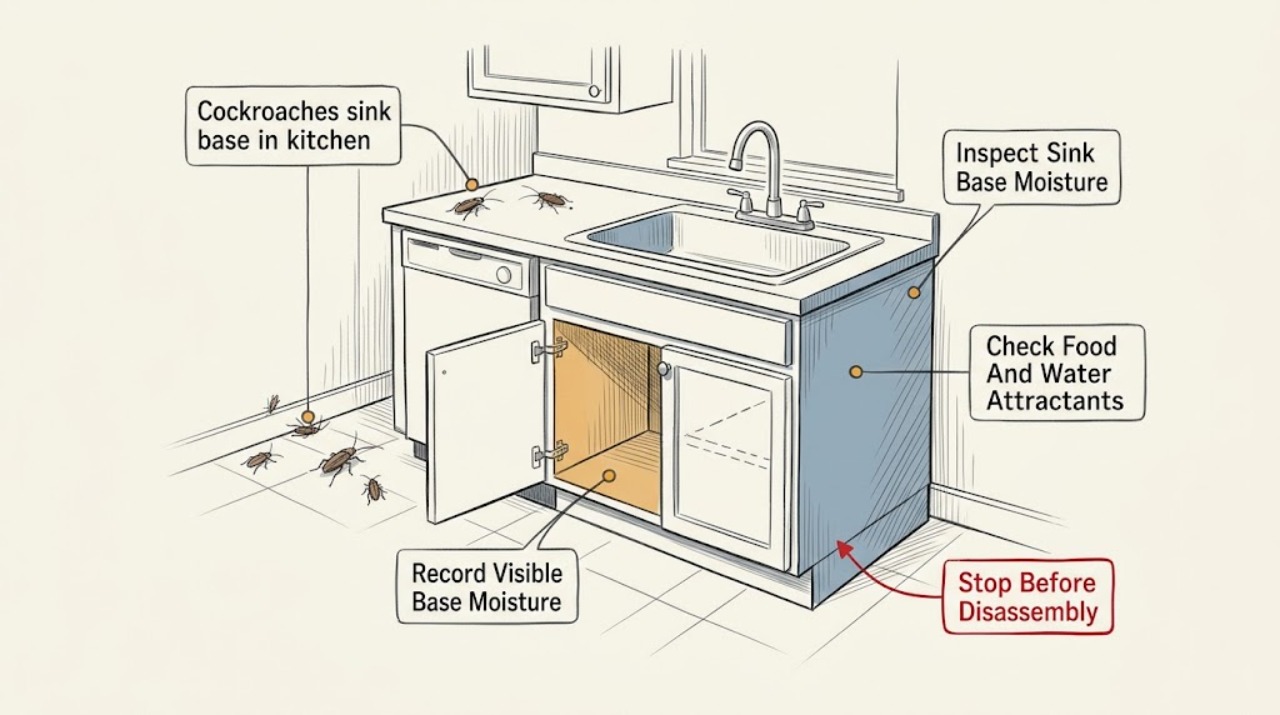
Cockroaches around a kitchen sink base usually mean the area offers some combination of water, food residue, shelter, or an opening around plumbing. Keep people and pets away from visible droppings, bodies, egg cases, and standing or contaminated water; do not touch them bare-handed or spray into plumbing, food storage, or a wet cabinet. From a dry position, record sightings, look for leak or moisture clues without dismantling the sink base, remove ordinary food and water attractants only when the surface is clean and safe, and arrange a qualified pest inspection if sightings repeat, spread, or involve an occupied kitchen. Do not mix pesticides, fog the room, or place bait where children or pets can reach it.
Work through in order
Diagnostic checks
Use only checks that match the exact appliance or system and its official guide.
-
Check 1
Record the date, time, location, number, and appearance of each sighting near the sink base, and photograph insects or signs from a safe distance without touching or moving them.
Expected result: The record may show one isolated adult, repeated adults, small nymphs, egg cases, droppings, cast skins, activity after darkness, or sightings in cabinets, appliances, bathrooms, or adjacent rooms.
Next step: Keep the record and request a qualified pest inspection when signs repeat or spread. Do not crush, sweep, vacuum, or handle contaminated material if it could aerosolize residue or expose you.
Stop if: Stop for heavy droppings, many insects, airborne dust, a dead or live roach on food-contact items, or any need to touch or clean contaminated material.
Why this matters
Why: Repeated sightings, young roaches, egg cases, or activity beyond the sink base make an established harboring or migration route more likely than a one-time visitor. Appearance alone is not a reliable species identification.
-
Check 2
From a dry position, use a flashlight to look at the visible sink-base floor, cabinet corners, pipe penetrations, trap area, shutoff area, and back wall for standing water, stains, swollen material, condensation, or gaps; do not reach into the cabinet or loosen plumbing.
Expected result: The area may be dry and intact, show a drip or water stain, have damp or swollen cabinet material, contain standing water, or show open gaps around pipes and wall joints.
Next step: Photograph the condition and arrange plumbing service for a leak or wet cabinet. Keep the cabinet closed or isolated if water or contamination is present; do not apply chemicals into plumbing openings.
Stop if: Stop for standing or foul-smelling water, wet electrical equipment, sewage-like contamination, mold, swollen flooring, or any need to touch pipes, pooled water, or droppings.
Why this matters
Why: Water and shelter can sustain roaches, while a leak can damage the cabinet and make pesticide or cleanup exposure more hazardous. A dry appearance does not rule out an intermittent leak or a hidden route.
-
Check 3
From clean, reachable surfaces outside the contaminated area, look for crumbs, grease, food or pet-food residue, damp sponges, wet towels, open trash, and dishes left overnight; remove or clean ordinary uncontaminated items using normal kitchen hygiene, without disturbing the sink base.
Expected result: Food residue, accessible trash, damp cloths, pet bowls, or a recurring water source may be present, or no obvious attractant may be visible.
Next step: Store food and pet food closed, keep trash lidded, dry clean surfaces, and address ordinary spills. Do not wipe, sweep, or vacuum droppings or suspected egg cases without a safe cleanup plan.
Stop if: Stop for contaminated food or dishes, droppings on food-contact surfaces, strong odor, standing water, a person with asthma or sensitivity nearby, or any need to handle contaminated residue.
Why this matters
Why: Removing accessible food and water reduces support for roaches but does not prove the harboring area is clear. No visible attractant increases the value of a professional inspection for concealed moisture, gaps, or neighboring sources.
-
Check 4
From outside the sink base, note visible gaps where pipes enter the cabinet or wall, openings along the toe-kick and back edge, and routes toward adjacent cabinets or appliances; do not remove panels, pull appliances, or seal a wet or contaminated opening.
Expected result: Openings may be absent, small and dry, connected to a neighboring cabinet, enlarged around a pipe, or accompanied by droppings, rub marks, or insect activity.
Next step: Photograph dry visible gaps and provide their locations to the technician. Have a professional choose any exclusion material after confirming that it will not block plumbing access or hide a leak.
Stop if: Stop for an opening with active water, sewage odor, exposed wiring, loose cabinet structure, or any need to cut, drill, remove trim, or reach behind the sink.
Why this matters
Why: Cracks and openings around sinks, baseboards, and pipes can provide entry or movement routes. An opening that is wet, damaged, or contaminated needs plumbing or pest assessment before sealing.
-
Check 5
If the sink-base area is clean, dry, accessible, and free of children or pets, use only a non-chemical monitoring method exactly as its label directs, placed where it cannot contact food, dishes, water, or plumbing; otherwise skip it and record observations for the professional.
Expected result: A monitor may remain empty, show one insect, show repeated activity, or become wet, contaminated, displaced, or inaccessible.
Next step: Record its location and findings without touching insects or residue. Remove or replace it only as the label permits and arrange pest service for repeated activity; never add spray or homemade bait.
Stop if: Stop for any pesticide exposure, a monitor in a food or water area, children or pets able to reach it, visible contamination, or any need to place it in a wet cabinet.
Why this matters
Why: A monitor can document activity and direction but cannot identify the source or replace inspection. Repeated activity supports professional treatment; a wet or contaminated monitor should not be handled casually.
-
Check 6
Assess whether the kitchen has repeated sightings, an occupant with asthma or sensitivity, children or pets, contaminated food-contact areas, or signs in more than one room; do not remain in a contaminated area to gather more evidence.
Expected result: The issue may be isolated with no health concern, recurring in the sink base, spreading to adjacent rooms, associated with asthma symptoms, or paired with inaccessible water or contamination.
Next step: Keep sensitive occupants and pets away, stop using contaminated food-contact items until safely cleaned or replaced, and arrange prompt qualified pest inspection; add plumbing service when water is involved.
Stop if: Stop and seek medical help for breathing difficulty or suspected poisoning, and stop inspection for extensive infestation, contaminated water, sewage, or uncontrolled pesticide exposure.
Why this matters
Why: Cockroach debris can worsen allergen exposure, and sprays or foggers can also trigger asthma. Repeated or multi-room signs need coordinated pest and plumbing evaluation rather than escalating household chemicals.
Use your observations
Decision map
Find the observation that best matches what you see, then follow the next safe action.
-
PATH 01Next step
What you see
The sink base has standing water, a recurring drip, swollen material, foul odor, or dampness around plumbing.
Do this next
Avoid contact and arrange plumbing and pest inspection. Keep food, children, and pets away; do not spray, pour chemicals into plumbing, or clean contaminated water without an appropriate plan.
-
PATH 02Next step
What you see
Roaches, nymphs, egg cases, droppings, or cast skins recur at the sink base or appear in other rooms.
Do this next
Arrange qualified pest inspection and provide the sighting log and photos. Use source reduction and safe monitoring while waiting; do not fog or mix pesticides.
-
PATH 03Next step
What you see
Accessible crumbs, grease, open trash, wet towels, pet food, dishes, or spills are present outside the contaminated area.
Do this next
Remove ordinary attractants with normal kitchen hygiene, store food closed, keep trash lidded, and dry clean surfaces. Continue monitoring and call service if activity returns.
-
PATH 04Next step
What you see
A dry visible gap around a pipe, cabinet back, toe-kick, or wall appears to connect to the sink base or adjacent space.
Do this next
Photograph and have a professional confirm exclusion material and timing after checking for leaks and access needs. Do not seal a wet, contaminated, or service-access opening.
-
PATH 05Next step
What you see
An occupant has asthma or sensitivity, contaminated food or dishes are involved, or pesticide or dirty-water exposure occurred.
Do this next
Keep the person away from the area and seek medical or poison-control guidance for symptoms or suspected exposure. Arrange professional pest and cleanup assessment.
-
PATH 06Next step
What you see
One unconfirmed sighting occurred, the sink base is dry and clean, and no other signs are present.
Do this next
Keep a dated log, reduce accessible food and water, and use safe monitoring only if the area remains clean, dry, and inaccessible to children and pets. Escalate if activity repeats.
Helpful context
Understand the symptom
Why the sink base is a useful clue
The space below a sink can combine a plumbing leak or condensation with darkness, shelter, and openings around pipes. A single roach does not identify the species or establish an infestation, while repeated adults, nymphs, egg cases, droppings, cast skins, or sightings in more than one room justify a broader inspection. The visible sink base is only one part of the route, so control should address moisture, food, shelter, entry points, and follow-up.
Inspect without contaminating yourself or the kitchen
Use a flashlight from a stable, dry position and photograph what you can see without touching droppings, egg cases, dead insects, wet cabinet material, or plumbing. Keep food, dishes, towels, and pet bowls away from the inspection area. If the cabinet base is wet, foul-smelling, visibly contaminated, or difficult to access, stop and let a qualified pest or plumbing professional handle the inspection and cleanup plan.
Use the least hazardous control path
EPA and CDC guidance emphasizes reducing food and water sources, sealing cracks around sinks and pipes, and avoiding sprays or foggers that can create exposure or trigger asthma. Any pesticide must remain in its original labeled container and be used only as the label allows; a professional can select placement and follow-up when the source or species is uncertain.
Safety boundary
Stop conditions
- Do not mix pesticides, use foggers or sprays in the kitchen, pour pesticide into plumbing, or apply any product outside its label directions.
- Do not touch roaches, droppings, egg cases, dead insects, standing or foul-smelling water, or contaminated food-contact items bare-handed.
- Do not inspect wet cabinets, remove sink-base panels, loosen plumbing, cut openings, or seal a leak or contaminated gap yourself.
- Keep pesticides, monitors, contaminated material, children, pets, and sensitive occupants separated; stop for breathing symptoms, suspected poisoning, sewage, or uncontrolled water.
Only after diagnosis
Potential parts
- roach-bait-station
Consider this category only if the exact label permits the intended location and a professional or responsible adult can keep it away from food, water, children, and pets.
Use only the original labeled product and placement directions; do not place in wet or contaminated cabinets, combine with sprays, or use as a substitute for leak correction and inspection. - sticky-trap
Consider this category only as a non-chemical monitoring aid in a clean, dry, inaccessible location where it cannot contact food, dishes, water, or plumbing.
Record placement and observations, avoid touching insects or residue, and skip the trap if the area is wet, contaminated, or accessible to children or pets. - door-sweep
Consider this category only if a professional identifies an actual exterior entry route and confirms that a sweep will not block ventilation, drainage, appliance clearance, or required access.
Verify the opening, surface, movement, moisture, and cleaning needs; do not cover a plumbing leak, wet cabinet, or contaminated gap.
When checks do not resolve it
Need a professional?
Arrange qualified pest inspection when cockroach activity repeats, includes nymphs or egg cases, appears in more than one room, or persists after safe food and water source reduction. Add plumbing service for leaks, standing water, swollen cabinet material, foul odor, or openings around pipes. Seek prompt help for contaminated food or water, asthma symptoms, suspected pesticide exposure, or an infestation that cannot be inspected without contact.
Common questions
FAQ
Why are cockroaches near the kitchen sink base?
The area can offer water from a leak or condensation, food residue, shelter, and openings around pipes or the cabinet. Look for these clues without touching wet or contaminated material, and arrange inspection when activity repeats.
Should I spray under the sink for roaches?
Do not spray blindly, mix products, or use foggers in a kitchen. Sprays can create exposure and may trigger asthma. Reduce ordinary food and water sources, follow any product label exactly, and use qualified pest service when the source is uncertain or activity repeats.
Can a sink leak cause a roach problem?
A leak or damp cabinet can provide water and shelter and may also damage the cabinet. Photograph visible moisture and arrange plumbing and pest assessment; do not reach into standing or foul-smelling water or open contaminated panels.
Are sticky traps enough to fix cockroaches under a sink?
A sticky trap can document activity but cannot identify or remove a hidden source. Use one only as labeled in a clean, dry, inaccessible location, and arrange pest inspection for repeated sightings, nymphs, egg cases, or signs in other rooms.
When should I call a professional for roaches in the sink base?
Call when activity repeats, spreads, involves young roaches or egg cases, persists after safe source reduction, or cannot be inspected without touching contaminated material. Add plumbing service for leaks, standing water, swelling, or foul odor, and seek medical help for breathing symptoms or suspected poisoning.
Read the exact guide
Official sources
- Controlling AsthmaCenters for Disease Control and Prevention · Public-health guidance for reducing food, water, and allergen exposure in homes; it is not a pest-identification or treatment diagnosis.
- Urban Integrated Pest Management: A Guide for Commercial ApplicatorsU.S. Environmental Protection Agency · Technical training guidance for pest professionals, used here to explain inspection and follow-up; it is not a homeowner pesticide prescription.
- Do you really need to use a pesticide?U.S. Environmental Protection Agency · General EPA consumer guidance; exact pesticide labels and local requirements govern any use.
Community feedback
Share a repair observation
Share a plain-text repair observation. Accepted observations are published automatically; this page may take a moment to update.