
Repair problem
Attic Condensation Troubleshooting Guides
Published FixGraph guidance for diagnosing and responding to attic condensation.
Matching published guides
Choose a guide that matches the service, equipment, and conditions you are seeing.
-
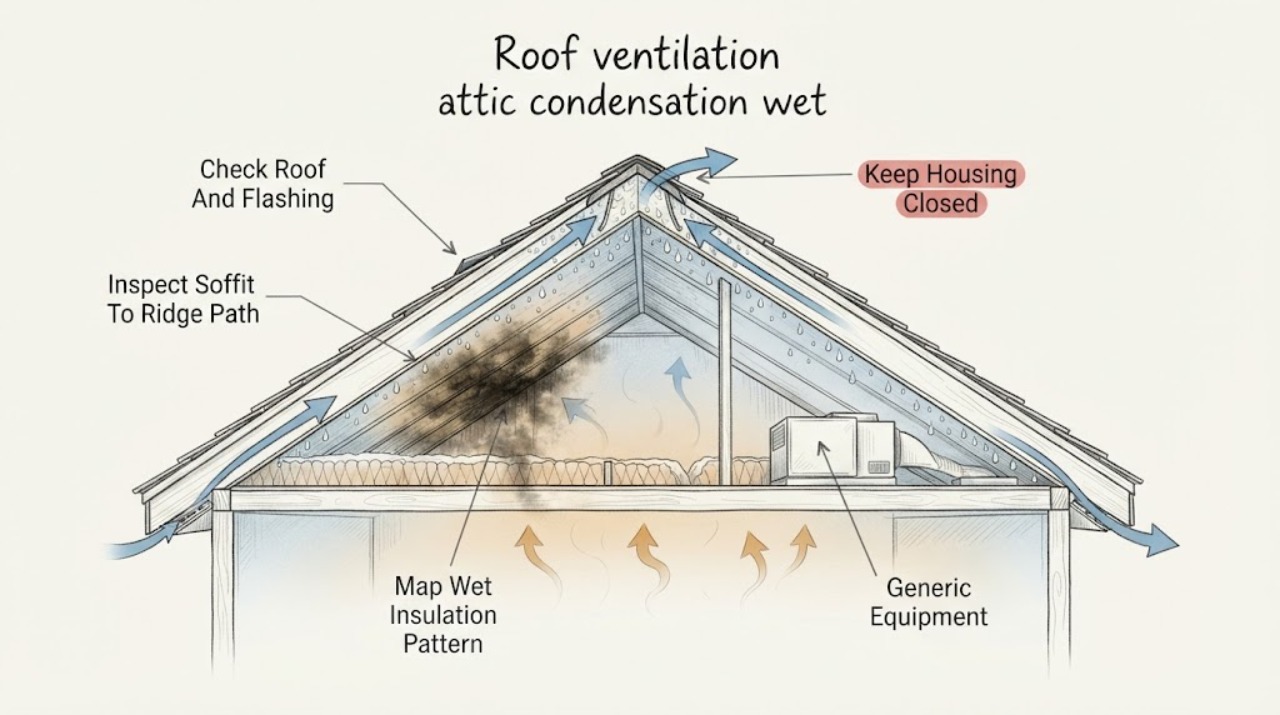
Roof ventilation attic condensation wet insulation: What to Check and What to Do Next
Wet attic insulation is a symptom, not proof that the roof needs more vents. First determine whether the moisture is localized after rain, concentrated near the eaves or roof penetrations, or spread across the underside of the roof deck after cold or humid weather.
-
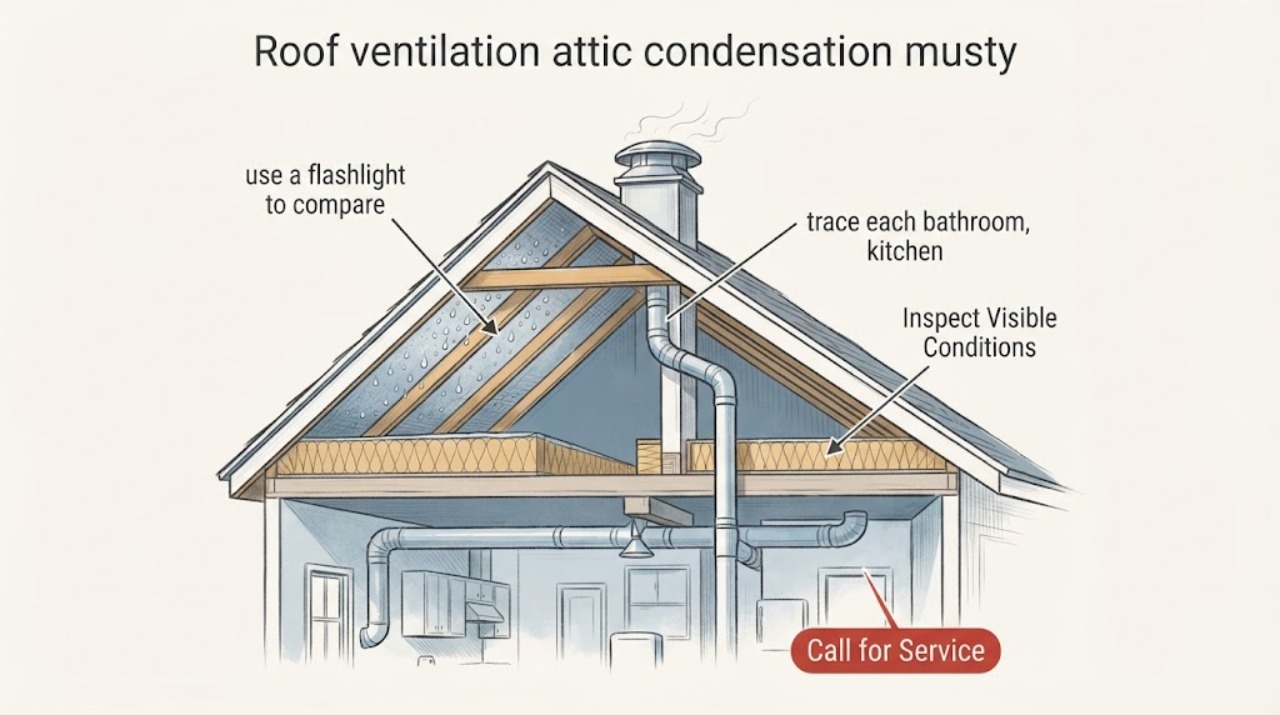
Roof ventilation attic condensation musty odor: What to Check and What to Do Next
A musty attic odor with condensation usually means moisture is reaching cold roof materials faster than the assembly can dry. First determine whether the moisture is widespread condensation or a localized roof leak, then check for indoor exhaust discharged into the attic, blocked soffit or ridge airflow, and high indoor humidity. Drying or deodorizing the attic without correcting the moisture path will not solve the problem.
-
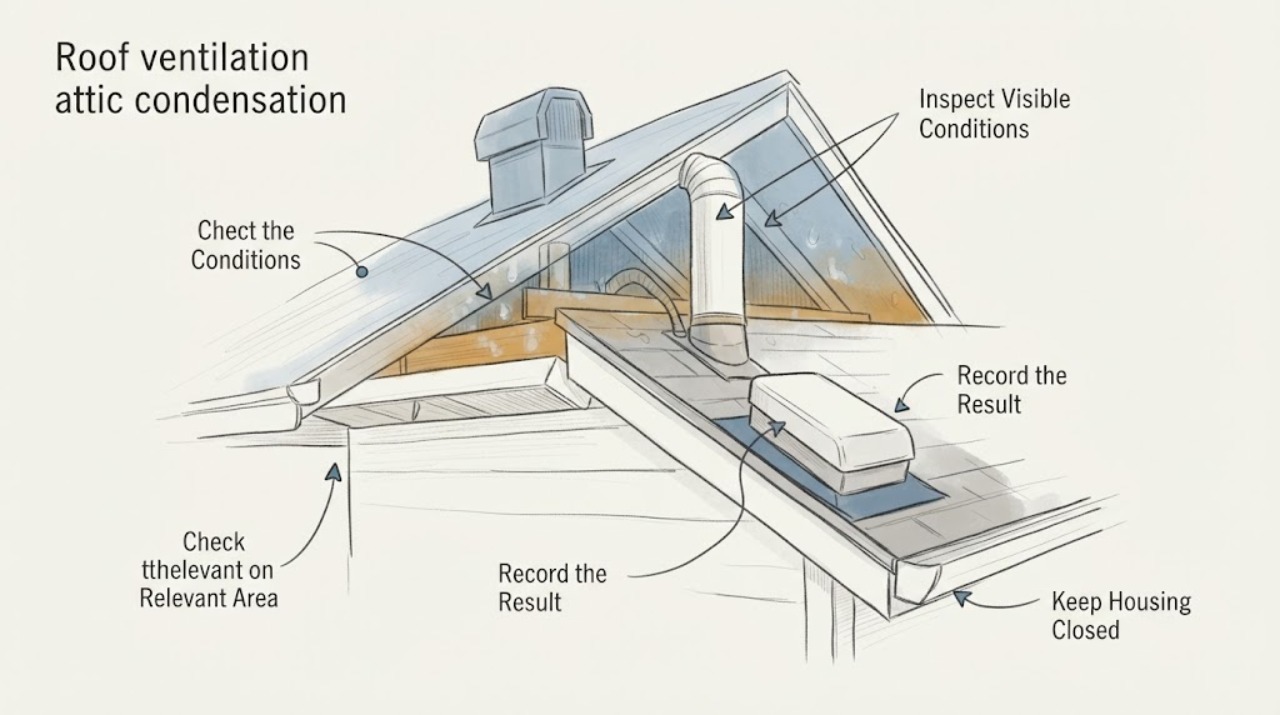
Roof ventilation attic condensation: What to Check and What to Do Next
Start from the living space and ground level. Note window or room condensation, indoor humidity clues, ceiling or upper-wall stains, and whether visible eaves, soffits, fascia, or roof edges show moisture-related changes.
-
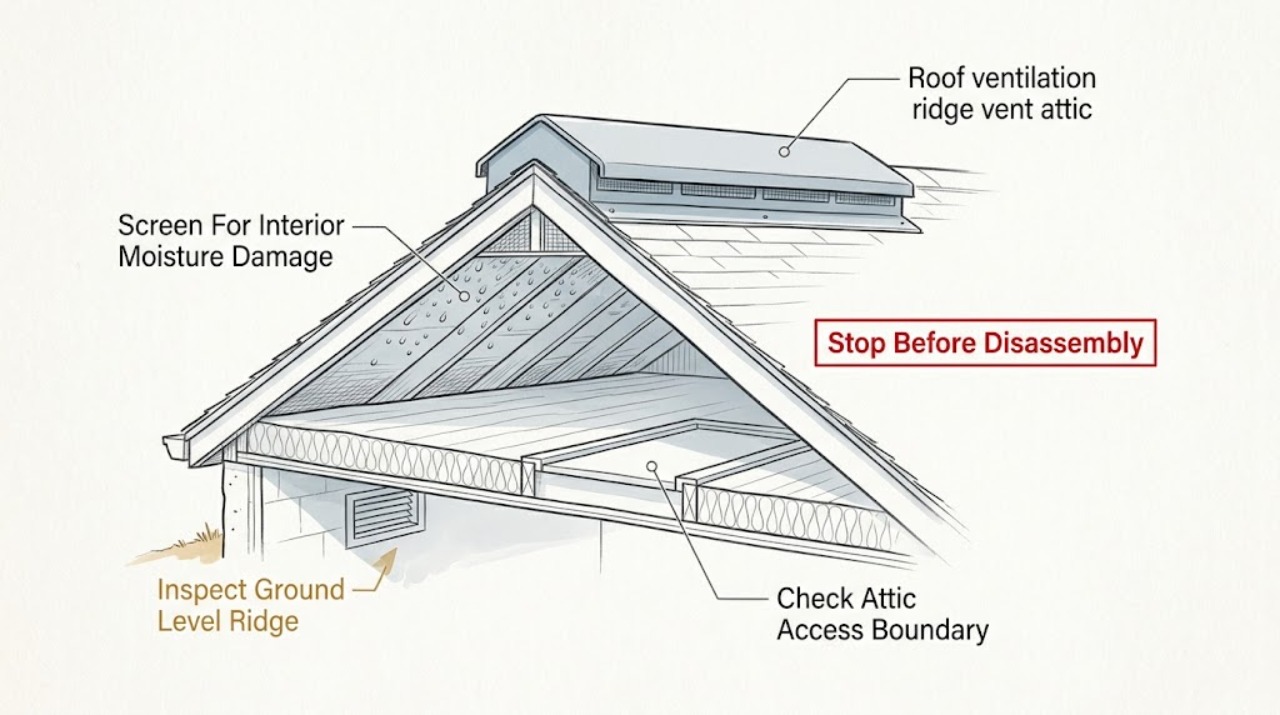
Roof ventilation ridge vent attic condensation: What to Check and What to Do Next
Attic condensation around a ridge-vented roof usually means moisture is entering faster than the attic assembly can remove it, or the intake and exhaust path is blocked or unbalanced; it can also be a roof leak rather than condensation.
-
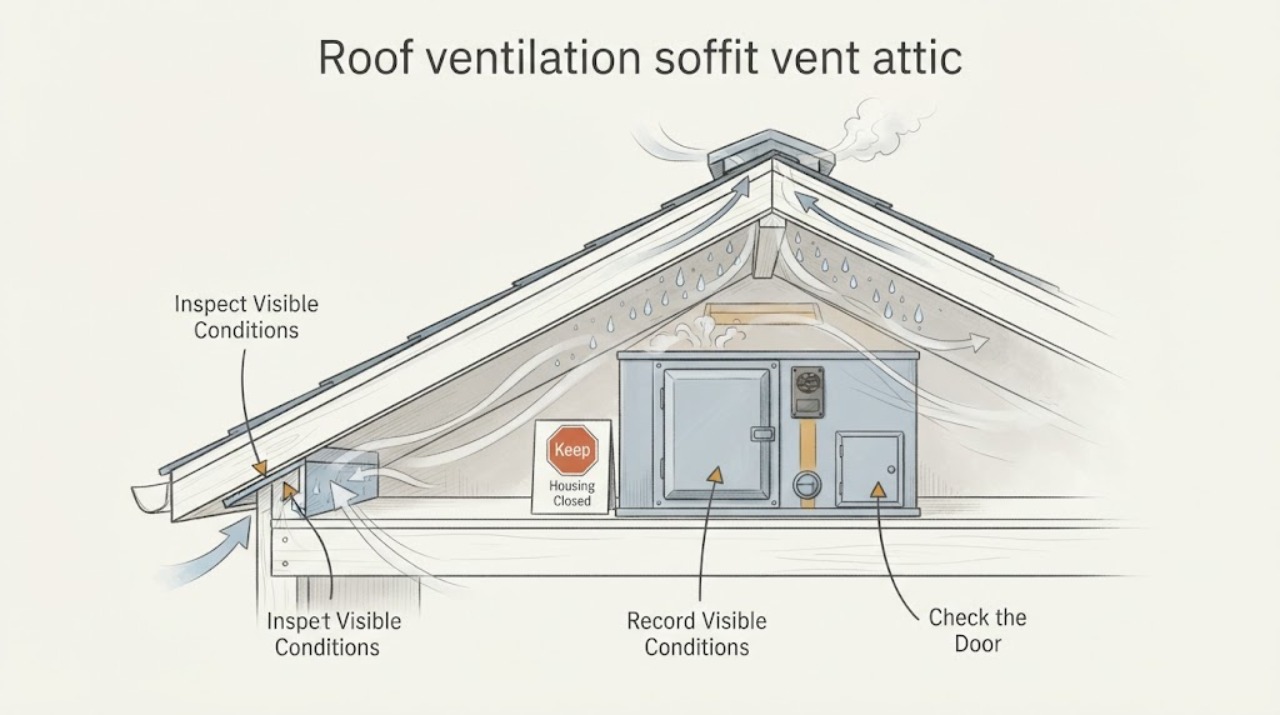
Roof ventilation soffit vent attic condensation: What to Check and What to Do Next
Condensation near a soffit vent can result from a blocked intake path, warm moist air leaking from the home, an exhaust duct terminating in the attic, or a roof leak. From a safe ground-level or normal standing position, document where and when the moisture appears and look for visible soffit blockage or damage; do not enter the attic, climb onto the roof, use a ladder, remove a soffit, or disturb insulation.