
On this page
Start here
Quick answer
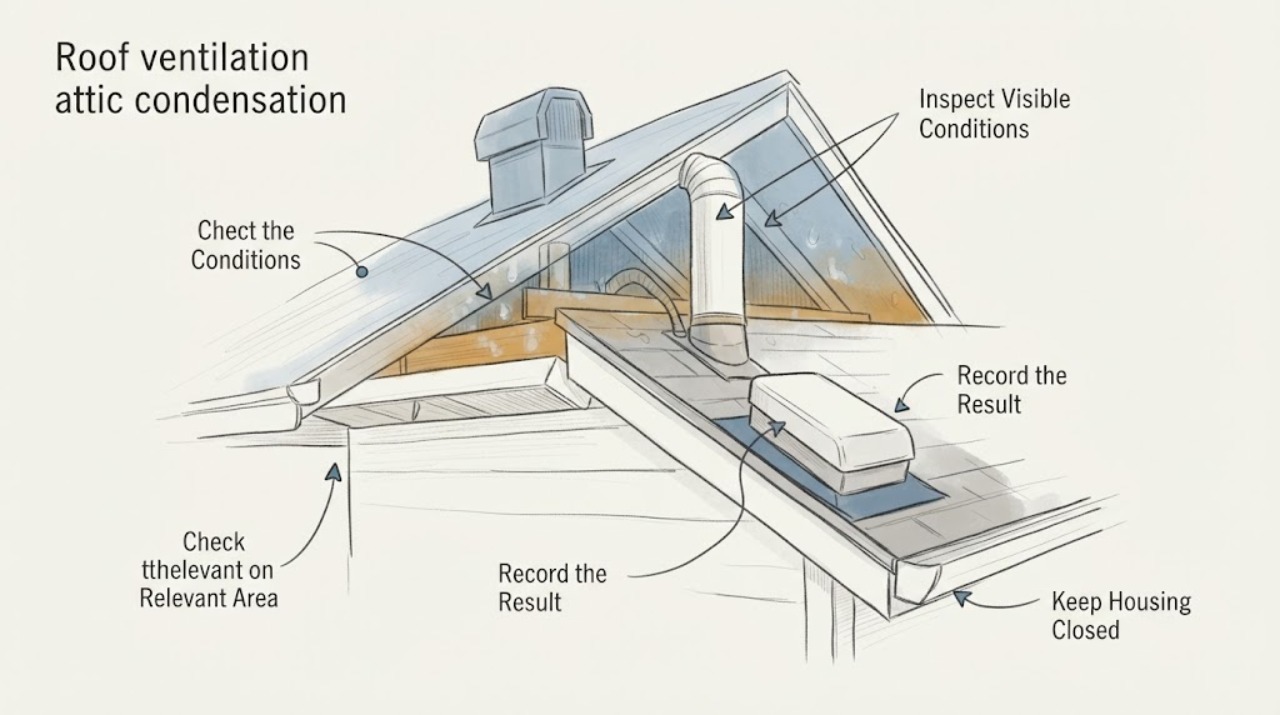
Start from the living space and ground level. Note window or room condensation, indoor humidity clues, ceiling or upper-wall stains, and whether visible eaves, soffits, fascia, or roof edges show moisture-related changes. Compare the timing with cold weather, rain, ice, cooking, bathing, or exhaust-fan use. Warm moist air entering a cold attic, roof or flashing leaks, and inadequate or altered ventilation can look similar from below. Do not enter the attic, climb the roof, disturb insulation, cut or install vents, touch electrical equipment, or attempt mold remediation; request a qualified roofing or home-performance inspection when signs persist.
Work through in order
Diagnostic checks
Use only checks that match the exact appliance or system and its official guide.
-
Check 1
From inside the living space, note condensation on windows, damp-feeling rooms, recurring musty odor, and whether symptoms change after bathing, cooking, clothes drying, or use of a humidifier. Use only room-side observations; do not open the attic, remove grilles, or touch electrical equipment.
Expected result: Condensation is absent, appears seasonally, follows moisture-producing activities, or persists regardless of activity and weather.
Next step: Record the room, timing, weather, and activities and provide the pattern to a roofing or home-performance professional for a whole-path assessment.
Stop if: Stop if water is near electrical equipment, a ceiling is bulging or shedding material, or further observation would require opening the attic or touching a wet fixture.
Why this matters
Why: Activity-linked or seasonal condensation makes indoor moisture and air-sealing paths relevant. Persistent symptoms keep roof leaks, ventilation, and concealed moisture in consideration; odor alone does not identify a source.
-
Check 2
From the floor or a stable room-side view, inspect ceilings, upper walls, trim, and the area around the top-floor ceiling for stains, bubbled paint, damp marks, discoloration, or recurring spots. Do not probe, scrape, remove ceiling material, or disturb suspected mold.
Expected result: There are no visible marks, a fixed stain, a stain that grows after rain, a stain that appears during cold weather, or a soft or bulging ceiling.
Next step: Photograph the area from a safe position, record dates and weather, and request roofing or moisture inspection; keep clear of any bulging or shedding surface.
Stop if: Stop and leave the immediate area if the ceiling sags, drips near electrical equipment, sheds material, or shows an expanding wet area.
Why this matters
Why: Rain-linked marks keep roof, flashing, or exterior water entry in focus. Cold-weather or activity-linked marks can fit condensation or air leakage, while a soft or bulging ceiling is an urgent water-damage concern that should not be tested by contact.
-
Check 3
From the ground, porch, or a window, observe visible soffit, fascia, eave, gutter, roof-edge, and exhaust-outlet conditions. Look for warped or rotted-looking eave material, bubbled paint, blocked-looking openings, damaged roof-edge surfaces, or an exhaust outlet that appears to terminate near the roof rather than safely outside; do not use a ladder or climb.
Expected result: The visible edge looks intact, shows localized staining or bubbling, has warped or damaged eave material, or cannot be seen clearly from a safe position.
Next step: Send wide photos and the location of each visible change to a roofing professional and ask that roof, flashing, ventilation, and exhaust routing be assessed together.
Stop if: Stop if inspection requires roof access, a ladder, reaching into an opening, moving a gutter, touching a vent, or approaching damaged electrical equipment.
Why this matters
Why: Localized edge changes may indicate water entry or moisture accumulation that needs professional confirmation. An unclear view is not evidence that ventilation is adequate; ground-level visibility is limited by design.
-
Check 4
Compare dated room-side and exterior-ground observations with cold snaps, rain, snow or ice, thawing, wind, and periods of high indoor moisture. Note whether the same location recurs and whether the symptom appears after weather or after indoor activity; do not enter the attic or roof area to verify the pattern.
Expected result: The symptom follows cold weather, follows rain or thaw, follows indoor moisture activity, or has no consistent timing.
Next step: Give the timeline and photos to the service provider and ask for a non-destructive assessment before any ventilation, insulation, or roof work is proposed.
Stop if: Stop if weather is severe, water is actively entering, the ceiling changes rapidly, or further tracking would require attic or roof access.
Why this matters
Why: Cold-linked recurrence can fit condensation on cold surfaces, while rain or thaw linkage can fit roof or flashing water entry. Activity linkage points toward indoor moisture paths; inconsistent timing keeps multiple causes open.
-
Check 5
Confirm that the living-space humidity clues, visible stains, ground-level eave observations, weather timing, and exhaust context are documented without attic entry, roof climbing, insulation disturbance, vent cutting or installation, mold remediation, or electrical contact.
Expected result: The condition is documented from safe positions, or important areas remain inaccessible or uncertain.
Next step: Request qualified roofing or home-performance service and provide photos, room locations, weather and activity timing, and any visible eave or exhaust observations.
Stop if: Stop and seek professional help for repeated condensation, wet or damaged building materials, active leaks, suspected mold, unsafe access, or any electrical or structural concern.
Why this matters
Why: A clear record supports a professional decision about moisture sources, air sealing, ventilation, flashing, and roof condition. An incomplete record is a reason for an on-site inspection, not a reason to enter the attic or modify a vent.
Use your observations
Decision map
Find the observation that best matches what you see, then follow the next safe action.
-
PATH 01Next step
What you see
A ceiling or upper-wall stain appears or grows after rain, snow, ice, or thawing.
Do this next
Request prompt roof and flashing inspection. Do not assume ventilation is the cause and do not climb to inspect the roof.
-
PATH 02Next step
What you see
Condensation follows cold weather or indoor moisture-producing activities and no exterior water pattern is visible.
Do this next
Request a home-performance or roofing assessment of air leakage, exhaust routing, insulation boundary, and ventilation. Do not disturb insulation or cut vents.
-
PATH 03Next step
What you see
Ground-level views show bubbled fascia paint, warped eave material, roof-edge damage, blocked-looking openings, or an exhaust outlet with an uncertain termination.
Do this next
Provide the photos and request professional evaluation of roof water entry, ventilation, and exhaust routing as one system.
-
PATH 04Next step
What you see
The ceiling is soft, bulging, dripping, shedding material, or wet near electrical equipment.
Do this next
Keep people out of the area and request prompt water-damage and qualified electrical assistance. Do not touch the fixture, ceiling, or wet equipment.
-
PATH 05Next step
What you see
Symptoms are intermittent, no visible stain or eave damage is present, and safe observations do not identify a pattern.
Do this next
Keep a short dated log and arrange a planned inspection if symptoms recur; absence of a visible sign does not prove the attic is dry.
-
PATH 06Next step
What you see
The only way to verify the condition requires attic entry, roof access, a ladder, insulation disturbance, vent work, mold cleanup, or electrical contact.
Do this next
Stop and request qualified service. Do not extend the inspection into an access or exposure hazard.
Helpful context
Understand the symptom
Condensation is not automatically a ventilation-only problem
Attic moisture can come from indoor air leaking upward, roof or flashing leaks, rain or ice-related entry, or a ventilation arrangement that does not allow moisture to escape. The visible symptom may be in the living space or at the eaves rather than at the source. The useful first step is to record patterns without opening the attic or altering the roof.
Use living-space and exterior-ground clues
Look at windows, ceilings, upper walls, and the room below the roof from inside. From the ground or a window, look at eaves, soffit and fascia surfaces, roof-edge appearance, and visible exhaust outlets. A professional can inspect the attic and roof safely, verify air and moisture paths, and distinguish condensation from bulk-water intrusion.
Keep insulation, wiring, and visible growth undisturbed
Do not move insulation, open an attic hatch, touch a wet fixture, or clean suspected mold as part of this check. If water is near electrical equipment or a ceiling is bulging, keep people out of the area and request prompt professional help.
Only after diagnosis
Potential parts
- attic moisture meter
Consider this category only if a qualified professional determines that material moisture readings are appropriate and can be taken without unsafe attic entry or insulation disturbance.
Confirm the material, measurement method, and interpretation with the professional; a meter does not identify whether moisture came from condensation or a roof leak by itself. - hygrometer
Consider this category only for room-side logging of indoor conditions when the professional wants a non-invasive trend record.
Use readings as context rather than a diagnosis; climate, room location, temperature, and instrument placement affect interpretation. - ventilation screen
Consider this category only after a qualified roofer confirms the existing vent configuration, damage, and airflow strategy and determines that a screen is the correct scope.
Confirm roof assembly, opening dimensions, weather exposure, and local requirements before ordering; do not cut or modify a vent based only on a ground-level view.
When checks do not resolve it
Need a professional?
Call qualified roofing or home-performance service for recurring condensation, wet insulation or visible water damage, stains after rain or thaw, warped eave or fascia material, uncertain exhaust termination, suspected roof or flashing leaks, or any condition requiring attic or roof access. Add qualified electrical or water-mitigation help when wet electrical equipment or active interior water is involved.
Have this ready
- Provide room and ceiling locations, condensation and humidity clues, photos from living space and ground level, eave and roof-edge observations, exhaust context, weather and activity timing, building age if known, and any access or safety limitation.
Common questions
FAQ
Does attic condensation always mean the roof vents are missing?
No. Moisture can come from indoor air leakage, exhaust routing, roof or flashing leaks, weather entry, insulation or air-boundary conditions, or ventilation changes. Request a professional assessment of the complete moisture path before modifying vents.
Can I enter the attic to look for wet insulation?
Do not enter the attic for this observation. Use living-space and ground-level clues and ask a qualified professional to inspect the attic, insulation, roof, and ventilation safely.
Why does the stain appear only in cold weather?
Warm, moist air from the living space can condense on colder attic or roof surfaces, but cold-weather roof or flashing effects can also be involved. Record the timing and request an assessment rather than assuming one cause.
Should I add a roof vent or cut a soffit opening?
No. Ventilation is part of a roof and air-sealing system, and an isolated opening can create new moisture or weather problems. Have a qualified roofer or home-performance professional verify the design and scope first.
Read the exact guide
Official sources
- Remodeling Your Home and Indoor Air QualityU.S. Environmental Protection Agency · Supports the article's explanation that warm moist air and air-sealing or insulation conditions can contribute to attic condensation; it is not a roof or attic repair manual.
- Consumer Guide to Durable AtticsU.S. Department of Energy · Supports the article's distinction among roof leaks, indoor vapor, ventilation, and visible eave or fascia signs; it does not authorize attic entry or homeowner roof work.
Community feedback
Share a repair observation
Share a plain-text repair observation. Accepted observations are published automatically; this page may take a moment to update.