
Repair problem
Broken Window Seal Troubleshooting Guides
Published FixGraph guidance for diagnosing and responding to broken window seal.
Matching published guides
Choose a guide that matches the service, equipment, and conditions you are seeing.
-
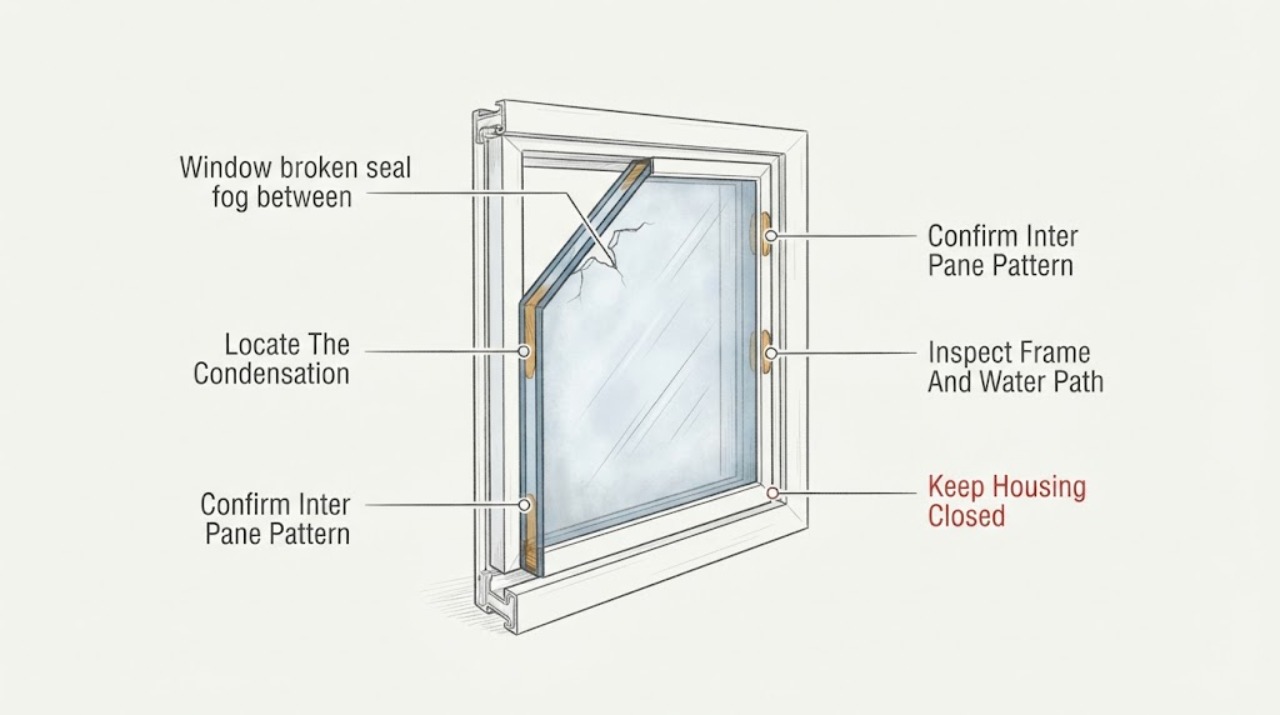
Window broken seal fog between panes: What to Check and What to Do Next
Fog or liquid moisture that remains in the space between two panes after you clean the accessible room-side and exterior surfaces is a strong sign that the insulating glass unit seal has failed. The sealed air space can no longer keep moisture out, so ordinary wiping or lowering indoor humidity will not remove that haze.
-
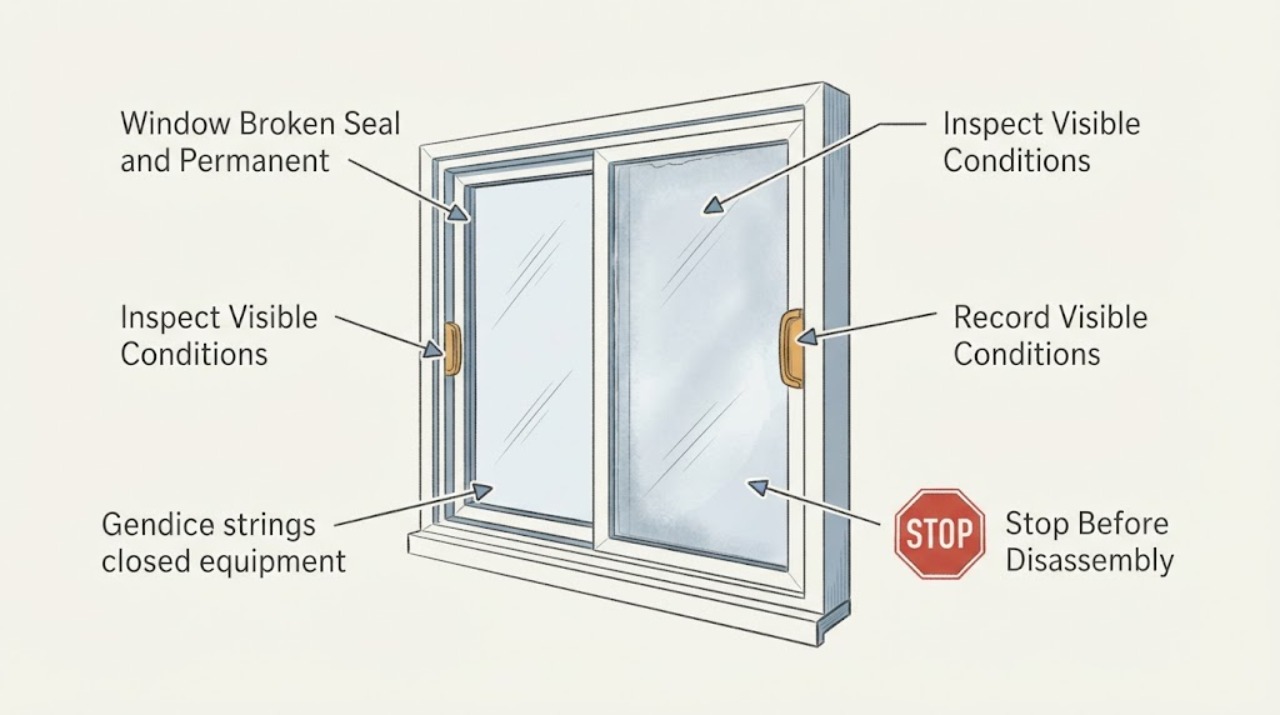
Window Broken Seal and Permanent Haze: What to Check and What to Do Next
First determine where the haze is. Moisture on the room side or outdoor side can be ordinary condensation related to temperature, humidity and air movement; haze or droplets that remain trapped between panes of insulated glass cannot be wiped away and usually indicate that the unit's perimeter seal has failed.
-
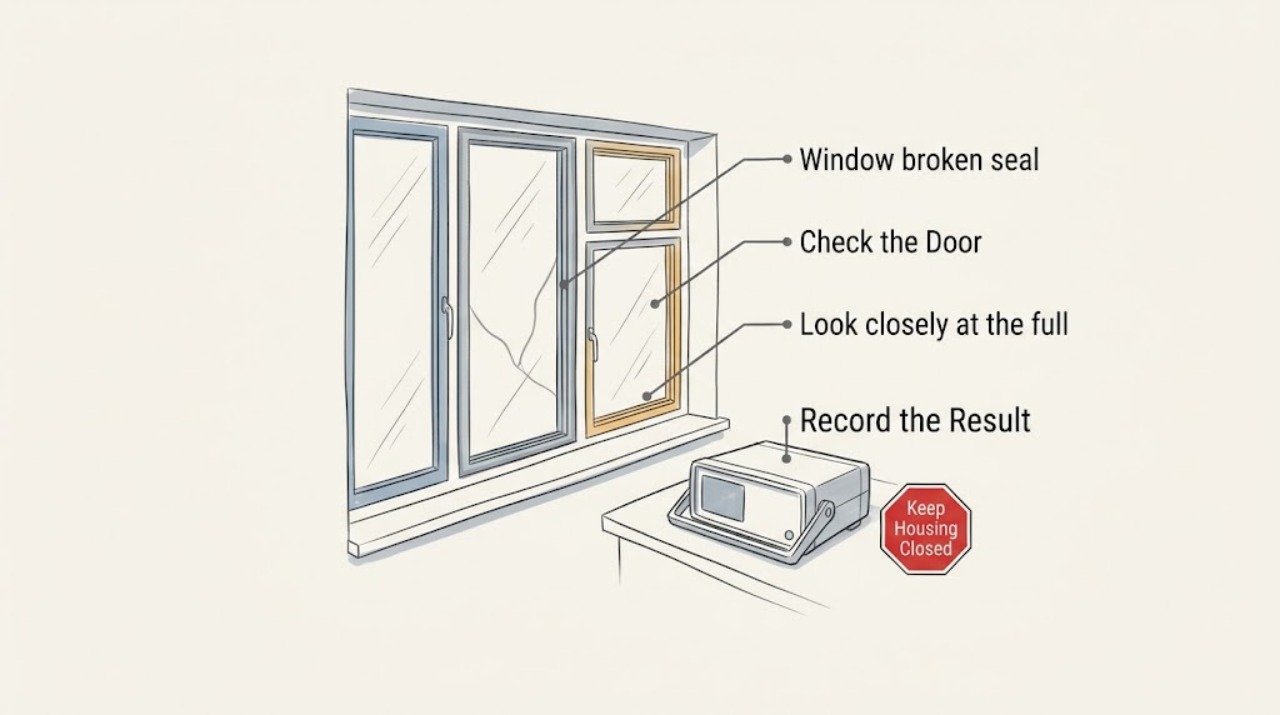
Window broken seal: What to Check and What to Do Next
If fog, droplets, or a milky haze stays between the panes after the accessible room-side and outdoor surfaces are dry, the insulated glass seal has likely failed. Do not remove the glass or drill the pane. Document the window and have a qualified window or glass professional confirm whether the insulated glass unit, sash, or whole window should be serviced. If the moisture is only on a surface, first treat it as room humidity or outdoor dew rather than a broken seal.
-
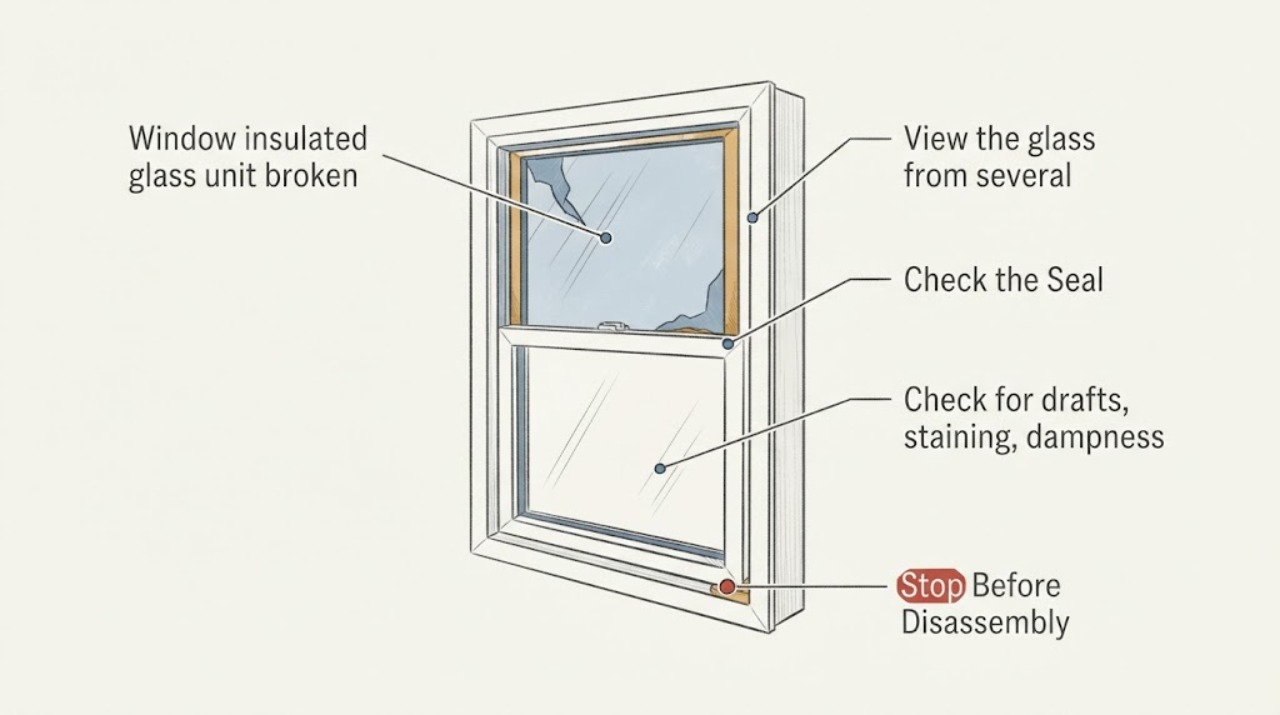
Window insulated glass unit broken seal: What to Check and What to Do Next
If haze remains between the panes after you wipe the room-side and exterior surfaces, the insulated glass unit may have lost its seal; cleaning will not restore it. Document whether the haze is between panes, then inspect the sash, frame, gaskets, sill, and surrounding wall from a safe position.
-
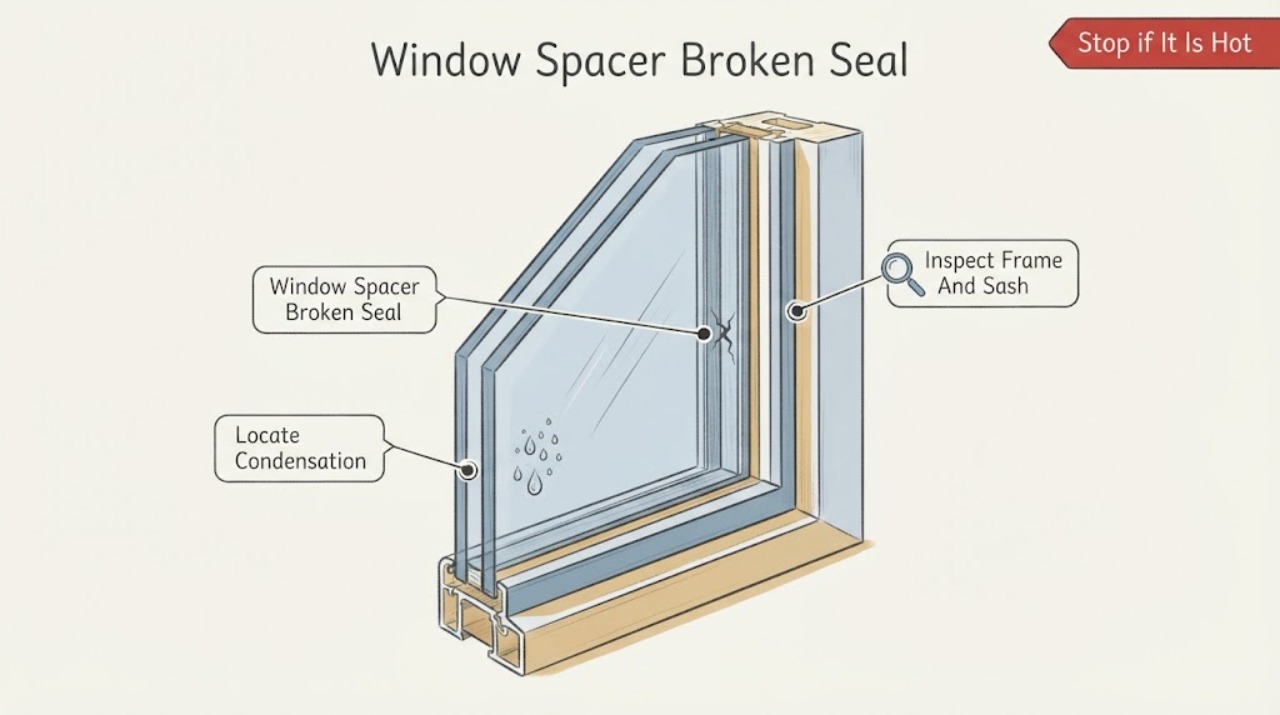
Window Spacer Broken Seal: What to Check and What to Do Next
If moisture or a fixed haze is trapped between the panes of an insulated window, the spacer and perimeter seal have likely lost the sealed cavity rather than the room-side glass simply being dirty. Confirm where the moisture is, check the frame and sash for separate water damage, and then ask the manufacturer or a qualified glazing professional whether the insulated glass unit or the entire window should be replaced.