
On this page
Start here
Quick answer
Fog or liquid moisture that remains in the space between two panes after you clean the accessible room-side and exterior surfaces is a strong sign that the insulating glass unit seal has failed. The sealed air space can no longer keep moisture out, so ordinary wiping or lowering indoor humidity will not remove that haze. First confirm which surface is fogged and check that the frame is not also leaking. Then record the window's manufacturer and identification details, review the applicable warranty, and ask the manufacturer or a qualified window professional whether the unit can be reglazed or whether the sash or whole window needs replacement. Do not drill the glass, inject a drying chemical, or pry apart the sealed unit.
Before you begin
Safety first
- This article covers ordinary-access observation and documentation only. Do not puncture or dismantle sealed glass, remove glazing or trim, work at height, or attempt to trace concealed water paths yourself.
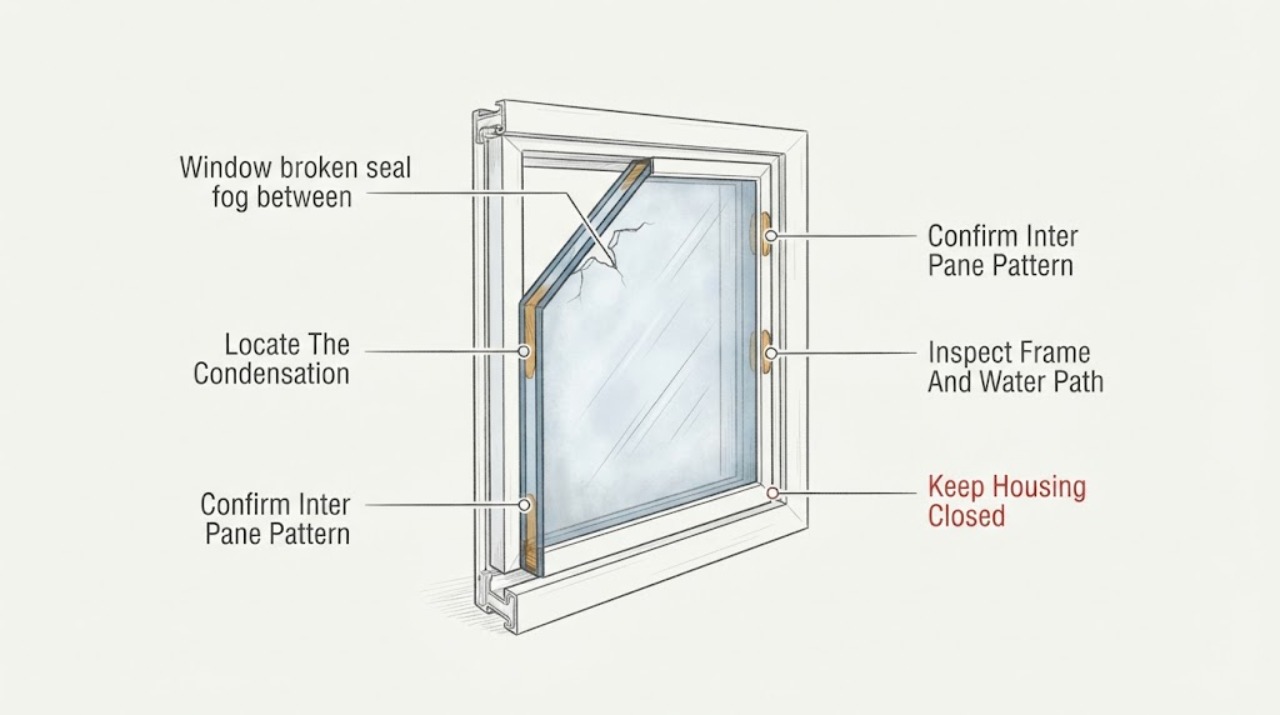
Work through in order
Diagnostic checks
Use only checks that match the exact appliance or system and its official guide.
-
Check 1
Clean and dry the accessible room-side and exterior glass surfaces with a soft cloth, without removing trim, glazing beads, or hardware.
Expected result: Record whether the haze or droplets disappear from one surface, remain in a band or cloud between the panes, or cannot be safely reached because the window is damaged or inaccessible.
Next step: If the haze remains between the panes, photograph it from inside and outside and continue with the frame check; if it clears from a surface, monitor indoor or outdoor condensation conditions instead of ordering glass.
Stop if: Stop if the glass is cracked, loose, sharp, or difficult to reach safely; do not remove stops or pry the sealed glass apart.
Why this matters
Why: A film that wipes away is not evidence of a broken insulating-glass seal. Moisture that remains after both accessible surfaces are dry makes an inter-pane seal failure more likely, while an inaccessible or damaged surface requires professional assessment rather than more force.
-
Check 2
View the affected area from several normal standing positions in daylight and with ordinary room lighting, paying attention to the spacer or perimeter and to whether the haze changes when the room-side surface is dry.
Expected result: Note a persistent cloudy field, beads or streaks inside the sealed cavity, a narrow perimeter strip, or a mark that moves or disappears when the surface is wiped; compare a neighboring pane if one is available.
Next step: Keep the photos and describe which pane and area are affected; use the frame-and-water check before asking for a pane, sash, or complete-window recommendation.
Stop if: Do not tap, press, drill, puncture, or inject anything into the glass or spacer to test the cavity.
Why this matters
Why: A persistent cavity-wide haze or droplets support a failed insulating-glass seal. A narrow perimeter strip can instead reflect a cold frame or metal path, and a surface mark that changes with wiping is not enough to call a seal failure.
-
Check 3
From ordinary safe access, inspect the sill, sash, frame corners, visible gaskets, and exterior perimeter for water staining, swelling, failed sealant, a displaced gasket, or a draft; compare the result with a nearby unaffected window.
Expected result: Record whether the frame is dry and sound, whether water appears only after rain or washing, whether staining extends into the wall, or whether the sash no longer closes and locks normally.
Next step: Photograph every wet or damaged area and arrange a window or building-envelope assessment when water reaches the wall, the frame is soft or distorted, or the leak source is unclear; do not seal over a suspected drainage path.
Stop if: Stop before removing exterior cladding, trim, sash components, or sealant that could conceal the water path or expose you to a fall.
Why this matters
Why: Persistent fog with a dry, sound frame points more toward a glass-unit replacement decision. Water at the frame, wall staining, swelling, or an operating problem may indicate a separate installation, drainage, gasket, or structural issue that can make a glass-only repair unsuitable.
-
Check 4
Find the manufacturer's label or etching from a safe position and record the brand, series or model if shown, approximate installation date, opening style, visible dimensions, glazing pattern, and any purchase or installation paperwork.
Expected result: Classify the record as complete identification, partial identification, or no readable identification; note whether a warranty document describes glass, sash, or complete-window coverage without assuming that coverage applies.
Next step: Send the identification, photos, dimensions, and frame condition to the manufacturer or a qualified window professional and ask whether a compatible glass unit, sash, or whole-window replacement is supported.
Stop if: Do not remove a label, disassemble the sash, or order a pane solely from a rough measurement when the glazing pocket, spacer, or frame condition is unknown.
Why this matters
Why: Complete product information gives the manufacturer or professional a basis to check the correct insulated glass unit and warranty route. Partial or missing identity means a generic replacement may not fit or match, so measurement and product confirmation are needed before ordering.
-
Check 5
Compare the affected window with an adjacent window under similar weather, noting interior comfort, visible drafts, outside noise, operation, and whether the fog is confined to one insulated unit or several.
Expected result: Record an isolated fogged unit with an otherwise sound window, several fogged units from the same installation, or fog combined with drafts, sticking, damaged glass, or recurring water entry.
Next step: Give the professional the comparison, photos, frame findings, and product identity so they can define the repair scope and check any applicable manufacturer process before work begins.
Stop if: Stop using the window if it is loose, cracked, cannot lock, allows water into the wall, or creates a safety hazard; do not keep operating a damaged sash to reproduce the symptom.
Why this matters
Why: One isolated fogged unit may support a targeted glass or sash evaluation. Several units or additional frame, operating, or water symptoms suggest a wider product or installation assessment; the comparison cannot prove the seal's age or promise that a glass-only repair will solve the problem.
Use your observations
Decision map
Find the observation that best matches what you see, then follow the next safe action.
-
PATH 01Safety boundary
What you see
The haze disappears when the room-side or exterior surface is wiped, and no moisture remains in the cavity.
Do this next
Manage the relevant indoor humidity or airflow condition, or simply allow exterior dew to dry, then watch for moisture that returns inside the sealed space.
Why this path and its safety boundary
Why it matters: This pattern is more consistent with room-side humidity or outdoor dew than a failed insulating-glass seal. The window may still need attention if moisture repeatedly damages the frame.
Safety stop: Call a professional if moisture is damaging the frame, the wall is wet, or the location cannot be distinguished safely.
-
PATH 02Safety boundary
What you see
Fog or droplets remain between the panes after both accessible surfaces are dry, while the frame is dry, sound, and operating normally.
Do this next
Ask the manufacturer or a qualified window professional to evaluate the exact product and decide between an insulated glass unit, sash, or complete-window replacement; bring the identity record and photos.
Why this path and its safety boundary
Why it matters: A failed insulating-glass edge seal is the leading explanation supported by the observed pattern. Cleaning, a dehumidifier, or exterior caulk cannot dry the sealed cavity.
Safety stop: Do not puncture, drill, inject, heat, or pry the sealed glass unit, and do not claim a warranty or fitment until the product is identified.
-
PATH 03Safety boundary
What you see
Persistent between-pane fog is accompanied by water at the sill or frame, wall staining, swelling, failed perimeter sealant, or a draft around the frame.
Do this next
Stop cosmetic sealing and arrange a window or building-envelope inspection that can trace the water path and assess the frame before selecting replacement parts.
Why this path and its safety boundary
Why it matters: The glass seal may have failed, but a frame, gasket, drainage, or installation problem is also plausible. Replacing only the glass without tracing water could leave the building leak unresolved.
Safety stop: Stop if water is entering the wall, the frame is soft or distorted, or the window cannot be secured; protect the area from further water without covering a suspected drainage route.
-
PATH 04Safety boundary
What you see
Several windows from the same installation are fogged, or fog occurs with cracked glass, a loose or sticking sash, failure to lock, or substantial drafts.
Do this next
Collect a room-by-room photo and identity record and request a professional assessment of the affected units, frame, and installation before ordering anything.
Why this path and its safety boundary
Why it matters: The scope may extend beyond one failed glass unit to product history, installation, frame condition, or multiple replacement units. The symptoms do not identify a single universal part.
Safety stop: Do not operate cracked or loose glass and do not remove sash parts or trim as a DIY attempt to reach the seal.
Helpful context
Understand the symptom
Why the location of the fog matters
A wipeable film on the room side is usually related to indoor humidity and a cold glass surface, while dew on the outside can be caused by outdoor temperature and humidity. A haze or droplets that stay visible in the sealed space between panes point to a different failure: moisture has entered the insulating glass unit after its edge seal stopped excluding it. The seal diagnosis does not by itself identify whether only the glass unit, a sash, or the entire window should be replaced.
Check the frame as well as the glass
A failed glass seal and a leak around the frame can occur together but are not the same repair. Look for staining, soft or swollen wood, deteriorated exterior sealant, water on the sill, or a draft that is clearly around the frame. If moisture appears after rain or the surrounding wall is damp, preserve photos and stop short of removing trim; a window or building professional needs to trace the water path before a replacement is selected.
A replacement decision needs the exact window identity
Window construction varies: some products allow an insulated glass unit or sash to be replaced while the frame remains, and others may call for a complete replacement. The identification label, dimensions, operating style, glazing pattern, and any available purchase or installation record help the manufacturer or professional determine the compatible option. Treat a generic pane or sealant as unverified until the exact product requirements have been checked.
Safety boundary
Stop conditions
- Do not drill, puncture, pry apart, inject chemicals into, or heat the sealed glass unit.
- Stop for cracked or loose glass, sharp edges, a sash that cannot lock, a frame that is soft or distorted, or any fall exposure.
- Stop and seek professional help when water reaches the wall, the source of a frame leak is unclear, or the window requires trim, cladding, sash, or glazing-bead removal.
- Do not cover a suspected drainage path with caulk, and do not order a generic pane from rough measurements alone.
- Use the manufacturer or a qualified window professional to confirm whether the compatible repair is an insulated glass unit, sash, or complete window.
Only after diagnosis
Potential parts
- replacement insulating glass unit
Consider this category only when persistent between-pane fog is confirmed, the frame and sash are sound, and the exact product and glazing pocket are verified by the manufacturer or a qualified professional.
Confirm exact dimensions, thickness, spacer, coatings, glazing pattern, safety requirements, and manufacturer fit information; do not order from a rough opening measurement alone. - replacement window sash
Consider a sash only when the product design supports sash replacement or the existing sash is damaged, distorted, or incompatible with a glass-only repair after the seal failure is confirmed.
Verify the exact window series, opening style, handing, dimensions, hardware, glazing, and manufacturer fit information before ordering. - replacement window assembly
Consider a complete assembly only when the frame, installation, water management, multiple units, or product history makes a glass-only or sash-only repair unsuitable after professional assessment.
Confirm the existing opening, installation method, performance requirements, and product documentation with the manufacturer or qualified installer; this category is not a universal substitute for a failed pane.
When checks do not resolve it
Need a professional?
Arrange manufacturer or qualified window-professional service when fog remains between panes, the frame also leaks or is damaged, several units are affected, the sash will not operate or lock normally, the product identity is incomplete, or any step would require removing trim, glazing components, or the sealed unit. Seek prompt building-envelope assessment when water is entering the wall or causing swelling, staining, or mold concerns.
Safety scope: This article covers ordinary-access observation and documentation only. Do not puncture or dismantle sealed glass, remove glazing or trim, work at height, or attempt to trace concealed water paths yourself.
Common questions
FAQ
How can I tell whether fog is between the panes or on the surface?
Dry the room-side and exterior surfaces from ordinary safe access. If the haze or droplets remain visible in the cavity, especially across the sealed area, a failed insulating-glass seal is more likely. If wiping removes it, investigate indoor humidity or outdoor dew instead.
Can a dehumidifier fix fog between window panes?
A dehumidifier can help room-side condensation caused by humid indoor air, but it cannot dry moisture that has entered a sealed insulating-glass cavity. Persistent between-pane fog needs product-specific evaluation.
Does a failed window seal always mean the whole window must be replaced?
No single replacement applies to every window. Depending on the product and the condition of the frame and sash, the manufacturer or professional may evaluate an insulating glass unit, a sash, or the complete assembly. Confirm the exact product before ordering.
Can I drill a small hole to remove moisture from the sealed glass?
Do not drill, puncture, inject, heat, or pry the sealed unit. Those actions can damage the glass, coatings, spacer, and frame and can create a separate water or safety problem. Ask the manufacturer or a qualified window professional to define the repair.
What should I document before asking for window service?
Photograph the fog from both sides, note whether wiping clears either surface, record any water at the sill or frame, and collect the manufacturer label, series or model, opening style, glazing pattern, approximate age, dimensions, and available warranty or installation records.
Read the exact guide
Official sources
- What Causes Windows to Fog?Pella Corporation · Pella technical explanation of fogging between insulating-glass panes and considerations for replacing existing windows.
- Condensation on windows: What causes it and how to manage itAndersen Corporation · Andersen homeowner guidance distinguishing condensation inside, outside, and between dual-pane glass.
- What Causes Condensation on Windows in Your Home?Marvin · Marvin guidance for diagnosing room-side condensation and household moisture sources; it is not a product-specific seal-repair instruction.
- How to Deal with Window CondensationPella Corporation · Pella guidance distinguishing room-side, exterior, and between-pane condensation in windows and doors.
- Replacing Existing SkylightsU.S. Department of Energy Building Science Education · Department of Energy building-science guidance for distinguishing an insulated-glass unit problem from frame, gasket, and water-management leaks; the article applies the inspection principle cautiously to windows.
Community feedback
Share a repair observation
Share a plain-text repair observation. Accepted observations are published automatically; this page may take a moment to update.