
On this page
Start here
Quick answer
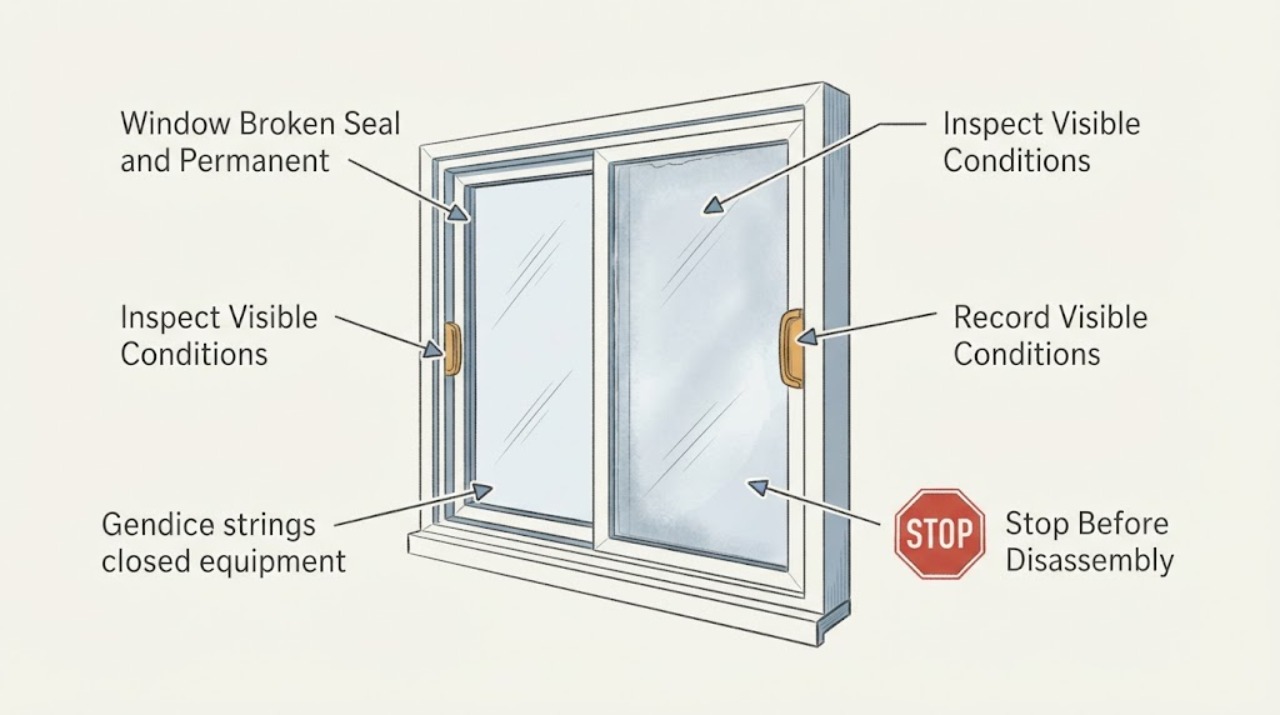
First determine where the haze is. Moisture on the room side or outdoor side can be ordinary condensation related to temperature, humidity and air movement; haze or droplets that remain trapped between panes of insulated glass cannot be wiped away and usually indicate that the unit's perimeter seal has failed. Wipe each accessible surface gently, observe the haze from different angles, and check the frame and glass for cracks, water entry or sharp damage without removing glazing components. A failed sealed unit is generally a glass-unit replacement question, not a caulk or cleaning fix, although a glazier must confirm whether the insulated glass unit or the entire window needs attention. Record the window location, pane configuration, serial or product label if present, photographs and warranty information, then arrange a qualified window or glazing assessment.
Work through in order
Diagnostic checks
Use only checks that match the exact appliance or system and its official guide.
-
Check 1
From a stable position, identify whether the haze is on the room-side pane, the outdoor-side pane, the frame, or between two panes. Wipe only the reachable glass surface with a clean, compatible cloth and observe from an angle in daylight; do not press hard on the glass or remove a sash.
Expected result: The haze clears from one reachable surface, returns with cold or humid conditions, or remains visible behind the glass where neither surface can be wiped.
Next step: For surface condensation, note the indoor conditions and improve normal ventilation or air circulation without blocking the window. For haze between panes, photograph the cavity and arrange a glazing assessment rather than repeatedly cleaning the surfaces.
Stop if: Stop if the glass is cracked, loose, flexes unusually, has a sharp edge, or the check would require climbing, removing trim or reaching outside.
Why this matters
Why: Surface condensation can result from temperature, humidity and air movement. Haze or droplets trapped between panes are more consistent with loss of insulating-glass seal integrity and are not a normal cleaning problem.
-
Check 2
Inspect the visible perimeter of the pane and the accessible frame without prying: look for a continuous cloudy band or droplets between panes, damaged gaskets, failed weather seals, staining, water tracks, blocked drainage openings, cracked glass, or movement in the sash when operated normally.
Expected result: The haze is confined to the sealed cavity with an otherwise intact frame, or the frame also shows water entry, damaged seals, rot, cracking, loose glazing, or operation problems.
Next step: Keep the window closed or latched in its normal safe position if it does not operate reliably, and give the glazier photographs of the pane edges and frame. Do not remove beads, gaskets or exterior trim to expose the seal.
Stop if: Stop for loose or falling glass, a sash that may drop, sharp edges, active water entering the wall, or any need to dismantle the window or work at height.
Why this matters
Why: Cavity haze points toward the insulating glass unit, while frame or drainage damage can indicate a broader window or installation problem. A clean frame does not prove that the pane seal is intact, and a failed pane seal does not prove that the frame has failed.
-
Check 3
Compare the affected window with nearby windows under the same indoor conditions. Record whether each window has surface condensation, cavity haze, droplets, frosting, or no moisture, and whether the affected unit is double- or triple-pane if that is visible from its construction or documentation.
Expected result: Several windows show removable surface condensation, or only one insulated unit has persistent haze between panes while nearby windows remain clear.
Next step: Use the comparison to explain the symptom to the professional. Do not attempt to equalize indoor humidity by sealing, drilling or replacing a pane before the moisture location is confirmed.
Stop if: Stop if comparison requires unsafe exterior access, moving furniture near a fragile window, or touching damaged glass or electrical equipment near the window.
Why this matters
Why: A house-wide surface pattern makes humidity, temperature or air circulation more likely. A single permanent cavity haze makes a unit-specific seal failure more likely, although comparison cannot determine the exact repair scope.
-
Check 4
Document the affected opening for the window professional: room and elevation, fixed or operable section, approximate pane count, visible labels or serial information, haze location, photos from both sides, frame condition, and whether the window still opens, closes and latches normally. Do not remove a label or glazing component to find a number.
Expected result: The product label and configuration are available, or the label is missing and the window's age, dimensions, pane arrangement and frame material must be identified on site.
Next step: Send the record to the manufacturer, installer or qualified glazier for an assessment and written scope. Ask whether only the glass unit, the sash, or the complete window requires replacement and what measurements they will verify.
Stop if: Stop if obtaining the label requires removing trim, climbing, disassembling the sash, or leaning through the opening.
Why this matters
Why: Correct identification helps a professional determine whether a replacement insulating glass unit can be specified and whether written warranty terms may apply. A generic pane description is not a fitment or compatibility guarantee.
-
Check 5
Use the haze, frame, operating and water-entry observations to choose the next safe response: monitor a removable surface-condensation pattern, request prompt glazing service for trapped haze, or request urgent help for damaged glass, an unsecured sash, or active water intrusion.
Expected result: The haze stays between panes but the window is intact, or the opening has cracked or loose glass, an unsafe operation, visible water entry, or a condition that affects a required exit or ventilation route.
Next step: Keep people away from damaged glass and arrange appropriate window, glazing or building-envelope service. Preserve photos and warranty information; do not tape over a structural failure, paint over water damage, or attempt a pane replacement yourself.
Stop if: Stop immediately for falling or cracked glass, a window that cannot stay safely secured, active wall water damage, or any need to work from a ladder, roof or exterior face.
Why this matters
Why: A sealed-unit failure is usually a planned glazing-repair decision, while structural, water-intrusion and egress concerns raise urgency. Clarity alone cannot establish whether the frame or installation also needs replacement.
Use your observations
Decision map
Find the observation that best matches what you see, then follow the next safe action.
-
PATH 01Next step
What you see
The haze wipes off the room-side or outdoor-side surface and changes with cold, humidity, sun or air movement; nearby windows show a similar pattern.
Do this next
Treat this as surface condensation or residue first, improve normal room ventilation and air circulation, and monitor without applying sealant. Request a window assessment if moisture begins appearing between panes or the pattern does not respond.
-
PATH 02Next step
What you see
Clouding, droplets or a permanent film remain inside the sealed cavity between panes while the outside surfaces are clearable.
Do this next
Treat the insulating glass seal as likely failed and arrange qualified glazing service. Ask for the glazing-unit replacement scope and check the manufacturer or installer warranty; do not drill, inject or reseal the pane as a home test.
-
PATH 03Next step
What you see
Cavity haze is accompanied by damaged weather seals, water tracks, frame deterioration, difficult operation, a loose sash or evidence that the wall around the window is wet.
Do this next
Request a broader window and building-envelope assessment rather than ordering glass from the haze symptom alone. Keep the opening secured and avoid dismantling the frame or exterior trim.
-
PATH 04Next step
What you see
Glass is cracked or loose, edges are sharp, the sash cannot stay secured, or water is actively entering near the opening.
Do this next
Keep people away, secure the room from a safe position, and obtain prompt window or glazing help. Treat active water near electrical equipment as an additional electrical-safety concern; do not reach through or work on the window.
Helpful context
Understand the symptom
Permanent haze is meaningful only after its location is identified. If a cloth clears the room-side or outdoor-side surface, the issue is surface condensation or residue rather than proof of a failed sealed unit. If the cloudy area, droplets or film are in the cavity between panes and cannot be reached from either side, the insulating glass seal is the leading explanation. Changes with sun, season or indoor humidity can change how visible the haze is without restoring the seal.
A failed seal does not automatically mean the whole framed window must be replaced. The glazing unit, frame, sash, weather seals, drainage and installation can have different conditions. Ask a qualified glazier to identify the replacement scope and check the product documentation or warranty before ordering glass. Do not drill the pane, inject a drying chemical, pry out a bead, or apply perimeter caulk as a test; those actions can damage the glass or conceal the evidence.
Keep the safety decision separate from the clarity decision. A hazy but intact pane may be a performance and visibility issue, while cracked glass, loose glazing, sharp edges, water entering the wall, or a window that cannot be safely closed needs prompt professional attention. Any inspection that requires a ladder, removing trim, or working from the exterior is outside this check.
Safety boundary
Stop conditions
- Stop immediately for cracked, loose or falling glass, sharp edges, an unstable sash, active water entry, or a required exit or ventilation opening that cannot be secured.
- Do not drill the glass, inject drying chemicals, pry out glazing beads, remove gaskets or trim, apply perimeter caulk as a test, or attempt to replace a sealed unit without qualified assessment.
- Stop any inspection requiring a ladder, roof, exterior face, leaning through the opening, or moving into a position below or beside unstable glass.
Only after diagnosis
Potential parts
- insulating glass unit
Only consider this category after a qualified professional confirms that haze is trapped between panes and the existing frame and sash can safely accept a replacement unit.
Confirm exact pane dimensions, thickness, configuration, coatings, spacer, safety-glazing requirements and frame fit with the manufacturer or glazier before ordering. - window weather seal or glazing gasket
Only consider this category when the professional identifies a damaged perimeter weather seal or gasket separate from a failed sealed-glass cavity.
Confirm the window series, sash or frame location, cross-section and approved material before selecting a replacement seal.
When checks do not resolve it
Need a professional?
Arrange qualified glazing service when moisture or haze remains between panes after both accessible surfaces are cleaned, especially when the appearance is permanent or recurring., Request broader window or building-envelope assessment for frame deterioration, damaged weather seals, water tracks, difficult operation, an unsecured sash, or moisture in the wall around the opening., Obtain prompt help for cracked or loose glass, sharp edges, falling components, a window that cannot remain secured, active water entry, or any inspection requiring a ladder, exterior access or dismantling., Check the manufacturer or installer warranty before ordering glass, but do not assume a brand, pane size, gas fill or replacement unit is compatible from appearance alone.
Common questions
FAQ
How can I tell whether window haze is between the panes?
Clean the reachable room-side and outdoor-side surfaces gently and view the pane from different angles. If the clouding or droplets remain behind the glass where neither surface can be wiped, a failed insulating-glass seal is more likely than ordinary surface condensation.
Does a broken window seal mean I need a whole new window?
Not necessarily. A professional must assess the insulating glass unit separately from the frame, sash, gaskets, drainage and installation. Government guidance identifies replacement of the insulating glass unit for condensation inside a sealed unit, but the surrounding window may need separate work.
Can I drill a small hole or add caulk to clear permanent haze?
Do not use drilling, chemical injection or perimeter caulk as a home repair. These actions can damage the pane or frame and do not establish a safe, durable replacement scope. Have a qualified glazier assess the sealed unit and frame.
Can humidity cause a window to fog even when the seal is intact?
Yes. Indoor or outdoor surface condensation can result from temperature, humidity and air movement. Compare the location of the moisture and whether it wipes away; persistent moisture inside the sealed cavity is a different failure pattern.
Read the exact guide
Official sources
- What Causes Windows to Fog?Pella · Pella explanation of exterior, interior and between-pane fogging, insulating-glass seal failure and moisture entering the sealed cavity
- Customer Support CenterPella · Pella homeowner support guidance distinguishing interior or exterior condensation from condensation between panes and identifying glass seal failure
- CondensationNatural Resources Canada · Government of Canada guidance on condensation locations, broken seals between panes, insulating glass unit replacement and air circulation near windows
Community feedback
Share a repair observation
Share a plain-text repair observation. Accepted observations are published automatically; this page may take a moment to update.