
Repair service
Windows Guides
Window repair, installation, and maintenance.
Published windows guides
Choose the guide that best matches the service and problem you are seeing.
-
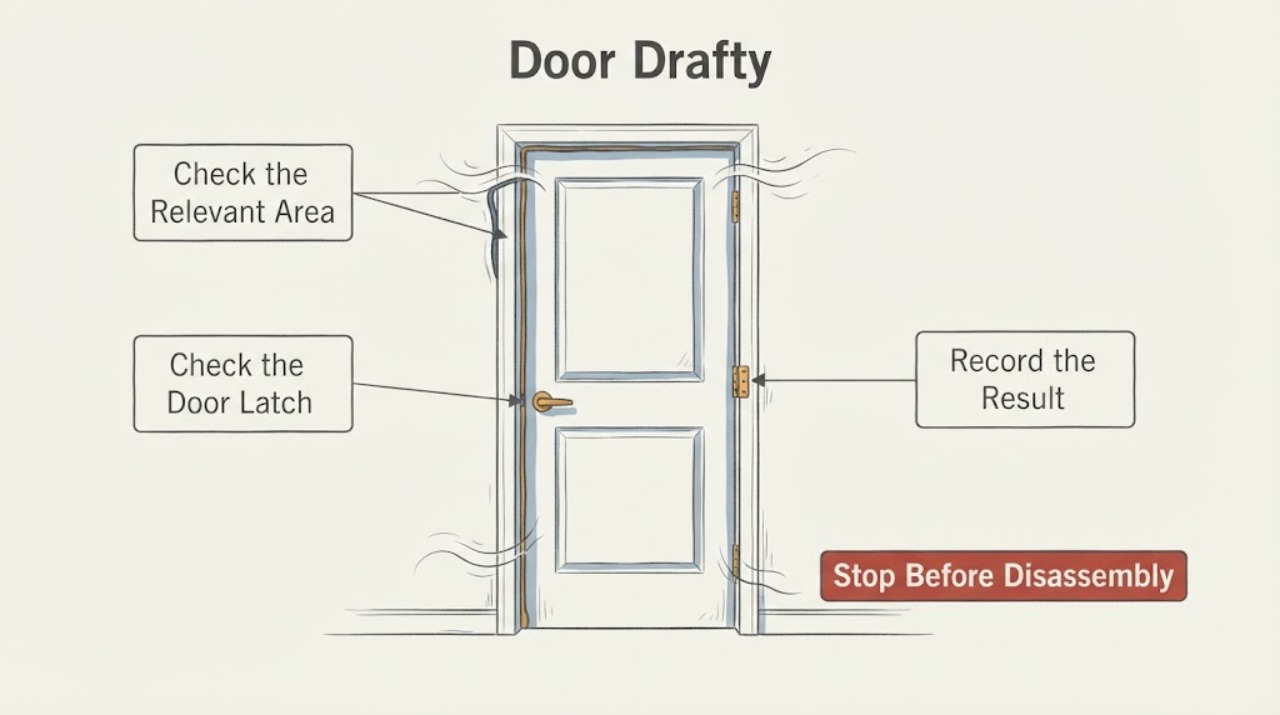
Door Drafty
For a drafty closed exterior door, locate the leak before buying material: check for visible daylight or a loose fit, then use a paper or tissue test around the jamb, head, threshold, hinges, and strike side. If the paper slides freely, inspect the weatherstripping and door alignment.
-
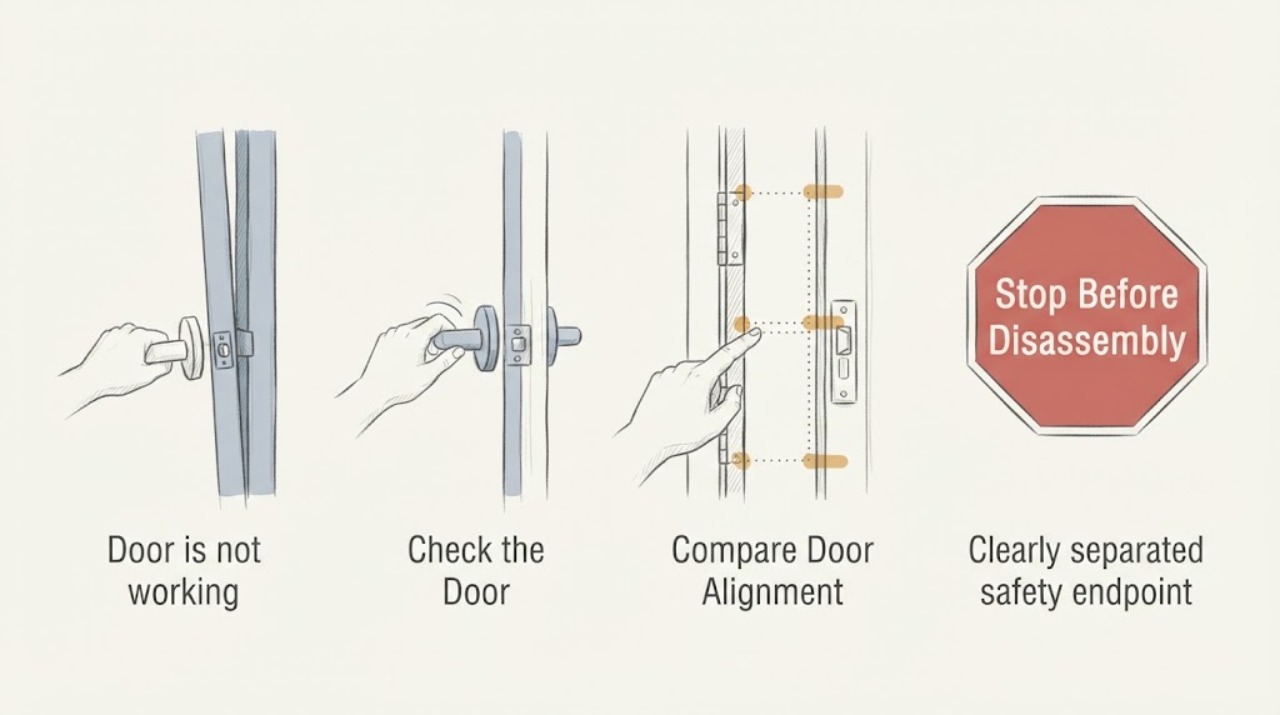
Door is not working: What to Check and What to Do Next
A door that is not working must first be separated into a door that will not open, will not close, will not latch, or is difficult to move. From a stable position, operate the handle normally without forcing it, observe where the door contacts the frame, and look for an uneven gap, a shifted strike, hinge-side sag, a swollen sill, damaged weatherstrip, or an obstruction.
-
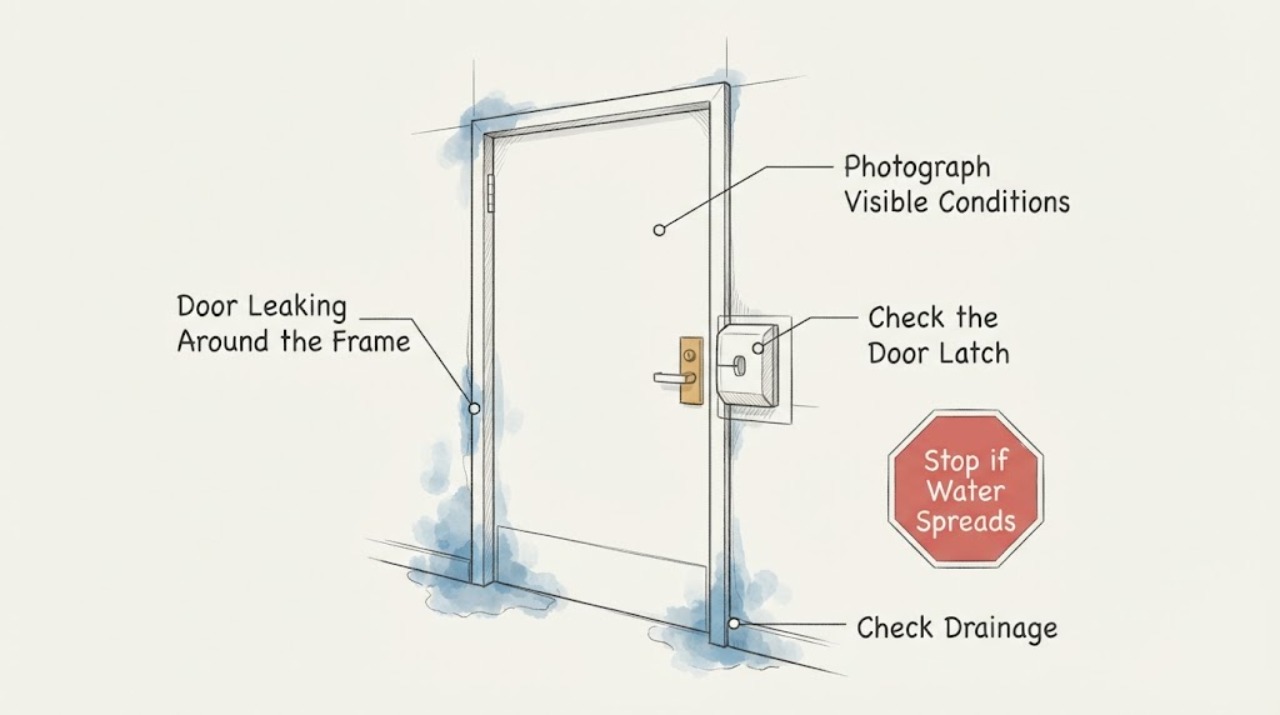
Door Leaking Around the Frame: Trace Water to the Entry Point
If water is leaking around a door frame, first determine whether it appears only during wind-driven rain, at the bottom threshold, or even in dry weather. Dry the area, photograph the stain or drip path, and inspect the exterior frame joints, head flashing, sill, threshold, and nearby roof or siding for an upper leak that is running down.
-
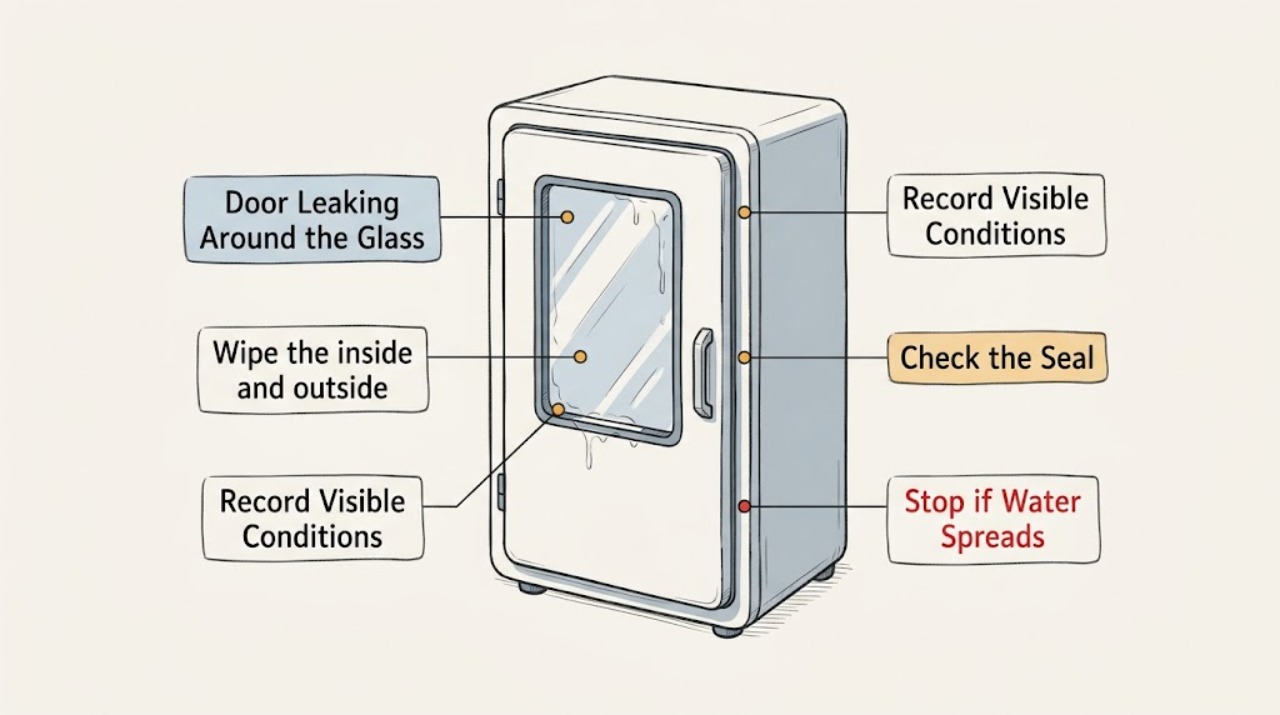
Door Leaking Around the Glass: Find the Water Path Safely
First determine whether the moisture is condensation on the glass, moisture between panes, or rain entering around the glass, frame, sill, or wall opening. Wipe the surface dry, observe where moisture returns during a controlled weather event, and inspect the interior edge, weatherstrip, drainage openings, and nearby trim without removing the glass or door frame.
-
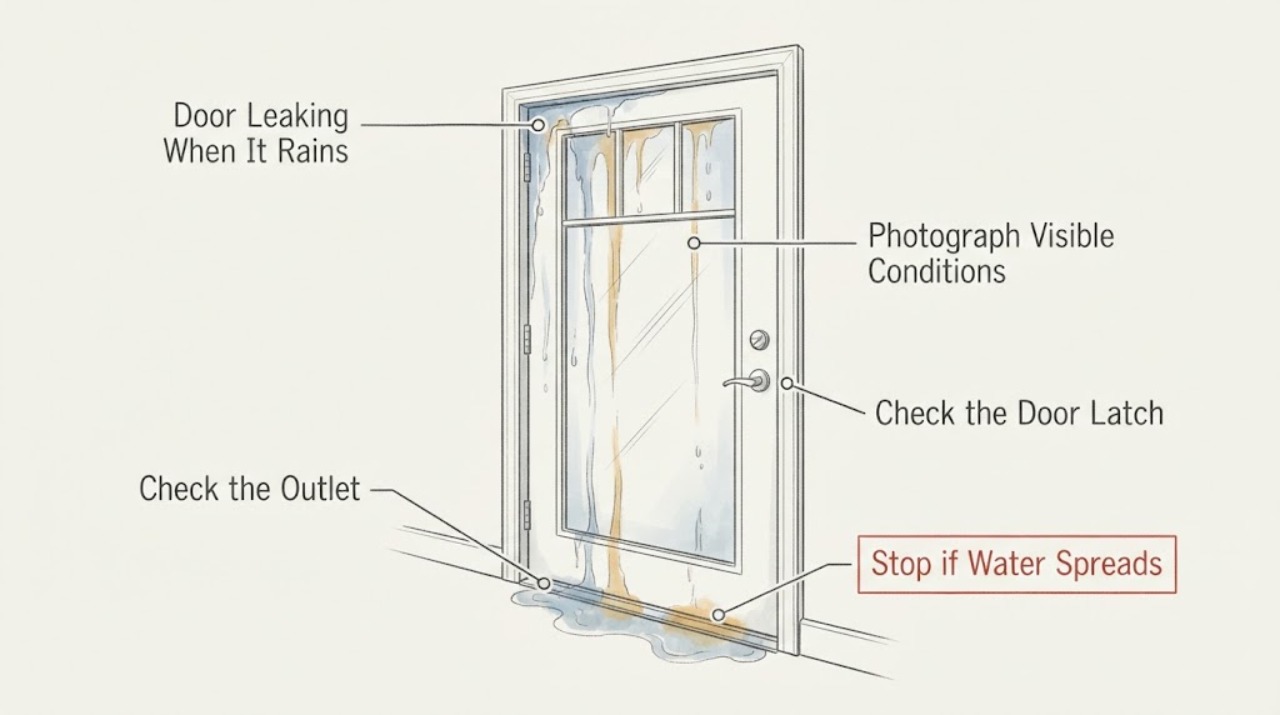
Door Leaking When It Rains: Trace the Glass, Sill, and Flashing
Do not start with caulk. First stay off ladders and exterior surfaces during rain, wind, or lightning, and keep water away from electrical outlets and equipment.
-
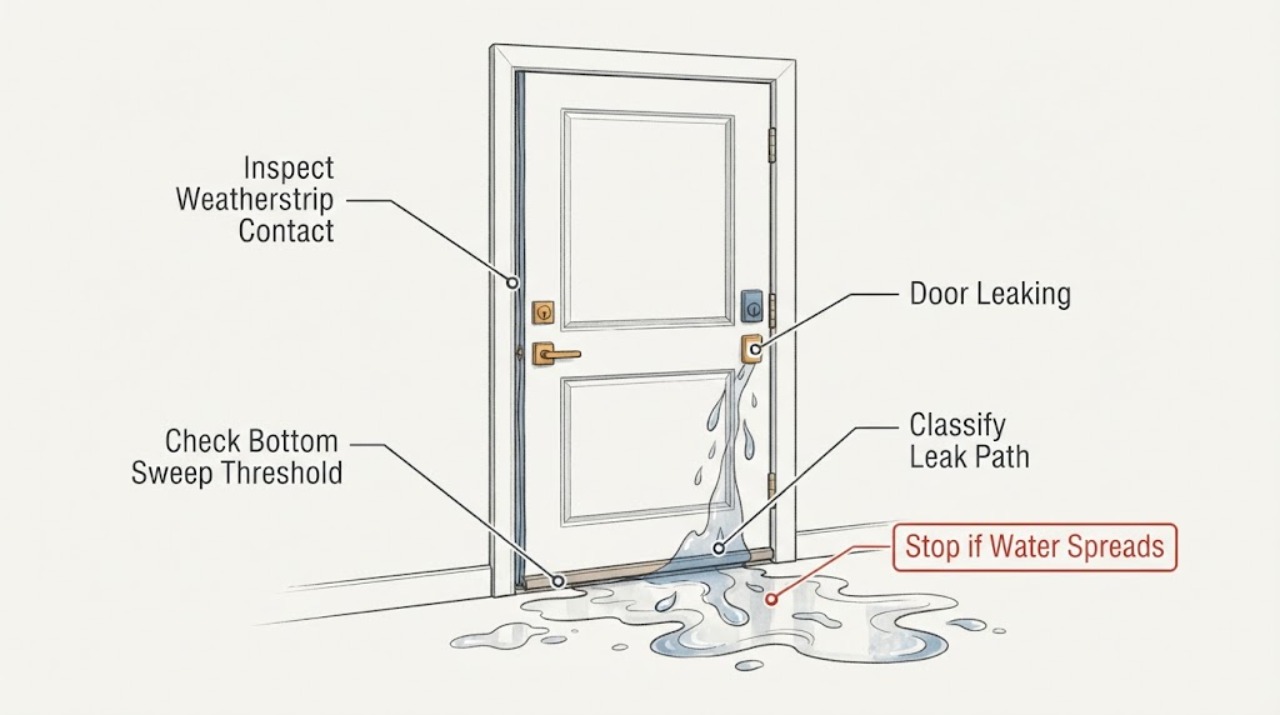
Door Leaking: Check the Weatherstripping Before Replacing It
First determine whether “leaking” means outside air, rainwater, or water from a plumbing or condensation source. Weatherstripping is intended to close air gaps around a moving exterior door; it is a likely match when you see daylight, feel a draft, or find a damaged strip that no longer contacts the jamb.
-
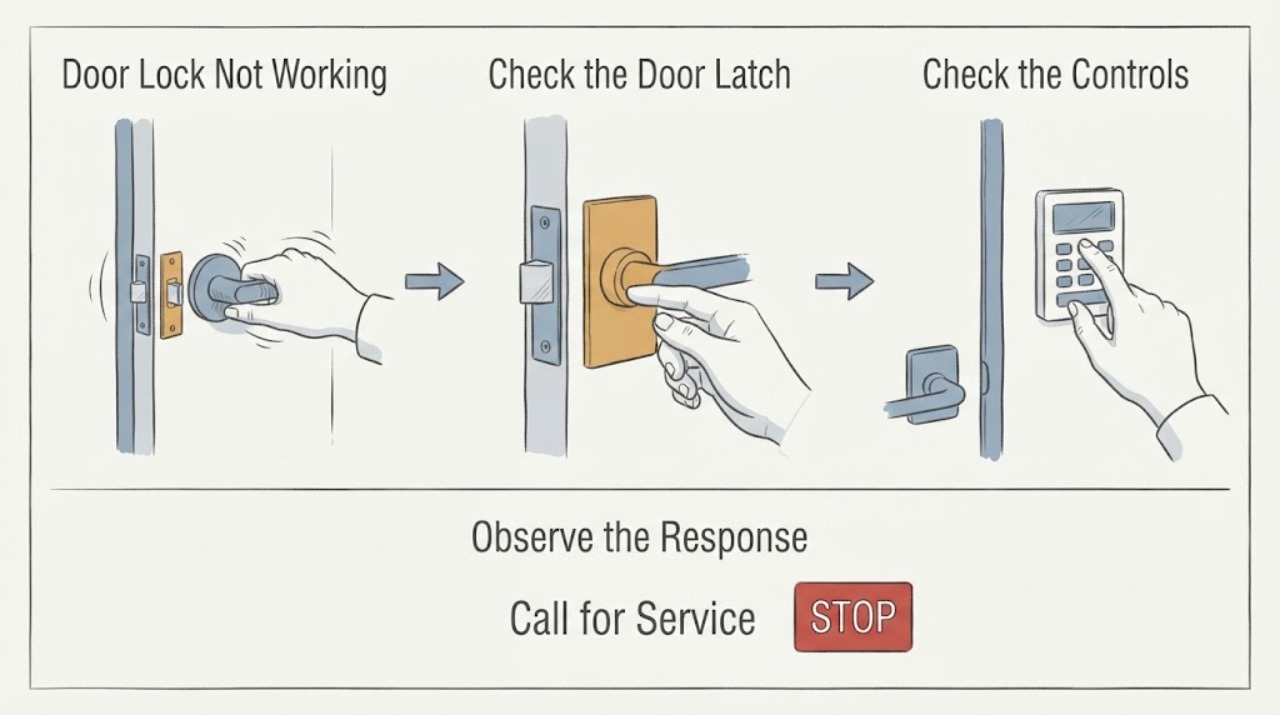
Door Lock Not Working: Check Alignment, Latch, and Hardware Safely
A door lock that does not work is often an alignment problem rather than a failed lock: the door may be rubbing the frame, the latch or bolt may miss the strike, weatherstrip compression may be too tight, or the handle may be binding. Test the lock with the door open before applying force, then observe whether the latch moves freely and whether it aligns with the strike when the door closes.
-
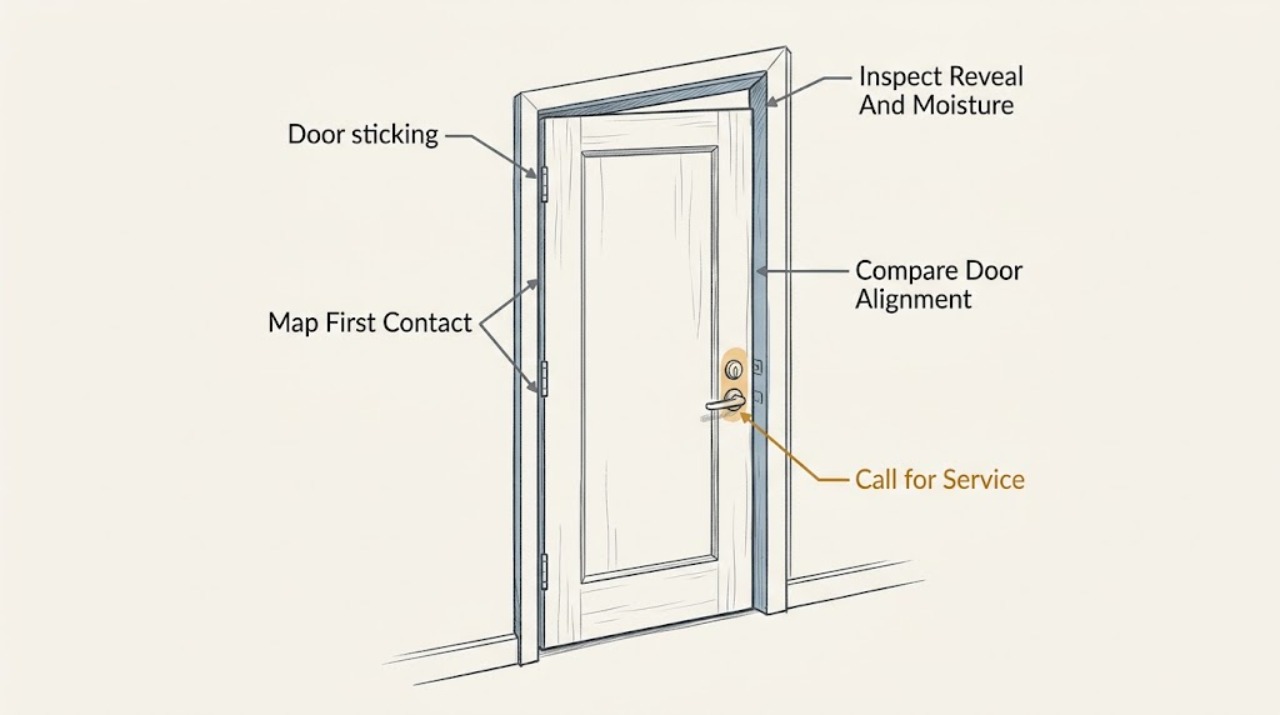
Door sticking: Find the bind and decide when to call for service
A sticking door is usually an alignment, clearance, hardware, weatherstrip, threshold, or moisture-related symptom, and the location of the bind matters more than the force needed to open it. From a safe position, note whether it rubs at the top, bottom, hinge edge, latch edge, strike, sill, or weatherstrip, and whether the problem changes with humidity or season.
-
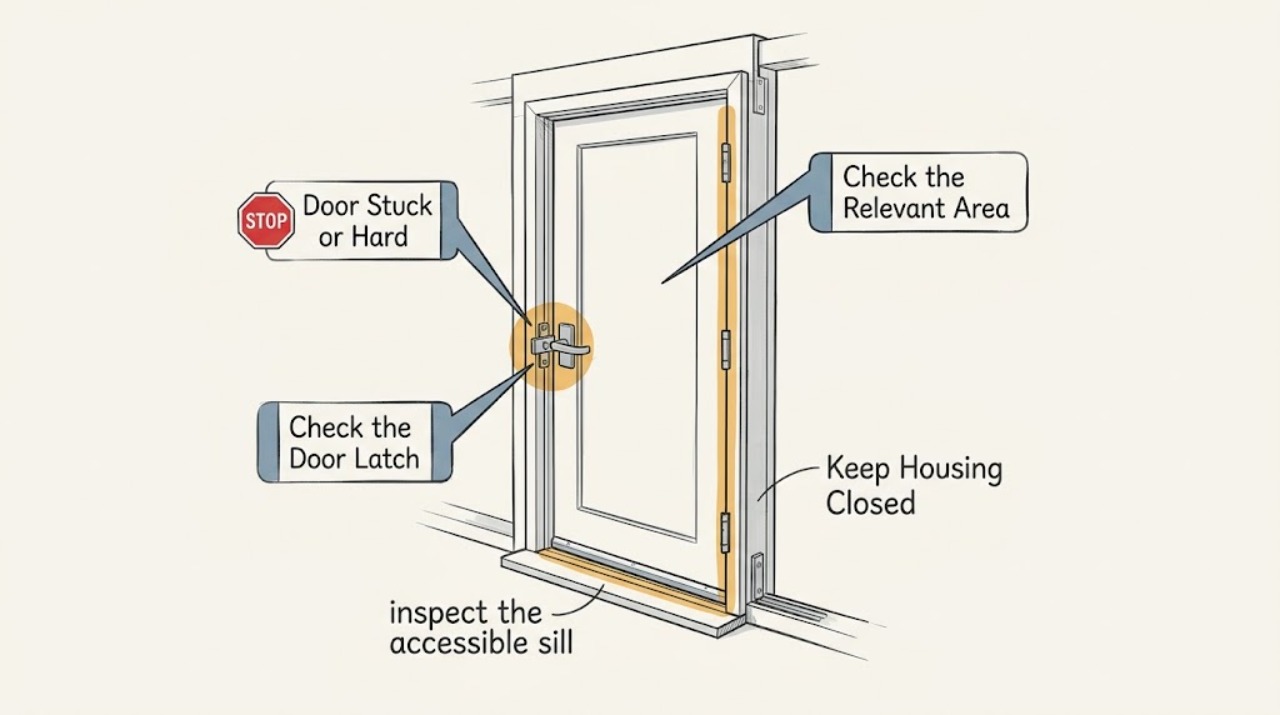
Door Stuck or Hard to Open? Check the Lock, Hinges, Frame, and Sill
A stuck door is usually binding at the frame or sill, misaligned at the hinges or latch, obstructed in a track, or affected by a warped or moisture-damaged component. First determine whether the handle or lock is stuck, or whether the panel moves and then rubs; then inspect the visible contact point without forcing the door.
-
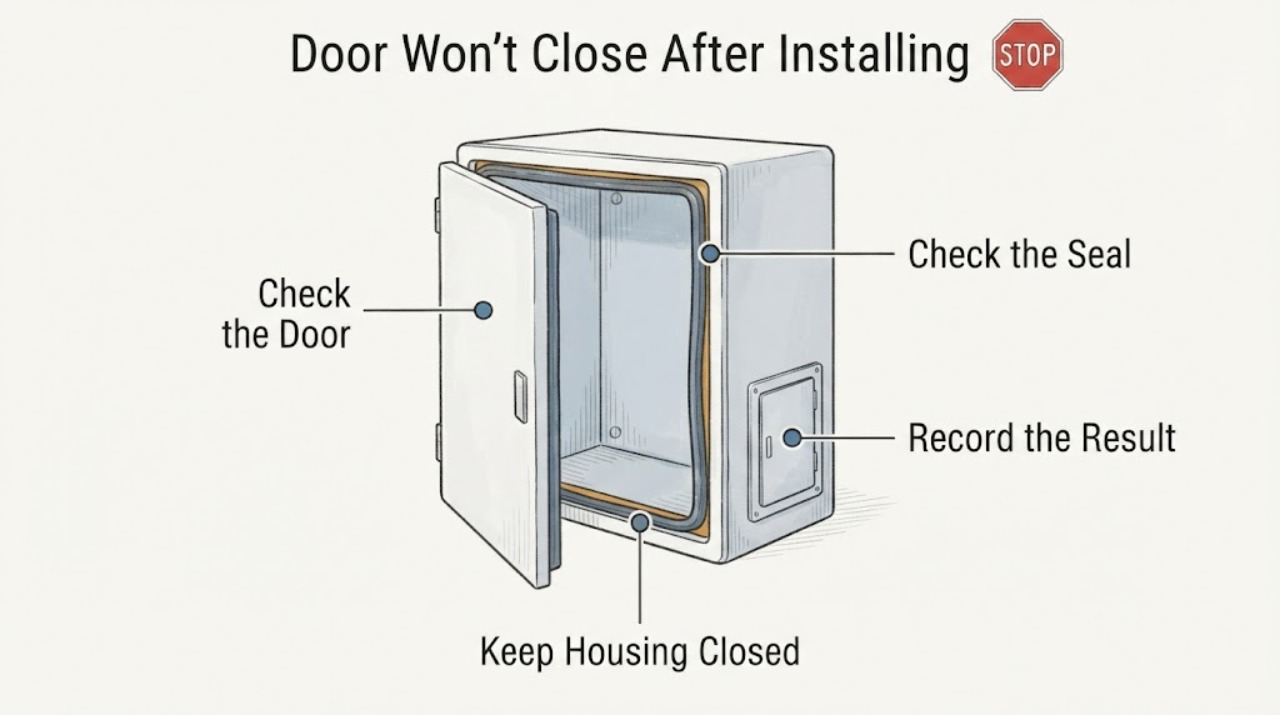
Door Won't Close After Installing Weatherstrip Seal
If the door stopped closing immediately after a weatherstrip seal was installed, do not trim the door, force the latch, or remove hinges first. With the door supported and no pinch, glass, security, or fire-door hazard, compare the new seal with the product instructions: a strip can be too thick for the gap, installed on the wrong face, doubled at a corner, buckled, or seated against the latch path.
-
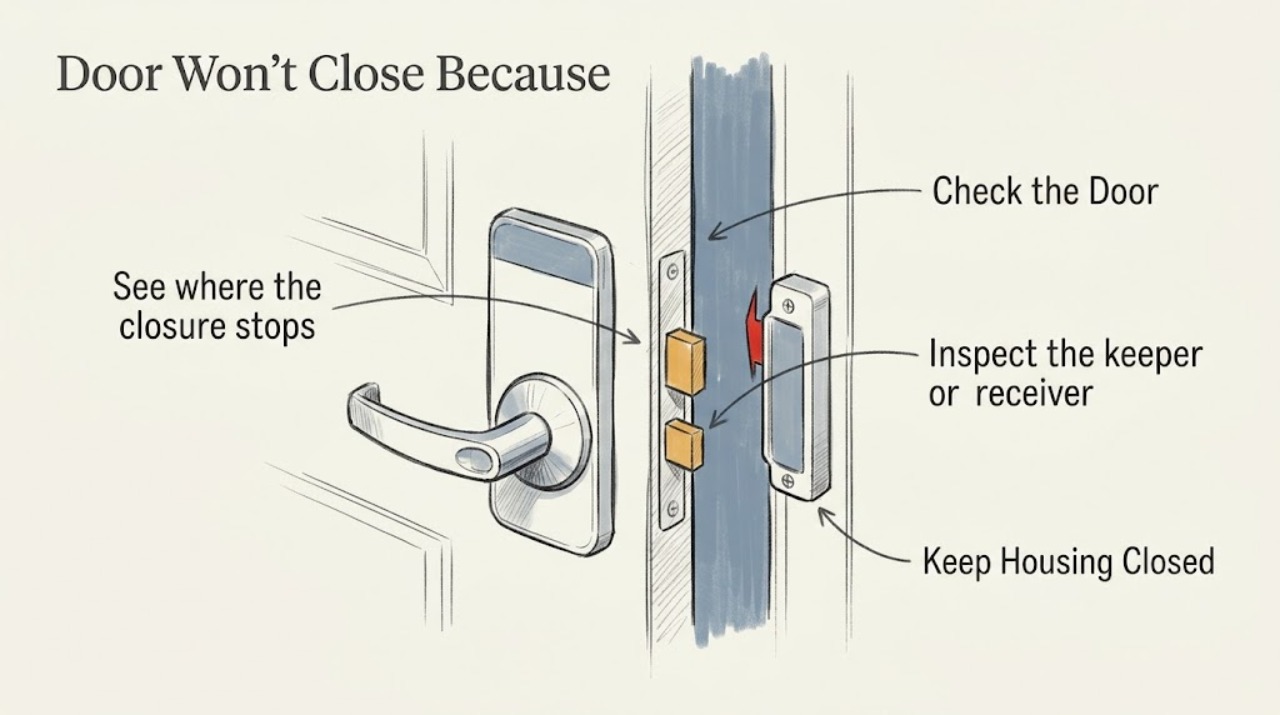
Door Won't Close Because of the Lock: Check Alignment Safely
If a door will not close because its lock or latch does not line up, do not force the handle or throw the deadbolt against resistance. First determine whether the panel reaches the frame and whether the lock works freely with the door open.
-
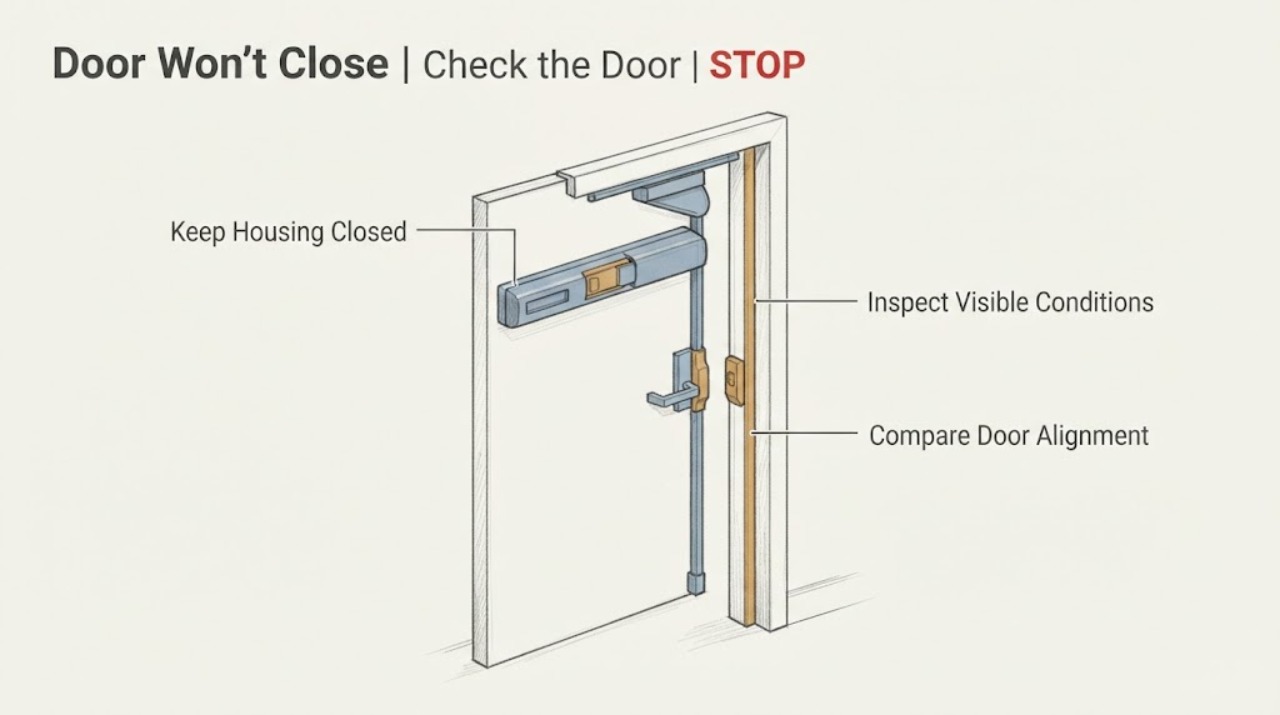
Door Won't Close: Check Frame Alignment, Hinges, and Obstructions
When a door will not close, first find where the panel contacts the frame, sill, weatherstrip, or hardware. A dropped or warped frame, loose or binding hinge, displaced closer, bottom sweep, or latch-side mounting frame can stop closure.
-
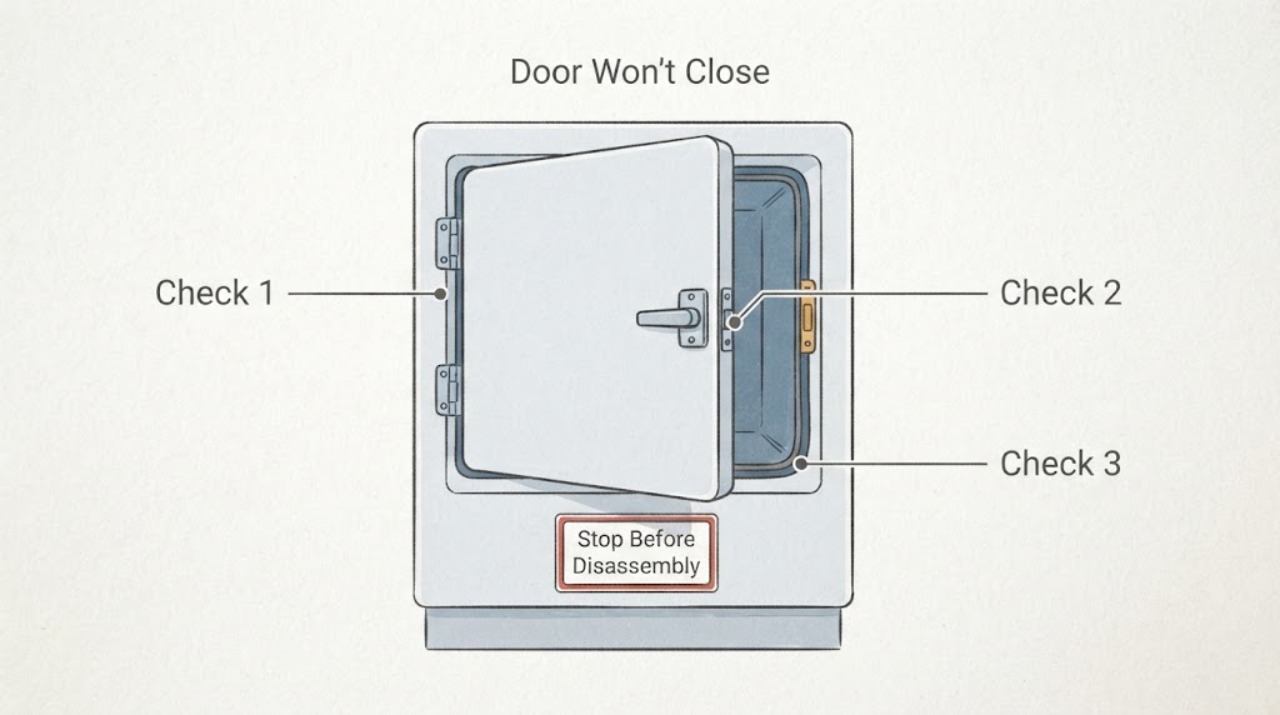
Door Won't Close: Check the Frame, Seal, and Alignment Safely
Do not force a door that will not close. From a safe standing position, close it only until the first contact and note whether the top, bottom, hinge side, latch side, frame, or weatherstrip is stopping it.
-
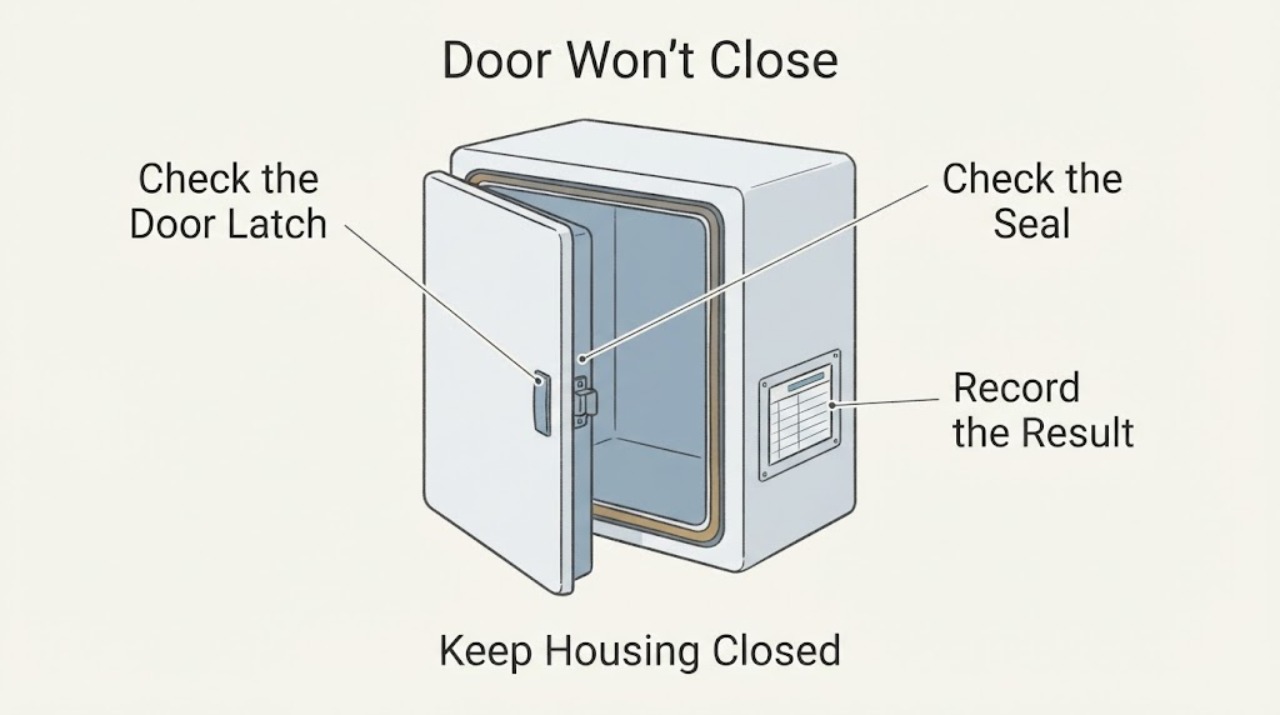
Door Won't Close: Gasket and Alignment Checks
A door that will not close because of its gasket usually has a damaged, displaced, painted, folded, or overly compressed weatherstrip, but the door may also be approaching the gasket out of alignment. Inspect the gasket from hinge side to latch side, look for an uneven contact pattern, and check whether the panel is sagging or the strike is misaligned.
-
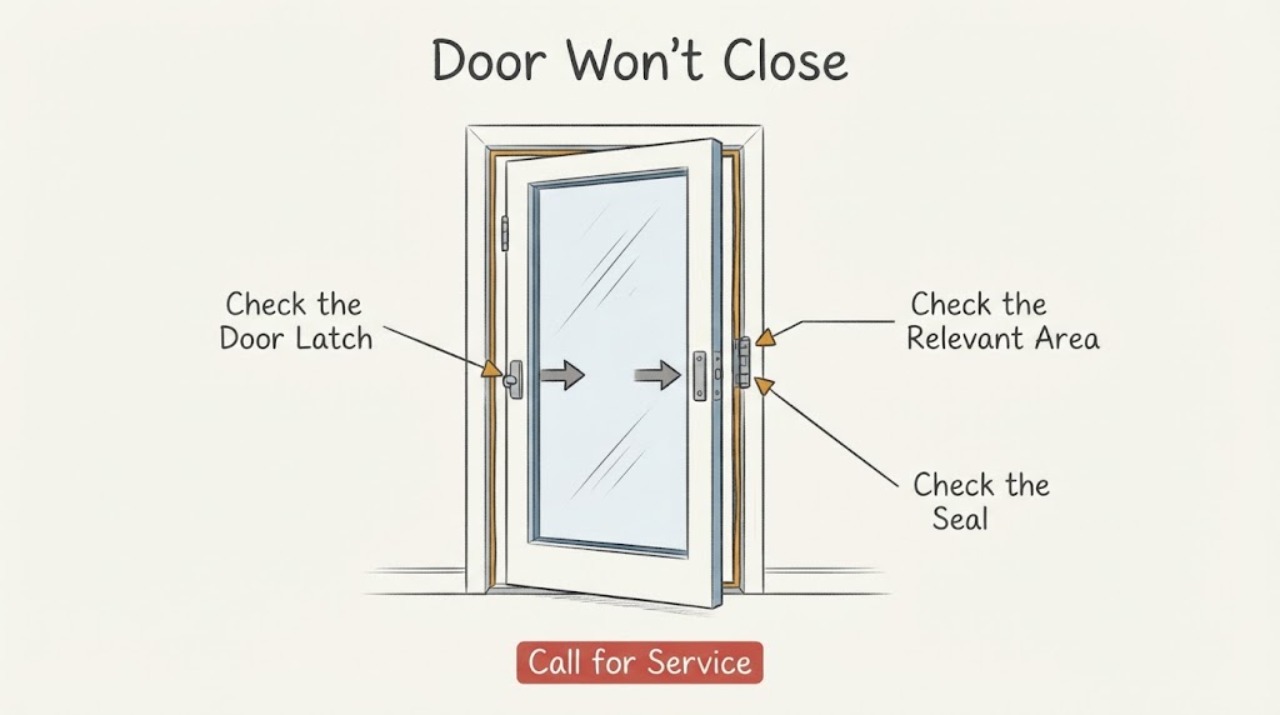
Door Won't Close: Check the Hinge, Frame, and Obstructions Safely
Start by checking whether the door is blocked, sagging on the hinge side, or failing at the latch side. Do not force it, lift a heavy glazed door, remove a hinge pin, or disable a self-closing device.
-
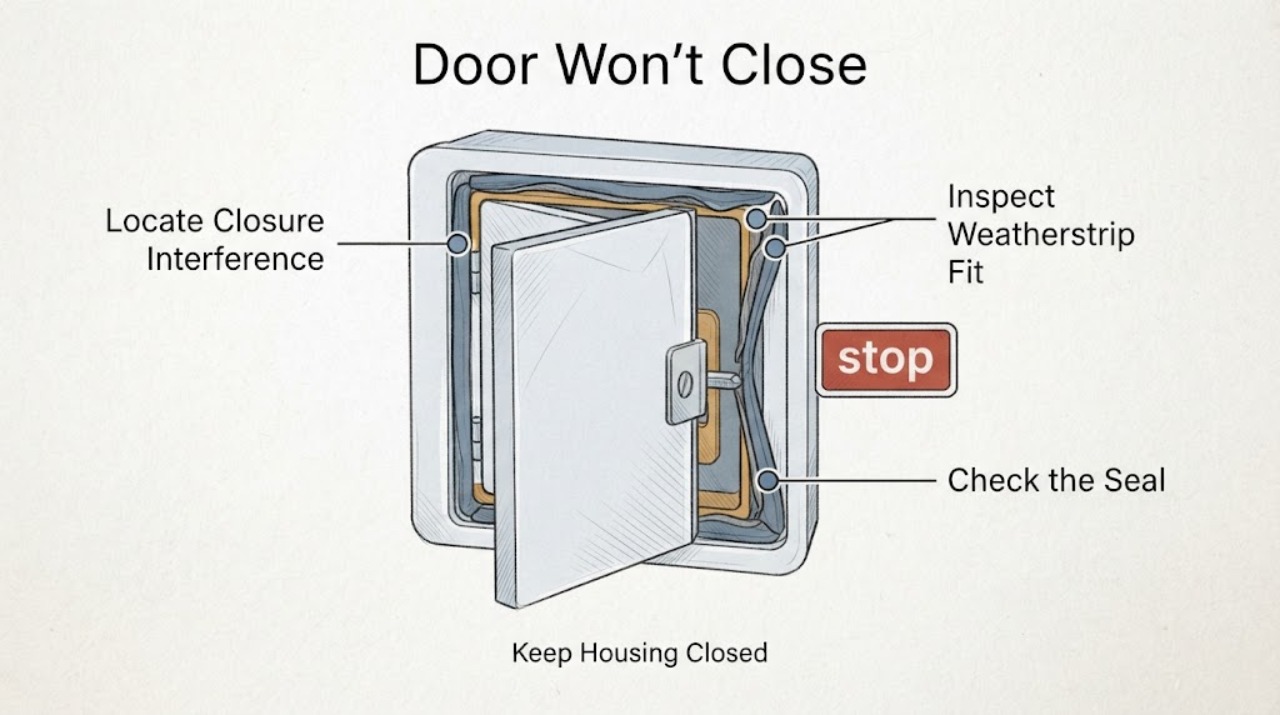
Door Won't Close: check weatherstripping, alignment, and the latch
If a door will not close after weatherstripping was installed or replaced, do not force the latch. First identify where the panel stops: a bulky or mispositioned weatherstrip, loose hinge or hardware, a shifted strike, a raised threshold or sweep, or a frame that is out of square.
-
Door won't close: isolate rubbing, hinge sag, weatherstrip, or latch alignment
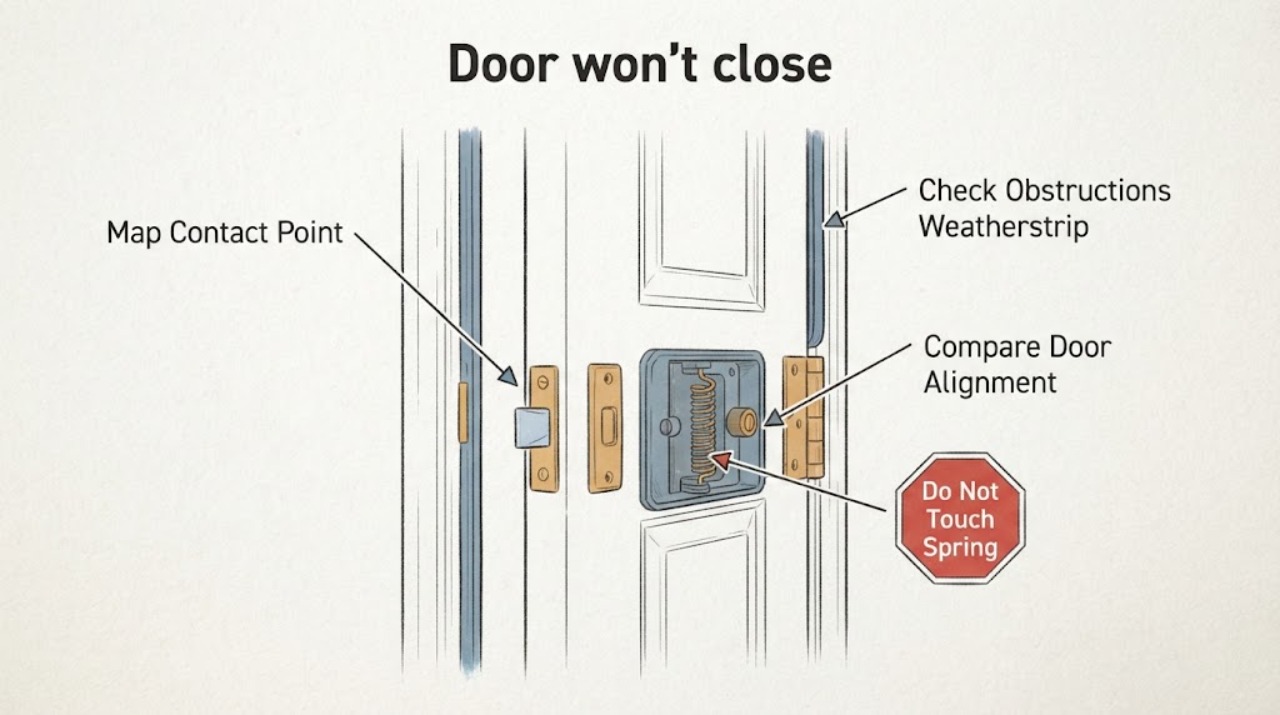
A door that will not close is usually being stopped by rubbing or a shifted frame, compressed or displaced weatherstripping, hinge sag, an obstruction at the sill, or a latch that no longer lines up with its receiver. Close it slowly without forcing the handle or lock and note the first contact point: top, bottom, hinge side, lock side, weatherstrip, threshold, or latch.
-
Double-Hung Window Stuck: Spiral Balance Spring Adjustment & Track Friction Fix
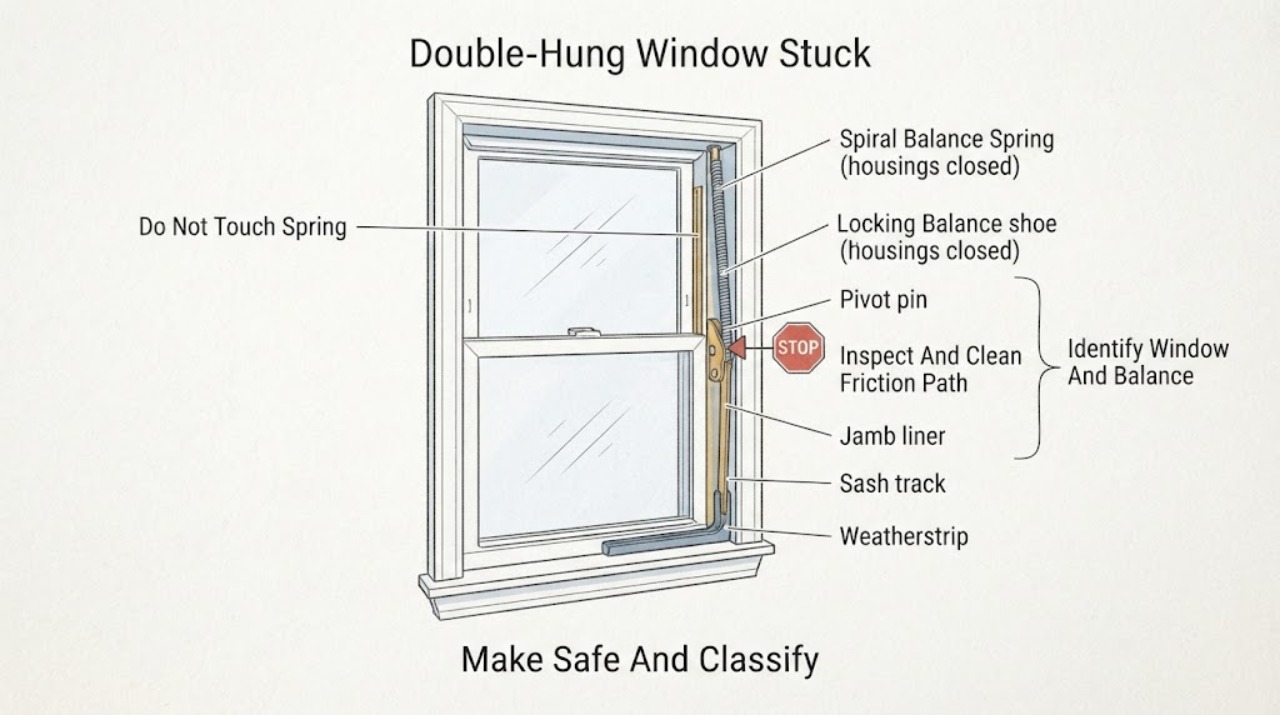
Do not force a stuck double-hung sash or pull a spiral balance rod freehand. First distinguish track friction from a balance or pivot problem: debris or a dirty jamb liner can make a sash drag through its travel, while a sash that drops, rises, binds on one side, or will not stay tilted points to balance-shoe engagement or balance tension.
-
Drafty Door: Find the Gap and Restore the Seal
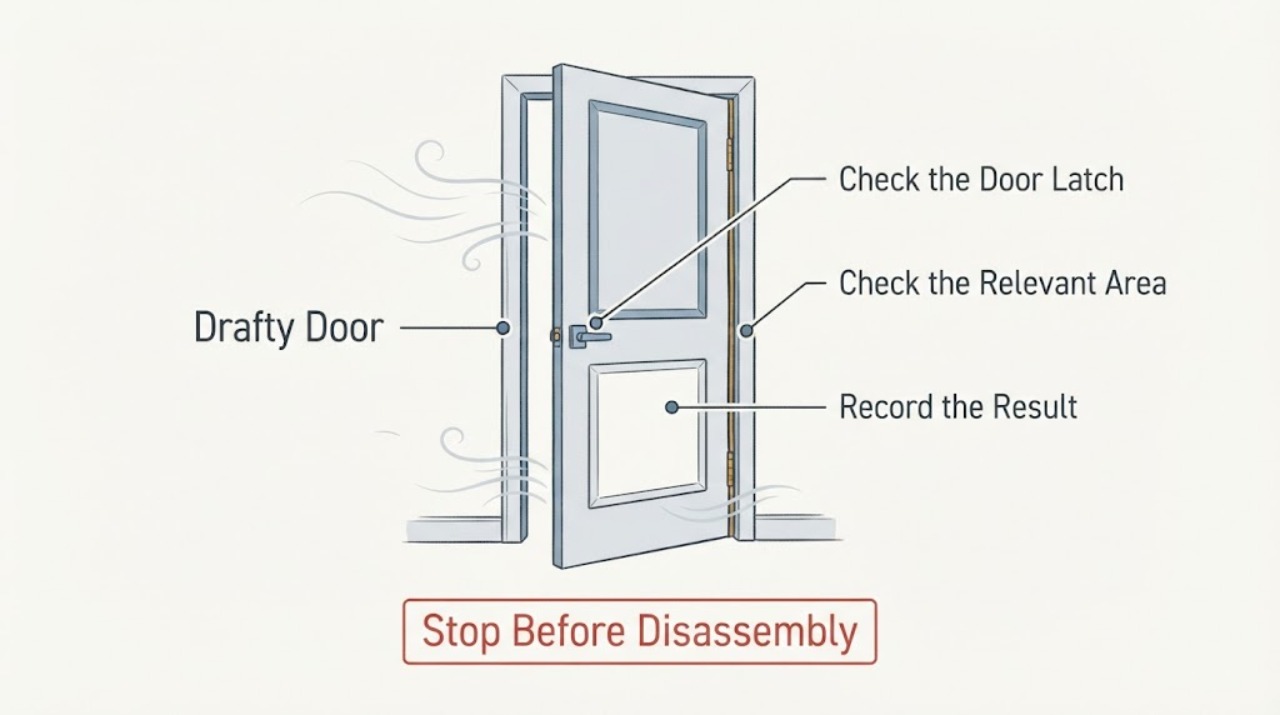
A draft around a closed door usually comes from a worn or compressed weatherstrip, a door that no longer closes tightly against its stops, a gap beneath the door, or air leakage behind the frame. With the door closed, identify the exact edge where air or daylight enters, then check the seal with a paper or playing-card test and inspect the bottom sweep and threshold.
-
Drafty Door: Check the Seal and Weatherstripping
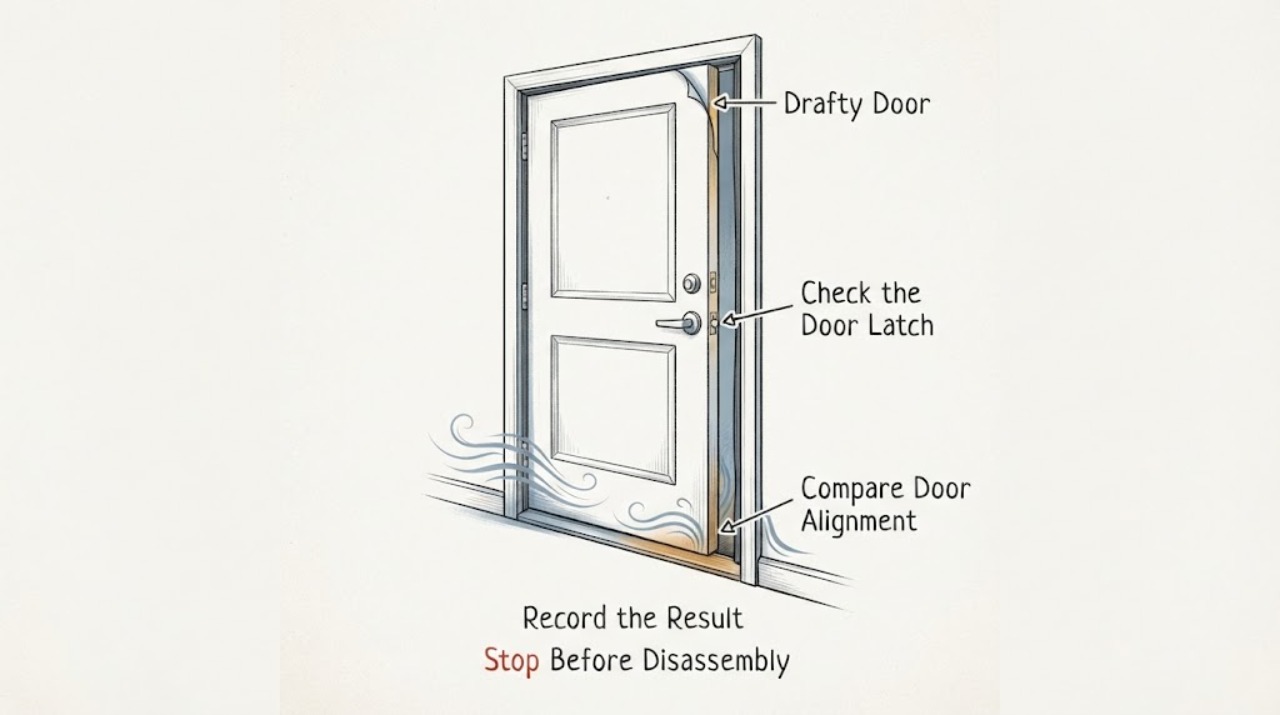
Close and latch the door, then locate whether the draft crosses the perimeter seal, the bottom sweep or threshold, or the gap behind the frame. Weatherstripping is for the moving door-to-jamb joint; caulk or backer rod is for stationary gaps around the frame.
-
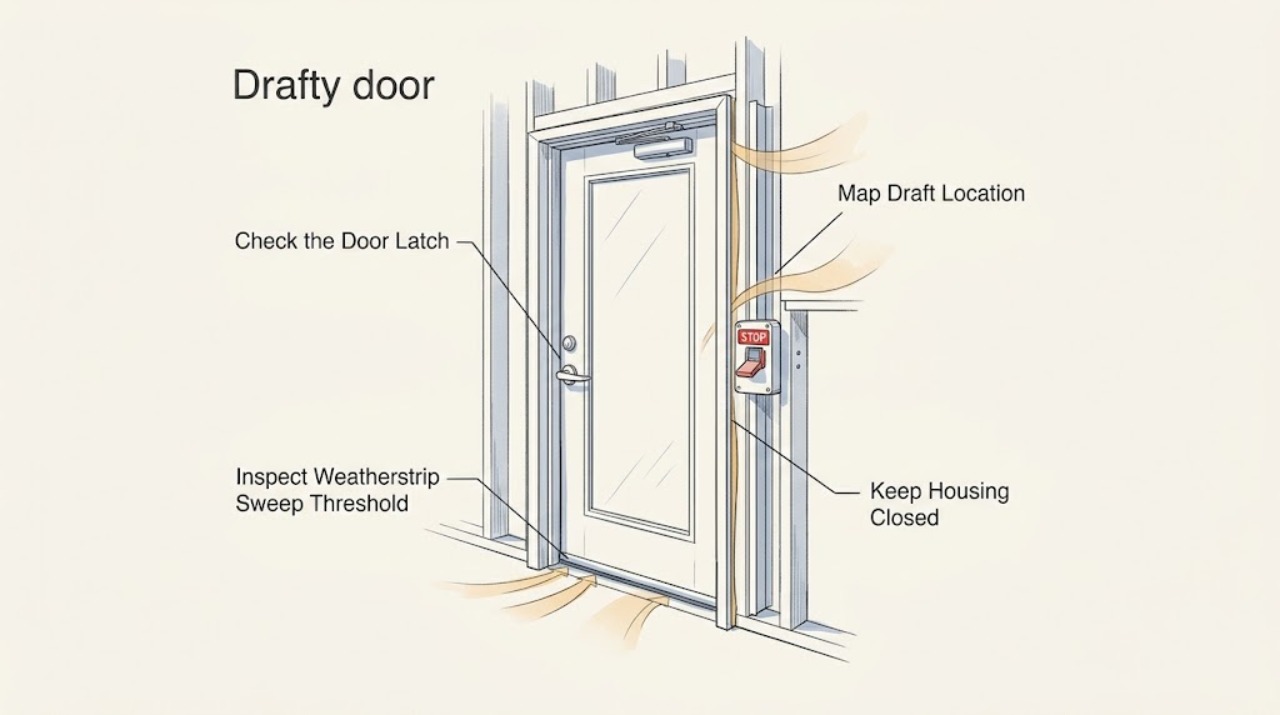
Drafty door: Find the leak before replacing the seal
A drafty door needs a location check before you buy a replacement seal. With the door closed, identify whether air enters at the latch side, hinge side, head, bottom sweep or threshold, or around the frame where it meets the wall.
-
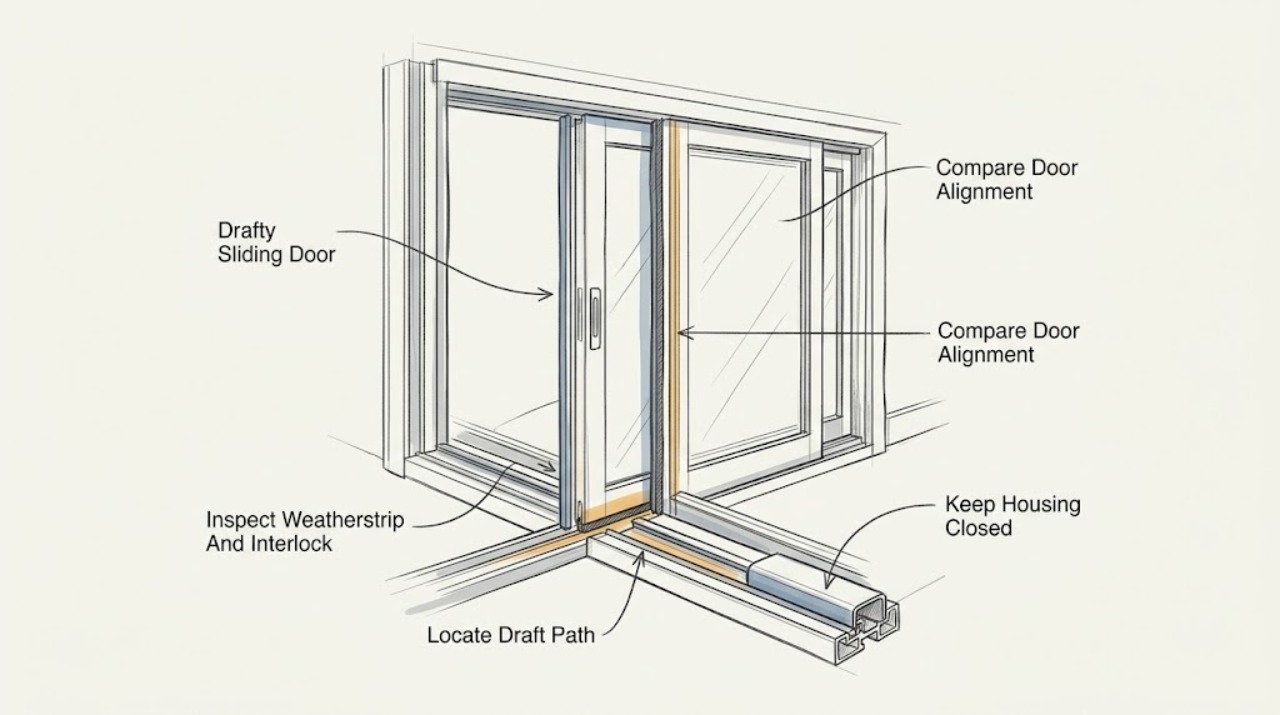
Drafty Sliding Door: Find the Leak at the Panel, Seal, Track, or Frame
A drafty sliding door usually leaks at the moving-panel seal or interlock, a worn or displaced weatherstrip, a panel that is not sitting square on its rollers, or the fixed frame and trim rather than the glass itself. With the door fully closed and locked, locate the draft using a thin-paper or smoke observation, then check the track, panel reveal, latch pull-in, and visible seals.
-
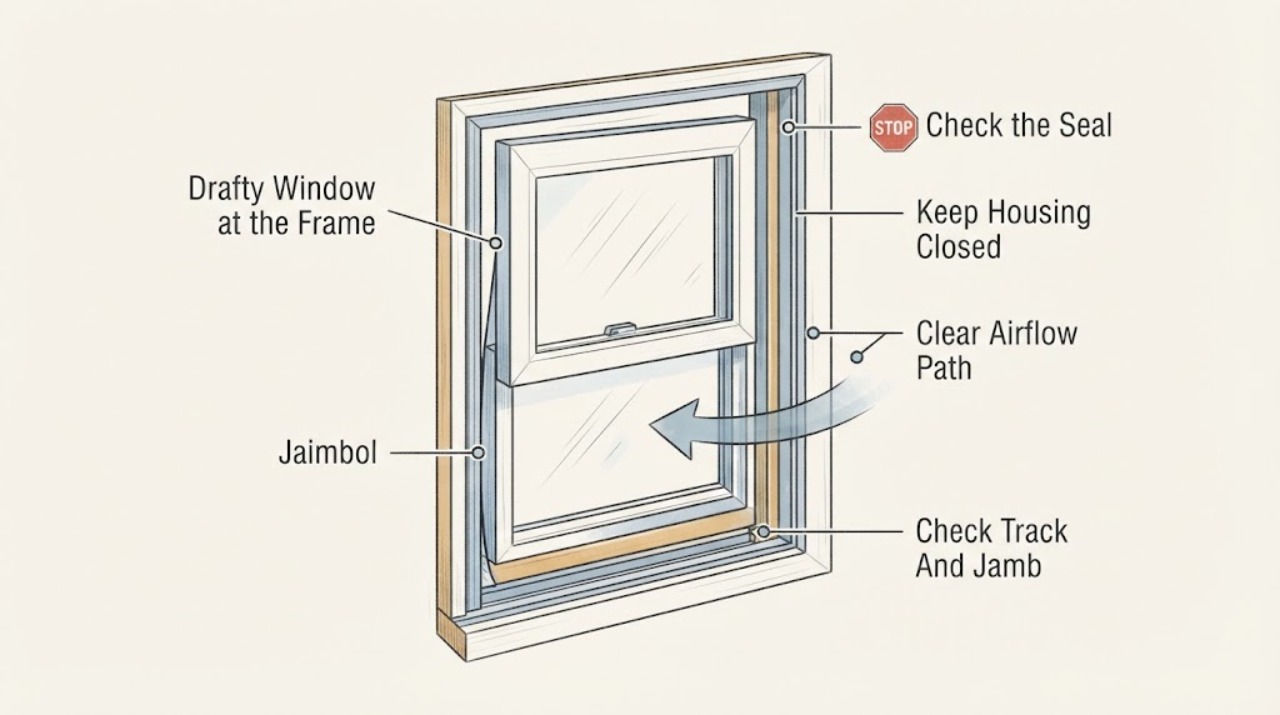
Drafty Window at the Frame or Track: What to Check
Confirm the airflow path before applying material. With the window closed and latched, test the sash edges, meeting rail, sill, jambs, frame-to-trim joint, and track with a paper strip or a safe smoke source.
-
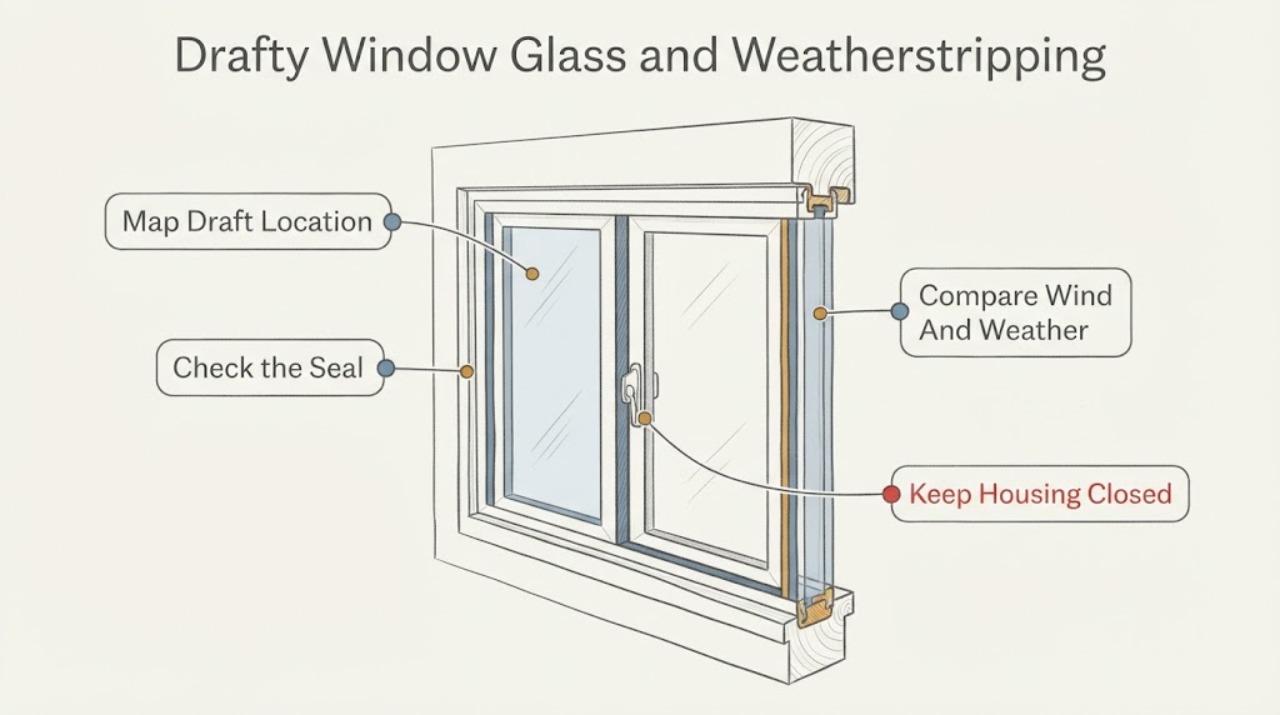
Drafty Window Glass and Weatherstripping: What to Check Next
A draft at a closed window can come through failed sash weatherstripping, a gap around the stationary frame, a cracked or poorly sealed pane, or the rough opening behind the trim. First identify whether air moves at the sash, glass edge, frame, or wall and whether the symptom changes with wind or rain.
-
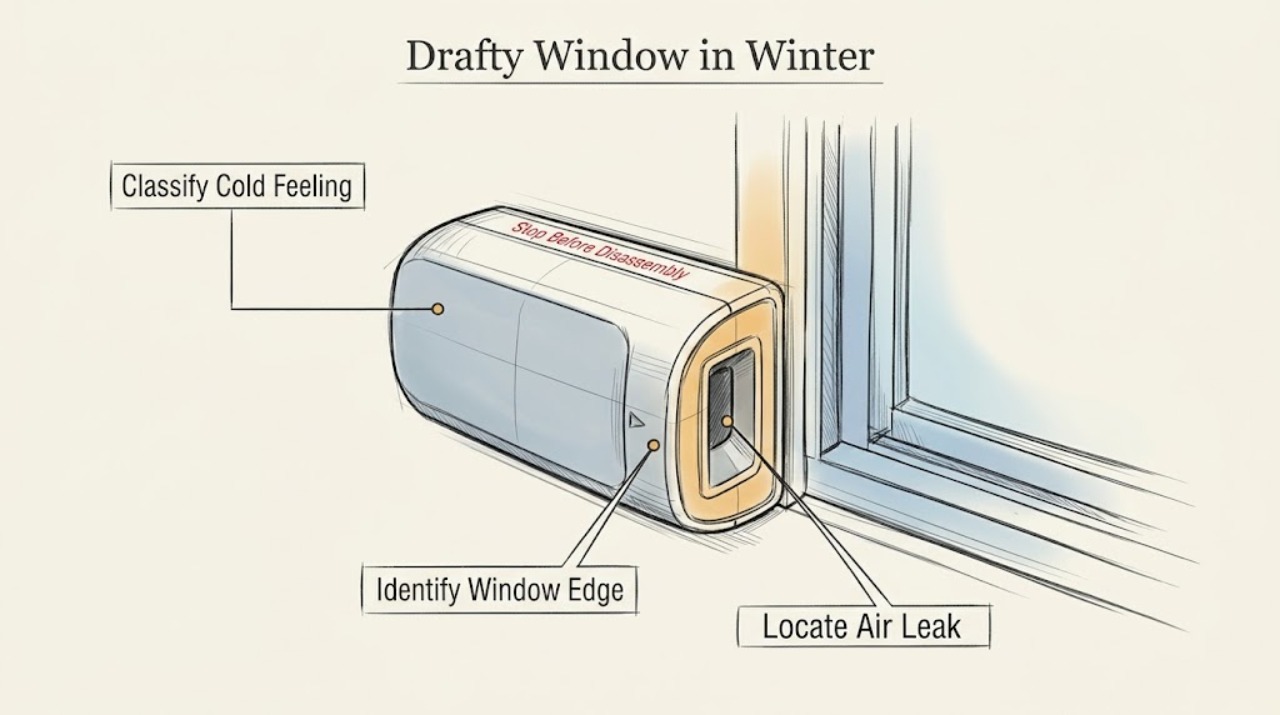
Drafty Window in Winter: Find the Leak Before Replacing the Glass
A winter window can feel drafty because air is passing through the sash, frame, or rough opening, or because cold glass is causing nearby air to move. Close and latch the window, then locate the exact edge with a strip of tissue or a smoke pencil; never use a candle or other flame.
-
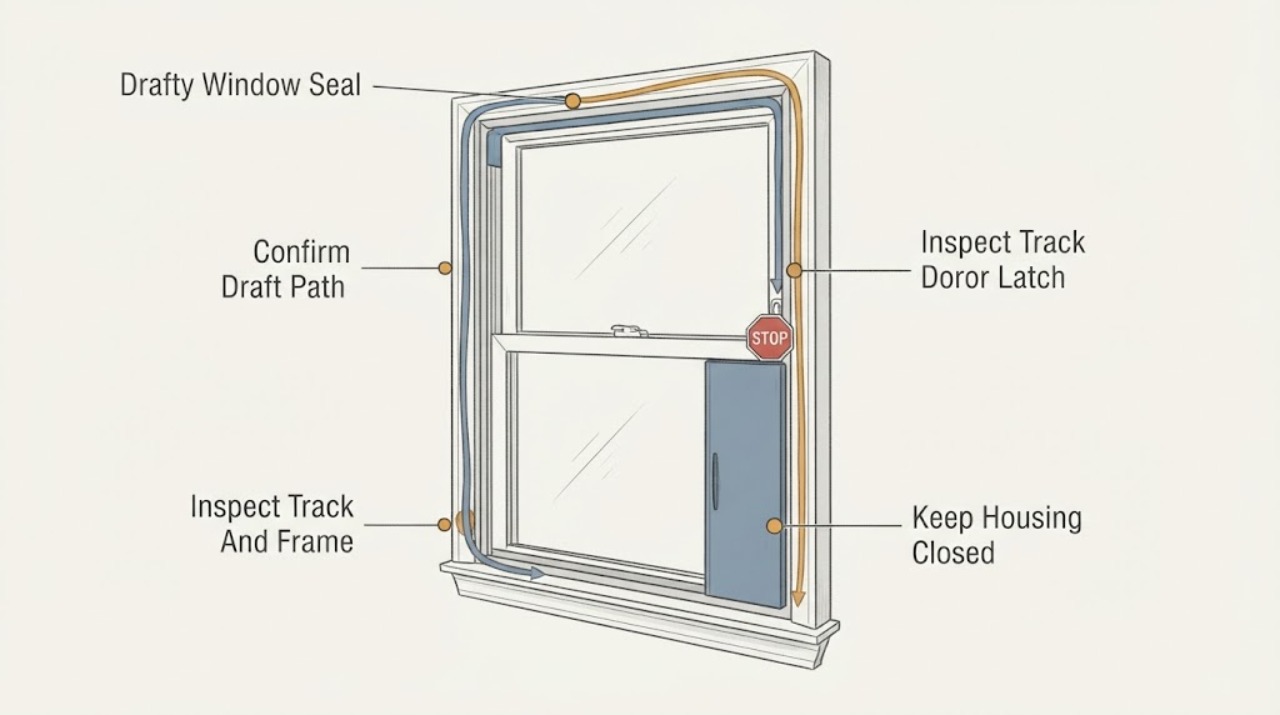
Drafty Window Seal: Check Compression and Gaps
Confirm that air is moving before replacing a seal. Close and latch the window, then test the sash edges, meeting rail, corners, and frame with a paper strip or a safe smoke source.
-
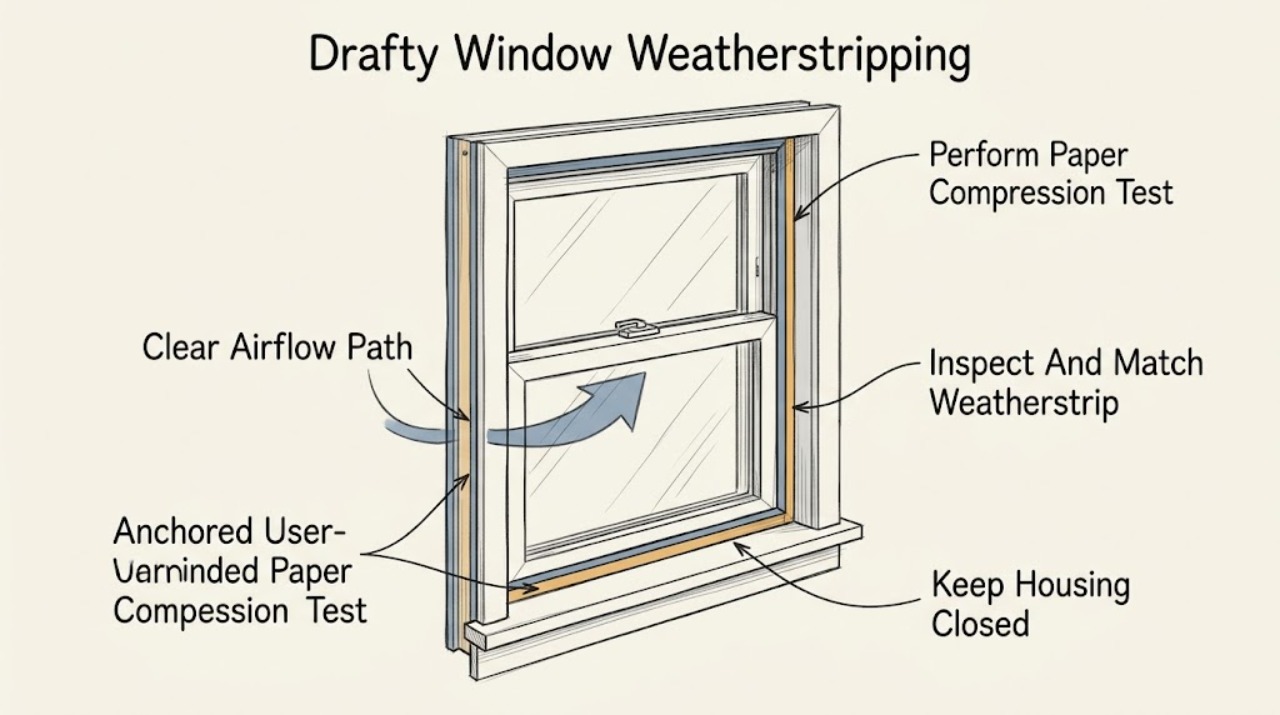
Drafty Window Weatherstripping: Find the Leak and Seal It Safely
To fix a drafty window, first locate whether air is passing the moving sash or through a stationary gap around the frame. A paper test on a closed, latched window can reveal weak compression: if the paper slides out easily, the weatherstrip or closure is not sealing well.
-
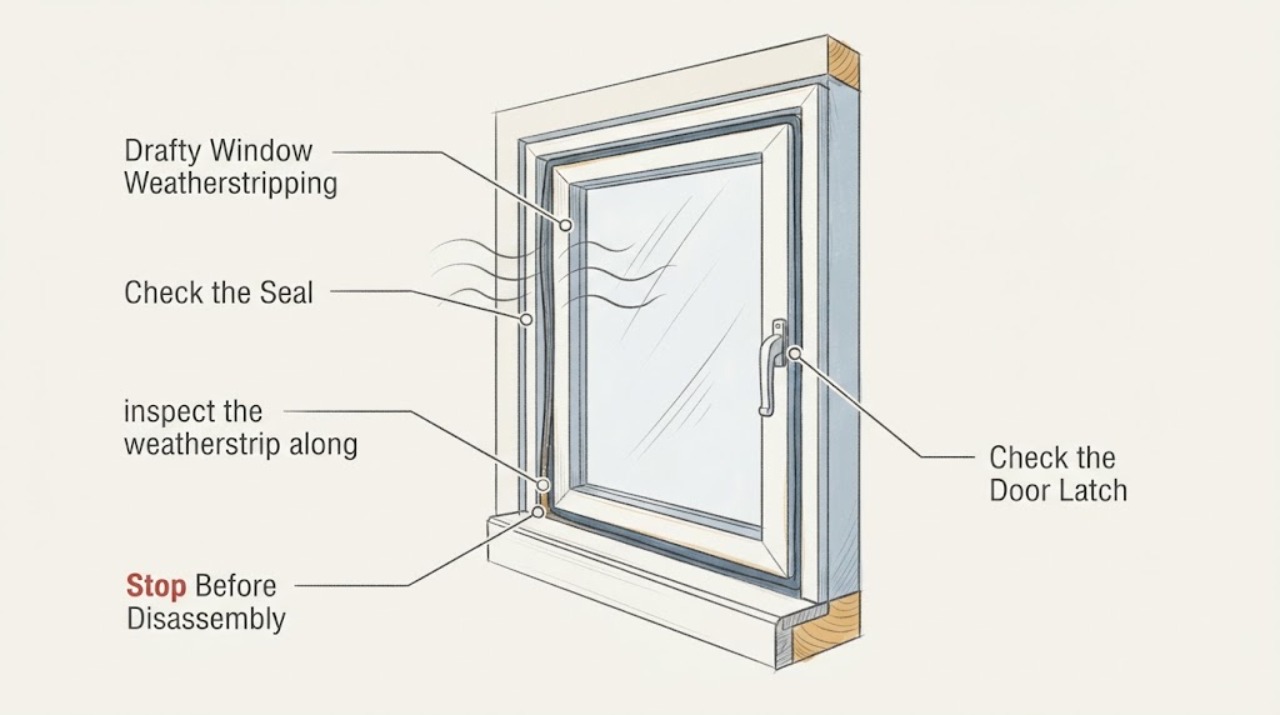
Drafty Window Weatherstripping: Match the Profile
First locate the air movement with the window fully closed and locked, then separate a moving-sash seal problem from a fixed frame, trim, or installation gap. Weatherstripping seals moving joints such as the sash-to-frame contact; caulk or an air-sealing repair is used at stationary frame-to-wall gaps.
-
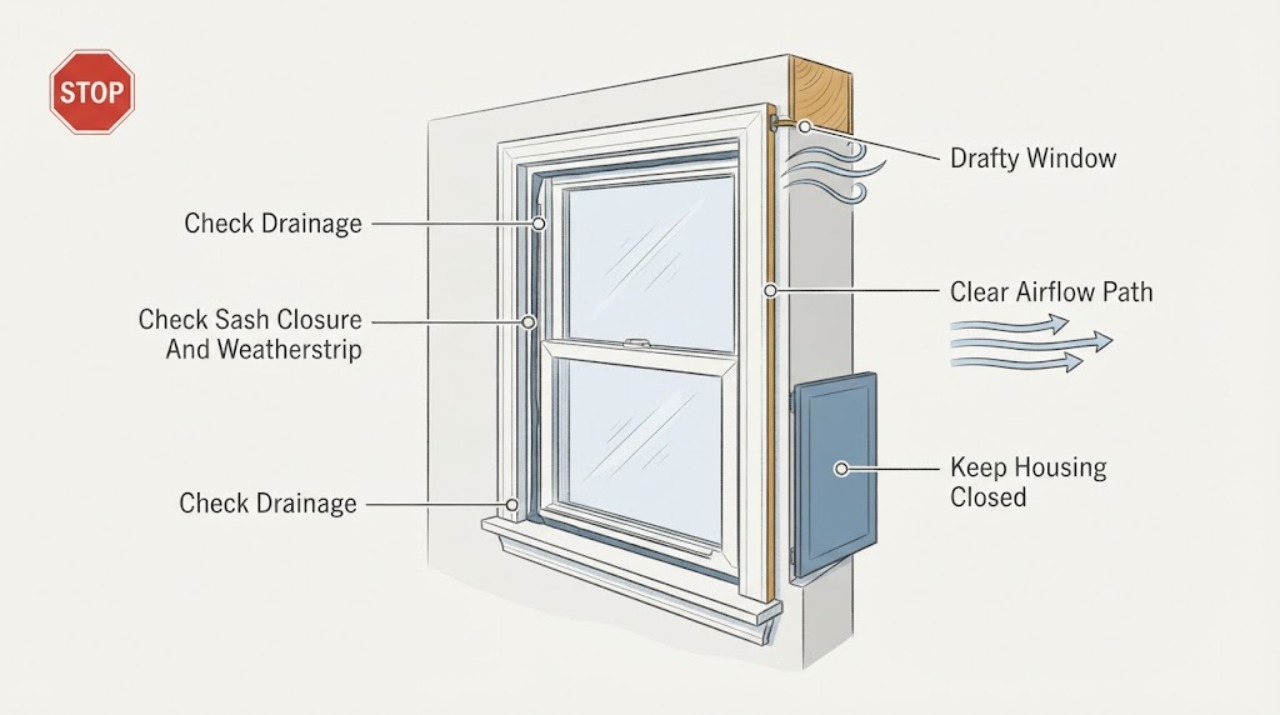
Drafty Window: Find the Air Leak, Check the Sash and Frame, Then Seal Safely
For a drafty window, first locate the air movement without using a flame: compare the sash, meeting rail, frame, trim, and nearby wall on a windy or temperature-difference day. If the draft follows a moving sash or latch, inspect the weatherstripping and whether the window closes squarely.
-
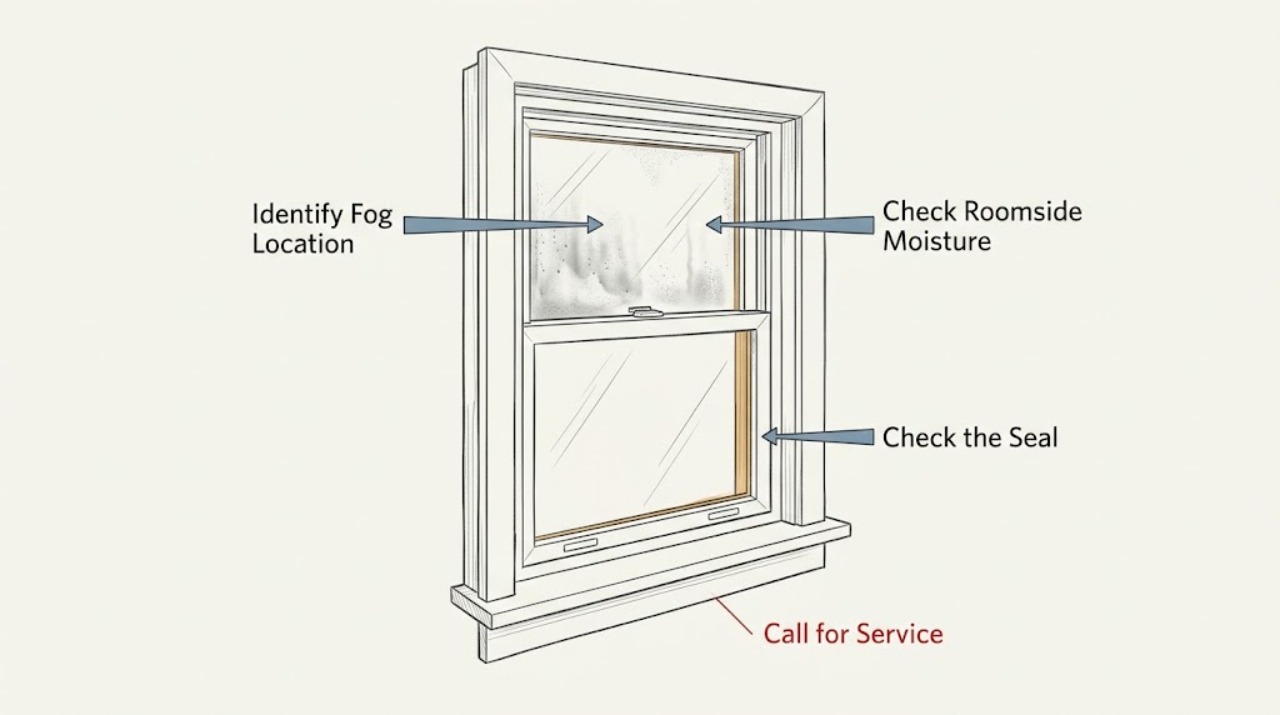
Foggy Window Glass: Identify Which Surface Is Hazy Before Choosing a Fix
When window glass looks foggy, first determine whether the haze is on the room side, outside, or between the panes. Wipe an accessible surface and see whether the haze returns; persistent moisture between double or triple panes points to a failed insulated-glass seal and cannot be corrected by cleaning the surface.
-
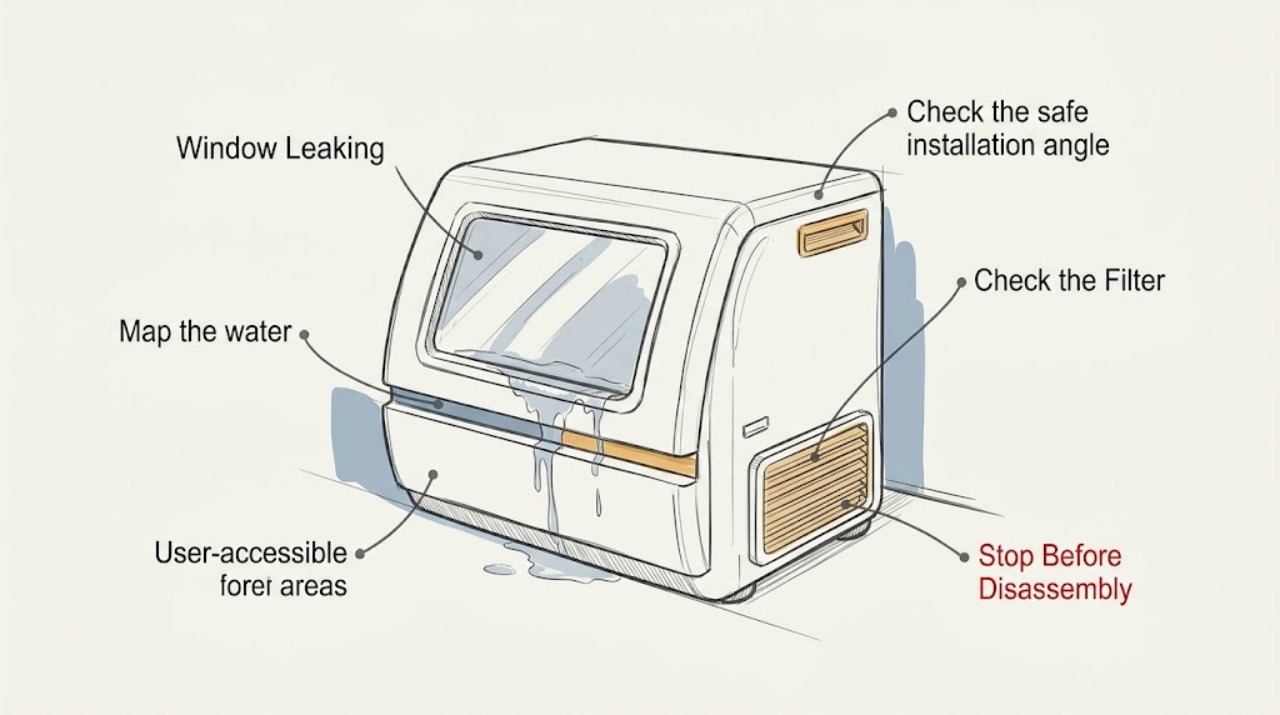
GE Window Leaking: Tell Normal Outside Drips from an Indoor Leak
If by a leaking GE window you mean a GE window air conditioner, first identify where the water appears. Water dripping from the outdoor side can be normal because the unit collects condensate and rainwater in its base pan and uses the fan to move some of it across the outdoor coil.
-
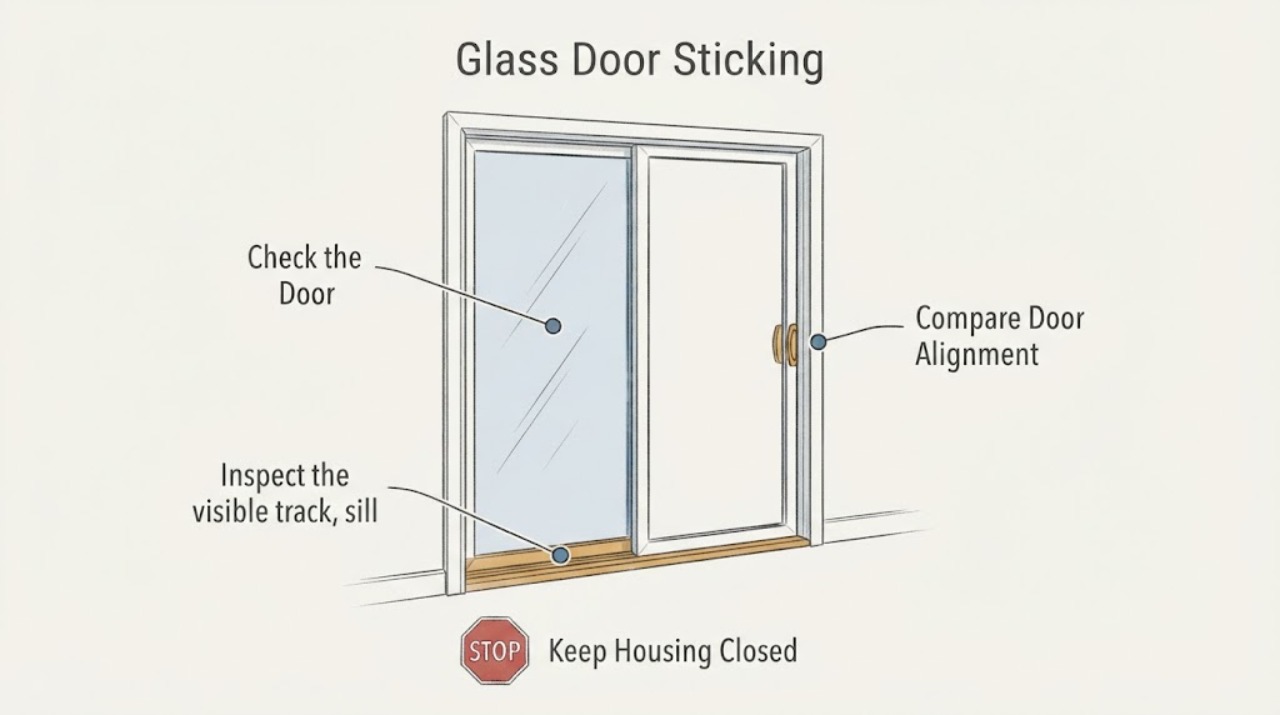
Glass Door Sticking: Safe Checks for the Panel, Track, and Alignment
A glass door that sticks usually needs to be separated into a sliding-panel problem and a hinged-door problem. For a sliding patio door, first look for debris or damage in the track, an uneven gap that suggests roller misalignment, and a latch or frame that is being loaded by a skewed panel.
-
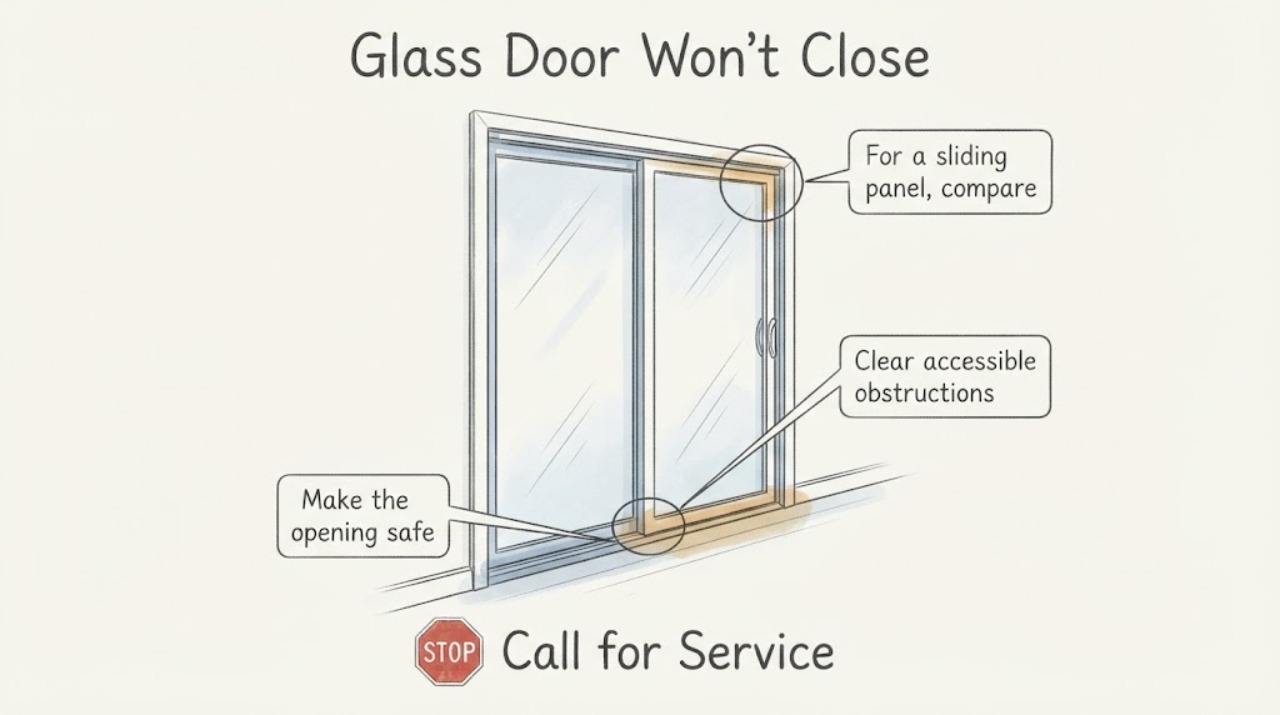
Glass Door Won't Close: Check the Panel, Track, and Latch Safely
A glass door that will not close is usually being stopped by an obstruction, a panel that has shifted out of alignment, a roller or hinge problem, a closer or latch that is out of position, or damaged glass or hardware. First identify whether it is a sliding patio door, hinged glass door, or storm/screen door, then keep fingers clear and inspect the sill, track, frame, latch area, and glass edges without forcing the panel.
-
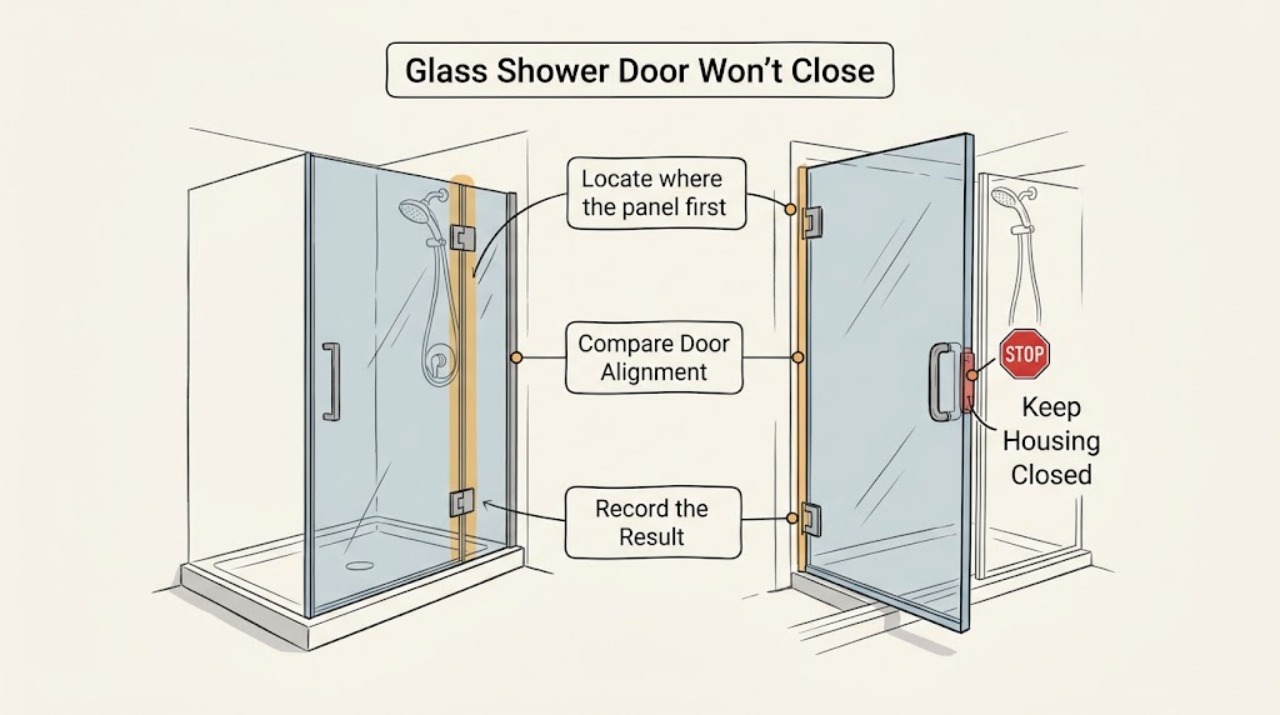
Glass Shower Door Won't Close: Check the Hinges, Track, and Seals
A glass shower door that will not close is commonly being stopped by hinge misalignment or sag, a panel edge touching the bottom track, an unlevel track, a folded seal, or a wrong gap at the strike or fixed panel. Do not force the glass.
-
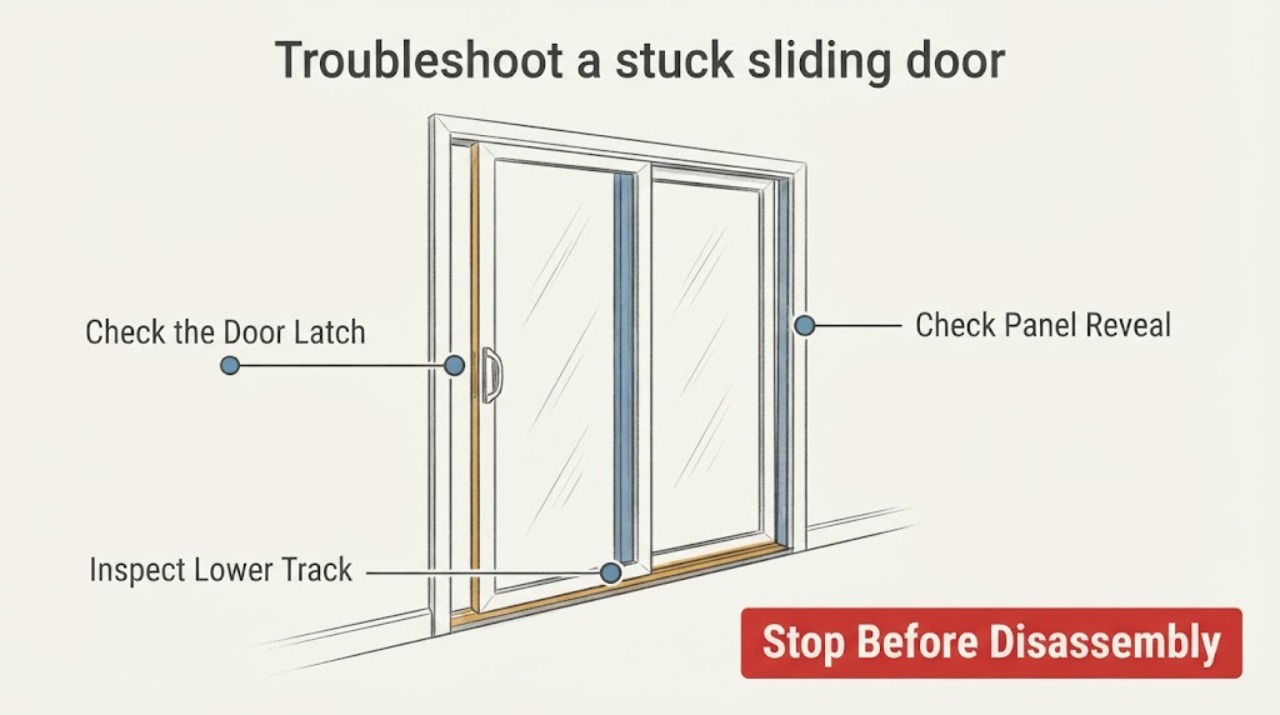
How to troubleshoot a stuck sliding door
Start by confirming that the latch is released, then inspect the accessible lower track and the panel's alignment without forcing the glass. On a gliding patio door, an uneven top-to-bottom gap points to an operating-panel adjustment issue, while a damaged track, leaning panel, cracked glass, or persistent bind is a stop-and-call condition.
-
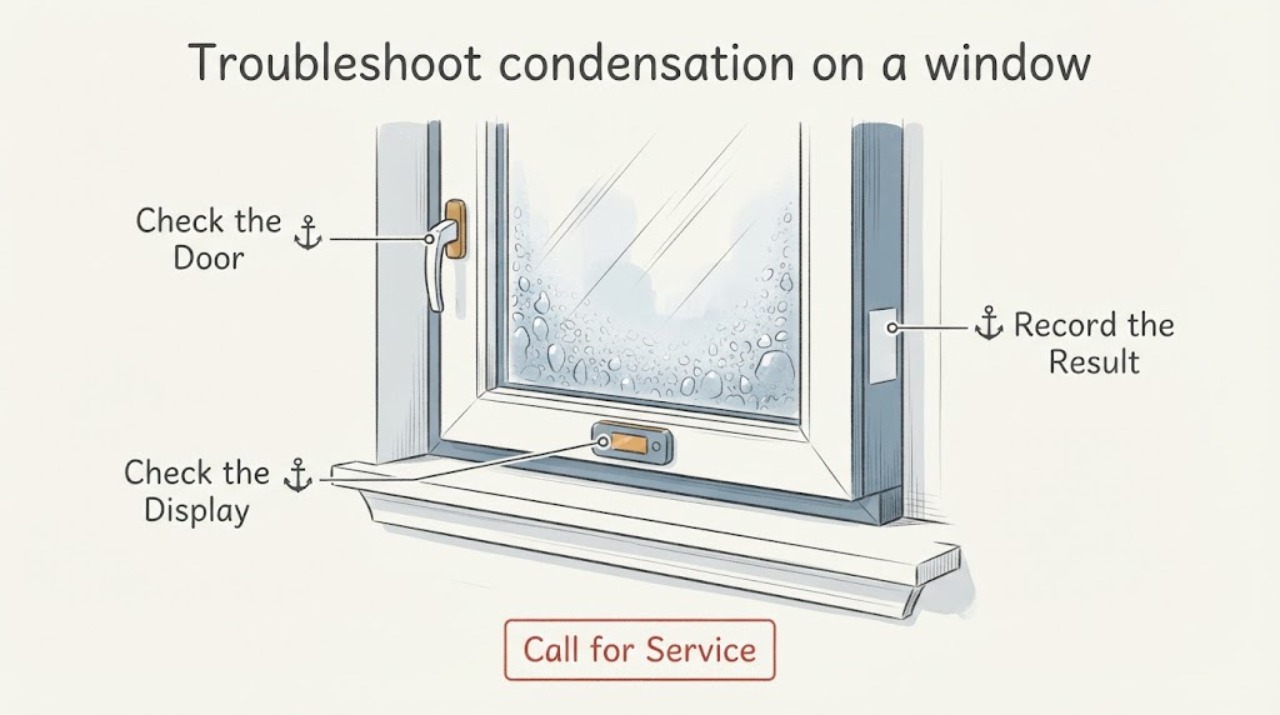
How to troubleshoot condensation on a window
Condensation on the room side of a window usually means humid indoor air is meeting glass that is colder than its dew point. First identify whether the moisture is on the inside, outside, or between panes, then note the weather, room, and activities that precede it.
-
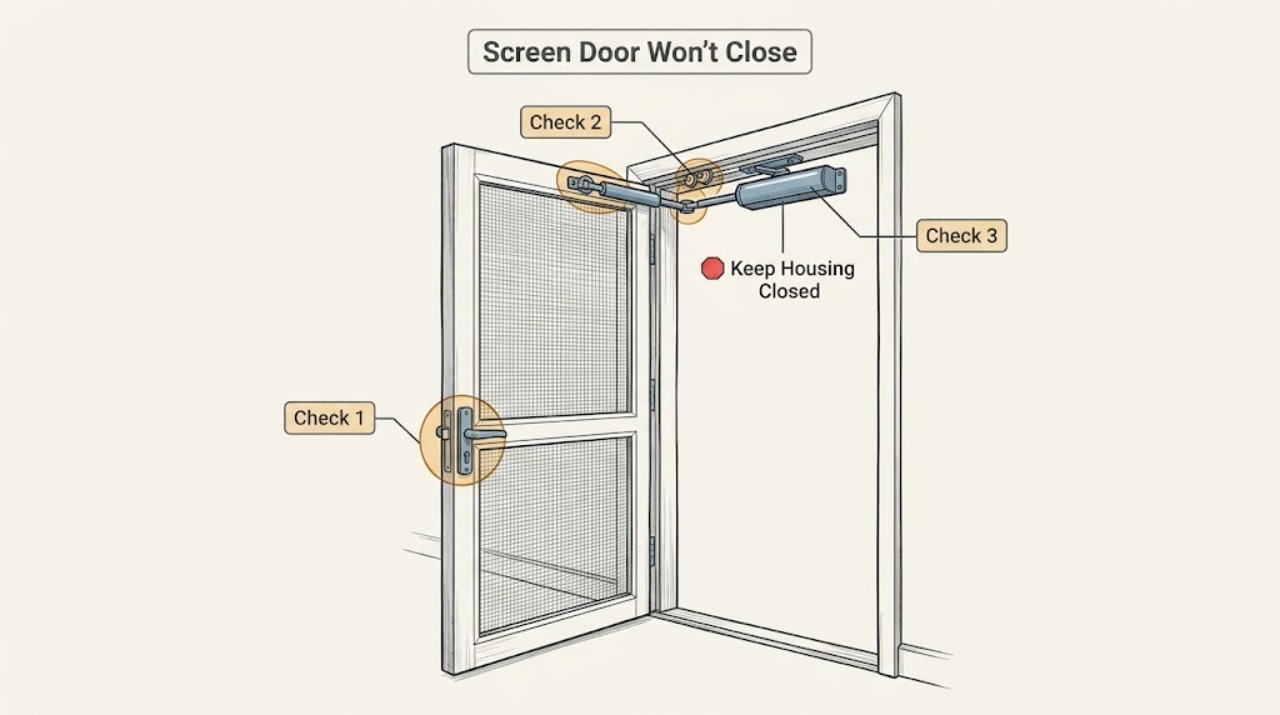
Screen Door Won't Close: Check the Track, Rollers, and Latch
If a screen door will not close, first identify whether it is a sliding screen door that binds in the track or a hinged/retractable screen door that fails to return, align, or latch. From a safe position, check for visible debris in the track or bottom guide, a screen panel sitting out of its channel, a misaligned handle or latch receiver, and a sweep or closer that interferes with the sill.
-
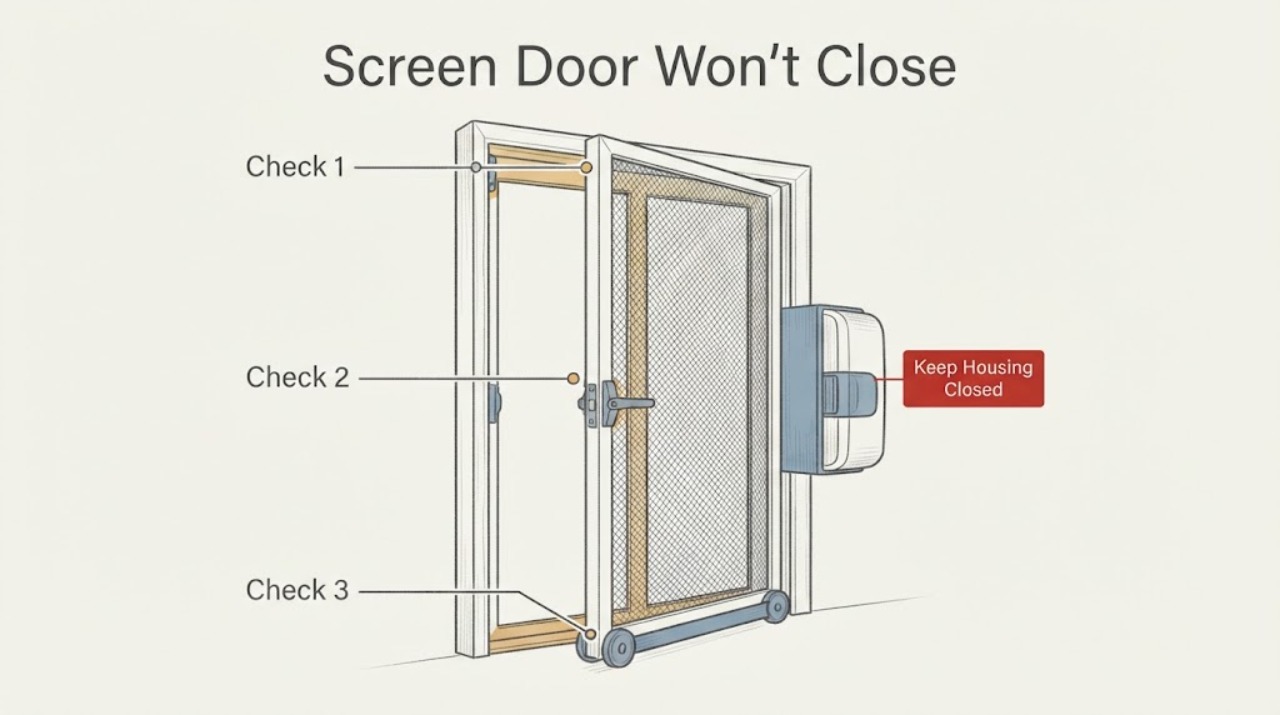
Screen Door Won't Close: Check the Screen, Track, and Latch Safely
If a door with a screen will not close, do not force the screen or door panel. First determine whether the hinged or sliding door itself is stopping, or whether the screen fabric, cassette, track, bottom guide, pull bar, magnet, latch rail, sweep, or closer is preventing closure.
-
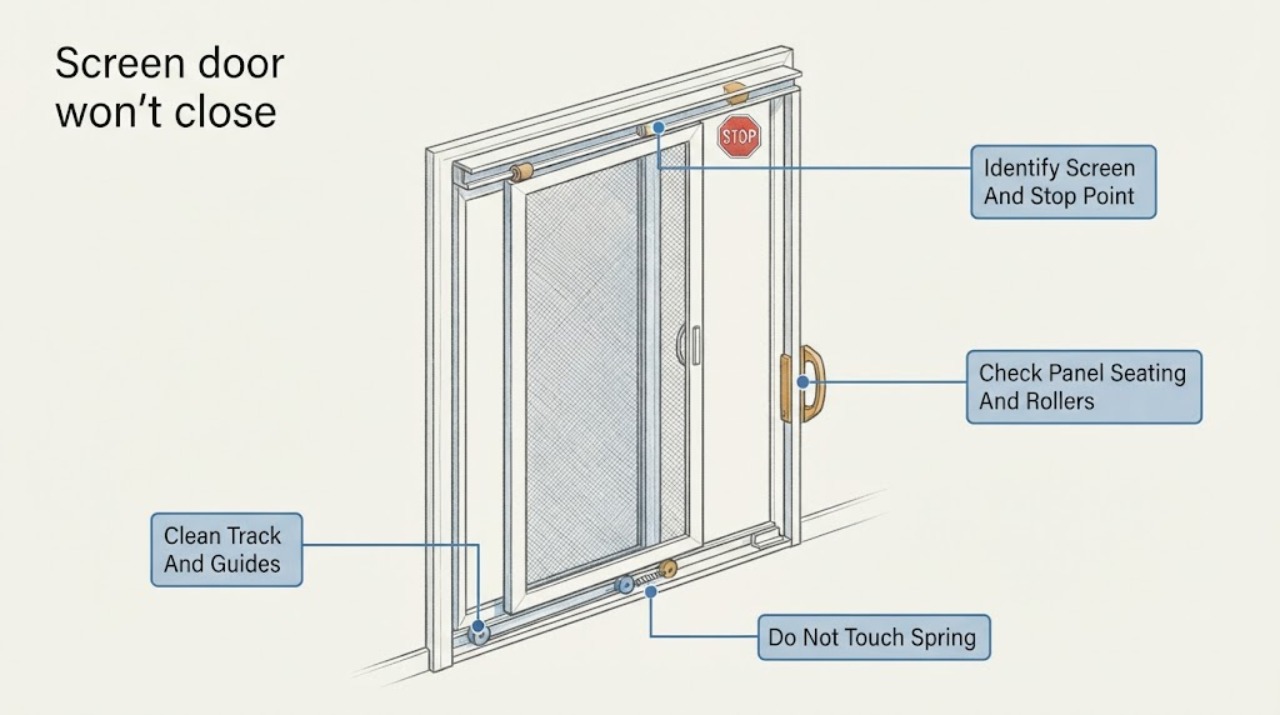
Screen door won't close: check the track, panel alignment, rollers, and latch
A screen door that will not close is usually blocked by debris or a bent track, sitting out of the frame, riding on damaged or misadjusted rollers, or missing the latch, magnet, or receiver. First identify whether it is hinged, sliding, or retractable, then close it slowly and note whether the panel stops at the top, bottom, side, track, or latch.
-
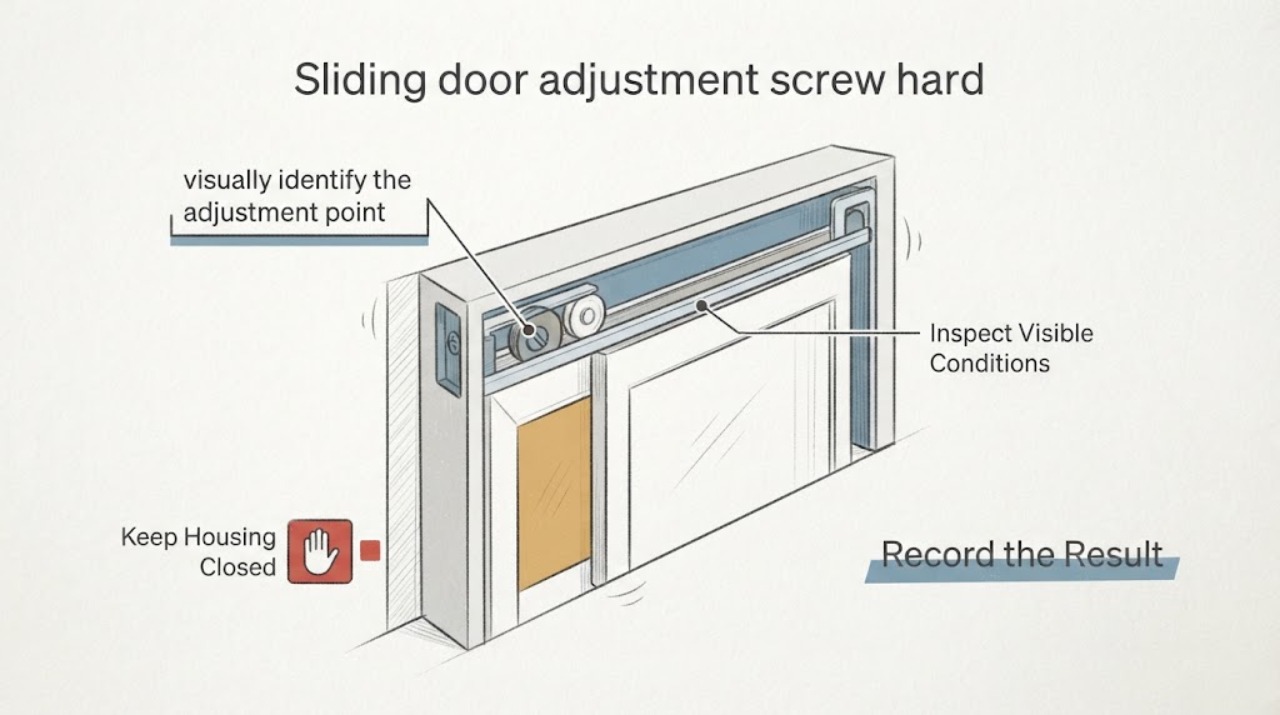
Sliding door adjustment screw hard to move: What to Check and What to Do Next
A sliding-door adjustment screw that resists movement may be corroded, damaged, the wrong screw for the adjustment point, or loaded by a misaligned panel or roller. Do not force it, use an impact tool, remove the door panel, lift the glass, or treat a generic screw as a universal adjustment.
-
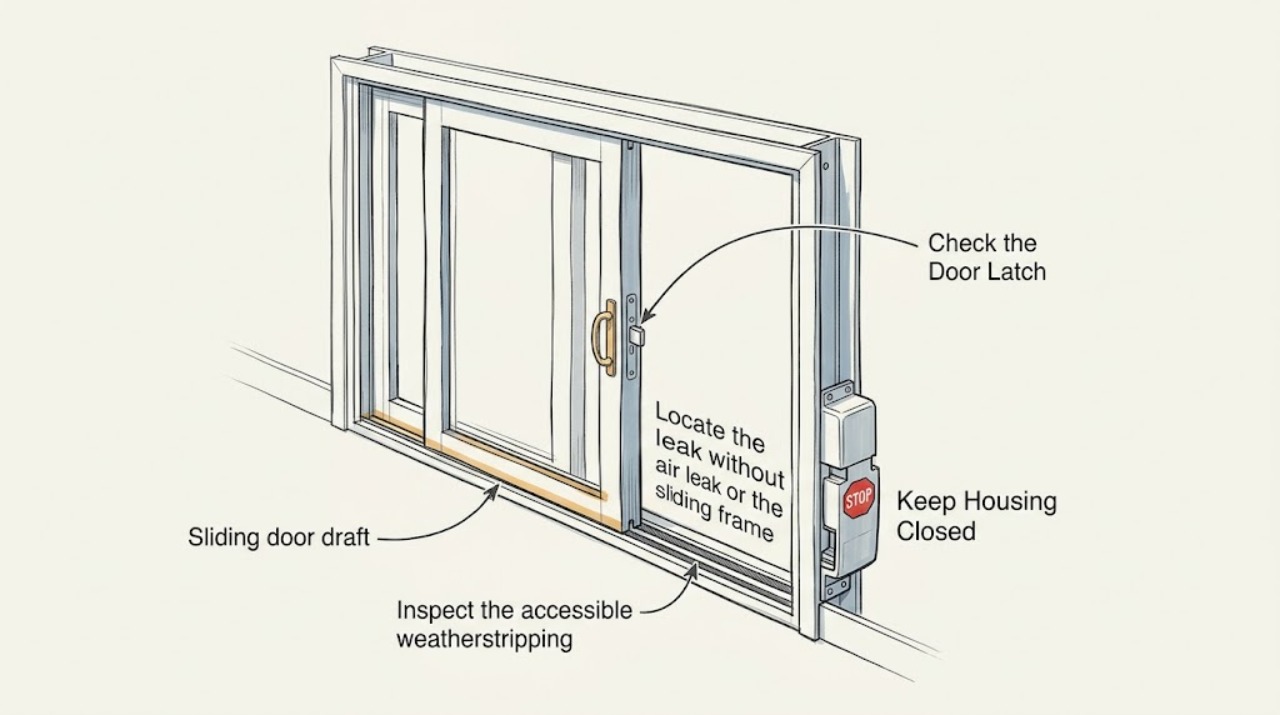
Sliding door draft: What to Check and What to Do Next
Start by locating the draft, then check whether the sliding panel closes and locks evenly and whether the weatherstripping is torn, flattened, missing, or no longer contacting the frame. Clean only the accessible track and frame surfaces and avoid forcing a stiff door.
-
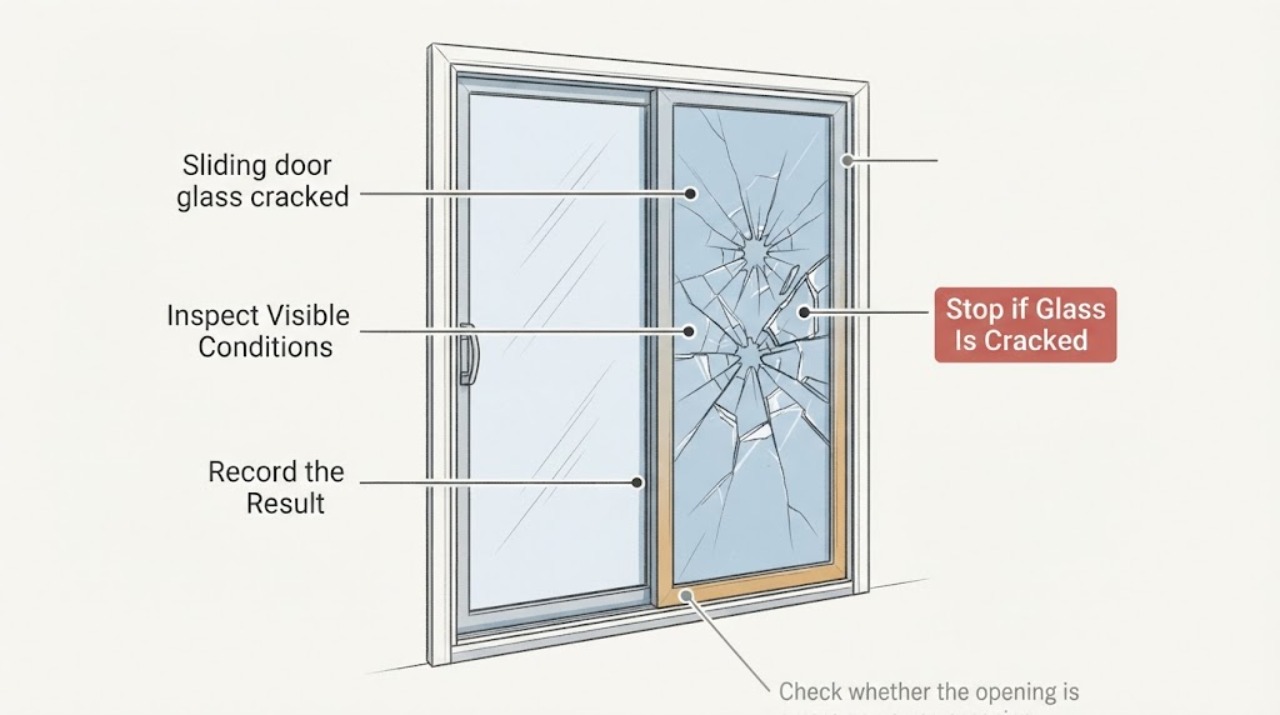
Sliding door glass cracked: What to Check and What to Do Next
Treat cracked sliding-door glass as an immediate injury and security hazard. Do not slide, push, press, tape, clean, remove, or try to stabilize the panel, and do not cut or replace the glass yourself.
-
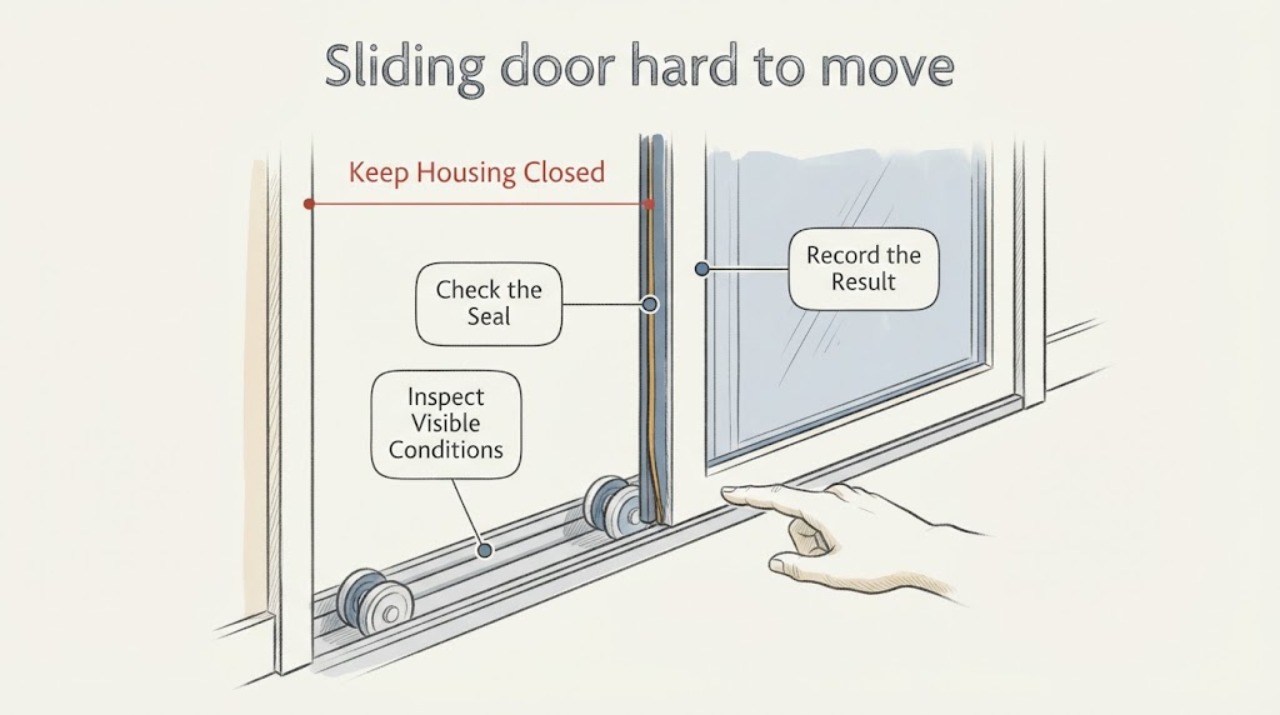
Sliding door hard to move: What to Check and What to Do Next
Do not force a hard-to-move sliding door or try to lift the glass panel. From the floor and with the panel in its normal position, inspect the visible sill track for debris or damage, compare the panel's top and bottom gaps with the frame, and look for a tilted panel, rubbing marks, or frame movement.
-
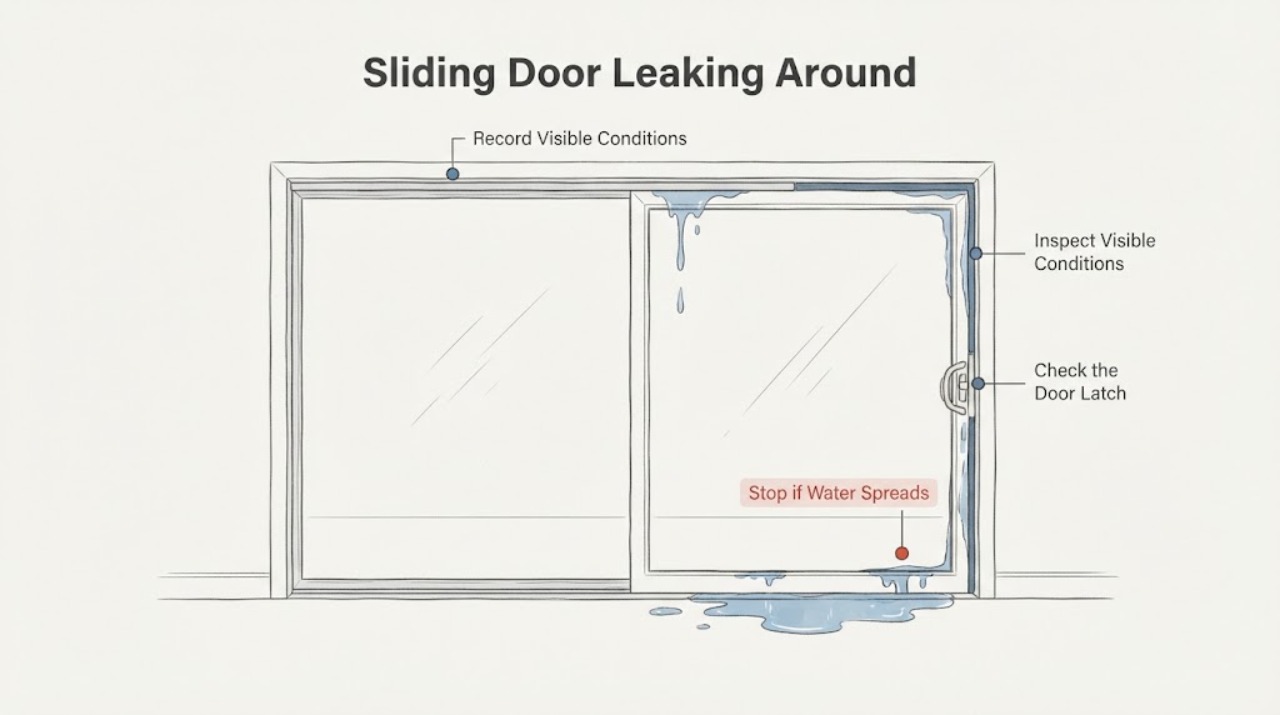
Sliding Door Leaking Around the Frame: Check the Sill, Weep Path, and Seals
When a sliding door leaks, first locate whether water appears at the sill or track, at a jamb or frame joint, around the moving panel, or in the wall beside the opening. Sliding patio doors commonly use a sill drainage or weep system to move incidental water outside, so clear visible debris without sealing over a drain path.
-
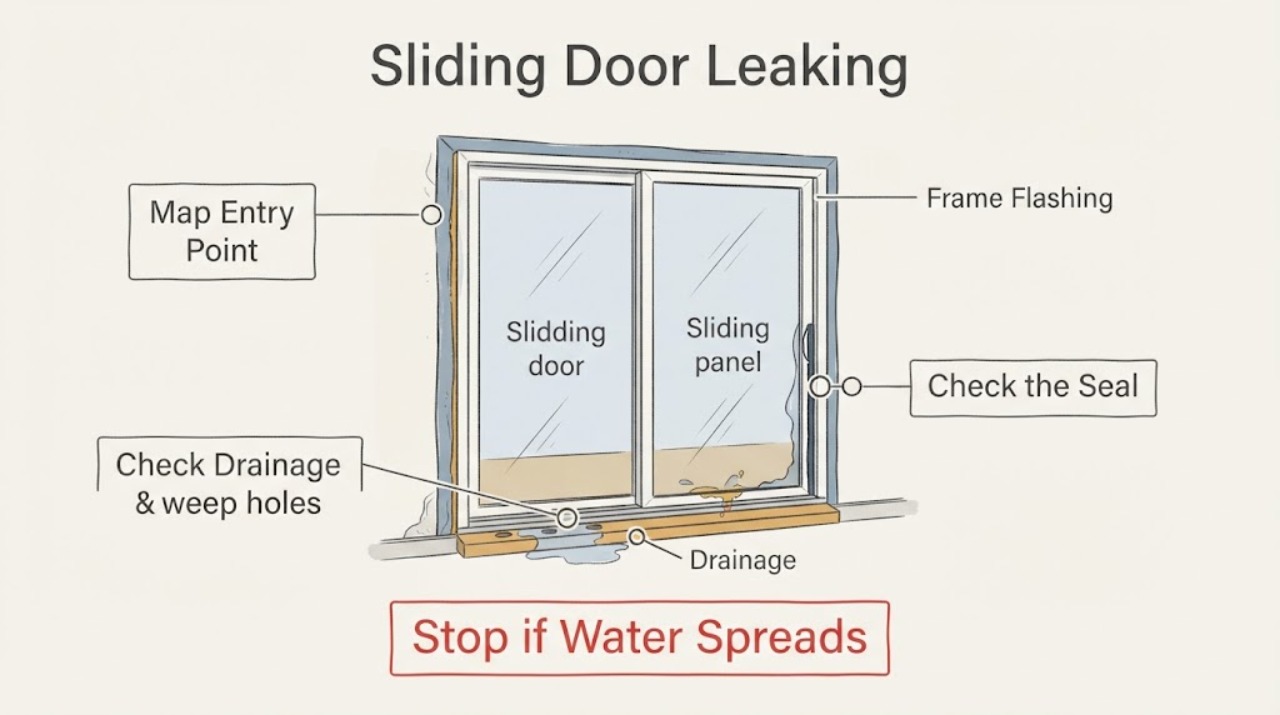
Sliding Door Leaking: Trace Water at the Panel, Sill, or Frame
Water at a sliding door can come from a blocked or damaged sill drainage path, a panel that does not close squarely against its seals, water entering at the fixed-panel or interlock area, or failed flashing and air or water sealing around the frame. First locate the entry point after rain without removing the panel, check the visible track, drain openings, gasket, latch, and exterior joints, and keep drainage paths open.
-
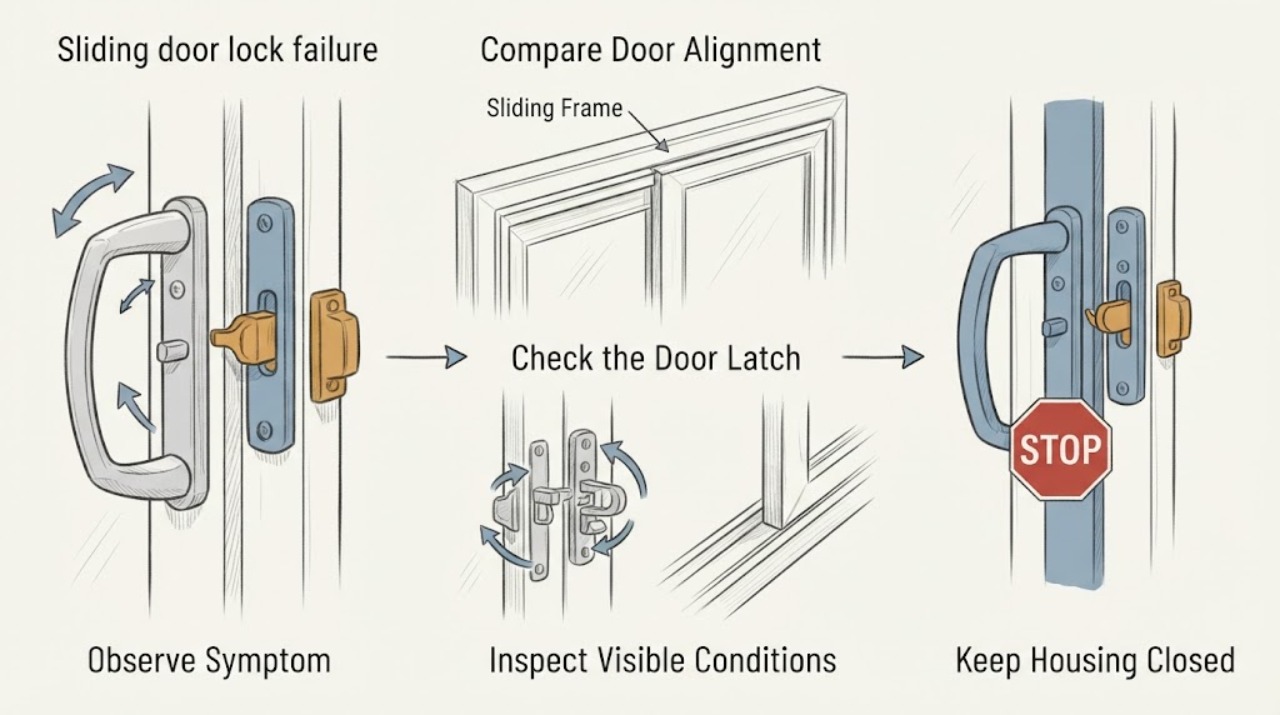
Sliding door lock failure: What to Check and What to Do Next
Start with safe observations: check whether the panel is fully closed and visually aligned with the jamb, whether the latch or keeper appears offset, and whether the handle or lock control moves normally without force. Note any glass damage, binding, loose hardware, or sill-track obstruction, but do not bypass the lock, remove glass or the door panel, force the handle, or follow an installation procedure.
-
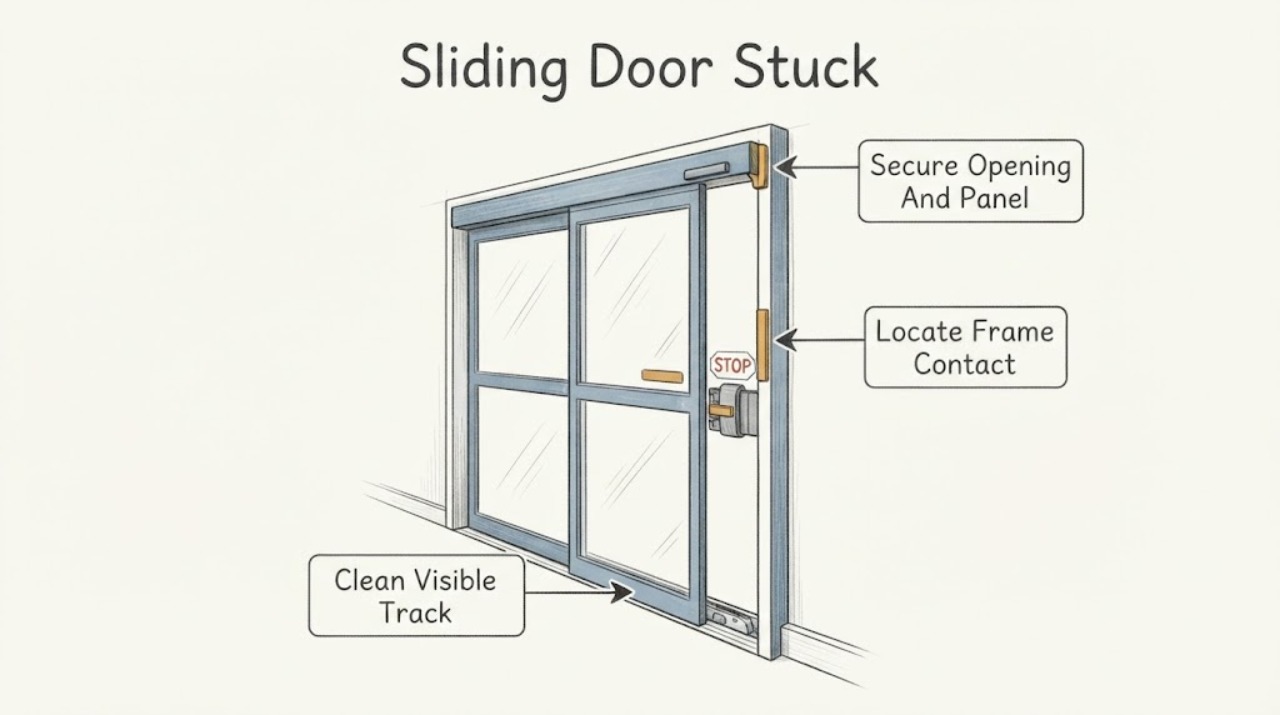
Sliding Door Stuck: Check the Frame, Track, and Rollers Safely
A sliding door that is stuck usually needs the contact point separated from track debris, a mis-seated or worn roller, a panel that is no longer square in the frame, or a lock or keeper that is still engaged. Do not force or pry the panel.
-
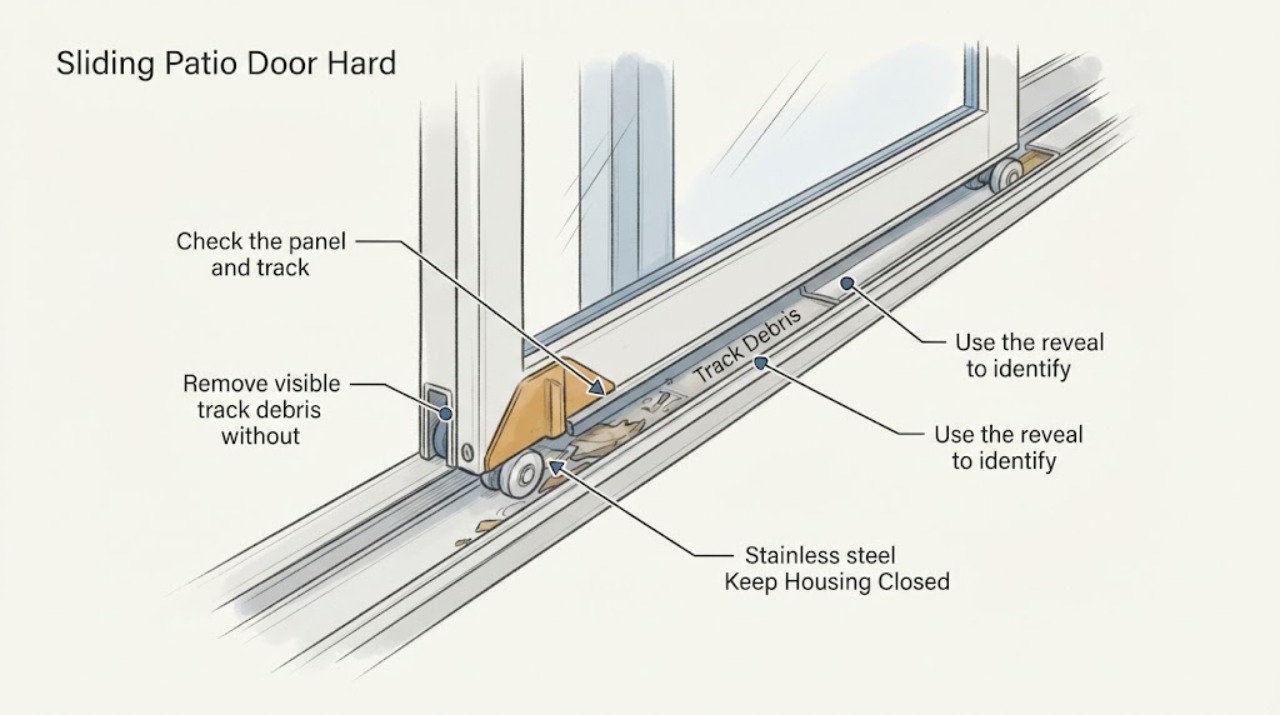
Sliding Patio Door Hard to Open: Roller Height Adjustment & Stainless Steel Track Cap Fix
A sliding patio door that is hard to open usually needs the low-risk checks done in order: remove visible dirt from the sill and roller path, confirm the panel is sitting level, then make only the small roller-height adjustment described for the exact door. Andersen and Milgard both identify track debris and roller height as operation checks, while Andersen says an uneven reveal from top to bottom indicates that the panel needs adjustment.