
On this page
Start here
Quick answer
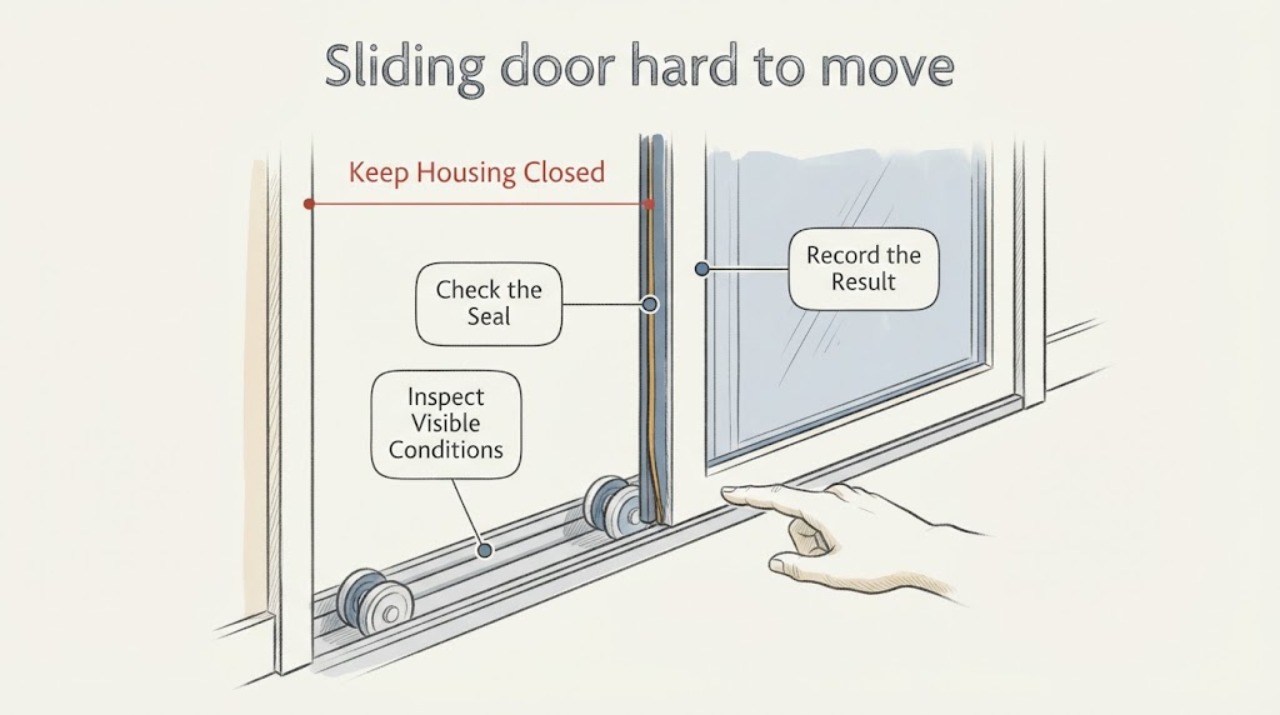
Do not force a hard-to-move sliding door or try to lift the glass panel. From the floor and with the panel in its normal position, inspect the visible sill track for debris or damage, compare the panel's top and bottom gaps with the frame, and look for a tilted panel, rubbing marks, or frame movement. Debris can load the rollers, but a persistent drag after the track looks clear can indicate worn rollers, a bent track, or a frame issue. Keep the door secured and call a sliding-door professional if the glass, frame, track, or rollers look damaged or if safe visual checks do not explain the resistance.
Work through in order
Diagnostic checks
Use only checks that match the exact appliance or system and its official guide.
-
Check 1
With the door in its normal closed or partially open position, inspect the accessible sill track from above using a flashlight. Look for grit, hair, paint, dents, corrosion, a raised section, or a groove that is visibly obstructed; do not put fingers under the panel or pry debris out.
Expected result: Loose debris or a localized obstruction can explain a gradual drag, while a dent, raised edge, or damaged track changes the problem to a track or frame assessment. A clean-looking track does not rule out a hidden or worn roller.
Next step: Photograph the track and the exact point where the panel feels hardest to move, then compare the panel alignment with the frame.
Stop if: Stop if the track is sharp, loose, heavily corroded, cracked, or adjacent to a panel that appears unstable. Keep the opening secured and call a professional.
Why this matters
Why: Track condition tells you whether the first lead is surface debris or hardware/frame damage. Do not assume that lubricant or a cleaner will correct a bent track or damaged roller.
-
Check 2
From inside and outside where safely accessible, compare the moving panel's top and bottom gaps with the vertical frame and fixed panel. Look for a tapered gap, a corner sitting low, rubbing marks, or an edge that is no longer parallel; do not push the panel sideways or lift it.
Expected result: An even reveal and parallel edges are consistent with normal seating, while a tapered reveal, low corner, or rubbing mark suggests roller height, frame alignment, or track wear. The observation cannot identify the correct adjustment method for an unknown door.
Next step: Record which corner or edge differs and whether the change is new. Continue with a frame and hardware visual check without removing covers.
Stop if: Stop if the panel shifts, the glass is cracked or chipped, the frame is separating, or the door can no longer be controlled safely. Do not operate it until serviced.
Why this matters
Why: A visibly tilted or rubbing panel should be assessed before any roller adjustment because the glass and frame may be under abnormal load. A straight panel with a dirty track points more toward accessible track maintenance, subject to the manufacturer's instructions.
-
Check 3
Inspect the visible lower panel edge, frame corners, lock-side contact, and roller-adjustment cover areas without removing caps or hardware. Look for cracks, missing trim, loose-looking fasteners, scrape marks, or evidence that the panel is contacting the frame.
Expected result: A clean, intact frame with no contact marks is different from a frame that is bent, separating, or being rubbed by the panel. A damaged roller cover or exposed hardware can indicate that the panel should not be operated.
Next step: Photograph the damaged area and note whether resistance occurs at one point or throughout travel. Give that information to a sliding-door repair professional.
Stop if: Stop for cracked glass, a loose panel, exposed sharp metal, frame separation, or any condition that would require glass handling or structural adjustment.
Why this matters
Why: Visible frame or hardware damage moves the issue beyond simple debris. Do not infer that a replacement roller is compatible from its appearance or reach inside the panel to inspect it.
-
Check 4
If the door can be moved a short distance without force, observe whether the resistance is constant, occurs only at one track location, or changes when the panel approaches the lock side. Do not repeat the motion if it binds, jumps, or requires more than light hand pressure.
Expected result: Resistance at one location is compatible with a localized track obstruction or damage; drag throughout travel is more consistent with roller wear, panel seating, or frame-related friction. A sudden stop or jump is a safety concern, not a cue to push harder.
Next step: Record the travel pattern and stop using the door if the movement worsens. Provide the track, alignment, and frame photos with the report.
Stop if: Stop immediately if the door jams, jumps, falls toward the track, makes a sharp cracking sound, or requires force.
Why this matters
Why: The resistance pattern helps the technician choose between track, roller, and frame inspection, but it does not authorize the homeowner to adjust the roller or remove the panel.
Use your observations
Decision map
Find the observation that best matches what you see, then follow the next safe action.
-
PATH 01Next step
What you see
Visible debris is concentrated in the accessible track and the panel remains square, stable, and free of glass or frame damage.
Do this next
Follow the door maker's care instructions for cleaning the accessible track only, without lifting the panel or applying an unapproved lubricant. If it remains hard to move, arrange professional roller and track inspection.
-
PATH 02Next step
What you see
The panel is tilted, rubs the frame, the track is dented, or the frame or hardware appears damaged.
Do this next
Keep the door secured and call a sliding-door repair professional. Do not remove the glass panel, lift it, adjust structural fasteners, or assume a replacement roller will fit.
-
PATH 03Next step
What you see
The glass is cracked or chipped, the panel shifts, or the door binds or jumps.
Do this next
Stop operating the door and keep people away from the opening until a qualified professional makes it safe.
Helpful context
Understand the symptom
Why a sliding door becomes difficult
A sliding patio door depends on rollers at the bottom of the moving panel and a sill track. Dirt, hair, and grit can add drag, while a worn roller, damaged track, or changed frame alignment can make the panel rub or sit unevenly. The symptom alone does not identify which part has failed, so begin with visible evidence and do not remove or lift a glass panel.
Keep glass and structure out of the DIY diagnosis
Use a flashlight and phone camera from a stable floor position. Do not handle the glass, remove the panel, lift the door, take off frame covers, adjust structural fasteners, or use force to overcome a bind. Manufacturer care guidance varies by door system; a professional can identify the roller and track design without risking a heavy panel.
Only after diagnosis
Potential parts
- sliding-door-roller
Consider this category only if a professional confirms that the roller is worn or damaged after the track and panel alignment have been assessed.
Confirm the door manufacturer, series, panel configuration, roller housing, wheel profile, and adjustment method before ordering; a similar-looking roller is not a fit guarantee. - track-cleaner
Consider this category only for loose, accessible debris on an intact track when the panel is stable and the door maker permits that cleaning method.
Use only a product compatible with the track and finish, keep liquid away from the glass and frame cavities, and do not use cleaning as a substitute for a damaged-track assessment. - silicone-lubricant
Consider this category only if the door maker specifies a compatible silicone-based lubricant for the identified track or roller system after the track is clean and intact.
Do not apply oil or an unknown lubricant, flood the track, or lubricate a damaged or contaminated roller. Follow the model-specific care instructions and keep lubricant off walking surfaces.
When checks do not resolve it
Need a professional?
Call a sliding-door repair professional when the panel remains hard to move after safe visible track cleaning, when the roller or track may be worn or bent, or when the panel is tilted, rubbing, unstable, or damaged. Stop using the door immediately for cracked glass, a shifting panel, frame separation, or a sudden bind.
Have this ready
- Provide the door manufacturer and series if safely visible, photos of the track, top and bottom gaps, frame corners, and any scrape or damage marks, plus whether resistance is localized or constant. State that the panel was not removed, lifted, or structurally adjusted.
Common questions
FAQ
Should I lift a sliding glass door to check the rollers?
No. A patio door panel is heavy and contains glass. Limit the check to visible track, alignment, frame, and movement observations; have a professional inspect or remove the panel if roller access is needed.
Can dirt in the track make a sliding door hard to move?
Yes, debris can add drag and strain rollers, but a clear track does not rule out worn rollers, track damage, or frame alignment. Clean only the accessible track according to the door maker's instructions and stop if the door is unstable or still binds.
Should I adjust the rollers myself?
Not when the door identity, glass condition, alignment, or frame condition is uncertain. A tilted or rubbing panel may need more than roller adjustment, and the safe procedure differs by system. Give the photos and resistance pattern to a sliding-door professional.
Read the exact guide
Official sources
- How to Clean Sliding Door TracksMILGARD · The manufacturer page explains that debris can make a sliding patio door stick and strain rollers, and that persistent sticking or visible frame, glass, or hardware damage needs further assessment; its cleaning and lubricant instructions are model-dependent.
- Spring Cleaning: Windows & Patio DoorsAndersen Windows & Doors · The checklist says that an Andersen gliding patio door that does not move with ease may need the rollers and track inspected, cleaned, or lubricated; it does not establish a universal procedure for other door systems.
Community feedback
Share a repair observation
Share a plain-text repair observation. Accepted observations are published automatically; this page may take a moment to update.