
On this page
Start here
Quick answer
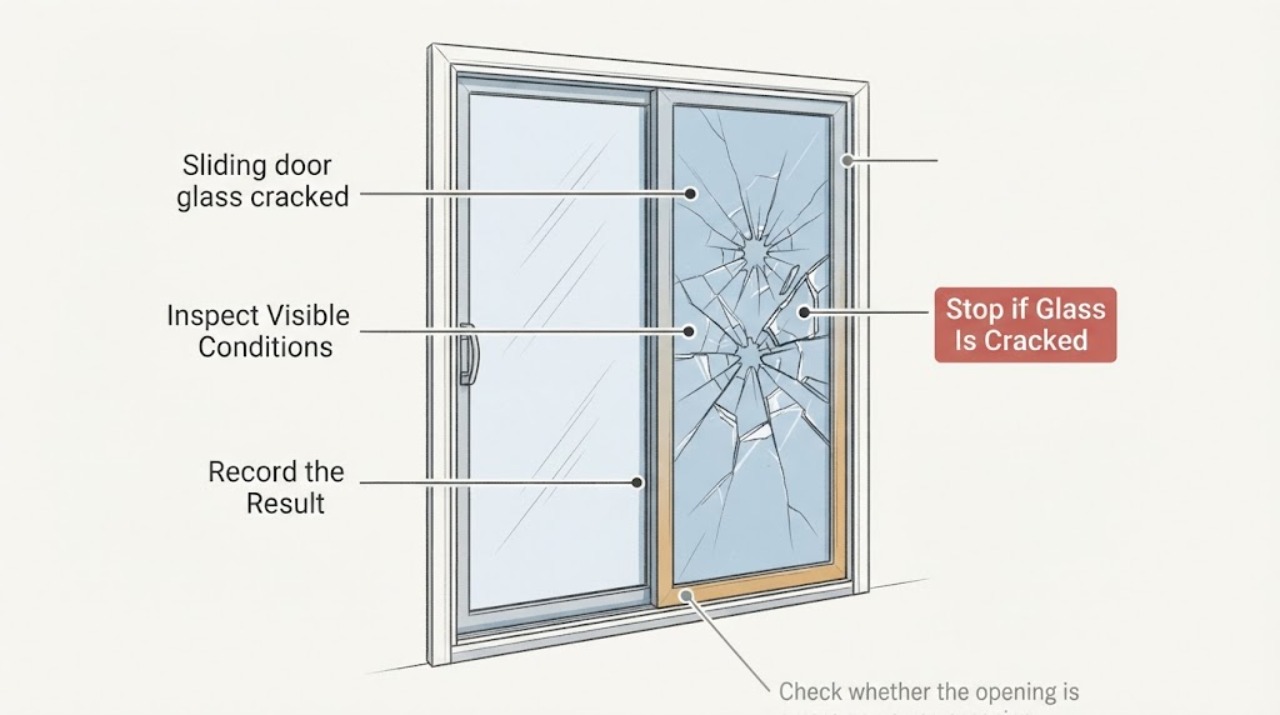
Treat cracked sliding-door glass as an immediate injury and security hazard. Do not slide, push, press, tape, clean, remove, or try to stabilize the panel, and do not cut or replace the glass yourself. Keep people and pets away from both sides, prevent the door from being used if that can be done without touching the damaged panel, and arrange professional glass or door service. From a safe distance, record whether the glass is still in the frame, whether fragments are present, whether the opening is exposed, and whether the panel or frame is leaning or moving. Escalate immediately if glass is falling, the opening cannot be secured without contact, or anyone is cut.
Work through in order
Diagnostic checks
Use only checks that match the exact appliance or system and its official guide.
-
Observe whether the glass is stable in the frame
From several steps away and without touching the door, look at the full panel through the opening or from both sides if that can be done without entering the hazard area. Note whether the crack is a line, star pattern, widespread fragmentation, a missing section, or a panel that appears to bow or lean.
Expected result: The glass is cracked but still appears seated; fragments are loose or on the floor; a section is missing; or the panel/frame is leaning, shifting, or visibly unstable.
Next step: Keep everyone away and arrange urgent professional glass or door service. If glass is falling or the frame is actively shifting, leave the immediate area and use emergency help as appropriate.
Stop if: Stop observation if a closer view would require touching, pressing, sliding, opening, or stepping into the path of the panel.
Why this matters
Why: Loose, missing, leaning, or moving glass can fail when the door is touched or exposed to vibration or weather. Even seated cracked glass should not be operated or treated as safe to handle.
-
Check whether the opening is exposed
From outside the opening's hazard area, look for missing glass, visible daylight through a damaged panel, loose fragments, or a door that no longer closes. Do not reach into the opening or try to cover it with a sheet, board, or tape.
Expected result: Yes, the opening is exposed or cannot be secured without touching the damaged door; or no opening is visible and the glass appears seated.
Next step: For yes, keep people and pets away, use another entrance, and request urgent professional boarding or glazing service. For no, keep the door unused and schedule professional replacement or assessment.
Stop if: Stop if securing the opening would require touching glass, moving the panel, drilling, nailing, or leaning a temporary barrier against it.
Why this matters
Why: An exposed opening adds fall, cut, weather, and security risks. A seated panel still remains a breakage hazard and may not be safe to move.
-
Look for debris or injury without handling it
From a safe position, look at the floor and sill for visible glass pieces, dust, blood, or items that may have struck the door. Do not sweep, vacuum, pick up, or inspect shards by hand.
Expected result: Glass debris, an injury, a suspected impact object, or no visible debris/injury is present.
Next step: For an injury, keep the person away from the area and seek appropriate medical care. For debris or suspected impact, isolate the area and tell the professional; do not clean it yourself. If none is visible, still keep the door unused and continue to service escalation.
Stop if: Stop and move away if shards shift, more glass falls, or anyone would need to step onto debris to leave the area.
Why this matters
Why: Debris can extend beyond the obvious crack and can injure anyone entering the area. An injury takes priority over documenting the door, and the impact may have affected the frame or track as well.
-
Record what changed without operating the door
Ask occupants when the damage appeared and whether the door was struck, exposed to a storm, forced, or already difficult to slide. Observe the handle, frame, and track only from a distance; do not pull the handle or move the panel to test it.
Expected result: Impact, forced movement, weather exposure, a sticking track, frame distortion, or no known trigger is reported.
Next step: Give the history and safe-distance photos to a qualified glass or door professional. Keep the door in its current position until they assess it.
Stop if: Stop if anyone proposes sliding, lifting, pressing, removing, or disassembling the door to diagnose it.
Why this matters
Why: The trigger can help the professional check the frame, rollers, track, and glazing support, but it does not make operating the door safe or prove that only the glass needs replacement.
Use your observations
Decision map
Find the observation that best matches what you see, then follow the next safe action.
-
PATH 01Next step
What you see
The panel is loose, leaning, shifting, shedding fragments, or missing a section.
Do this next
Leave the area, keep people and pets out, and request urgent professional stabilization or glazing service; do not approach to brace it.
-
PATH 02Next step
What you see
The opening is exposed or cannot be secured without touching the damaged panel.
Do this next
Use another entrance, isolate the area, and request urgent professional boarding or glass service.
-
PATH 03Next step
What you see
Someone is cut or glass debris is present.
Do this next
Prioritize medical care for the injury and keep everyone away; do not sweep or pick up shards yourself.
-
PATH 04Next step
What you see
The door was forced, struck, sticking, or exposed to weather before the glass cracked.
Do this next
Tell the professional to assess the frame and track as well as the glazing; do not assume a glass-only replacement.
Helpful context
Understand the symptom
Keep the damaged door untouched
Do not test the sliding motion or try to close a cracked panel. Tempered safety glazing is designed to reduce injury from breakage, but broken glass can still cut and may fragment when disturbed. Keep the area clear on both sides of the door and use a separate entrance if available. Do not tape over the glass, lean anything against it, remove the panel, or place hands near the frame or track.
What to tell the professional
Share the door location, a safe-distance photo, the approximate panel position, how the crack appeared if known, whether the door still moves or is stuck, and whether the glass is loose, missing, or on the floor. Mention pets, children, weather exposure, security concerns, and any injury. Do not measure the opening by touching the frame or glass; the technician should identify the correct glazing and installation method.
When checks do not resolve it
Need a professional?
Request urgent service for any crack, shattered pattern, loose or missing glass, an exposed opening, a door that cannot be secured, or frame movement. Use emergency help for immediate injury, falling glass, or an actively collapsing panel.
Common questions
FAQ
Can I keep using a sliding door with a hairline crack?
No. Do not slide, press, or test cracked glass. Keep the door unused and have a professional assess the panel and frame.
Can I tape the crack or cover the panel temporarily?
Do not tape, press, clean, or lean a temporary cover against unstable glass. Keep people away and ask a professional about safe stabilization or boarding.
What if the glass has shattered into small pieces?
Keep everyone out of the area and do not sweep or pick up fragments yourself. Arrange professional glass service, and seek medical care for any injury.
Does the whole door need replacement?
Not necessarily, but the correct scope depends on the glazing, sash, frame, track, and how the damage occurred. A professional should identify whether the panel, frame, or related hardware is affected.
Read the exact guide
Official sources
- Tempered Glass Safety AlertU.S. Consumer Product Safety Commission · Cracked or broken glass in a sliding patio door
- CPSC Amends Mandatory Safety Standard for Architectural Glazing MaterialsU.S. Consumer Product Safety Commission · Confirming that sliding glass doors are architectural glazing products with safety requirements
Community feedback
Share a repair observation
Share a plain-text repair observation. Accepted observations are published automatically; this page may take a moment to update.