
On this page
Start here
Quick answer
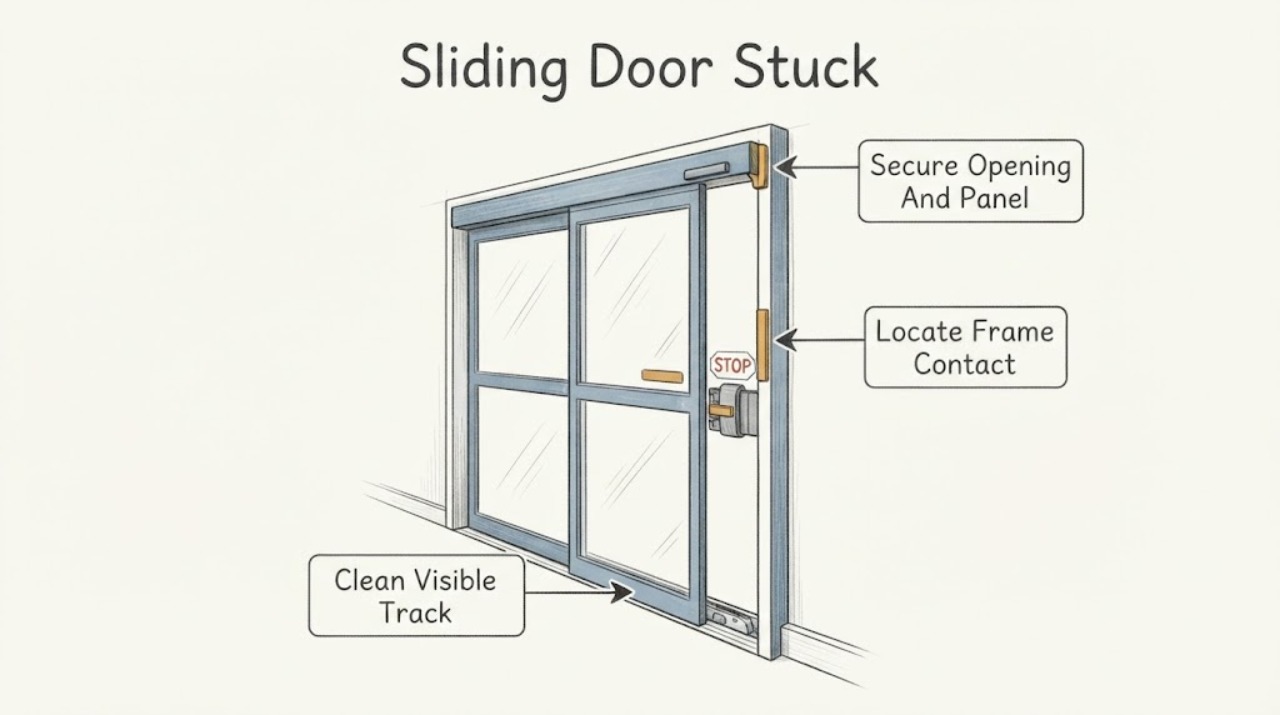
A sliding door that is stuck usually needs the contact point separated from track debris, a mis-seated or worn roller, a panel that is no longer square in the frame, or a lock or keeper that is still engaged. Do not force or pry the panel. First secure the opening and check for a loose or damaged frame, then move the panel only a small amount to see whether it catches at the head, sill, side jamb, or lock. Clean visible track debris with a dry or damp cloth as the product instructions allow; do not apply penetrating oil. If the panel's top-to-bottom gap is uneven, use only the exact door manual's roller or frame adjustment, and stop if the panel, glass, retainers, sill, flashing, or frame would need removal. A bent or sagging frame, broken roller, damaged track, water intrusion, or door that cannot be secured needs qualified door service.
Before you begin
Safety first
- This article covers ordinary-access observation, visible track cleaning, and model-authorized minor adjustments only. Do not lift glazed panels alone, remove retainers or frame anchors, pry the frame, or disturb sill drainage and flashing.
Work through in order
Diagnostic checks
Use only checks that match the exact appliance or system and its official guide.
-
Check 1
Clear people and objects from both sides of the opening, support the handle normally, and check without forcing whether the panel has loose glass, a missing retainer, a loose frame, a damaged lock, water at the sill, or a security gap.
Expected result: Record whether the panel is merely stiff, completely immovable, off its track, damaged, unable to lock, or unsafe to handle.
Next step: Stop and arrange qualified door service for damage, an unsecured opening, a panel out of the track, or any part that may fall. Otherwise keep the panel supported by its normal hardware and continue with a small movement test.
Stop if: Do not pry the glass, lift a heavy panel alone, remove retainers, or leave an open door accessible to children or pets.
Why this matters
Why: A loose or falling panel, damaged glass, failed retainer, water intrusion, or unsecured opening is a safety and installation problem rather than a routine cleaning task. A sound panel with localized resistance can proceed to an external frame and track check.
-
Check 2
Move the sliding panel a small distance using the handle and watch the head, sill, hinge or lock jamb, and frame reveal to identify the first point that rubs, drops, binds, or stops the panel.
Expected result: Note top contact, bottom track contact, side-jamb rubbing, a diagonal or changing reveal, a lock edge that remains engaged, or no visible contact.
Next step: Photograph the first contact point and leave the panel in a safe position. Use the matching track, roller, frame, or lock check below; do not keep cycling the door against the same obstruction.
Stop if: Do not use a pry bar, screwdriver, lubricant, or body weight to make the panel pass the contact point.
Why this matters
Why: Top or side rubbing and an uneven reveal point toward panel height, rollers, or frame alignment. Bottom resistance points toward debris, a damaged track, or a low panel. Resistance only at the lock edge may be a keeper or lock alignment issue rather than a roller fault.
-
Check 3
With the panel closed or safely stationary, inspect and clean only the visible sill track and roller path using the door instructions and a cloth or vacuum method that will not scratch the track.
Expected result: Record dirt, drywall dust, hair, stones, a loose seal, standing water, a bent rail, deep wear, or a visibly clear and intact track.
Next step: Remove only loose visible debris, then test the panel gently. Keep the track dry and free of penetrating oil; request service if the track is bent, deeply worn, water-damaged, or cannot be accessed safely.
Stop if: Do not apply penetrating oil or grease, scrape the rail aggressively, drill the sill, or remove the panel to reach hidden rollers without the exact instructions and safe support.
Why this matters
Why: Loose debris can stop a roller from turning or make it climb the rail. A bent, worn, wet, or damaged track is not restored by oil or repeated cycling and may require a replacement or frame assessment. A clear track shifts attention to panel height and frame alignment.
-
Check 4
Open the panel only as far as it moves safely and compare the gap between its edge and the side jamb from top to bottom; inspect the visible roller-adjustment access points if the exact door design provides them.
Expected result: Record an even gap, a gap that narrows at the top or bottom, a panel sitting low on the sill, a roller that is visibly damaged or unseated, or no safe access to the adjustment.
Next step: Use only the exact model's roller adjustment procedure, making small changes and retesting smooth travel; arrange professional help when the panel must be lifted, removed, or supported, or when the roller is damaged.
Stop if: Do not lift a glazed panel alone, turn an unidentified adjustment screw repeatedly, remove caps or retainers by force, or adjust until the panel loses sill contact.
Why this matters
Why: An unequal gap or low panel is consistent with roller height or panel alignment. A damaged or unseated roller needs model-specific replacement or reseating. A clear even gap makes a frame, lock, or hidden track problem more likely.
-
Check 5
With the rollers and track left intact, check whether the frame jambs appear straight, the header is sagging, the panel reveal changes diagonally, and the lock or keeper aligns when the panel reaches its normal closed position.
Expected result: Note a straight frame and aligned lock, a sagging or bowed header, a shifted jamb, a loose anchor, or a lock that contacts early even when the panel rolls freely.
Next step: Follow the exact product guide for a minor accessible lock adjustment only when the panel is otherwise aligned; request an installer for frame movement, loose anchors, uneven reveals, or a lock that remains misaligned.
Stop if: Do not remove frame anchors, shim the jamb by guesswork, enlarge lock openings, or force the lock against a misaligned panel.
Why this matters
Why: A sagging or shifted frame can bind the panel and requires installation correction. A lock-only obstruction may be a keeper or receiver adjustment, but adjusting it cannot correct a panel that is physically rubbing or a frame that is out of square.
-
Check 6
After only a permitted track cleaning or model-specific adjustment, open and close the panel gently and confirm that it rolls evenly, clears the frame, engages the lock, and leaves the sill and weather seals intact.
Expected result: Record smooth travel and secure latching, improvement with residual binding, unchanged contact at the same frame point, new noise or damage, or a water gap.
Next step: Stop further adjustment and provide the door type, model if known, contact photos, reveal measurements, track condition, and changes made to a qualified installer or manufacturer.
Stop if: Do not accept a door that requires excessive force, cannot secure, grinds, drops, leaks, or has a panel retainer or frame problem.
Why this matters
Why: Smooth travel and a secure lock support a successful low-risk correction. Persistent binding, grinding, a damaged seal, new frame movement, or water exposure indicates a deeper roller, track, frame, or installation fault.
Use your observations
Decision map
Find the observation that best matches what you see, then follow the next safe action.
-
PATH 01Safety boundary
What you see
The panel is off its track, glass or retainers are damaged, the frame is loose, the door cannot be secured, or water is entering at the sill.
Do this next
Stop using the door, keep people away from the opening, and arrange qualified door or glazing service with the panel and frame supported only as safely instructed.
Why this path and its safety boundary
Why it matters: The opening has a fall, injury, security, or water-management risk that ordinary track cleaning cannot resolve.
Safety stop: Do not lift the panel alone, remove retainers, pull frame anchors, or seal over a suspected drainage path.
-
PATH 02Safety boundary
What you see
The panel catches at the sill and visible dirt, drywall dust, hair, stones, or loose debris is present in the roller path.
Do this next
Clean the visible track using the product instructions, keep it dry, and retest gently. Escalate for bent, worn, wet, or inaccessible track damage.
Why this path and its safety boundary
Why it matters: A surface obstruction is plausible and may be corrected without changing the frame or removing the panel.
Safety stop: Do not oil the track, scrape it aggressively, or force the roller over debris.
-
PATH 03Safety boundary
What you see
The gap between the panel and side jamb is not even from top to bottom, or the panel sits low and contacts the sill or head.
Do this next
Use only the exact model's roller or panel adjustment procedure; request professional help if the panel must be lifted, removed, or supported.
Why this path and its safety boundary
Why it matters: Roller height, panel seating, or frame alignment is more likely than a simple surface obstruction.
Safety stop: Do not turn an unidentified screw repeatedly, lift a heavy glazed panel alone, or adjust until the sill seal loses contact.
-
PATH 04Safety boundary
What you see
The header sags, a jamb is bowed or shifted, reveals are diagonal, anchors are loose, or the frame moves when the panel is handled.
Do this next
Stop panel adjustments and arrange qualified installation or structural door service; provide photos of the frame, reveal, sill, and anchor area.
Why this path and its safety boundary
Why it matters: The frame or opening is contributing to the stuck condition and cannot be corrected safely by lubricant or a generic roller.
Safety stop: Do not remove frame anchors, shim structural gaps without a plan, or cut the frame to restore clearance.
-
PATH 05Safety boundary
What you see
The panel rolls freely but stops or will not secure only when the lock or keeper reaches the closed position.
Do this next
Follow the exact door guide for a minor receiver or keeper adjustment, then retest; call service when the hardware is damaged or the frame is not aligned.
Why this path and its safety boundary
Why it matters: A lock or keeper alignment issue is plausible, provided the panel reveal and frame remain even.
Safety stop: Do not force the lock, enlarge the keeper opening, or move the strike to hide physical frame or roller binding.
-
PATH 06Safety boundary
What you see
The track is clear, the panel and frame look aligned, but the door still binds, grinds, drops, or needs excessive force.
Do this next
Stop experimenting and arrange qualified door service with the model information, contact point, reveal observations, and cleaning or adjustment history.
Why this path and its safety boundary
Why it matters: A hidden roller, damaged track, frame distortion, seal interference, or installation fault remains possible.
Safety stop: Do not remove the panel, use penetrating oil, pry the frame, or keep cycling a damaged mechanism.
Helpful context
Understand the symptom
Protect the panel and find where the frame stops it
A stuck sliding door should not be treated like a jammed drawer. Glass panels are heavy, and forcing the handle can damage the lock, rollers, sill, or frame. Move the panel only through its ordinary handle and only far enough to identify whether resistance begins at the head, bottom track, side jamb, or lock edge. An uneven gap from top to bottom is evidence that the panel or frame needs alignment, not that more force is needed.
Clean the track without turning it into a dirt trap
Dirt, drywall dust, hair, stones, and bent track surfaces can prevent a panel from rolling. Clean visible debris with the method allowed by the door instructions and inspect the sill for damage. Pella's maintenance guidance specifically warns against penetrating oil and similar oils on the track because they attract more dirt. If the track is bent, deeply worn, wet from a failed seal, or inaccessible without removing the panel, stop at inspection.
Use the reveal to distinguish a roller issue from a frame issue
Andersen's gliding-door guidance checks the narrow gap between the panel and side jamb from top to bottom; an unequal gap indicates that the panel needs adjustment. Pella installation guidance likewise ties plumb, square jambs and even panel reveals to operation. Roller adjustment is model-specific, and a heavy or glazed panel may require two people or professional equipment to remove or support it safely.
Leave structural, glass, and water-management work to a professional
A sagging header, shifted frame, loose anchor, broken panel retainer, damaged glass, or failed sill can make a door appear stuck even after the track is clean. Pella's installation material calls for a plumb and square frame, shimming where needed, and protection against water entry at the sill. Do not remove trim, frame anchors, panel retainers, or sill sealant to gain movement unless the exact installation procedure and safe support are known.
Safety boundary
Stop conditions
- Do not force, pry, slam, or lift a heavy glazed panel alone; stop for loose glass, damaged retainers, a falling panel, or an unsecured opening.
- Do not apply penetrating oil or similar oils to the track; they can attract dirt and worsen sliding operation.
- Do not remove the panel, frame anchors, sill, trim, or water-management sealant without the exact instructions, safe support, and appropriate skill.
- Stop for a bent or deeply worn track, sagging header, bowed jamb, loose frame, water intrusion, grinding, or a panel that drops during movement.
- Do not alter the lock or keeper to compensate for physical frame, roller, or track binding; arrange qualified door service when a permitted adjustment does not restore smooth, secure travel.
Only after diagnosis
Potential parts
- sliding-door roller assembly
Consider this category only when an exact-model inspection confirms a damaged, worn, seized, or unseated roller after the track is clear and the panel alignment is documented.
Confirm the door manufacturer, model, panel design, roller housing, and safe panel-removal procedure before ordering; do not fit a generic roller by appearance alone. - sliding-door sill track
Consider this category only when the exact door system has a bent, deeply worn, or damaged track that is confirmed as the source of the binding.
Confirm the frame and sill design, drainage path, track profile, and installation method; track work may require panel and frame support. - frame shim or anchor hardware
Consider this category only when a qualified assessment confirms a shifted or out-of-square frame that needs supported alignment correction.
Match the door system and opening construction; do not add shims or remove anchors without preserving plumb, square, load support, flashing, and sill drainage. - sliding-door lock keeper or receiver
Consider this category only when the panel rolls and reveals are normal but the exact lock or keeper is damaged or remains misaligned.
Confirm the exact lock design and frame location; do not enlarge the opening or use lock hardware to mask a roller or frame problem.
When checks do not resolve it
Need a professional?
Arrange qualified door or window service when the sliding panel is off its track, glass or retainers are damaged, the frame or header is loose or sagging, the sill or track is bent or water-damaged, the door cannot be secured, the panel requires lifting or removal, or cleaning and a model-approved adjustment do not restore smooth travel. Professional help is also needed for frame shimming, anchor work, structural opening correction, or any repair that could affect flashing and sill drainage.
Safety scope: This article covers ordinary-access observation, visible track cleaning, and model-authorized minor adjustments only. Do not lift glazed panels alone, remove retainers or frame anchors, pry the frame, or disturb sill drainage and flashing.
Common questions
FAQ
Why is my sliding door stuck?
Common possibilities include debris in the sill track, a worn or unseated roller, an uneven panel reveal, a sagging or shifted frame, or a lock or keeper that is still engaged. Find the first contact point before attempting any adjustment, and do not force the panel.
Can I use oil on a sliding-door track?
Avoid penetrating oil and similar oils. Pella warns that they attract dirt and can restrict movement. Clean visible debris using the exact door instructions and ask a professional about a damaged or worn track.
How can I tell if the sliding-door frame is misaligned?
Open the panel slightly and compare the gap to the side jamb from top to bottom. An uneven gap, diagonal reveal, bowed jamb, or sagging header points toward panel or frame alignment rather than simple dirt.
Should I remove the sliding panel to reach the rollers?
Not as a casual first step. Sliding glass panels are heavy and may need retainers and safe support. Use the exact model instructions or arrange qualified service when the panel must be lifted, removed, or supported.
When does a stuck sliding door need professional service?
Call when the panel is off its track, glass or retainers are damaged, the frame or header moves, the track is bent or water-damaged, the door cannot secure, or cleaning and a model-approved adjustment do not restore smooth travel.
Read the exact guide
Official sources
- Gliding Patio Door Hardware Adjustment and Replacement GuideAndersen Windows & Doors Help Center · Official Andersen guidance for Andersen gliding patio doors; other door systems use different adjustment locations and procedures.
- 9 CARE AND MAINTENANCEPella · Official Pella care and maintenance guidance for its multi-slide door systems; use the exact product manual for another door type.
- Adjust or Replace Rollers on Andersen Gliding Patio Door Insect ScreensAndersen Windows & Doors Help Center · Official Andersen screen-door guidance used only for its visible-track and roller-maintenance principles; a main sliding panel may require a different procedure.
- Block Frame Booklet for Sliding Patio DoorsPella · Official Pella block-frame sliding-door installation booklet; exact series instructions and trained installation practice control a particular door.
Community feedback
Share a repair observation
Share a plain-text repair observation. Accepted observations are published automatically; this page may take a moment to update.