
On this page
Start here
Quick answer
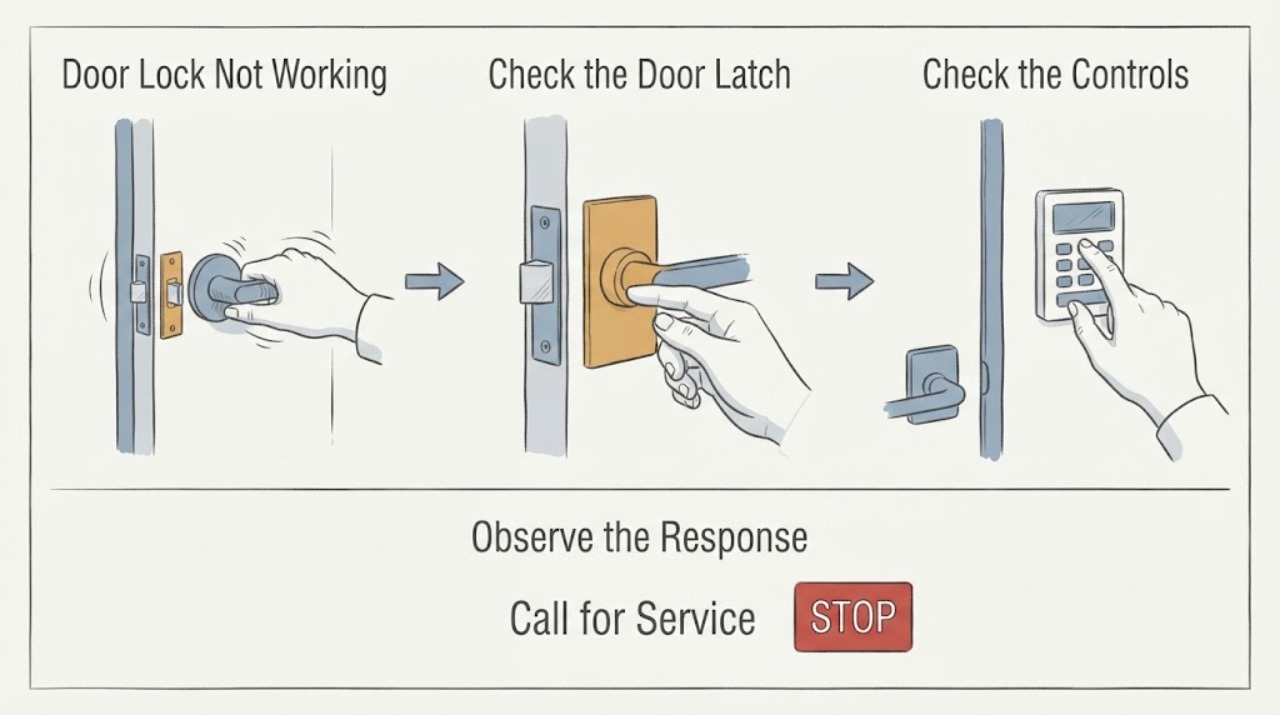
A door lock that does not work is often an alignment problem rather than a failed lock: the door may be rubbing the frame, the latch or bolt may miss the strike, weatherstrip compression may be too tight, or the handle may be binding. Test the lock with the door open before applying force, then observe whether the latch moves freely and whether it aligns with the strike when the door closes. Check only visible screws, hinges, receiver, and weatherstrip according to the exact door manual. If the door cannot be secured, the key or handle is broken, the frame is warped, or the lock remains jammed, use another secure entry and arrange qualified door or locksmith service; never force or bypass the lock.
Work through in order
Diagnostic checks
Use only checks that match the exact appliance or system and its official guide.
-
Check 1
With the door open, operate the handle, latch, bolt, key, or thumbturn slowly and observe whether each moving piece travels fully without rubbing, grinding, or stopping.
Expected result: The lock moves freely with the door open; or the key, handle, latch, or bolt binds even before the door meets the frame.
Next step: If it binds while open, stop forcing the mechanism and arrange door or locksmith service. If it is free, continue with the closed-door alignment check.
Why this matters
Why: Free movement with the door open points toward alignment or weatherstrip pressure when closed. Binding while open points toward hardware, dirt, a loose fastener, or a mechanism fault rather than the strike position.
-
Check 2
Close the door gently without turning the lock and look for rubbing at the jamb or sill, an uneven gap around the panel, or a panel that must be pushed or pulled before the latch reaches the strike.
Expected result: The panel rubs, sits high or low, or needs pressure to reach the strike; alternatively, it closes evenly with a consistent reveal.
Next step: Do not force the panel into position. Follow the exact door manual for a permitted hinge, roller, or panel adjustment; otherwise arrange service if the frame is warped or the door has dropped.
Why this matters
Why: Rubbing or an uneven reveal can move the latch out of alignment and make a good lock appear broken. A square-looking, freely closing door makes the receiver or strike and the latch itself the next comparison.
-
Check 3
With the door open, compare the latch or bolt position with the strike or keeper on the frame, then close the door slowly and observe whether the latch enters the opening cleanly.
Expected result: The latch hits above, below, or beside the strike; it enters but will not fully lock; or it aligns and locks without resistance.
Next step: If the manual provides a user adjustment for the strike or receiver, make only a small model-specific adjustment and retest with the door open first. If alignment is correct but locking still fails, stop and arrange service.
Why this matters
Why: A miss or partial entry indicates a strike/keeper alignment issue. A correctly aligned latch that still will not lock points more toward the lock case, cylinder, handle linkage, or a model-specific deadlock condition.
-
Check 4
Inspect the visible receiver, keeper, latch plate, hinge-side fasteners, and weatherstrip for a loose piece, obstruction, displaced tab, or compression that prevents the panel from reaching its normal locked position.
Expected result: A visible receiver or fastener is loose, a tab is displaced, debris blocks the opening, or the weatherstrip is being compressed unusually hard; alternatively, all visible parts look secure and clear.
Next step: Remove only loose surface debris and tighten only an obviously loose accessible fastener if the exact manual permits it. Do not seal, bend, drill, or remove the lock assembly; escalate if the part is damaged or the resistance remains.
Why this matters
Why: A receiver or tab helps draw some patio-door panels toward the frame so the lock can engage; an obstruction or abnormal seal pressure can prevent that final movement. A clear, secure exterior does not rule out a hidden lock-case fault.
-
Check 5
If the door has a sliding panel or multi-point mechanism, check that the panel is fully seated and that any hookbolt, flush bolt, or handle sequence described in the model manual has been completed before turning the lock.
Expected result: The panel is not fully seated or a required latch sequence was skipped; alternatively, the panel is seated and the prescribed sequence still leaves the lock inoperative.
Next step: Repeat the exact manual sequence once with the panel supported and moving freely. If the lock still will not engage, use another secure entry and arrange qualified service rather than removing the hardware.
Why this matters
Why: Some patio-door systems require the panel or hookbolts to be engaged before the primary deadbolt can lock. A correctly seated panel with a failed sequence points toward adjustment or hardware service, not additional force.
-
Check 6
Test the key or thumbturn from the safe side after the door is correctly aligned, and record whether the handle springs back, the bolt reaches full travel, and the lock can be secured without excessive force.
Expected result: The handle remains depressed, the key turns without moving the bolt, the bolt stops partway, or the lock works normally after alignment.
Next step: Stop using a lock that slips, grinds, or only partly engages. Arrange qualified door or locksmith service for internal hardware, a broken cylinder, a damaged key, or a lock that cannot reliably secure the door.
Why this matters
Why: A handle that does not return or a key that turns without bolt movement suggests an internal linkage, cylinder, or lock-case fault. Normal operation after alignment confirms that the original problem was door fit or receiver position.
Use your observations
Decision map
Find the observation that best matches what you see, then follow the next safe action.
-
PATH 01Next step
What you see
The lock works with the door open but binds when closed
Do this next
Treat the issue as alignment, panel position, strike/receiver, hinge, roller, or weatherstrip pressure; follow only model-specific external adjustment guidance.
-
PATH 02Next step
What you see
The latch misses the strike or keeper
Do this next
Check for visible panel drop, rubbing, or receiver movement and make only a permitted small adjustment; arrange service if the frame is distorted.
-
PATH 03Next step
What you see
The latch or key binds even with the door open
Do this next
Stop forcing the hardware and arrange qualified door or locksmith service for the lock, cylinder, handle linkage, or latch mechanism.
-
PATH 04Next step
What you see
The door cannot be secured, the key is broken, or the lock is jammed in the locked position
Do this next
Use another secure entry or temporary security measure and call a qualified locksmith or door technician; do not drill, pry, or bypass the lock as a basic check.
Helpful context
Understand the symptom
First separate a lock fault from a door-fit fault
The quickest safe distinction is whether the lock operates with the door open. If the latch or bolt moves smoothly open but binds when the door is closed, the strike, keeper, hinges, panel height, or weatherstrip compression is usually the next area to inspect. If the hardware does not move even with the door open, the lock or handle itself may need service. Do not keep turning a key or thumbturn against resistance: that can break the key, cylinder, or internal mechanism.
Protect the security boundary
Keep the door closed and secured whenever possible during testing. Do not leave an exterior door unable to latch, remove the lock case, drill out a cylinder, or bypass a deadbolt as a basic adjustment. If anyone is locked inside or outside, use a qualified locksmith or door technician rather than forcing the hardware.
Safety boundary
Stop conditions
- Stop if the key, handle, latch, or bolt binds, grinds, slips, or only partly engages; forcing it can damage the mechanism or leave the door unsecured.
- Stop if the door cannot be secured, the frame is warped, glass is damaged, or anyone is trapped inside or outside.
- Do not drill, pry, bypass, or remove the lock case during a basic user inspection; arrange qualified door or locksmith service.
Only after diagnosis
Potential parts
- strike or latch receiver
Consider this only when the door and latch operate freely but the latch consistently misses or cannot enter the receiver after the door is aligned.
Confirm the exact door type, lock geometry, and manufacturer fit information before selecting a receiver. - door lock or latch assembly
Consider this only when the lock binds with the door open or a qualified technician confirms an internal latch, deadbolt, or lock-case failure.
Lock assemblies vary by door system and handing; verify the exact model and security requirements before replacement. - door handle or cylinder
Consider this only when the handle fails to return, the key turns without moving the bolt, or a qualified diagnosis identifies a cylinder or linkage fault.
Confirm cylinder format, handing, keying, and the complete door hardware specification with a qualified provider.
When checks do not resolve it
Need a professional?
Arrange qualified door or locksmith service when the lock binds with the door open, the latch does not align after safe external checks, the key or handle slips, the bolt does not fully extend, the frame is warped, or the door cannot be secured.
Common questions
FAQ
Why does my door lock work when open but not when closed?
The door panel may have shifted, rub the frame, compress the weatherstrip too tightly, or miss the strike or receiver. Check alignment and latch entry without forcing the lock.
Should I adjust the strike plate if the door will not lock?
Only make a small adjustment if the exact door manual describes it and the latch operates freely with the door open. Stop if the frame is warped, the hardware binds, or the door cannot be secured.
When should I call a locksmith for a door lock that is not working?
Call when the key or handle slips, the latch binds while the door is open, the bolt will not fully move, the lock is jammed, or the door cannot be secured after safe alignment checks.
Read the exact guide
Official sources
- TROUBLESHOOTING GUIDEPella · Manufacturer troubleshooting guide used for general door hardware decision paths; follow the exact door manual
- Patio Door AdjustmentsAndersen Windows · Manufacturer maintenance guidance for sliding and hinged patio-door fit and lock engagement
- Adjust Tabs on Andersen® Hinged Inswing and Outswing Patio DoorsAndersen Windows · Manufacturer guidance for visible receiver tabs that affect panel draw, weatherstrip contact, and locking
Community feedback
Share a repair observation
Share a plain-text repair observation. Accepted observations are published automatically; this page may take a moment to update.