
On this page
Start here
Quick answer
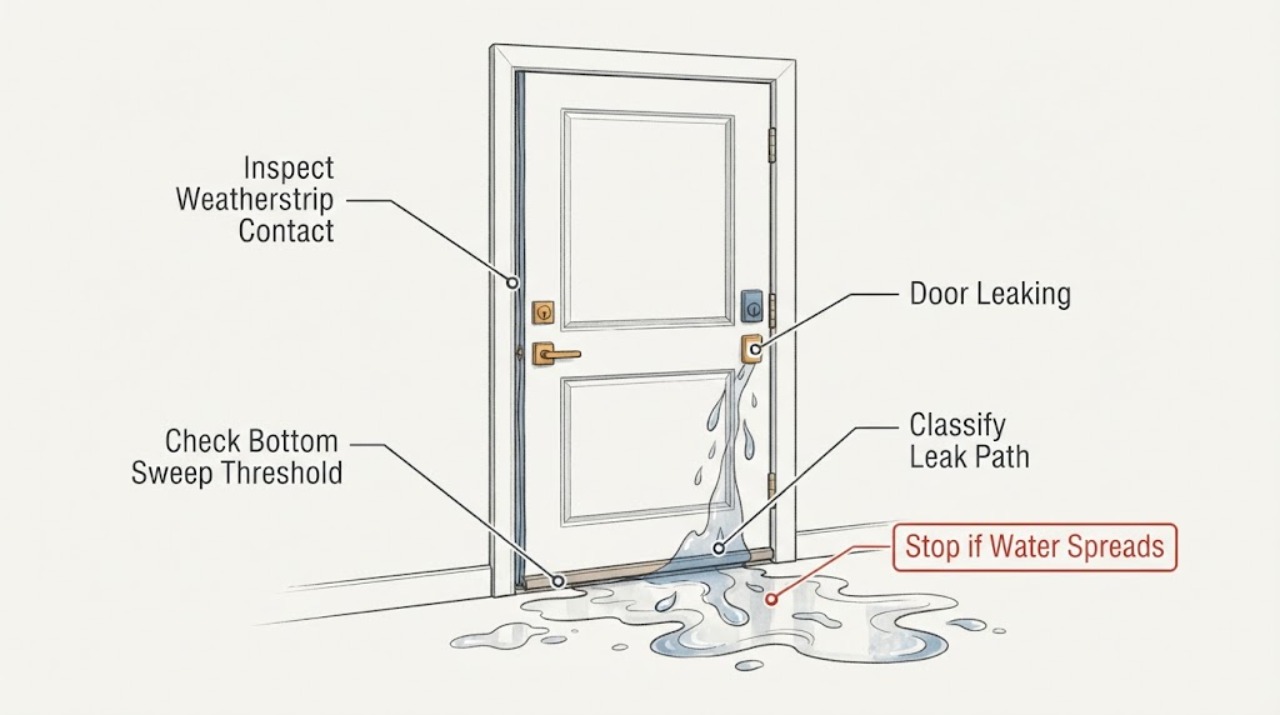
First determine whether “leaking” means outside air, rainwater, or water from a plumbing or condensation source. Weatherstripping is intended to close air gaps around a moving exterior door; it is a likely match when you see daylight, feel a draft, or find a damaged strip that no longer contacts the jamb. Inspect the whole perimeter, the sweep or threshold, and the surrounding trim before choosing a replacement. If the wet mark begins above or beside the weatherstrip, the door is out of square, the threshold drains poorly, or the wall or trim is swelling, a new strip may not solve the water path. Stop if the door binds, the leak reaches electrical equipment, or there is structural, mold, or concealed-wall damage, and arrange qualified door or building-envelope service.
Work through in order
Diagnostic checks
Use only checks that match the exact appliance or system and its official guide.
-
Check 1
With the door closed normally, record when the problem occurs and trace the first visible point: feel for outside air around the closed perimeter on a windy day, and separately note whether water appears only during rain, at the threshold, from the latch or hinge side, above the head, or from inside the room. Do not use an open flame or disturb wet electrical equipment.
Expected result: There is a draft or daylight with no rain; water appears at the bottom edge during rain; water starts above or beside the frame; or the wet area occurs without weather exposure.
Next step: Use the weatherstripping branch only for a clear air-gap or moving-seal symptom. For water above, behind, or away from the seal line, keep the area dry and arrange door or building-envelope diagnosis instead of ordering a strip first.
Why this matters
Why: A draft or daylight makes a moving seal or trim air gap more likely. Rain at the bottom points toward the sweep or threshold. Water above or behind the frame suggests a broader opening or drainage problem, while water without rain may have another household source.
-
Check 2
Inspect the weatherstripping around the head and jambs without removing trim. Look for a torn, flattened, detached, hardened, or visibly gapped section, and check whether the door closes smoothly with the seal making continuous contact. Do not force the door against an oversized seal.
Expected result: The strip is damaged or has a consistent gap while the door is square and operates normally; the strip looks intact and contacts the jamb; or the door binds, rubs, or sits unevenly.
Next step: Measure the existing seal locations and choose only a neutral replacement category after confirming the door profile. If alignment or operation is abnormal, stop at inspection and have the door adjusted by a qualified professional.
Why this matters
Why: A damaged strip with normal door alignment supports a weatherstripping repair. An intact contacting strip makes the trim, threshold, frame alignment, or another water path more likely. Binding or an uneven reveal means adding material could worsen the fit.
-
Check 3
Examine the bottom sweep and threshold from the dry, accessible side. Look for a visible gap below the door, a sweep that no longer reaches the threshold, debris preventing contact, or water tracks that begin at the sill rather than the jamb seal. Do not block a designed drainage path or drill into the threshold from a generic instruction.
Expected result: The gap is limited to the bottom edge and the sweep is worn or displaced; the threshold is visibly damaged or out of level; or the water track begins higher than the sweep.
Next step: If the bottom seal is the confirmed failure and the door still operates smoothly, use the model or door-manufacturer instructions for the correct sweep. Otherwise stop and request a qualified inspection of the opening and drainage details.
Why this matters
Why: A bottom-only gap can require a compatible sweep or threshold adjustment, not side weatherstripping. A damaged or poorly draining threshold needs a different repair decision. A higher entry point makes the weatherstrip an unlikely primary cause.
-
Check 4
Inspect the visible trim and wall-side edges for open joints, peeling paint, soft or swollen material, staining, mold-like growth, or a gap that continues beyond the removable seal. Compare the reveal around the closed door and note whether the latch side and hinge side are parallel.
Expected result: The seal line is dry and intact but the trim or wall is wet or damaged; the gap continues behind the trim; or the frame is visibly shifted and the door is no longer parallel.
Next step: Do not remove complicated trim or cover wet damage with caulk or thicker weatherstrip. Photograph the path, keep water away from the area, and arrange qualified door, siding, or building-envelope service.
Why this matters
Why: Damage beyond the moving weatherstrip can indicate failed air sealing, water intrusion behind trim, or frame movement. A replacement strip cannot reliably correct concealed moisture or a distorted opening.
-
Check 5
If the diagnosis is limited to a damaged, accessible weatherstrip and the door is square, compare the old seal's location and profile with the door or manufacturer's instructions, install or adjust only as directed, and close the door gently to check smooth operation. Do not improvise a seal that prevents the latch from engaging.
Expected result: The replacement closes the visible air gap while the door latches and operates smoothly; the gap remains; the door needs excessive force; or rainwater still enters.
Next step: If the result is not clearly improved, stop ordering thicker material and arrange qualified service. Escalate immediately for swelling, mold-like growth, structural movement, concealed moisture, or damage near electrical equipment.
Why this matters
Why: A smooth closure with a reduced air gap supports the weatherstrip diagnosis. A remaining gap can be an alignment or trim problem, while binding or persistent rain points away from a simple seal replacement.
Use your observations
Decision map
Find the observation that best matches what you see, then follow the next safe action.
-
PATH 01Next step
What you see
Only air or daylight passes through a damaged seal on an otherwise square, smoothly operating door.
Do this next
Use the door or manufacturer's instructions to select and fit a compatible weatherstrip, then confirm that the door still latches and operates smoothly.
-
PATH 02Next step
What you see
Water enters only at the bottom edge and the sweep or threshold has a clear gap or damage.
Do this next
Investigate the compatible sweep or threshold path using the door instructions; do not block drainage or assume side weatherstripping will solve it.
-
PATH 03Next step
What you see
Water starts above or behind the jamb, continues beyond the seal line, or the trim is swollen or stained.
Do this next
Stop at visual inspection and arrange qualified door or building-envelope service. Keep the area dry and do not hide the path with extra sealant or a thicker strip.
-
PATH 04Next step
What you see
The door binds, the latch will not engage, or adding the seal requires force.
Do this next
Do not add more material. Have the door, hinges, frame, or threshold adjusted and assessed by a qualified professional.
-
PATH 05Next step
What you see
The wet area appears without rain or there is mold-like growth, concealed moisture, structural movement, or nearby electrical risk.
Do this next
Stop troubleshooting, protect people from the affected area, and arrange the appropriate qualified building or electrical professional.
Helpful context
Understand the symptom
A door can leak air without leaking rainwater
The word leak matters here. A draft or visible daylight at a closed door is an air-sealing problem, and weatherstripping is designed for that moving joint. A wet floor after rain is a water-management problem that can also involve the sweep, threshold, frame, flashing, siding, or a roof or plumbing source. Use the location and timing of the water to choose the branch instead of assuming every leak is a worn strip.
Inspect the complete seal line
Look at the head, latch side, hinge side, bottom edge, threshold, and the trim around the opening. A strip that is torn, flattened, detached, or not touching the jamb can allow air through. ENERGY STAR also identifies gaps around door trim as a possible air-leak path. A replacement should leave the door easy to operate and should not be used to hide a loose hinge, shifted frame, or failed exterior joint.
Know when to stop
A small, accessible weatherstrip or sweep can be a reasonable maintenance repair when the door remains square and the problem is clearly at the moving seal. Do not keep adding thicker material when the door must be forced shut, the latch no longer engages, or water is entering from above or behind the trim. Persistent wet materials, swelling, staining, or a musty odor deserve prompt professional assessment before damage spreads.
Only after diagnosis
Potential parts
- door jamb weatherstripping
Consider this category only when the leak is an air gap or daylight at a damaged side or top seal and the door remains square and smooth.
Confirm the door manufacturer, profile, mounting method, and opening dimensions before ordering. - door bottom sweep
Consider this category only when water or air enters at the bottom edge and the existing sweep no longer contacts the threshold.
Confirm the door thickness, sweep style, threshold relationship, and manufacturer's fit information. - threshold seal or sill component
Consider this category only after inspection shows a bottom threshold gap or damaged sill component rather than a jamb or trim leak.
Threshold geometry and drainage are opening-specific; verify compatibility before purchase and do not block designed drainage.
When checks do not resolve it
Need a professional?
Arrange qualified service when water enters above or behind the frame, the trim or wall is swollen or stained, the door is out of square or binds, the latch cannot engage, a seal does not improve the leak, mold-like growth or concealed moisture is suspected, or the leak is near electrical equipment. Do not cover a water path with thicker weatherstripping or caulk without identifying its source.
Common questions
FAQ
Will replacing weatherstripping stop a door from leaking water?
Only if the water entry is actually at the moving seal and the door, sweep, and threshold are correctly aligned. Weatherstripping is primarily an air-sealing measure. Water that starts above or behind the frame, or damage in the trim, needs a broader inspection.
How can I tell if the weatherstrip is the problem?
With the door closed normally, look for a torn, flattened, detached, or consistently gapped strip, daylight, or a draft at that seal line. If the strip contacts the jamb but the door still leaks, investigate the sweep, threshold, trim, and frame instead.
Should I use a thicker weatherstrip if the door is hard to close?
No. A door that binds or needs force may be misaligned, and adding material can prevent the latch from engaging. Stop at inspection and have the door or frame adjusted before selecting a different seal.
When should a door leak be professionally inspected?
Arrange service for water above or behind the frame, swelling or staining, persistent moisture, mold-like growth, frame movement, an unsafe latch, a leak near electrical equipment, or a leak that remains after a confirmed seal repair.
Read the exact guide
Official sources
- Sealing Behind Window & Door Trim ProjectENERGY STAR / U.S. Environmental Protection Agency · Air leakage around window and door trim and professional sealing boundaries
- Locating Air LeaksENERGY STAR / U.S. Environmental Protection Agency · Locating household air leaks around doors and windows
- Install Weatherstripping on an Exterior DoorU.S. Department of Energy / National Renewable Energy Laboratory · Exterior door weatherstripping and sweep installation guidance
- Glossary of Common TermsENERGY STAR / U.S. Environmental Protection Agency · Home air sealing and weatherstripping terminology
Community feedback
Share a repair observation
Share a plain-text repair observation. Accepted observations are published automatically; this page may take a moment to update.