
On this page
Start here
Quick answer
Do not start by turning every visible screw. First identify whether this is a casement window, tilt-and-turn window, hinged door or sliding/bi-fold door, then record where it binds: handle, lock, hinge side, threshold, frame or seal. Clear visible debris, drainage slots and obstructions and check the weather seals before any adjustment. uPVC hardware is system-specific: Eurocell’s published adjustment values and Allen-key sequence apply to its named Aspect door system, while Anglian and Eurocell care guidance directs owners to clean, protect seals and use the product’s own maintenance instructions. If the frame or glass is cracked, the door cannot lock, the sash is dropped, or resistance is high, stop and use the installer or a qualified window-and-door technician rather than forcing the handle or changing several adjustments at once.
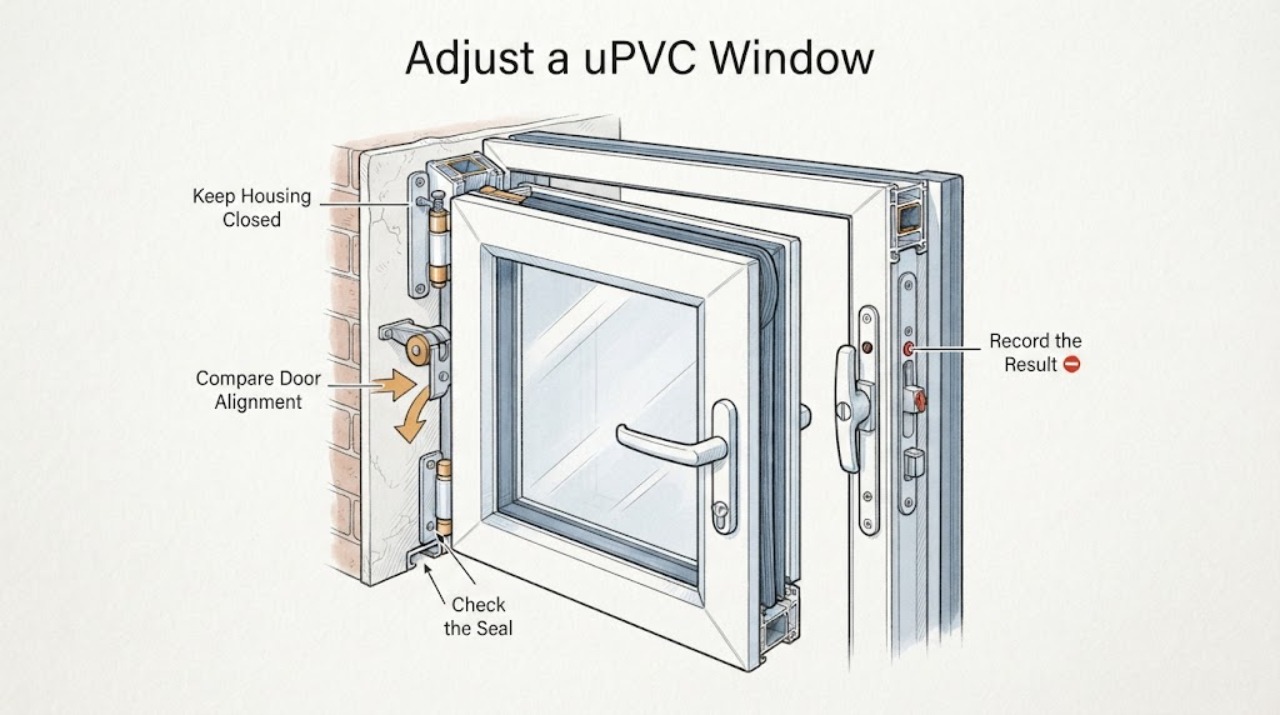
Work through in order
Diagnostic checks
Use only checks that match the exact appliance or system and its official guide.
-
Check 1
Identify the opening type and record the manufacturer, installer or system label if present. Decide whether it is a casement window, tilt-and-turn window, hinged door, sliding door or bi-fold door, and note whether the binding occurs at the handle, lock side, hinge side, threshold or track.
Expected result: The system identity and contact point are clear, or the unit has no label and the hardware type is uncertain.
Next step: If the hardware identity is uncertain, stop at external inspection and obtain the exact installer/manufacturer guide or qualified service. Do not begin by loosening multiple fixings.
Why this matters
Why: Different systems use different hinges, rollers, keeps and adjustment directions. Eurocell’s published adjustment sequence is for its named Aspect system, not a universal uPVC procedure.
-
Check 2
With the window or door supported normally and operated gently, inspect the frame, threshold/track, lock keeps, hinge covers, visible rollers, drainage slots and weather seals. Remove only loose dirt or an obvious mat/debris obstruction using a soft brush or mild soapy water; do not force the handle or scrape the seals.
Expected result: A visible obstruction, blocked drain slot, dirt-filled track or displaced/damaged seal is found, or the visible path is clear.
Next step: Correct only the accessible obstruction or cleaning issue, then make one gentle movement check. If the seal is torn, the drainage path remains blocked, or the unit still binds, use the system guide or service rather than compensating with random screw turns.
Why this matters
Why: Anglian identifies frame/door obstructions and blocked drainage holes as checks for closing problems. Eurocell says blocked drainage and damaged/dislodged seals can affect performance and cautions against abrasive or solvent cleaning.
-
Check 3
Check the closed gap and contact pattern without forcing the lock: compare the hinge side and lock side, look for a sash or door that has dropped, and see whether the handle reaches its normal position. Do not remove hinge pins, glazing beads, cover caps or lock keeps just to expose an adjuster.
Expected result: The sash/door is visibly dropped or rubbing, the handle will not reach its normal position, the lock cannot engage, or the gap is even and the mechanism moves freely.
Next step: If the lock cannot engage, the frame/glass is damaged, or resistance is high, stop and call the installer or a qualified technician. If movement is free but the fit remains poor, find the exact adjustment guide before changing one identified adjuster at a time.
Why this matters
Why: A dropped or rubbing unit may need a system-specific hinge/roller/keep adjustment, but the symptom does not establish which adjuster or how much movement is safe. A lock that cannot engage is a security and weather-sealing issue, not a reason to force the handle.
-
Check 4
If the label confirms the Eurocell Aspect door system and its guide matches the visible hardware, follow only that guide: its documented hinge, roller and keep adjustments use specified Allen keys or fixing screws, and each fixing is retightened after the adjustment. Do not apply those values to another uPVC system.
Expected result: The exact Aspect system and matching hardware are confirmed, or the unit is another/unknown system.
Next step: For a confirmed matching Aspect unit, make the smallest documented change and recheck operation without forcing the handle. Otherwise stop and obtain the exact guide or qualified service.
Why this matters
Why: The Eurocell guide supports a narrow, product-specific adjustment path; it does not provide a generic uPVC measurement. On an unknown system, the same-looking grub screw may serve a different part or adjustment axis.
-
Check 5
After any documented single adjustment, close and open the unit gently and check the handle, lock engagement, seal contact, threshold/track clearance and drainage path. Do not keep adjusting if the gap worsens, the lock binds, the sash moves unevenly, or the frame flexes.
Expected result: The unit operates smoothly with the lock engaged and no new rubbing, leaks or seal displacement, or the original problem remains/worsens.
Next step: If the operation is smooth, leave the hardware at the documented setting and continue routine cleaning. If the result is worse, reverse only the documented change if safe and arrange qualified service; do not compensate with multiple adjustments.
Why this matters
Why: A successful adjustment is a complete operating result, not simply a screw reaching a new position. Persistent binding can reflect installation movement, a damaged hinge/roller/lock, frame distortion or glass loading rather than a simple setting.
Use your observations
Decision map
Find the observation that best matches what you see, then follow the next safe action.
-
PATH 01Next step
What you see
The window or door binds because dirt, a mat, debris in a track, or a blocked accessible drainage slot is visible.
Do this next
Remove only loose accessible debris with a soft tool and mild soapy water, then retest gently. Escalate if the unit still binds or a seal is damaged; do not turn hardware screws yet.
Why this path and its safety boundary
Why it matters: The immediate issue may be an obstruction or drainage-maintenance problem rather than misalignment.
-
PATH 02Next step
What you see
The handle will not reach its normal position, the lock will not engage, the frame/glass is cracked, or the sash/door is visibly dropped.
Do this next
Stop forcing the handle or lifting the sash and contact the installer or a qualified window-and-door technician with the system details and photos.
Why this path and its safety boundary
Why it matters: This is beyond a safe generic adjustment decision and may affect security, weather sealing or structural loading.
-
PATH 03Next step
What you see
The hardware identity matches a published system guide, and one identified hinge, roller or keep adjustment is explicitly documented for that system.
Do this next
Make the smallest documented change, retighten the fixing, and perform one gentle operation check. Do not transfer the measurement or sequence to another brand/system.
Why this path and its safety boundary
Why it matters: A narrow owner adjustment may be appropriate, but only within that guide’s component, tool and re-tightening instructions.
-
PATH 04Next step
What you see
The hardware/system is unknown, or the first documented adjustment does not restore smooth movement and lock engagement.
Do this next
Stop adjusting, leave the unit in its safest usable position, and obtain the matching installer guide or qualified service.
Why this path and its safety boundary
Why it matters: The visible symptom does not identify the failed hinge, roller, keep, lock or frame, and further random changes can worsen alignment.
Helpful context
Understand the symptom
Adjustment begins with the symptom and hardware type
“The uPVC door/window needs adjustment” can mean a handle that is hard to turn, a sash rubbing the frame, a door that drops at the handle side, a seal that no longer compresses, or a drainage problem. Those symptoms use different hardware. Before touching an adjuster, open and close the unit gently once, identify the contact point, and note whether the problem is on the hinge side, lock side, threshold, roller track or frame. A screw that looks adjustable is not proof of its function.
Clean and inspect before changing alignment
Eurocell says uPVC drainage slots must remain unblocked, weather seals should not be dislodged, and abrasive or solvent-based products can damage the finish. Anglian also directs users to check door/frame obstructions and drainage holes. Clear only accessible dirt with a soft brush or cloth and mild soapy water; do not use pressure, force a seal back into an unknown channel, or treat a blocked drain as proof that the hinges need adjustment.
A model-specific adjustment guide controls the screw sequence
Eurocell’s Aspect guide documents separate hinge, roller and keep adjustments and says fixings must be retightened after adjustment. Those instructions are useful evidence that uPVC systems differ, but the guide is for the named Aspect product rather than every uPVC window or door. Without the system or installer identity, the safe answer is to identify the hardware and retrieve the matching guide before loosening a hinge, roller grub screw or keep.
Common questions
FAQ
Can I adjust any uPVC window or door with an Allen key?
No. Allen-key size, adjuster location, direction and travel depend on the hardware system. Eurocell documents one Aspect system with specific hinge and roller procedures; use the matching guide rather than copying its values to an unknown unit.
What should I check before adjusting the hinges?
Look for a mat or debris obstruction, blocked drainage slots, dirt in a track, displaced seals and a visibly dropped or damaged frame. Clean only accessible areas with mild materials and do not force the handle or lock.
Why does the door close differently in hot or cold weather?
Anglian says seasonal expansion or contraction can change how its uPVC door or frame closes. Check for obstructions and allow the surface to return to normal before treating the symptom as a hardware adjustment; persistent binding still needs the exact product guidance.
When should I stop and call a professional?
Stop if the lock will not engage, the handle needs force, the frame or glass is cracked, the sash or door is dropped, the seal is damaged, or one documented adjustment makes operation worse. Give the installer or technician the system identity and photos rather than continuing to turn screws.
Read the exact guide
Official sources
- Eurocell Aspect Installation GuideEurocell · Official Eurocell PDF for the named Aspect door system only. It demonstrates system-specific hinge, roller and keep adjustment and re-tightening; it must not be presented as a generic uPVC procedure.
- Care & Maintenance of Eurocell ProductsEurocell · Official Eurocell care guidance for Eurocell products. It supports external cleaning, drainage-slot, seal and product-guide boundaries; it is not a universal adjustment procedure for an unidentified uPVC system.
- My Door Won’t Close or LockAnglian Home Improvements · Official Anglian support guidance for Anglian uPVC doors. It supports external obstruction/drainage checks and seasonal-fit context; it does not establish adjustment values for another manufacturer’s window or door.
Community feedback
Share a repair observation
Share a plain-text repair observation. Accepted observations are published automatically; this page may take a moment to update.