
On this page
Start here
Quick answer
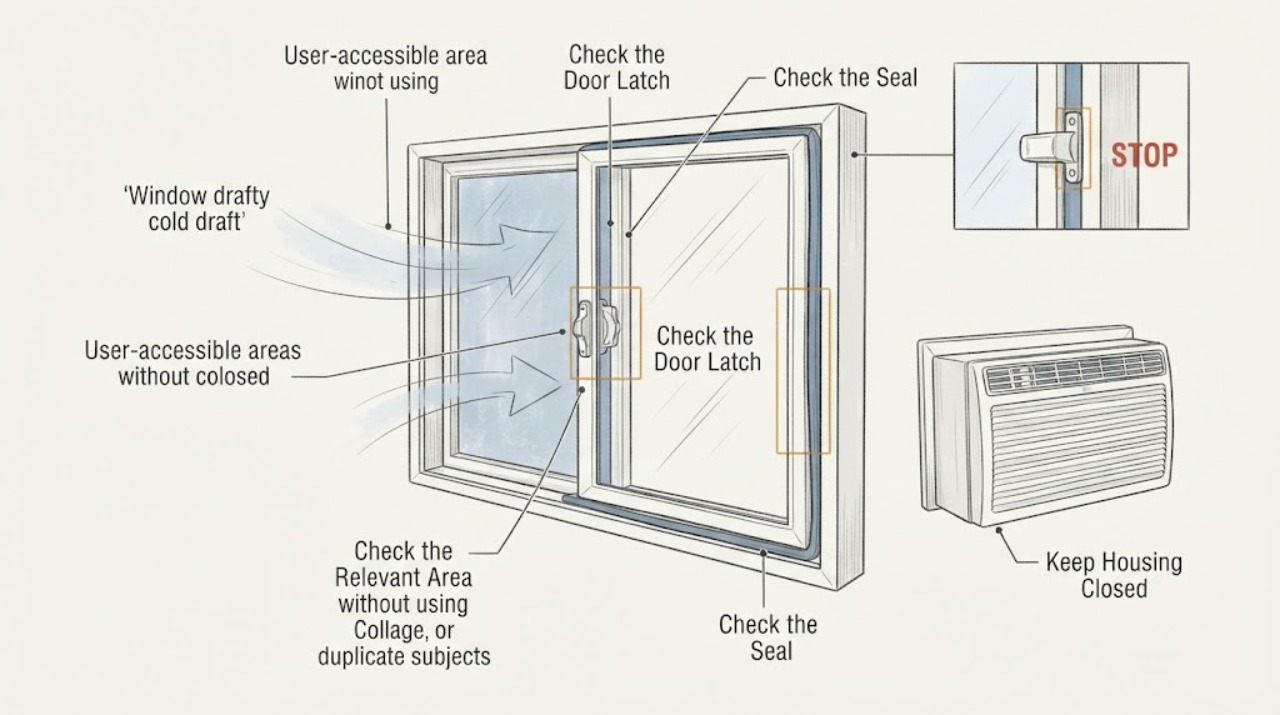
A cold draft can enter through the moving sash, the frame-to-wall opening, or a gap around exterior trim. On a windy day, first locate the airflow with a tissue strip at the closed window, sash joints, and frame edges without using a flame. Then check latches and weatherstripping, look for gaps or water staining around the frame, and measure indoor humidity if you also see condensation. Weatherstripping may solve a moving-joint leak; a frame, flashing, glass, or operating problem needs a window or weatherization professional.
Before you begin
Safety first
- A professional should handle trim or flashing removal, concealed rough-opening repairs, warped frames, broken glass, lead-paint concerns, and any repair that could block drainage.
Work through in order
Diagnostic checks
Use only checks that match the exact appliance or system and its official guide.
-
Check 1
On a windy, cold day, close and latch the window, then hold a thin tissue strip near the sash meeting rail, corners, frame-to-trim joint, and sill. Do not use a candle, lighter, or other flame to find the draft.
Expected result: The tissue moves at a moving sash joint, at the stationary frame-to-wall edge, or not at all while the glass still feels cold.
Next step: Mark the exact location and continue with the matching sash, frame, or condensation check. Do not seal a drainage path or cover a suspected leak before checking for water entry.
Why this matters
Why: Movement at the sash points to a seal or compression problem; movement at the frame-to-wall edge points to a rough-opening or trim air leak. No movement with cold glass makes a surface-temperature or humidity issue more likely than an airflow leak.
-
Check 2
Inspect the visible weatherstripping, gaskets, sash corners, and latch side with the window closed; gently test whether the sash is held evenly against its seal without forcing the hardware.
Expected result: A seal is flattened, split, missing, loose, or bypassed at a corner, or the sash appears evenly compressed and the latch works normally.
Next step: Record the seal profile and window type before considering a compatible replacement weatherstrip. If the sash is warped, the latch will not hold it closed, or adjustment would require disassembly, arrange a window professional.
Why this matters
Why: A damaged or poorly compressed seal can let cold outdoor air bypass the closed sash. An intact, evenly compressed seal makes the moving joint less likely as the primary leak, so the frame junction or another window may need attention.
-
Check 3
From inside and from ground level outside, inspect the stationary frame, trim, sill, and visible flashing for open joints, peeling sealant, water stains, soft trim, or a gap where the frame meets the wall. Do not climb or remove exterior cladding for this check.
Expected result: A gap or water stain is concentrated at the frame-to-wall junction, or the visible frame and surrounding finish are dry and intact.
Next step: Photograph the location and arrange a qualified window, siding, or weatherization inspection before applying foam or caulk into an unknown drainage path. Keep the interior dry while the cause is investigated.
Why this matters
Why: A frame-to-wall gap can allow wind and rain behind the trim and is not the same repair as replacing sash weatherstripping. A dry, intact surface makes a visible installation leak less likely but cannot rule out a concealed gap.
-
Check 4
Measure indoor relative humidity with a humidity meter and note whether moisture appears on the room-side glass after showers, cooking, drying clothes, or during colder weather.
Expected result: Humidity is persistently high or condensation follows moisture-producing activities, or the glass stays dry while a tissue confirms moving air at a joint.
Next step: Vent moisture-producing rooms outdoors and use appropriate dehumidification when needed; repair the confirmed leak separately. If condensation persists or affects the wall, arrange a building-envelope assessment.
Why this matters
Why: High humidity or activity-linked condensation can make cold glass wet even without a draft. A confirmed airflow path with dry glass keeps air leakage as the primary issue, while both conditions can coexist.
-
Check 5
Open and close the window once while watching the sash, hinges or tracks, locking points, and glass from inside; stop if the hardware binds or the glass is cracked.
Expected result: The sash does not sit square, the latch cannot pull it evenly closed, the frame is damaged, or the window operates smoothly and seals evenly.
Next step: Do not force or plane the sash as a quick fix. Have a qualified window professional assess alignment, hardware, frame, and any insulated-glass failure before ordering parts.
Why this matters
Why: A warped sash, damaged frame, or failed latch can create a persistent perimeter leak and may make weatherstripping ineffective. Smooth operation and even closure shift attention back to the identified seal or rough-opening gap.
Use your observations
Decision map
Find the observation that best matches what you see, then follow the next safe action.
-
PATH 01Next step
What you see
The tissue moves only at the sash joint, and the weatherstripping is split, flattened, missing, or no longer compressed when latched.
Do this next
Match replacement weatherstripping to the exact window profile and installation instructions, or have a window professional adjust or repair the sash if it is warped or does not latch evenly.
Why this path and its safety boundary
Why it matters: A moving-joint seal or latch-compression problem is more likely than a wall-opening leak.
-
PATH 02Next step
What you see
The tissue moves at the frame-to-wall junction, or open joints and water stains appear around the stationary frame or sill.
Do this next
Arrange a qualified window or weatherization inspection and preserve the visible evidence. Do not fill a suspected drainage path blindly with sealant or foam.
Why this path and its safety boundary
Why it matters: An installation, air-sealing, or flashing problem is more likely; replacing sash weatherstripping alone will not close that path.
-
PATH 03Next step
What you see
The glass feels cold and collects moisture, but the tissue does not move at the joints and indoor humidity rises after cooking, showers, or laundry.
Do this next
Reduce indoor moisture and improve room air movement, then monitor the glass. If condensation remains severe, have the glazing and building-envelope conditions evaluated.
Why this path and its safety boundary
Why it matters: Indoor moisture condensing on a cold surface is more likely than a draft at that window.
-
PATH 04Next step
What you see
The sash is warped, the latch will not secure it, the frame or glass is damaged, or water enters during wind-driven rain.
Do this next
Stop forcing the window and arrange a qualified window or building-envelope professional. Keep occupants away from broken glass and document the condition from a safe position.
Why this path and its safety boundary
Why it matters: The problem exceeds a simple accessible seal check and may involve operation, glazing, structural attachment, or water management.
Helpful context
Understand the symptom
Find where the cold air is entering
A draft at the meeting rail or perimeter of a moving sash is different from air entering between the window frame and the surrounding wall. The first often points to a worn seal, latch, or adjustment. The second points to an installation or air-sealing gap and may also allow rainwater into the wall. Locate the path before buying a replacement window or applying sealant.
Do not confuse a cold surface with a draft
In winter, a window may feel cold even when little air is moving. Condensation on the room-side glass is often related to indoor humidity and the temperature of the glass. If a tissue does not move but moisture repeatedly forms, investigate humidity, ventilation, glazing, and thermal performance separately from air leakage.
Use the right repair boundary
Weatherstripping is intended for moving joints, while caulk or carefully selected low-expansion foam can address some stationary gaps around a rough opening. Removing trim, changing flashing, correcting a warped frame, replacing sealed glass, or working near lead paint or damaged materials is a professional task.
Safety boundary
Stop conditions
- Do not use a flame to locate a draft, and stop if the window will not latch, the glass is cracked, or the sash binds when operated.
- Stop before removing trim, exterior cladding, or flashing, or before filling a suspected drainage path with foam or caulk; these conditions need professional assessment.
- Arrange a qualified window, weatherization, or building-envelope professional for persistent water entry, soft or damaged framing, concealed gaps, lead-paint concerns, or condensation affecting the wall.
Only after diagnosis
Potential parts
- replacement window weatherstripping
Only consider this when airflow is confirmed at the moving sash joint and the existing seal is damaged or no longer compressed; it will not correct a rough-opening, flashing, glass, or frame problem.
Match the exact window brand, model or profile, seal shape, attachment method, and sash orientation. Confirm the window still latches and drains correctly after installation.
When checks do not resolve it
Need a professional?
Safety scope: A professional should handle trim or flashing removal, concealed rough-opening repairs, warped frames, broken glass, lead-paint concerns, and any repair that could block drainage.
Common questions
FAQ
How can I tell whether a window is drafty or simply cold?
Use a tissue strip at the closed sash and frame edges on a windy day. Movement identifies airflow; a cold pane with no movement points more toward surface temperature or indoor humidity. Both conditions can occur together.
Should I caulk around a drafty window?
Caulk can address some stationary gaps, but it is not the right fix for a moving sash seal and should not block a drainage path. Locate the leak first and have concealed frame, flashing, or rough-opening gaps assessed before sealing them.
Why does condensation appear on a window when I do not feel a draft?
Cold glass can reach the dew point when indoor moisture is high, even without measurable airflow. Reduce indoor moisture and improve air movement, then arrange an envelope or glazing assessment if the problem continues.
When should I replace the whole window?
Do not decide from a single cold spot. A professional should distinguish a replaceable sash seal from a rough-opening leak, failed glazing, warped frame, water-management defect, or broader wall problem before recommending replacement.
Read the exact guide
Official sources
- Purchasing Energy-Efficient Residential Storm WindowsU.S. Department of Energy, Federal Energy Management Program · Residential windows with cold drafts or condensation
- Reference Guide for Indoor Air Quality in SchoolsU.S. Environmental Protection Agency · General condensation mechanisms at cold window surfaces; residential symptoms require building-specific assessment
- Rough Opening Flashing: Air SealingU.S. Department of Energy, Building Science Education · Air leakage at stationary window frames and frame-to-wall junctions
- What are the main ways to control moisture in your home?U.S. Environmental Protection Agency · Cold windows with condensation that may be mistaken for or accompany a draft
Community feedback
Share a repair observation
Share a plain-text repair observation. Accepted observations are published automatically; this page may take a moment to update.