
Repair problem
Drafty Window Troubleshooting Guides
Published FixGraph guidance for diagnosing and responding to drafty window.
Matching published guides
Choose a guide that matches the service, equipment, and conditions you are seeing.
-
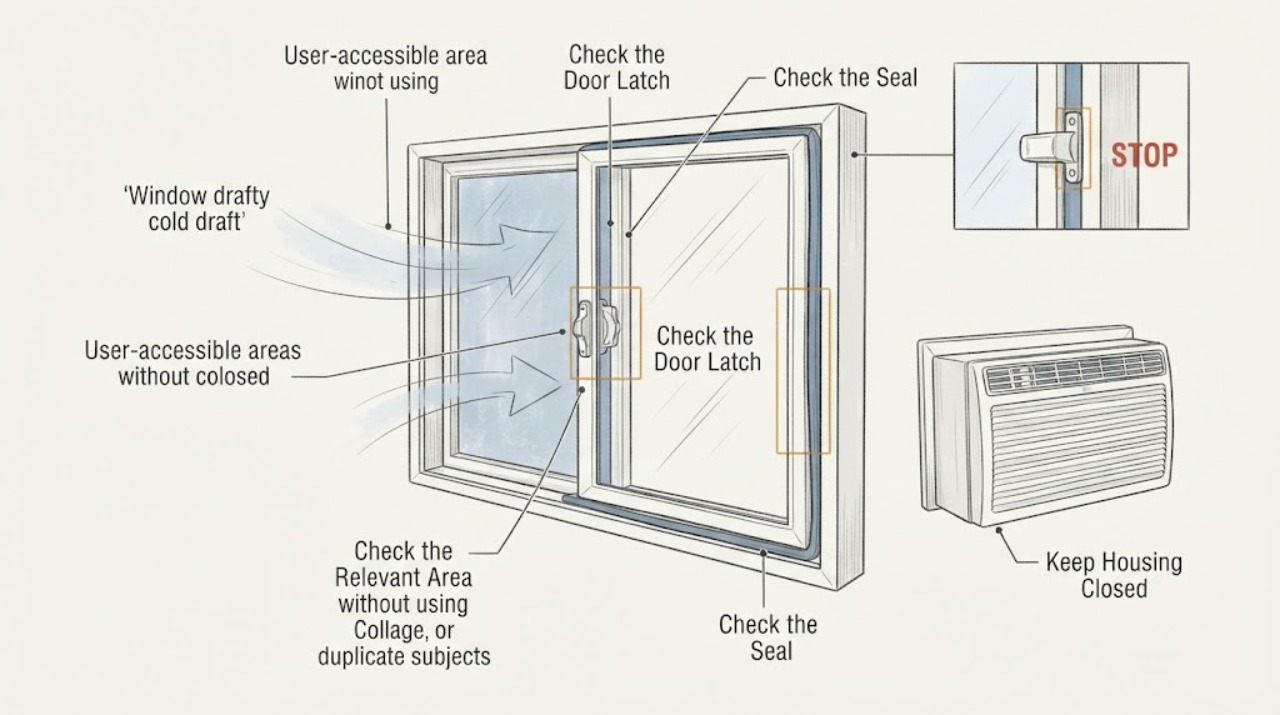
Window drafty cold draft: What to Check and What to Do Next
A cold draft can enter through the moving sash, the frame-to-wall opening, or a gap around exterior trim. On a windy day, first locate the airflow with a tissue strip at the closed window, sash joints, and frame edges without using a flame.
-
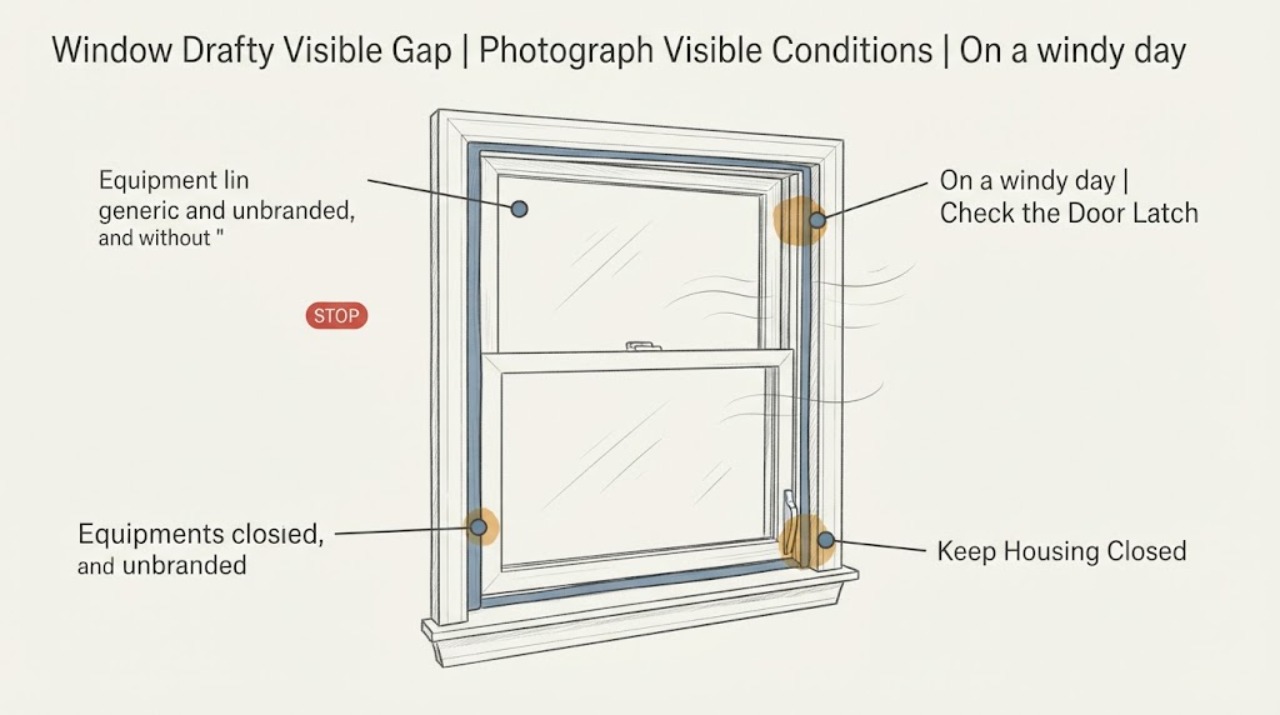
Window Drafty Visible Gap: What to Check and What to Do Next
A visible gap around a drafty window is not one single fault: it may be between a moving sash and its frame, between the fixed frame and the wall opening, at trim or exterior sealant, or around damaged glazing. First map exactly where daylight or air enters and whether the sash still closes and latches squarely.
-
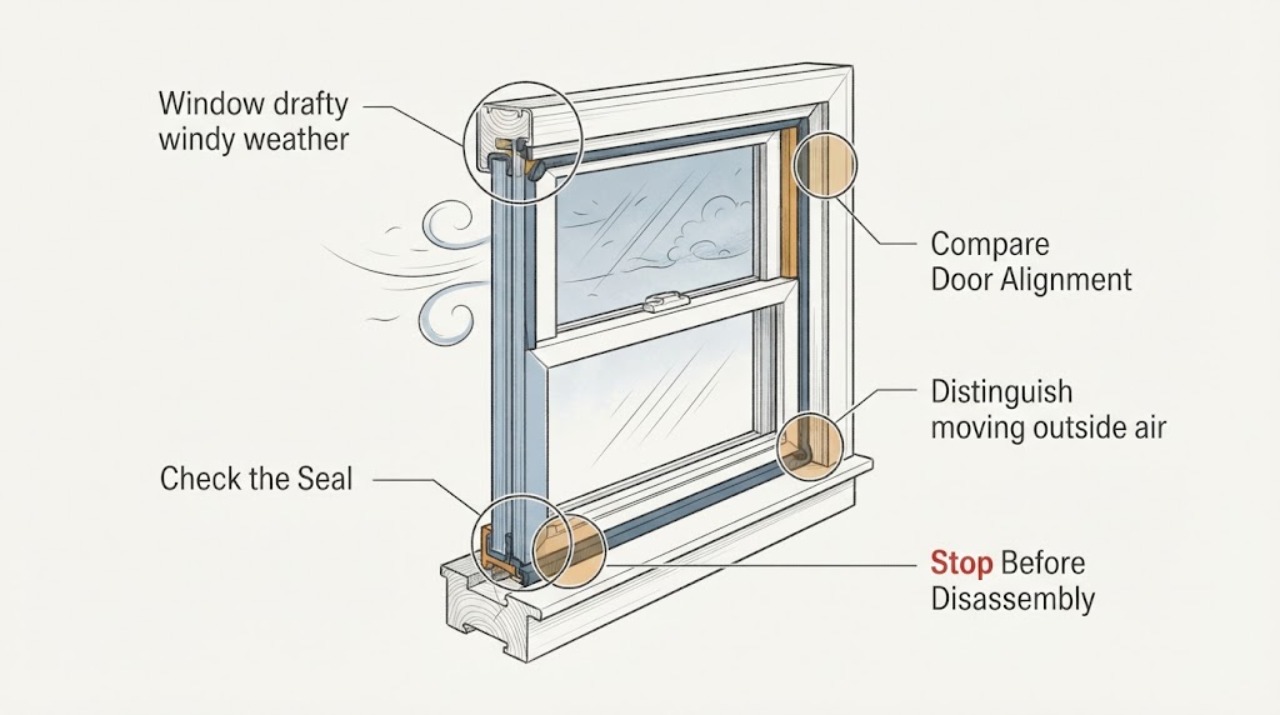
Window drafty windy weather: What to Check and What to Do Next
A window that feels drafty only when it is windy may have a loose sash, worn weatherstripping, a gap between the frame and rough opening, or a failed exterior flashing or seal; sometimes the sensation is a cold-glass downdraft rather than outside air entering. With the window closed and latched, use a thin strip of paper to compare the seal around the sash and inspect visible trim for gaps, dust tracks, dampness, or peeling paint.
-
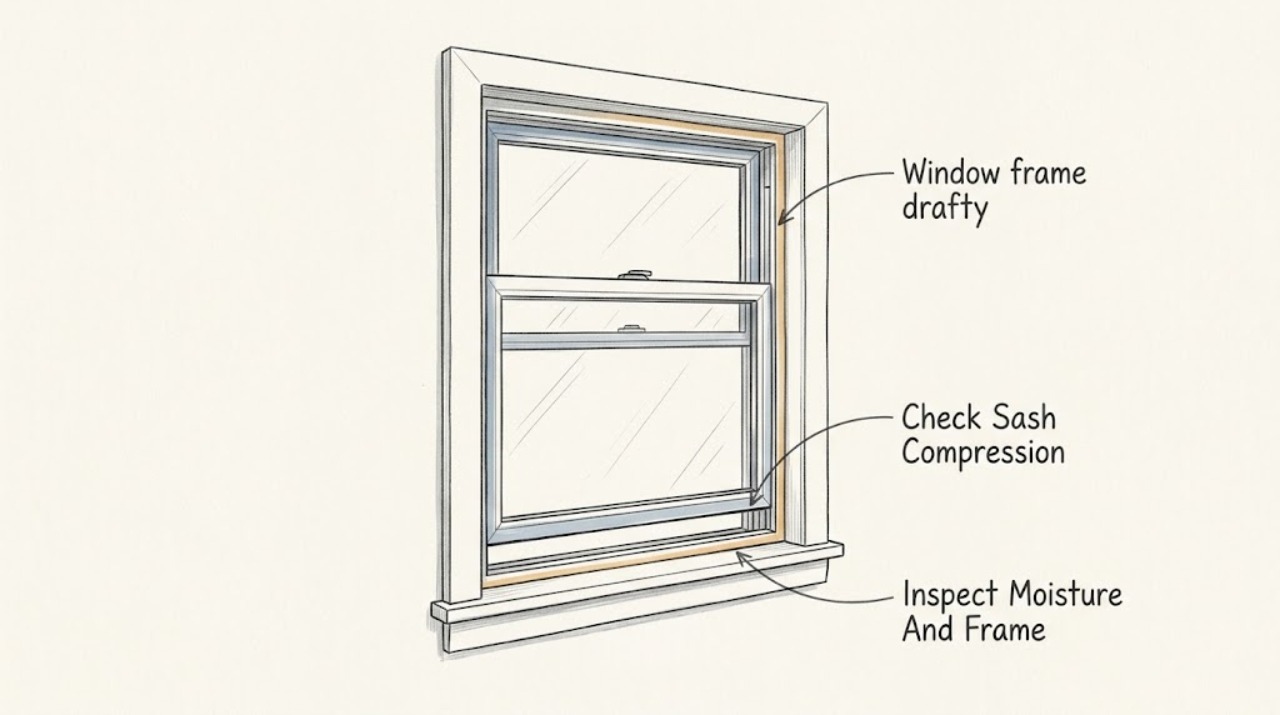
Window frame drafty: What to Check and What to Do Next
First locate where air moves around the closed window: the moving sash, the fixed frame and trim, or the nearby wall. A paper test can show whether the sash is losing compression, while a careful tissue or smoke observation can show a perimeter path; do not use an open flame.
-
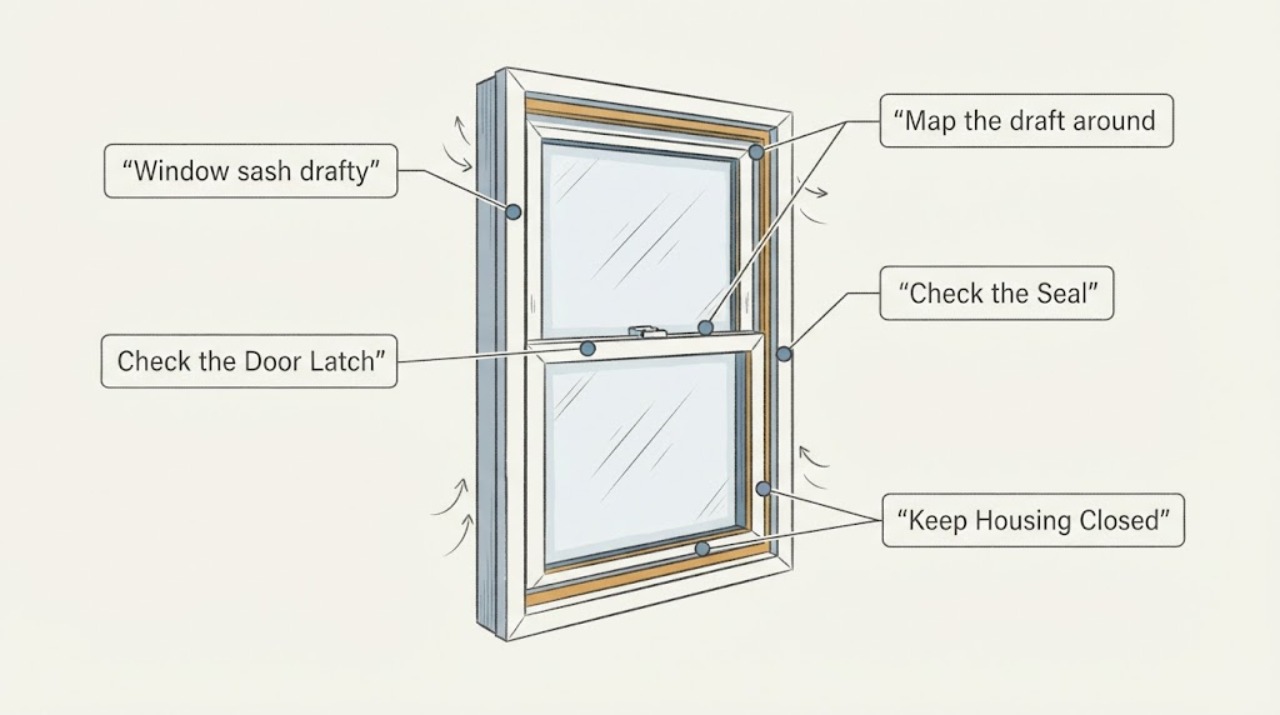
Window sash drafty: What to Check and What to Do Next
A draft at a closed window sash usually comes from an air path at the meeting rail, side stops, weatherstripping, lock-side gap, or surrounding frame—not proof that the glass itself is leaking. Close and latch the sash, use a paper or tissue check to locate movement, and inspect visible seals without removing trim or glass.
-
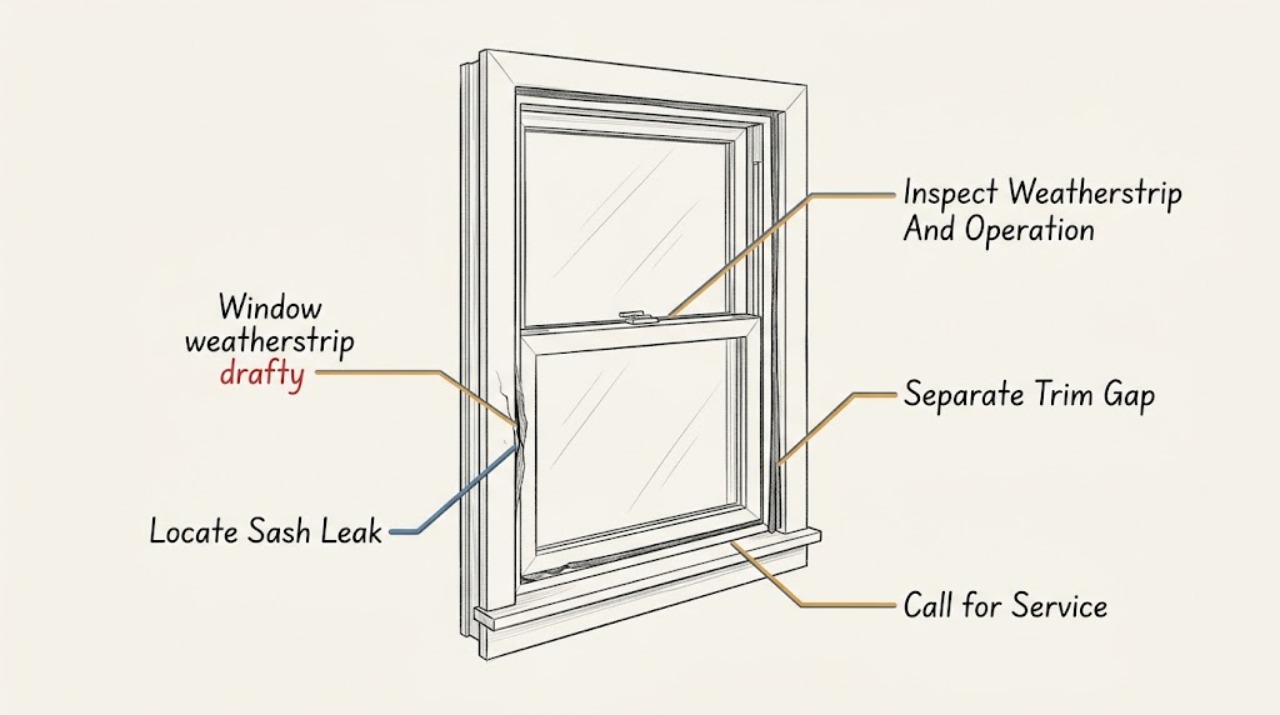
Window weatherstrip drafty: What to Check and What to Do Next
A draft around a closed window usually comes from a compressed, missing, damaged, or incorrectly fitted weatherstrip, but the air may also be entering around the fixed trim or through a larger installation gap. First locate the leak with a safe paper check and inspect the sash, meeting rail, latch side, corners, and fixed trim.