
On this page
Start here
Quick answer
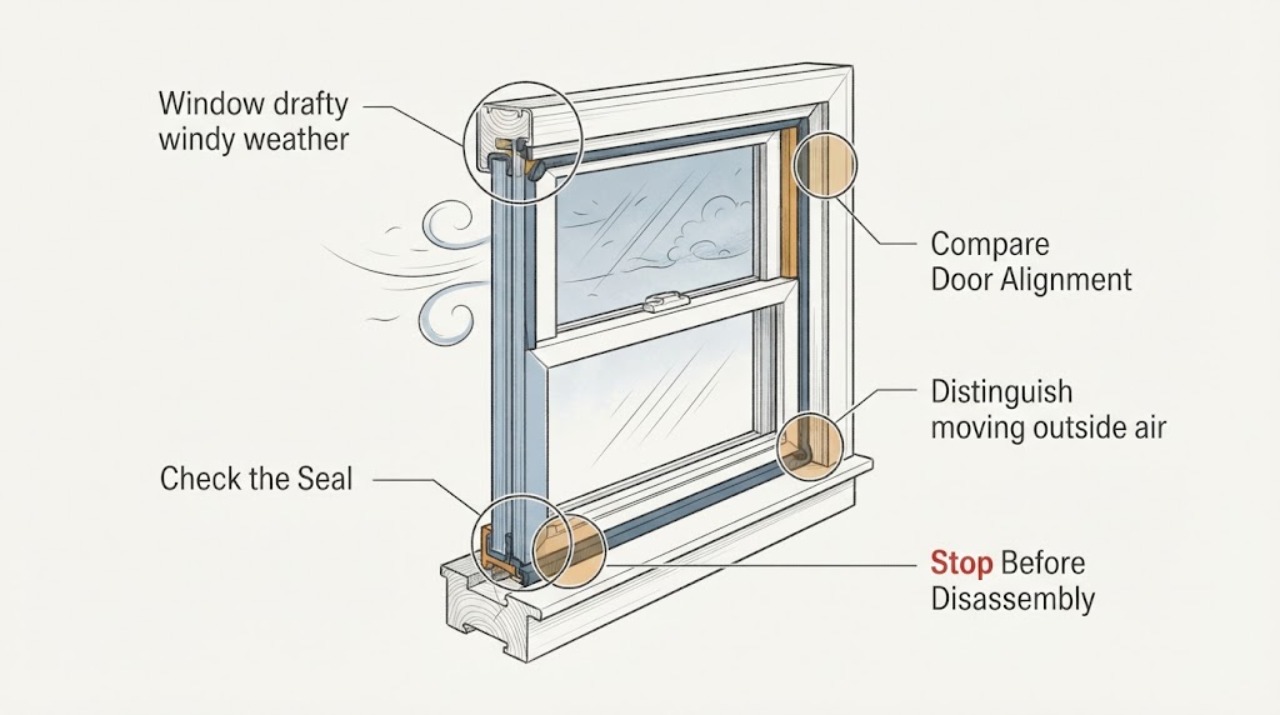
A window that feels drafty only when it is windy may have a loose sash, worn weatherstripping, a gap between the frame and rough opening, or a failed exterior flashing or seal; sometimes the sensation is a cold-glass downdraft rather than outside air entering. With the window closed and latched, use a thin strip of paper to compare the seal around the sash and inspect visible trim for gaps, dust tracks, dampness, or peeling paint. Note whether air moves at the sash, trim, wall, or glass surface, and whether wind-driven rain is also entering. Use only normal adjustments or manufacturer-approved weatherstripping that fits the window; do not force a sash, remove complicated trim, block weep paths, or seal over drainage openings. Call a window or building-envelope professional for water entry, rot, a loose frame, failed insulated glass, lead-paint concerns, or a leak that remains after a visible seal check.
Work through in order
Diagnostic checks
Use only checks that match the exact appliance or system and its official guide.
-
Check 1
With the window fully closed and latched during windy conditions, hold a narrow strip of paper at the meeting line of the sash and frame, then compare the corners, lock side, hinge side, and bottom edge without forcing the sash.
Expected result: The paper is held firmly around the perimeter, slips easily at one section, or the sash visibly moves or rattles when a gust hits.
Next step: Record the exact section and check the visible weatherstrip and latch for damage. Use only the window maker's documented adjustment or replacement guidance; do not bend the frame or add material that prevents the sash from closing.
Why this matters
Why: A loose section or movable sash points toward worn weatherstripping, a latch or adjustment issue, or a distorted sash. A firm paper test makes a moving-sash leak less likely, though air may still enter around the frame or through concealed construction.
-
Check 2
Use a flashlight to inspect the interior trim, sill, jambs, and nearby wall for visible gaps, cracked sealant, dust tracks, peeling paint, dampness, staining, or a musty odor; compare the windy side of the room with another window.
Expected result: Air movement or dust is concentrated at the trim-to-wall joint, the sill is damp or stained, paint is peeling, or the trim looks intact and dry.
Next step: Photograph the location and keep the area dry while arranging an assessment if water or damage is present. Do not remove trim, insert insulation into an unknown gap, or cover a damp mark before its source is identified.
Why this matters
Why: A trim-to-wall draft points toward an air-seal gap at the rough opening rather than a simple sash problem. Dampness, staining, or odor raises concern for water entry or concealed wall damage. A dry intact trim shifts attention to the sash seal, cold-surface effect, or another envelope leak.
-
Check 3
Distinguish moving outside air from a cold-surface sensation by feeling near the sash and frame without touching wet glass, and by observing whether the draft-like movement is strongest beside the glass, at the perimeter, or below the window.
Expected result: Air movement is localized at a gap or sash edge, the glass is cold but no perimeter movement is found, or condensation or frost appears on the interior surface.
Next step: Address the identified layer only: check the sash seal for a perimeter leak, or improve room humidity and window performance with professional advice when the glass surface is the main clue. Do not seal over glass drainage or ventilation features.
Why this matters
Why: Localized perimeter movement supports air infiltration. A cold glass surface with no edge leak can create a downward convection pattern that feels drafty. Interior condensation or frost indicates a moisture and surface-temperature issue and does not by itself prove a failed weatherstrip.
-
Check 4
From indoors and from a safe ground-level exterior position, inspect the sill, corners, exterior trim, and visible weep openings for wind-driven rain, pooled water, blocked drainage, failed joints, or gaps between the window and cladding; do not climb or remove exterior trim.
Expected result: Water enters during wind-driven rain, the sill or wall is damp, a weep opening is blocked, or no water evidence is present despite an air draft.
Next step: Keep drainage openings clear only of loose surface debris that is reachable without tools, and arrange a window or building-envelope professional for any water entry, failed exterior joint, or wall damage. Do not caulk over weeps or use exterior sealant as a substitute for missing flashing.
Why this matters
Why: Rain entry or dampness points toward flashing, cladding integration, or drainage failure in addition to any air leak. A blocked weep path can change where water exits. No water evidence makes an air-seal or comfort issue more likely but does not rule out a concealed flashing defect.
-
Check 5
Identify the window type and visible seal material, and check whether the sash closes squarely, the lock engages normally, and the weatherstrip is continuous rather than compressed, torn, or missing; use the manufacturer's instructions if a normal adjustment is available.
Expected result: The weatherstrip is damaged or missing, the latch does not pull the sash evenly, the frame is bowed or loose, or the visible seal is intact and the window operates normally.
Next step: Replace weatherstripping only with a type and profile confirmed for that window, or use the documented adjustment without over-tightening. Have a professional assess a loose or distorted frame, failed glass seal, or a window that still leaks after the approved adjustment.
Why this matters
Why: Damaged weatherstrip or uneven latch pressure can explain a wind-sensitive sash leak. A bowed or loose frame suggests installation or structural movement beyond a simple seal replacement. An intact operating seal keeps the rough opening, cold-surface effect, and other envelope leaks in consideration.
Use your observations
Decision map
Find the observation that best matches what you see, then follow the next safe action.
-
PATH 01Next step
What you see
Do this next
Follow the window maker's normal latch or adjustment instructions and identify the correct weatherstrip profile before replacing anything. Escalate if the sash is distorted, the frame moves, or the draft remains after the approved adjustment.
-
PATH 02Next step
What you see
Do this next
Have the trim-to-jamb and rough-opening seal assessed. Use a professional when trim is complex, the frame may be disturbed, or old paint could contain lead; do not pry the trim off as a first test.
-
PATH 03Next step
What you see
Do this next
Do not add random sealant to the glass or frame. Improve comfort with appropriate room-humidity and window-performance advice, and have a professional assess failed insulated glass or a persistently cold unit.
-
PATH 04Next step
What you see
Do this next
Stop cosmetic sealing and arrange a window or building-envelope professional to inspect flashing, drainage, and the wall opening. Protect interior finishes from a safe location and do not block weep openings.
-
PATH 05Next step
What you see
Do this next
Stop forcing or modifying the window and call a qualified window professional. Keep the opening closed if it can latch safely, and document the model or window type for the assessment.
Helpful context
Understand the symptom
A draft feeling is not always an open gap
In cold, windy weather, moving air can enter through ineffective weatherstripping or through the joint between the window unit and the wall's rough opening. But a cold glass surface can also cool nearby room air, causing it to fall and feel like a draft even when the sash is sealed. Find the exact location and direction of movement before buying sealant or replacing the window. If the same window also admits rain, the problem is not merely comfort: window flashing and the wall drainage plane may be allowing water into the wall.
Keep the first checks reversible
A closed-window paper test, a flashlight, and a visual inspection of the sash, frame, trim, and sill can identify the likely layer without disturbing the assembly. Weatherstripping on a moving sash is different from the air seal behind fixed trim, and neither should be confused with exterior flashing or weep drainage. Avoid pry bars, open flames, drilling, or caulking over drainage openings. If trim must be removed, the paint is old, or the frame is distorted, have a qualified professional handle the work.
Only after diagnosis
Potential parts
- window sash weatherstripping
Consider this only when a paper or visual check identifies a damaged or missing sash seal and the window maker's profile or instructions can be confirmed.
Match the window type, sash channel, seal profile, and compression requirements; a generic strip can prevent latching or interfere with drainage. - window and door low-expansion air-sealing foam or backer rod
Consider this only when a professional or an exposed, well-understood rough-opening gap is confirmed behind the trim; it is not a remedy for a moving sash or exterior water-management failure.
Use only a material designated for window and door openings and preserve the frame shape, flashing, and drainage path; complex or painted trim may require professional work. - replacement insulated window unit
Consider this only when the frame, glazing seal, or window performance is confirmed beyond a weatherstrip or air-seal repair.
Confirm opening dimensions, operation, egress, climate performance, flashing details, and installation requirements before ordering; do not infer fit from visible glass size alone.
When checks do not resolve it
Need a professional?
Call a qualified window or building-envelope professional for wind-driven rain, damp or soft trim, peeling paint with an unexplained source, a loose or bowed frame, failed insulated glass, a blocked or damaged drainage path, or a draft that remains after the manufacturer's documented adjustment. Use extra caution in homes with older paint before removing trim, and seek lead-safe advice when paint may be disturbed. Do not climb to inspect the exterior, pry trim or siding, drill into the frame, use an open flame to find a leak, or caulk over weep openings.
Common questions
FAQ
Why does my window feel drafty only when it is windy?
Wind increases the pressure difference across a loose sash, worn weatherstripping, or a gap around the window frame, making a small opening noticeable. A cold glass surface can also create a downward air movement that feels like a draft, so locate the movement at the sash, trim, or glass before choosing a repair.
How can I check a window seal without taking the window apart?
Close and latch the window, then compare how firmly a narrow paper strip is held around different sash edges. Also look for visible trim gaps, dust tracks, dampness, or peeling paint. Do not pry off trim or force the sash as a test.
Should I caulk around a drafty window?
Only seal a confirmed, accessible air gap with a material and method appropriate for that window layer. Sash weatherstripping, the rough-opening air seal, and exterior flashing are different components; caulk should not block weep openings or substitute for missing water-management details.
When should a drafty window be inspected by a professional?
Arrange professional help for wind-driven rain, damp or soft trim, a loose or bowed frame, failed insulated glass, unexplained peeling paint, a blocked drainage path, or a draft that remains after the documented weatherstrip adjustment. Use lead-safe advice before disturbing old paint or complex trim.
Read the exact guide
Official sources
- Window FlashingU.S. Department of Energy Building Science Education · Supports the windy-weather branch involving wind-driven rain, damp walls, flashing, and drainage paths around the window opening.
- Measure Guideline: Energy-Efficient Window Performance and SelectionU.S. Department of Energy Building America Program · Supports distinguishing cold-surface convection from direct air infiltration and considering poor installation or ineffective weatherstripping as separate causes.
- Sealing Behind Window & Door Trim ProjectENERGY STAR · Supports the paper test, visible-gap and paint clues, conditional weatherstripping or rough-opening sealing, and professional or lead-paint boundaries.
- Rough Opening Flashing: Air SealingU.S. Department of Energy Building Science Education · Supports distinguishing frame-to-wall air leakage from sash leakage and the need for window-specific low-expansion sealing materials when a rough-opening gap is confirmed.
- Locating Air LeaksENERGY STAR · Supports treating drafts as air-leak clues while checking other hidden envelope leakage locations instead of assuming the window sash is the only source.
Community feedback
Share a repair observation
Share a plain-text repair observation. Accepted observations are published automatically; this page may take a moment to update.