
On this page
Start here
Quick answer
Condensation on the room side of a window usually means humid indoor air is meeting glass that is colder than its dew point. First identify whether the moisture is on the inside, outside, or between panes, then note the weather, room, and activities that precede it. Dry the glass and sill, use kitchen or bath exhaust that vents outdoors, reduce excess indoor moisture, and keep warm air moving across the window. Exterior condensation can be normal on a hot, humid day, while persistent interior water, frost, mold, staining, soft trim, or moisture that appears between sealed panes needs a window or building professional to check the glazing, air sealing, insulation, ventilation, and any hidden water source. Do not drill the frame, remove sealed glass, or disturb wall materials to chase the moisture.
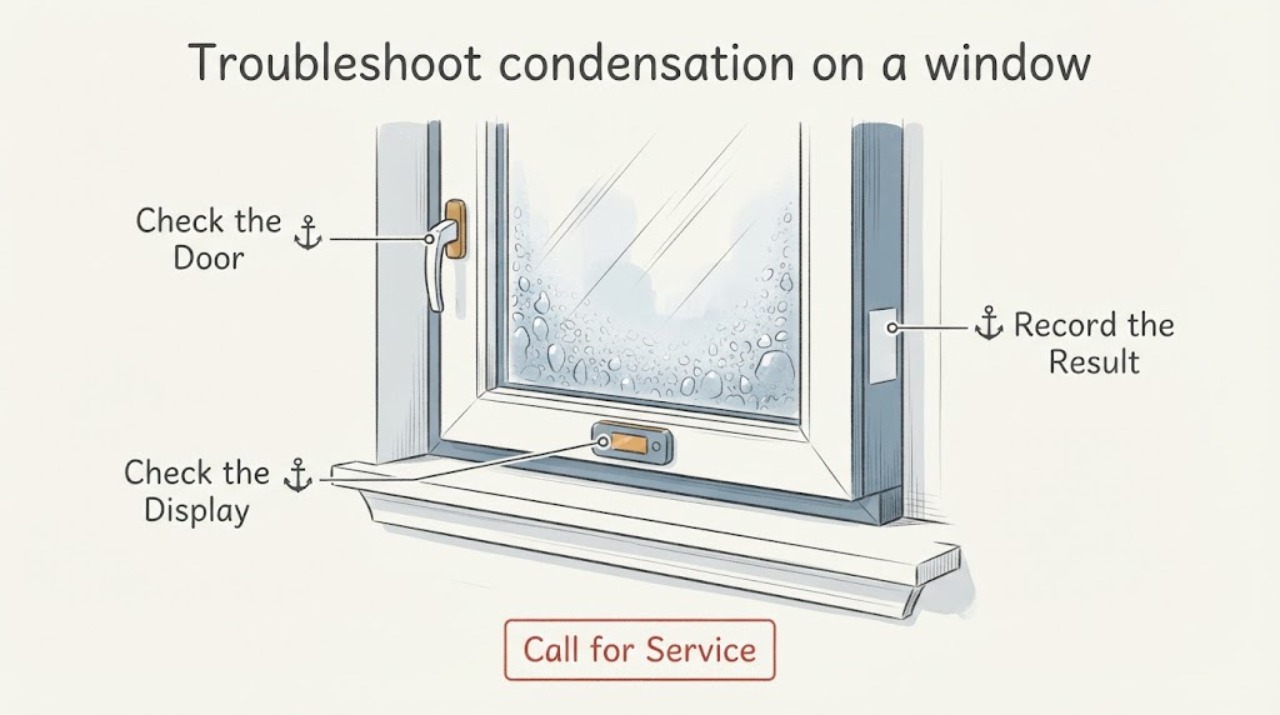
Work through in order
Diagnostic checks
Use only checks that match the exact appliance or system and its official guide.
-
Check 1
Wipe one affected pane and identify where moisture returns: the room side, the outdoor side, or the space between panes. Note whether it appears only during cold weather, after bathing or cooking, during indoor clothes drying, or on a hot humid day with air conditioning running.
Expected result: Room-side droplets or frost during cold weather support indoor humidity meeting a cold surface. Outdoor droplets during hot, humid weather can be exterior condensation. Moisture between panes is not removable by wiping the room surfaces and needs a different window assessment.
Next step: Record the side, weather, room, and trigger before changing anything. Do not drill, pry apart, or remove the window sash to inspect between panes.
Why this matters
Why: The side and timing determine whether to begin with indoor moisture, seasonal exterior conditions, or glazing evaluation.
-
Check 2
Use a room humidity indicator if available and compare its reading with the room where condensation is worst. Check again after a shower, cooking, or indoor clothes drying, and note whether the moisture collects on several cold surfaces or only one window.
Expected result: Higher indoor humidity during the event supports moisture generation as a contributor; condensation on several cold surfaces points to a room or building moisture condition. A normal-looking reading with one persistently wet window keeps cold glass, air leakage, insulation, or a local water source in the diagnosis.
Next step: Reduce moisture sources and use exhaust ventilation or dehumidification as appropriate. If the window remains wet or the wall or trim is damp, arrange a building or window inspection.
Why this matters
Why: Humidity evidence tells you whether ventilation or dehumidification is likely to change the symptom, but it does not rule out a cold frame or hidden leak.
-
Check 3
Run the bathroom and kitchen exhaust fans during moisture-producing activities and confirm, without opening ceilings or ducts, that they are intended to vent outdoors. Keep window coverings open enough for room air to reach the glass and move furniture away from the sill or exterior wall.
Expected result: If droplets decrease when moisture is exhausted and warm air reaches the pane, indoor humidity and restricted air movement were contributing. If the fan only recirculates or the window remains wet despite ventilation, the moisture source or window surface may need further evaluation.
Next step: Continue the low-risk moisture-control changes and dry the sill. Do not seal over a drain path, block a required vent, or remove trim to reach concealed gaps.
Why this matters
Why: Ventilation and air movement can lower the water vapor available to condense and raise the glass surface temperature, but they cannot repair a failed seal or leaking envelope.
-
Check 4
Inspect the accessible glass edge, frame, sill, and adjacent wall for pooled water, staining, peeling paint, soft wood, frost, mold-like growth, or a draft that changes with wind or rain. Look from the room and exterior only where safely reachable; do not climb or remove window components.
Expected result: Dry droplets with no material damage can be a surface-condensation problem. Staining, soft trim, mold, or water that appears after rain suggests a leak or concealed moisture source; frost or a strong local draft suggests a cold or air-sealing condition.
Next step: Dry the area and photograph the evidence. Stop investigating if the wall is soft, mold is extensive, water is actively entering, or access requires disturbing the assembly; call a qualified window or building professional.
Why this matters
Why: Damage and weather correlation distinguish ordinary winter droplets from a building-envelope or water-intrusion problem.
-
Check 5
After reducing indoor moisture and improving airflow for one normal weather period, compare the affected window with nearby windows of similar exposure. Record whether only one frame, one pane, or the entire room continues to collect water, and whether the moisture is still between panes.
Expected result: A single persistently wet window despite similar room humidity points toward a local glazing, frame, insulation, or air-sealing condition. Widespread condensation that tracks weather and moisture activities points toward a room-wide humidity or ventilation issue.
Next step: Provide the comparison, photos, humidity notes, and weather context to the appropriate professional. Do not order replacement glass or apply permanent sealant before the cause and assembly are confirmed.
Why this matters
Why: The comparison identifies whether the next professional should focus on one window assembly or the building’s moisture control.
-
Check 6
If condensation has made the sill or wall wet, dry reachable surfaces promptly and check again soon for returning moisture or odor. Do not disturb suspected mold behind wallpaper, trim, drywall, or insulation just to identify its extent.
Expected result: A dry surface that stays dry after moisture control is reassuring; returning wetness, mold odor, visible growth, or damaged materials indicates that the moisture source has not been resolved.
Next step: Arrange an experienced building or moisture professional for persistent or concealed moisture. If active water entry is present, stop using the area as needed and address the leak before cosmetic cleanup.
Why this matters
Why: Drying the surface limits damage while the recurrence pattern determines whether professional moisture or mold investigation is needed.
Use your observations
Decision map
Find the observation that best matches what you see, then follow the next safe action.
-
PATH 01Next step
What you see
Condensation is on the interior glass during cold weather and increases after showers, cooking, or drying clothes indoors.
Do this next
Dry the pane and sill, run exhaust fans outdoors, reduce indoor moisture, and keep warm air moving across the window. Escalate if water persists or damages the trim.
Why this path and its safety boundary
Why it matters: Indoor moisture meeting cold glass is the leading explanation.
-
PATH 02Next step
What you see
Condensation appears on the exterior of the window on a hot, humid day while indoor air conditioning is running.
Do this next
Monitor whether it clears as outdoor humidity or indoor cooling conditions change. Call a window professional if water enters the frame or the symptom is accompanied by damage.
Why this path and its safety boundary
Why it matters: Outdoor condensation can occur when humid outdoor air meets glass cooled from inside and is not necessarily a window failure.
-
PATH 03Next step
What you see
Moisture remains between panes or one window stays wet after room humidity and airflow are controlled.
Do this next
Have a qualified window or building professional inspect the assembly. Do not remove sealed glass, drill the frame, or inject material into the space between panes.
Why this path and its safety boundary
Why it matters: The issue is localized to the glazing or frame assembly, or to a concealed thermal or air-sealing condition; room ventilation alone may not solve it.
-
PATH 04Next step
What you see
The sill or adjacent wall is stained, soft, moldy, actively wet, or repeatedly damp after rain or snow.
Do this next
Dry what is safely reachable, stop disturbing the assembly, and arrange professional moisture or window inspection. Address active water entry before cosmetic repairs.
Why this path and its safety boundary
Why it matters: A leak, concealed condensation, or building-envelope moisture problem may be causing material damage.
-
PATH 05Next step
What you see
There is heavy frost, a window or door is freezing or sticking shut, a strong draft is present, or the source is unclear and recurring.
Do this next
Stop scraping or forcing the window and seek a qualified window or building professional. Use ordinary ventilation and moisture reduction only while keeping the affected area dry and safe.
Why this path and its safety boundary
Why it matters: Persistent condensation can reflect high humidity, a very cold surface, air leakage, insulation problems, or concealed moisture and may damage the frame or wall.
Helpful context
Understand the symptom
Start with the side of the glass
Water on the inside of the glass is usually a moisture-and-surface-temperature problem: humid indoor air cools at the window and releases water. Water on the outside can form when warm, humid outdoor air meets glass cooled by indoor air conditioning. Moisture between panes cannot be wiped from either room surface and should be documented for a window professional rather than treated as ordinary room humidity.
Control moisture without trapping it
Dry visible water promptly, use exhaust fans that discharge outdoors during showers and cooking, and use a dehumidifier or air conditioning when appropriate. Keep curtains, blinds, and furniture from blocking warm air at the glass. A brief reduction in droplets is useful evidence, but it does not prove that a wet wall, leaking frame, or building-envelope defect has been fixed.
Treat recurring water as a building issue
Ongoing condensation can damage sills and frames and can signal moisture inside a wall or attic assembly. Frost around a window, soft or stained trim, peeling finishes, mold odor, or water that returns after the room humidity is controlled justifies a professional inspection. Do not open a wall or remove glazing yourself; hidden moisture investigations can disturb contaminated or damaged materials.
Only after diagnosis
Potential parts
- window perimeter weatherstripping or seal
Consider this only after inspection confirms an accessible perimeter air leak or worn weatherstripping; surface condensation caused by high indoor humidity will not be fixed by sealing an unrelated edge.
Confirm the window type, frame profile, opening function, drainage path, and manufacturer guidance before fitting a seal. - insulated glass unit or window sash
Consider replacement only when a window professional confirms persistent moisture between panes or a failed, damaged glazing assembly rather than a room humidity or exterior condensation condition.
Verify the exact opening, glass configuration, frame system, safety requirements, and installation details before ordering or replacing glazing. - window or wall insulation and air-sealing material
Consider this only when an inspection finds a cold frame, missing perimeter insulation, or air leakage that keeps the interior surface below the dew point; do not use it to conceal active water entry.
A professional should select the material and installation location so drainage, ventilation, movement, and the existing wall assembly are not blocked.
When checks do not resolve it
Need a professional?
Arrange service when condensation is localized and persistent, appears between panes, returns after drying and ventilation, or has caused damage, mold, frost, or active leakage.
Common questions
FAQ
Why is water forming on the inside of my window?
Humid indoor air can condense when it reaches glass colder than its dew point, especially during cold weather. Showers, cooking, indoor clothes drying, and poor air movement can add to the moisture; dry the glass and improve ventilation while watching for recurring damage.
Is condensation on the outside of a window normal?
It can be normal on a hot, humid day when indoor air conditioning cools the outer glass below the outdoor dew point. Monitor it for water entering the frame or damage, which needs a window assessment.
Will opening a window fix condensation?
Ventilation can reduce indoor moisture when outdoor conditions are suitable, and exhaust fans or dehumidification may help. If condensation returns despite reasonable moisture control, the window surface, frame, insulation, air sealing, or a hidden water source should be inspected.
When should I call someone about window condensation?
Arrange professional help for moisture between panes, persistent wetness, frost that freezes the window, active leaks, soft or stained trim, mold or mold odor, or condensation that returns after drying and humidity control. Do not open a wall or remove sealed glass yourself.
Read the exact guide
Official sources
- Managing Indoor Humidity and Ventilation in Cold WeatherPacific Northwest National Laboratory, U.S. Department of Energy Building America Solution Center · Used for recurring condensation or frost as a possible building-moisture clue, damage to sills and frames, ventilation, humidity sources, and professional investigation boundaries.
- What are the main ways to control moisture in your home?U.S. Environmental Protection Agency · Used for the condensation mechanism, indoor humidity sources, exhaust ventilation, dehumidification, air circulation, and cold-surface measures.
- Residential Windows, Doors, & SkylightsENERGY STAR · Used for the interior and exterior condensation distinction, window surface temperature, air leakage, window coverings, and moisture-control measures.
- A Brief Guide to Mold, Moisture and Your HomeU.S. Environmental Protection Agency · Used for promptly drying condensation, reducing humidity, ventilation, insulating cold surfaces, and escalating persistent or hidden moisture.
Community feedback
Share a repair observation
Share a plain-text repair observation. Accepted observations are published automatically; this page may take a moment to update.