
Repair problem
Condensation Troubleshooting Guides
Published FixGraph guidance for diagnosing and responding to condensation.
Matching published guides
Choose a guide that matches the service, equipment, and conditions you are seeing.
-
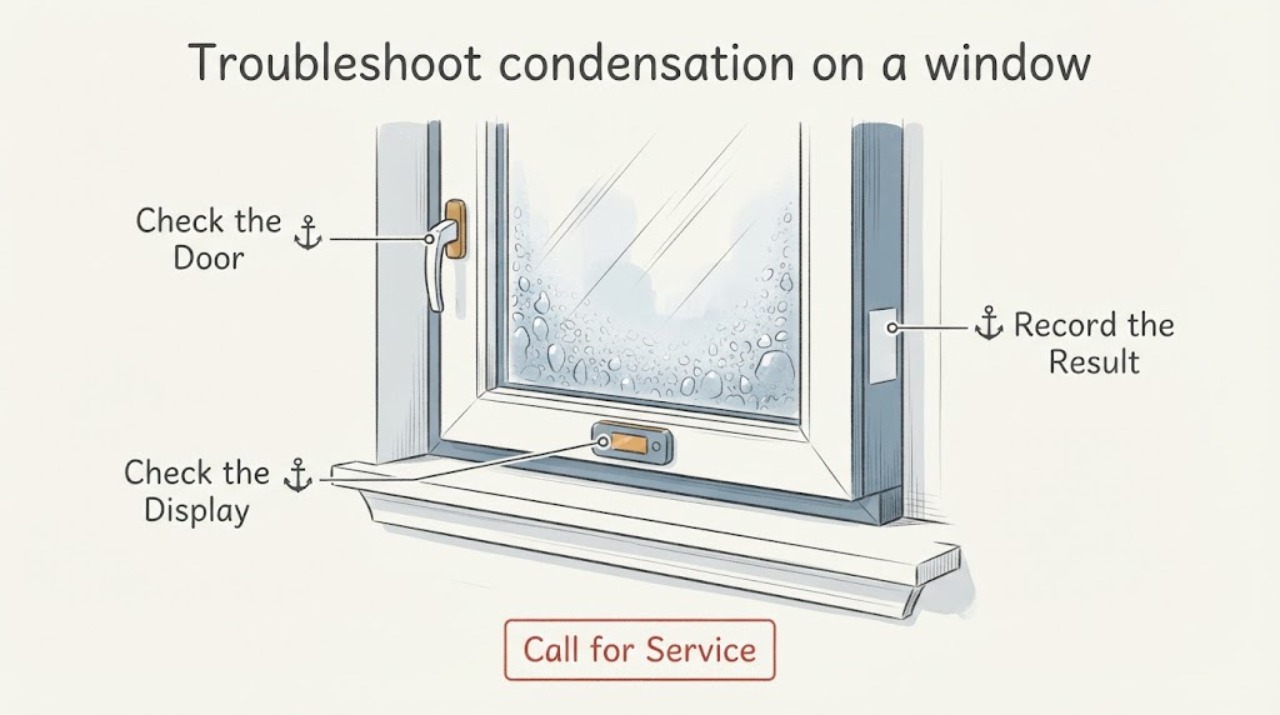
How to troubleshoot condensation on a window
Condensation on the room side of a window usually means humid indoor air is meeting glass that is colder than its dew point. First identify whether the moisture is on the inside, outside, or between panes, then note the weather, room, and activities that precede it.
-
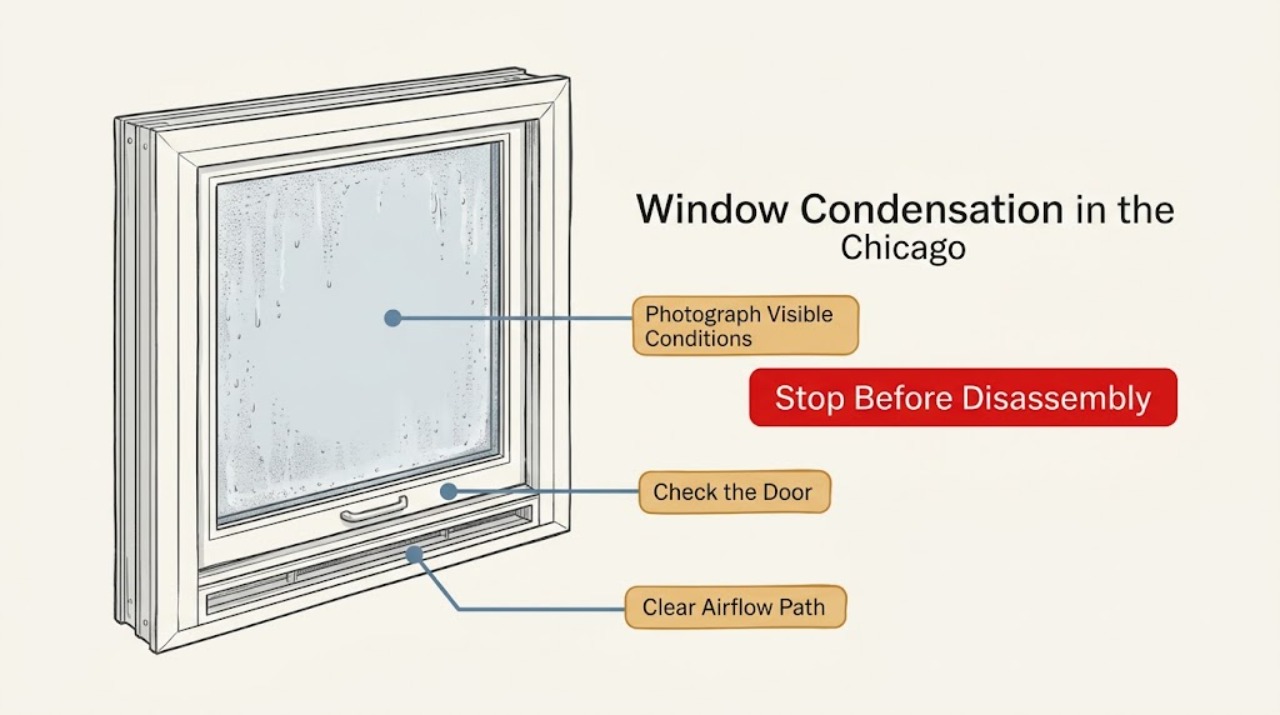
Window Condensation in the Chicago Suburbs: Identify the Surface Before You Act
First identify where the moisture is: on the room-side glass, on the exterior glass, or sealed between panes. In the Chicago suburbs, cold outdoor glass can make room-side condensation more likely when indoor humidity is high; measure indoor relative humidity, use kitchen and bath exhaust, keep air moving across the glass, and dry the sill promptly.
-
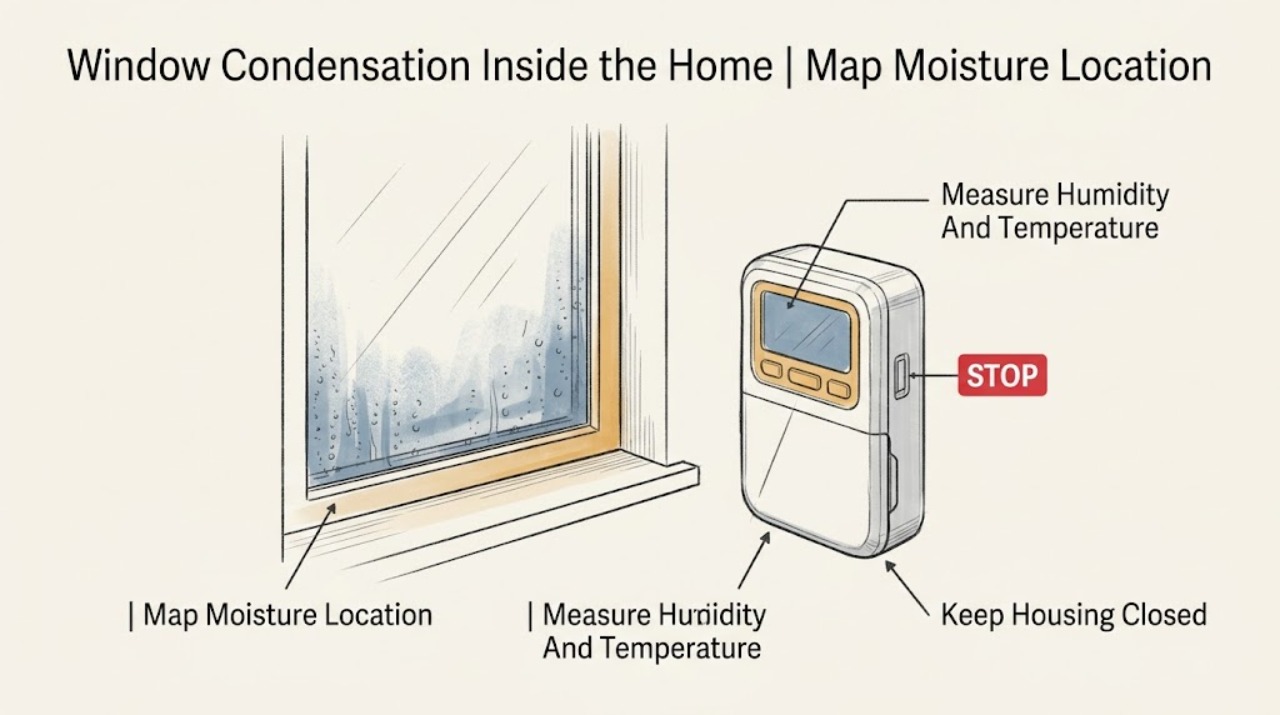
Window Condensation Inside the Home: Check Humidity, Airflow, and the Frame
Interior window condensation forms when humid indoor air meets a glass or frame surface that is below the air's dew point. First determine whether the moisture is on the room side, confined to the frame and sill, between insulating-glass panes, or arriving after rain.
-
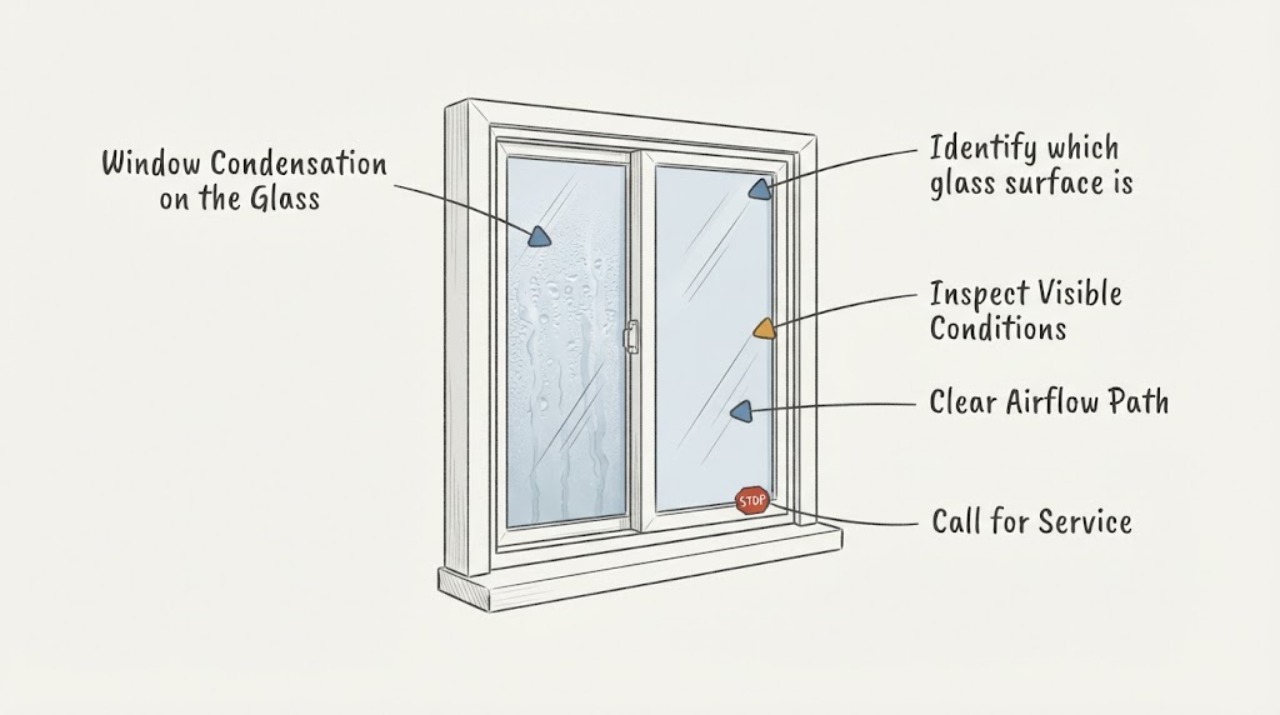
Window Condensation on the Glass: Find the Moisture Source and the Right Fix
Start by locating the water: on the room-side glass, on the exterior glass, or between sealed panes. Surface condensation usually forms when humid air meets cooler glass; the risk increases with indoor moisture, cold weather, low air movement, or coverings that trap cool air at the pane.
-
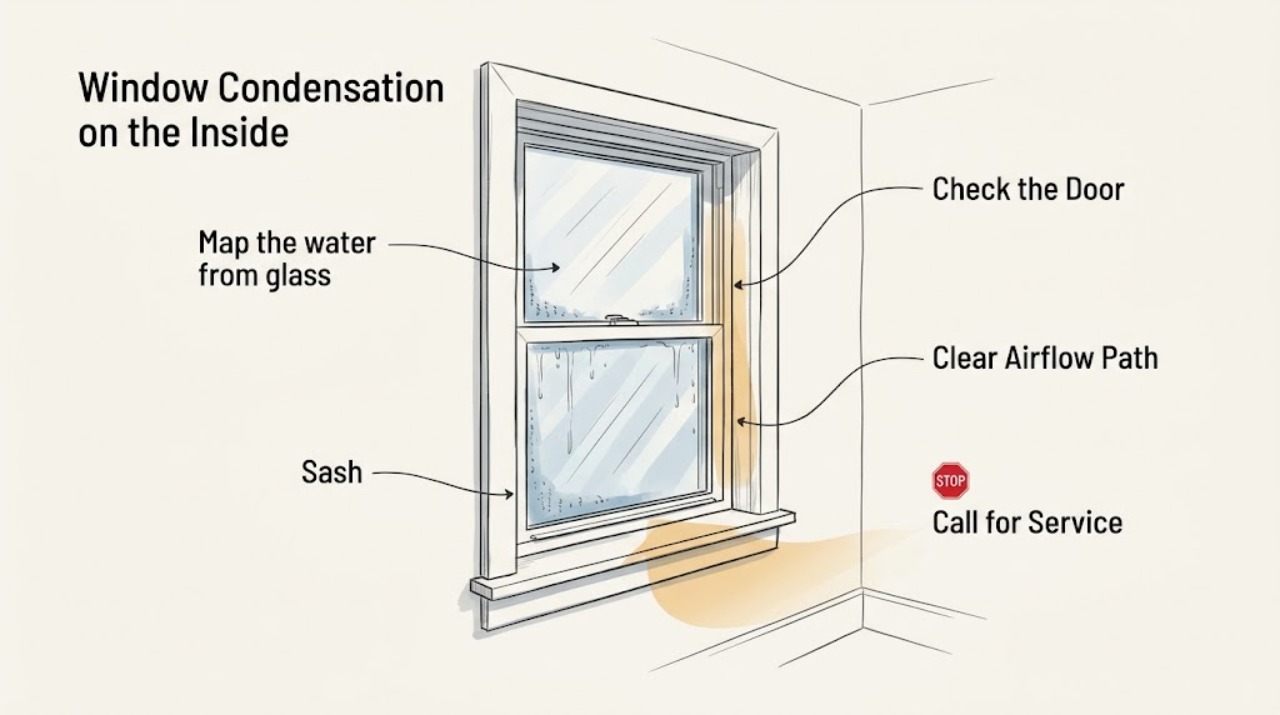
Window Condensation on the Inside Trim: Find the Moisture Path
Moisture on the inside trim or sill is not automatically a failed window. First dry the area and identify whether droplets form on the room-side glass and run down, collect only at a cold corner or edge, appear between sealed panes, or return after rain.
-
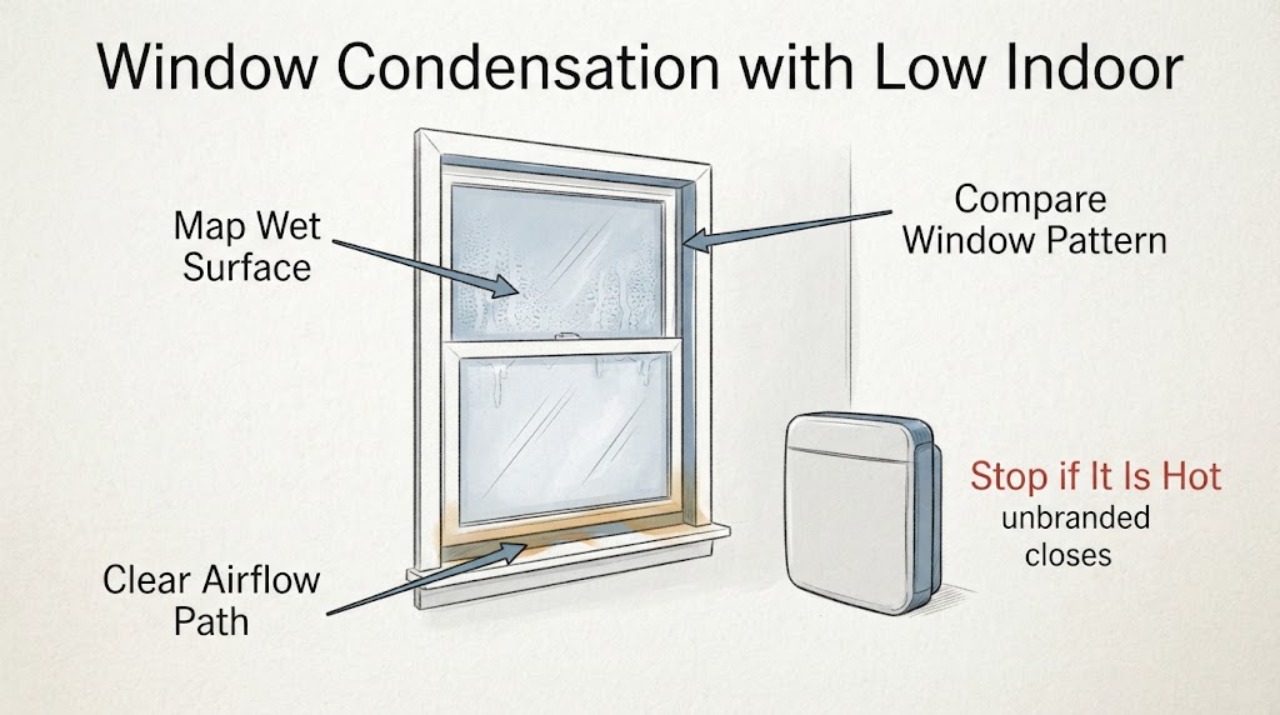
Window Condensation with Low Indoor Humidity: Find the Cold Surface or Air Leak
Low indoor relative humidity does not rule out condensation. Water or frost still forms when the local glass or frame surface falls below the room-air dew point, so one unusually cold pane, edge, frame, spacer, thermal bridge, or air leak can condense even when a room reading looks dry.
-
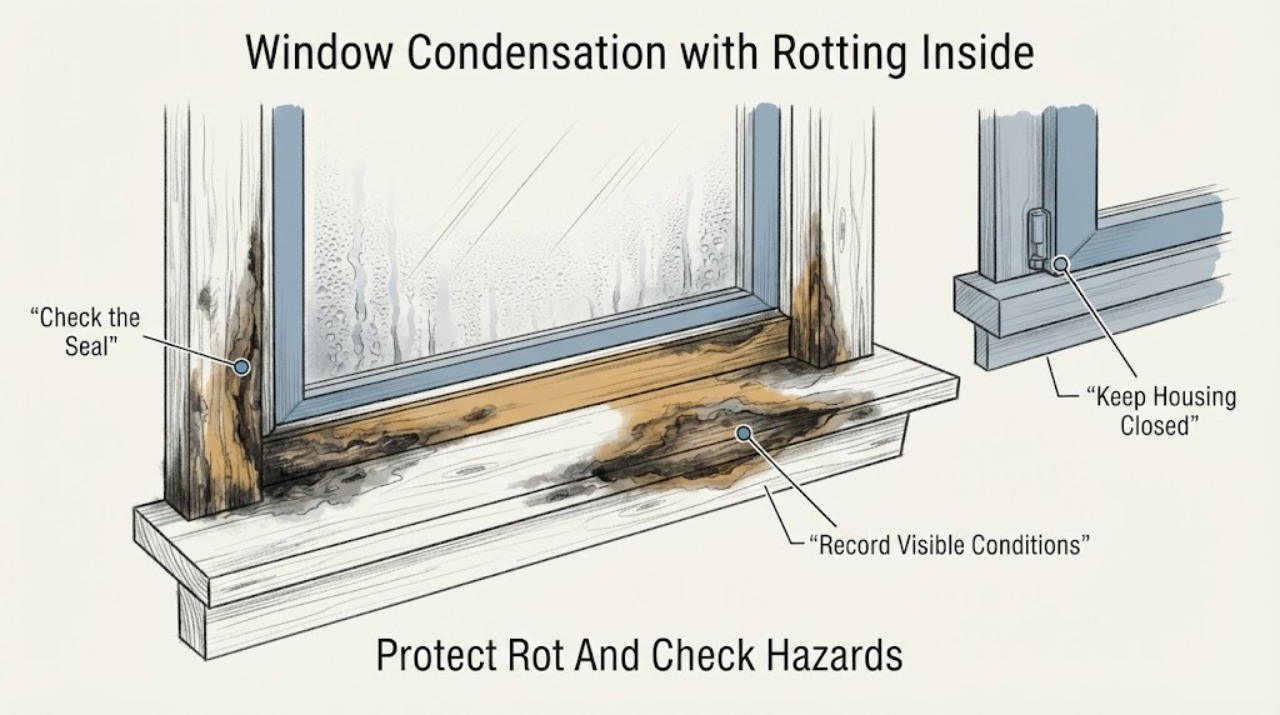
Window Condensation with Rotting Inside: Trace the Moisture Before Repairing the Frame
Rot inside a window opening is a moisture problem first and a cosmetic problem second. Determine whether water is forming on the room-side glass from humid air, trapped between sealed panes from a failed glass seal, or entering at the frame, sill, exterior sealant, flashing, or wall.
-
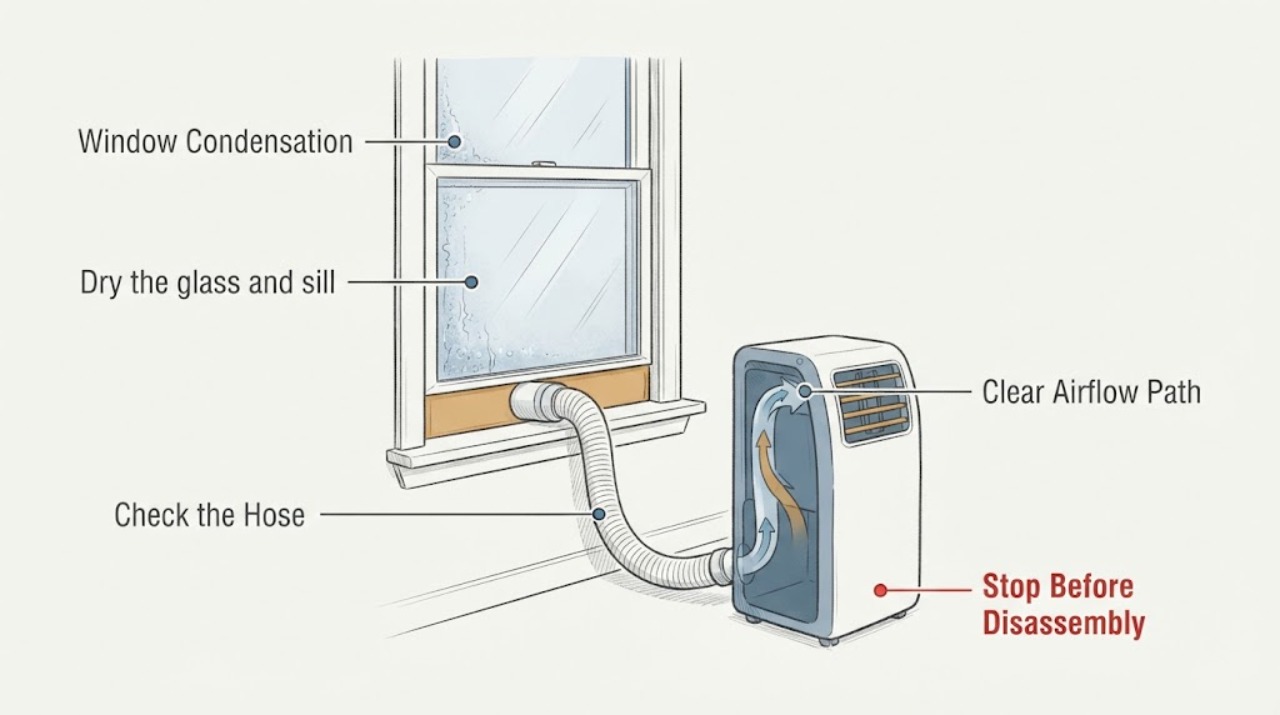
Window Condensation
Start by identifying where the water is: on the room side, outside, between insulated panes, or around the frame and sill. Room-side condensation usually means humid indoor air is meeting a colder glass or frame surface; outside condensation can be normal in warm, humid weather; moisture between panes usually indicates a failed insulated-glass seal.
-
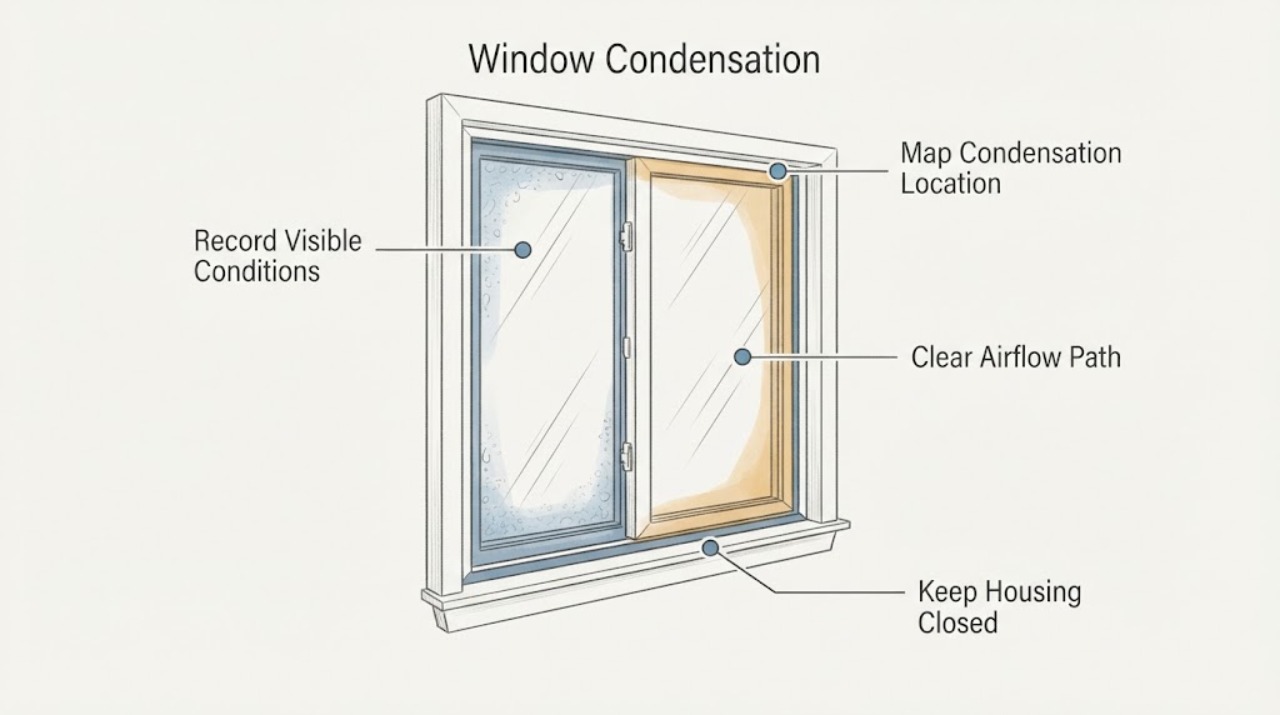
Window Condensation: Tell Humid-Air Moisture from a Glass or Seal Failure
First identify where the water is: on the room-side glass, on the outdoor glass, or between sealed panes. Room-side condensation usually means humid indoor air has reached a glass surface colder than its dew point, so record indoor humidity, improve exhaust from cooking, bathing, and laundry, keep air moving over the glass, and avoid blocking the window with tight coverings.