
On this page
Start here
Quick answer
First identify where the moisture is: on the room-side glass, on the exterior glass, or sealed between panes. In the Chicago suburbs, cold outdoor glass can make room-side condensation more likely when indoor humidity is high; measure indoor relative humidity, use kitchen and bath exhaust, keep air moving across the glass, and dry the sill promptly. Exterior condensation during a warm, humid period or after a cool night is usually a surface-weather effect. Fog that remains between insulated-glass panes points to a failed glass seal and needs a window or insulated-glass assessment, not a surface wipe. Check only accessible frame drainage or weep openings for dirt without blocking or drilling them. Stop and get professional help for persistent water intrusion, hidden dampness or mold, damaged or cracked glass, work at height, or water near outlets or other electrical equipment; never touch electrical equipment while standing in water.
Work through in order
Diagnostic checks
Use only checks that match the exact appliance or system and its official guide.
-
Check 1
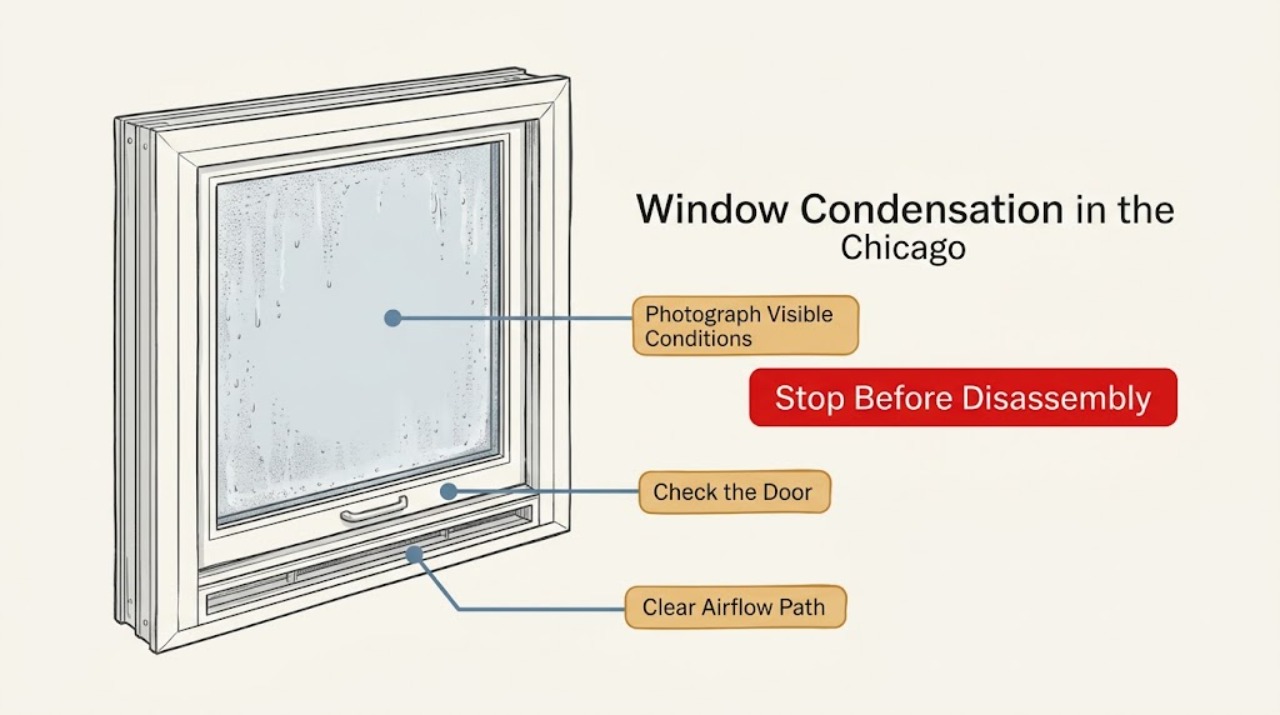
Photograph and mark the moisture location without climbing or removing trim. Look at both sides of the glass, the edge of the sash, the sill, and the frame; note whether the droplets wipe away from a reachable surface, appear only in the sealed space between panes, or return after rain or a temperature change.
Expected result: Moisture is on the room side, outside, visibly between panes, or on the frame/sill rather than the glass; or the glass is cracked, loose, or damaged.
Next step: For cracked, loose, or damaged glass, keep people away and arrange qualified glazing service. For between-pane fogging, record the affected sash and seek a window or insulated-glass assessment. For room-side or exterior moisture, continue with the humidity, airflow, and weather observation; for sill water, continue with the accessible drainage check.
Why this matters
Why: Room-side and exterior condensation are usually surface temperature and humidity phenomena. Moisture between insulating panes is associated with a failed seal. Sill or frame water can involve drainage, air leakage, or water intrusion. Damaged glass is a safety and weatherproofing issue, not a humidity experiment.
-
Check 2
For room-side condensation, measure relative humidity near the affected room with a hygrometer and note the indoor temperature, outdoor weather, recent cooking, showers, laundry drying, humidifier use, and whether the problem is worse in a bedroom, basement, or tightly closed room. Do not lower humidity so far that it creates a separate comfort or health problem; use the reading to guide the next change.
Expected result: Indoor humidity is consistently high or rises after moisture-producing activities; or humidity is moderate but one window or one frame remains wet while comparable windows stay dry.
Next step: If humidity rises with cooking or bathing, vent those sources to the outside and use appropriate dehumidification or HVAC controls. If humidity is not the differentiator, compare the affected window's glass edge, frame, latch/lock, visible weatherstrip, and nearby air movement with an unaffected window; do not remove the sash or wall finishes to chase a draft.
Why this matters
Why: EPA identifies condensation as a possible sign of high humidity and recommends keeping indoor relative humidity below 60 percent, ideally between 30 and 50 percent when practical. A single affected window despite similar room conditions suggests a colder surface, draft, insulation or installation difference, or a localized leak rather than room humidity alone.
-
Check 3
Improve safe room-side conditions for several normal heating or cooling cycles: run kitchen and bathroom exhaust when generating moisture, keep vents and interior air paths open, avoid pressing curtains or blinds tightly against the glass, and dry collected water from the reachable glass and sill. Open windows only when outdoor air and weather make that useful; do not use ventilation to conceal a leak or mold.
Expected result: Condensation decreases when moisture is vented and air reaches the glass, remains unchanged, or the sill stays wet and develops staining or musty odor.
Next step: Continue the moisture-source and airflow correction only when the glass and frame remain intact and accessible. If water persists, paint or wood swells, mold is visible, or a musty smell suggests hidden dampness, document the area and arrange building-envelope or mold/moisture assessment; do not open walls or disturb hidden mold casually.
Why this matters
Why: Reducing moisture and increasing air movement can reduce room-side condensation. Persistent wetness, staining, or musty odor indicates that moisture control alone has not solved the water problem and can allow material damage or mold growth.
-
Check 4
For exterior condensation, note the weather and timing: compare the outside pane with the room-side pane, observe whether it appears after a clear cool night or a warm humid day, and check whether it evaporates as the day warms. Do not use a ladder, pressure washer, abrasive tool, or aggressive scraping to remove exterior moisture.
Expected result: Haze or droplets occur only on the exterior and clear as outdoor conditions change; or the exterior remains wet, is accompanied by water entering the wall, or is actually trapped between panes.
Next step: For temporary exterior dew, monitor it and keep the sill and frame able to drain. If water enters the building, inspect only reachable exterior conditions from the ground and arrange a qualified window or building-envelope assessment. Treat trapped between-pane moisture as a seal-failure candidate rather than exterior dew.
Why this matters
Why: Exterior condensation can occur when the exterior glass is below the outdoor dew point, including after a warm day and cool night. It usually evaporates and does not by itself indicate a failed glass unit. Persistent water entry or between-pane haze is a different decision.
-
Check 5
From ground level or another stable, safe position, inspect the visible bottom sill and frame for designed weep or drainage openings, dirt, paint, caulk, leaves, or ice that could block an exit path. Do not drill new holes, seal designed openings, remove exterior cladding, or work from a ladder or roof to reach a high window.
Expected result: A designed opening is visibly blocked and reachable without height exposure; the opening is clear but water still pools; or the water is around the wall, trim, or interior finish rather than only the sill track.
Next step: If safely reachable, remove only loose surface debris using the window manufacturer's maintenance instructions; do not push debris deeper or alter the opening. If water remains, the window is high, access requires a ladder, or trim/wall materials are wet, stop and arrange qualified window or building-envelope service.
Why this matters
Why: Window drainage systems are intended to channel incidental water outward through designed openings. Blocked openings can contribute to pooling, but a clear opening with continuing water or wall wetness points to installation, flashing, seal, or envelope issues that need professional assessment.
-
Check 6
Check the stop conditions before any further cleaning or testing: is water reaching an outlet, switch, extension cord, HVAC/electrical equipment, or a concealed wall cavity; is anyone standing in pooled water; is there mold, ice pressure, broken glass, or a fall hazard? Do not touch wet electrical equipment or attempt to re-energize a wet area.
Expected result: Water is near electrical equipment or an occupant would need to stand in water; mold or hidden dampness is suspected; ice or glass damage is present; or the moisture is limited to a reachable, intact, non-electrical surface.
Next step: Keep people away, do not touch the wet equipment or switches, and arrange qualified electrical, window, building-envelope, or mold/moisture help as applicable. For an intact reachable surface with no electrical or structural warning, dry it promptly and continue only with the relevant humidity or location branch.
Why this matters
Why: Water near electricity can create shock and fire hazards. Persistent condensation can damage sills and wall finishes and support mold, while ice and damaged glass can add structural or injury risk. These conditions exceed a simple humidity adjustment.
Use your observations
Decision map
Find the observation that best matches what you see, then follow the next safe action.
-
PATH 01Next step
What you see
Droplets wipe from the room side and indoor humidity rises after cooking, bathing, laundry drying, or humidifier use.
Do this next
Vent moisture-producing activities to the outside, use suitable dehumidification or HVAC controls, keep air moving across the glass, and dry the sill promptly. Reassess the reading and the window after normal cycles rather than continuously wiping without reducing moisture.
-
PATH 02Next step
What you see
The moisture is only on the exterior and appears after a warm humid day, cool night, or other changing outdoor conditions.
Do this next
Treat it as exterior dew-like condensation if it clears as the day changes and no water enters the wall. Monitor the sill and drainage; arrange an assessment if it persists with water intrusion or is actually between panes.
-
PATH 03Next step
What you see
Fog or droplets remain between the panes of an insulated double- or triple-pane unit.
Do this next
Document the affected sash and arrange a qualified window or insulated-glass assessment. Surface cleaning and indoor humidity changes cannot dry the sealed cavity; do not drill the glass or dismantle the unit.
-
PATH 04Next step
What you see
Water pools in the sill, exits poorly after rain or thawing, or appears around the frame and interior finish.
Do this next
From a safe, ground-level position, check only designed drainage openings for loose debris according to the manufacturer's instructions. If openings are clear, the area is high, or wall/trim remains wet, stop and arrange a window or building-envelope assessment.
-
PATH 05Next step
What you see
The window has cracked or loose glass, ice pressure, visible mold, a musty hidden-moisture odor, or damaged/swollen frame or wall materials.
Do this next
Keep people away from the hazard and arrange qualified glazing, building-envelope, or mold/moisture service. Do not disturb hidden mold, scrape damaged glass, or use a ladder to investigate the upper window.
-
PATH 06Next step
What you see
Condensation or leakage reaches an outlet, switch, cord, HVAC/electrical equipment, or standing water.
Do this next
Do not touch wet electrical equipment, switches, or breakers and do not stand in the water. Keep clear and arrange qualified electrical and window/building-envelope help; use emergency assistance for immediate danger.
Helpful context
Understand the symptom
Why a Chicago-area window can sweat
Condensation forms when moist air meets a surface cold enough to reach its dew point. A cold winter pane is often the first visible surface in a room, so a humid home may show droplets at the glass edge, sash, or sill even when the window itself is not leaking. The exact threshold changes with the indoor temperature, outdoor temperature, glass construction, frame, air movement, and indoor humidity; do not treat one universal humidity number as a guarantee for every window.
The location is more useful than the word foggy. Room-side water calls for moisture and airflow checks. Exterior water can be dew-like and temporary. Haze or droplets trapped inside an insulating-glass unit are a seal or glazing issue. Water pooling in a sill or appearing around the frame also requires a drainage and air-leak check, especially after rain or thawing snow.
When checks do not resolve it
Need a professional?
Arrange qualified window or insulated-glass service for moisture trapped between panes, recurring water intrusion, failed drainage, damaged seals, or a frame or wall that stays wet., Arrange a qualified building-envelope or moisture professional for hidden dampness, swelling or staining, persistent musty odor, or mold that returns after the moisture source is addressed., Use a qualified glazier for cracked, loose, or ice-damaged glass, and do not work from a ladder, roof, or other unsafe height., Keep clear and call a qualified electrician when water reaches outlets, switches, cords, or electrical equipment; never touch wet electrical equipment or stand in pooled water.
Common questions
FAQ
Why do my windows sweat inside during a Chicago winter?
Cold outdoor glass can fall below the dew point of warm, humid indoor air. Measure indoor humidity, vent cooking and bathing moisture, use suitable dehumidification, keep air moving across the glass, and dry the sill. If only one window remains wet while similar windows stay dry, investigate its frame, seal, air leakage, or installation rather than assuming humidity is the only cause.
Is condensation on the outside of a window a defect?
Not necessarily. Exterior droplets can occur when the outside pane is below the outdoor dew point, such as after a warm humid day and cool night, and may evaporate as conditions change. It becomes a different problem if water enters the wall, persists with pooling, or is actually trapped between the panes.
How can I tell if condensation is between the window panes?
Look for haze or droplets that remain inside the sealed space and cannot be wiped from either accessible glass surface. Moisture between insulated panes is associated with glass-seal failure and needs a window or insulated-glass assessment; do not drill or dismantle the unit.
What indoor humidity should I use to reduce window condensation?
EPA recommends keeping indoor relative humidity below 60 percent and ideally between 30 and 50 percent when practical. ENERGY STAR notes that colder-climate heating-season conditions may require roughly 30 to 40 percent to prevent window condensation. Use a hygrometer and adjust for the home's comfort, ventilation, and the specific window rather than treating a reading as a guarantee.
Can blocked window weep holes cause condensation?
Blocked designed drainage openings can contribute to sill pooling or prevent incidental water from exiting. Check only accessible openings according to the window manufacturer's instructions; do not drill, caulk over, or seal them. If pooling continues or the wall or trim is wet, arrange a window or building-envelope assessment.
When is window condensation unsafe to investigate myself?
Stop for cracked or loose glass, ice damage, visible or suspected hidden mold, persistent wall wetness, high-window access requiring a ladder or roof, or water near outlets, switches, cords, or other electrical equipment. Never touch wet electrical equipment or stand in pooled water; arrange qualified help.
Read the exact guide
Official sources
- Care for Your Air: A Guide to Indoor Air QualityU.S. Environmental Protection Agency · General residential indoor-air guidance
- Statement from CPSC Acting Chairman Ann Marie Buerkle Regarding Hurricane HarveyU.S. Consumer Product Safety Commission · General U.S. consumer electrical and gas safety; local emergency and utility instructions also apply
- Condensation on the Exterior of Window or Patio Door GlassAndersen Windows · General explanation for exterior glass condensation; exact window construction and local conditions vary
- A Brief Guide to Mold, Moisture and Your HomeU.S. Environmental Protection Agency · Residential moisture and mold management; professional help may be needed for hidden or extensive problems
- Appendix | TroubleshootingPella · Pella owner's manual guidance for insulating glass; the exact product warranty and service path vary
- DehumidifiersENERGY STAR · Residential humidity management; the appropriate setting depends on the home, window, climate, and comfort
- Frequently Asked Questions About WindowsPella · Pella consumer window guidance used for general insulated-window distinctions; exact window manufacturer controls for maintenance
- Important Product, Care, and Maintenance Information for Andersen Windows and DoorsAndersen Windows · Andersen window and door products; drainage details differ by product and manufacturer
- Purchasing Energy-Efficient Residential Windows, Doors, and SkylightsU.S. Department of Energy · General residential window performance and cold-climate guidance; exact product and installation determine performance
Community feedback
Share a repair observation
Share a plain-text repair observation. Accepted observations are published automatically; this page may take a moment to update.