
On this page
Start here
Quick answer
Rot inside a window opening is a moisture problem first and a cosmetic problem second. Determine whether water is forming on the room-side glass from humid air, trapped between sealed panes from a failed glass seal, or entering at the frame, sill, exterior sealant, flashing, or wall. Stop if the wood or wall is soft, moldy, visibly wet, the glass is damaged, or nearby electrical materials are affected. Dry and protect the area, record indoor humidity and when water appears, improve exhaust and airflow for room-side condensation, and inspect accessible gaskets, corners, sill, and exterior joints without blocking drainage. Do not paint over rot, inject foam into an unknown cavity, drill sealed glass, or caulk over a leak. A window professional should trace the moisture path and assess the frame, sill, insulated glass, and surrounding wall before any repair or replacement.
Before you begin
Safety first
- This article covers drying visible surfaces, documenting moisture, humidity and airflow changes, and ordinary-access inspection only. Do not handle mold aggressively, remove glazing, open the wall, disturb flashing, or conceal rot.
Work through in order
Diagnostic checks
Use only checks that match the exact appliance or system and its official guide.
-
Check 1
Keep occupants away from the damaged area, dry standing water from the room-side sill, and check from ordinary access for soft or crumbling wood, visible mold, a wet wall, damaged glass, a loose sash, or electrical materials near the moisture.
Expected result: Record surface moisture only, soft or rotted material, mold or persistent dampness, cracked or loose glass, a failed lock, or water near electrical components.
Next step: Stop using or opening the window if glass, frame, or electrical materials are unsafe; protect the area and arrange qualified window or building service. Otherwise continue without cutting into the frame or wall.
Stop if: Do not scrape mold aggressively, sand rotten wood, handle broken glass, or operate a window that is loose, cannot lock, or may fall.
Why this matters
Why: Soft material, mold, damaged glass, loss of security, or wet electrical components means the assembly needs professional assessment and may present an injury, indoor-air, structural, or electrical risk. Dry, firm materials allow careful source mapping.
-
Check 2
When the window is safe to approach, identify whether moisture is on the room-side glass, on the outdoor glass, trapped between panes, on the sash or gasket, or at the sill and adjacent wall; wipe only the accessible room-side surface.
Expected result: Record where water remains after wiping, whether it returns with cooking or bathing, whether haze cannot be wiped from either pane, and whether moisture appears after rain or only in cold weather.
Next step: Choose the humidity, glass-seal, or frame and wall branch below. Photograph the exact return point before adding any cleaner, sealant, or paint.
Stop if: Do not drill the glass, remove glazing, pry the sash, or caulk a wet frame before the moisture path is identified.
Why this matters
Why: Room-side droplets support humid indoor air meeting cold glass. Outdoor droplets can be weather-related. Moisture between panes supports a failed insulating-glass seal, while water at the frame, sill, or wall supports a perimeter or exterior entry path that can cause rot.
-
Check 3
For room-side condensation, record indoor humidity with a hygrometer and note cooking, bathing, laundry, humidifier use, indoor clothes drying, and whether blinds or furniture block warm air from the glass.
Expected result: Compare the humidity and condensation pattern during moisture-producing activities and when exhaust fans and coverings allow airflow; note whether other cold surfaces are also wet.
Next step: Vent moisture-producing activities outdoors, manage humidifier use, and open or reposition coverings to allow airflow over the glass. Continue to inspect the sill and frame for rot even if surface droplets decrease.
Stop if: Do not use an unvented fuel-burning appliance to dry the room, block a required exhaust route, or dismiss soft framing because a humidity reading improved.
Why this matters
Why: A moisture-linked pattern across several cold surfaces supports indoor humidity as a contributor. One rotting window with normal room humidity, frame staining, or rain-linked water needs a window and wall assessment rather than only dehumidification.
-
Check 4
From safe interior and exterior access, inspect the lower corners, sill, sash or gasket, exterior sealant, flashing edges, and adjacent wall for cracks, gaps, staining, soft wood, movement, drafts, or a blocked drainage opening.
Expected result: Record a dry firm perimeter, a local failed gasket or sealant joint, water staining after rain, soft or rotten wood, a loose or twisted frame, or an area that cannot be reached without removing trim.
Next step: Photograph the defect and trace water during a safe rain event without opening the wall. Arrange qualified window or building-envelope service for rot, failed flashing, a loose frame, blocked drainage, or any repair that needs trim removal.
Stop if: Do not seal over weep paths, cover rotten wood with paint, inject foam into a wet cavity, or remove trim containing old coatings without appropriate controls.
Why this matters
Why: A rain-linked stain or soft sill suggests water entry or trapped moisture at the perimeter, flashing, support, or wall. A draft or failed gasket can lower the local surface temperature, but does not explain away rot. An inaccessible or moving frame needs professional opening and support.
-
Check 5
View the glass at an angle in changing light and determine whether haze or droplets remain inside the sealed space between panes rather than on the accessible surfaces; check for cracks or loose glazing.
Expected result: Record clear sealed panes, persistent between-pane fog, edge-only haze, cracked glass, or glass that moves in its frame.
Next step: Arrange a qualified window or glazing assessment for the insulated glass unit, sash, and surrounding frame; provide photos and the window identity if available.
Stop if: Do not drill the pane, separate the glass, inject a drying material, remove glazing beads, or press on a cracked or loose unit.
Why this matters
Why: Persistent moisture between panes supports an insulating-glass seal failure and will not be fixed by wiping, humidity control, or exterior caulk. Cracked or loose glass adds a breakage and injury risk and may also admit moisture.
-
Check 6
After drying visible surfaces and making only the safe humidity and airflow changes appropriate to room-side condensation, compare the same window during similar weather and record whether the rot or moisture returns.
Expected result: Record fewer room-side droplets with no new wetness, persistent sill or wall moisture, recurring between-pane fog, worsening softness or mold, a draft, or a window that no longer closes and locks.
Next step: Keep the area protected and arrange qualified service with photos, humidity notes, weather, and the exact moisture path; do not begin cosmetic replacement until the wet assembly is assessed.
Stop if: Do not paint, caulk, replace trim, or conceal soft material while water entry, mold, or structural damage remains unresolved.
Why this matters
Why: Reduced surface droplets show that indoor moisture contributed, but existing rot still needs a material and moisture-path assessment. Persistent wetness, worsening rot, sealed-pane fog, or operation failure indicates a frame, seal, glass, flashing, or wall problem.
Use your observations
Decision map
Find the observation that best matches what you see, then follow the next safe action.
-
PATH 01Safety boundary
What you see
Wood is soft or crumbling, mold or persistent dampness is visible, glass is cracked or loose, the sash cannot lock, or electrical materials are wet.
Do this next
Stop handling the damaged assembly, protect occupants and nearby finishes, and arrange qualified window, glazing, or building-envelope service.
Why this path and its safety boundary
Why it matters: The window or surrounding wall has a safety, indoor-air, security, or structural moisture concern beyond surface condensation.
Safety stop: Do not sand, paint, pry, remove glass, or operate a loose or unsecured window.
-
PATH 02Safety boundary
What you see
Water is on the room-side glass, follows indoor moisture or cold weather, the sealed space is clear, and the frame and sill remain firm and dry.
Do this next
Exhaust cooking, bathing, and laundry outdoors, manage humidifier use, and allow airflow over the glass; dry the sill and monitor for recurrence or softening.
Why this path and its safety boundary
Why it matters: Humid indoor air and limited airflow are plausible contributors, but condensation should still be monitored for damage at the sill.
Safety stop: Call service if the sill becomes soft, water reaches the wall, mold appears, or condensation persists despite reasonable humidity and airflow changes.
-
PATH 03Safety boundary
What you see
Haze or droplets remain between sealed panes and cannot be wiped from either accessible surface.
Do this next
Arrange qualified glazing or window service to assess the insulated glass unit, sash, and any damaged frame or sill around it.
Why this path and its safety boundary
Why it matters: An insulating-glass seal failure is likely; room humidity control cannot dry the sealed space.
Safety stop: Do not drill, pry, inject materials, or order a replacement pane without exact measurements and product identification.
-
PATH 04Safety boundary
What you see
Water or staining appears at a lower corner, sill, gasket, exterior sealant, adjacent wall, or after rain, and wood or finishes are soft or discolored.
Do this next
Stop cosmetic repairs and arrange qualified window or building-envelope service to trace and open the affected area safely before resealing.
Why this path and its safety boundary
Why it matters: A failed perimeter seal, flashing, drainage, support, or wall transition may be feeding the rot.
Safety stop: Do not caulk over drainage, seal the bottom edge blindly, inject foam into a wet cavity, or paint over rot.
-
PATH 05Safety boundary
What you see
The frame moves, twists, sags, has uneven support, or the sill is visibly deteriorated and affects window operation.
Do this next
Keep the window closed or safely secured and request a qualified installer to assess shimming, fastening, sill support, framing, and water management.
Why this path and its safety boundary
Why it matters: The opening or frame may be structurally affected; a gasket or surface seal cannot restore support or alignment.
Safety stop: Do not add shims, remove anchors, plane the sash, or open the wall without a supported installation plan.
-
PATH 06Safety boundary
What you see
Room-side droplets decrease after ventilation and airflow changes, but rot, staining, mold, or recurring wetness remains.
Do this next
Keep humidity and airflow controls in place while arranging a professional moisture-path and frame assessment; preserve photos and the before-and-after record.
Why this path and its safety boundary
Why it matters: Indoor humidity contributed but did not account for the existing material damage or another moisture path.
Safety stop: Do not treat reduced condensation as proof that the rotten frame or wall is dry and sound.
Helpful context
Understand the symptom
Rot means the moisture path has to be found
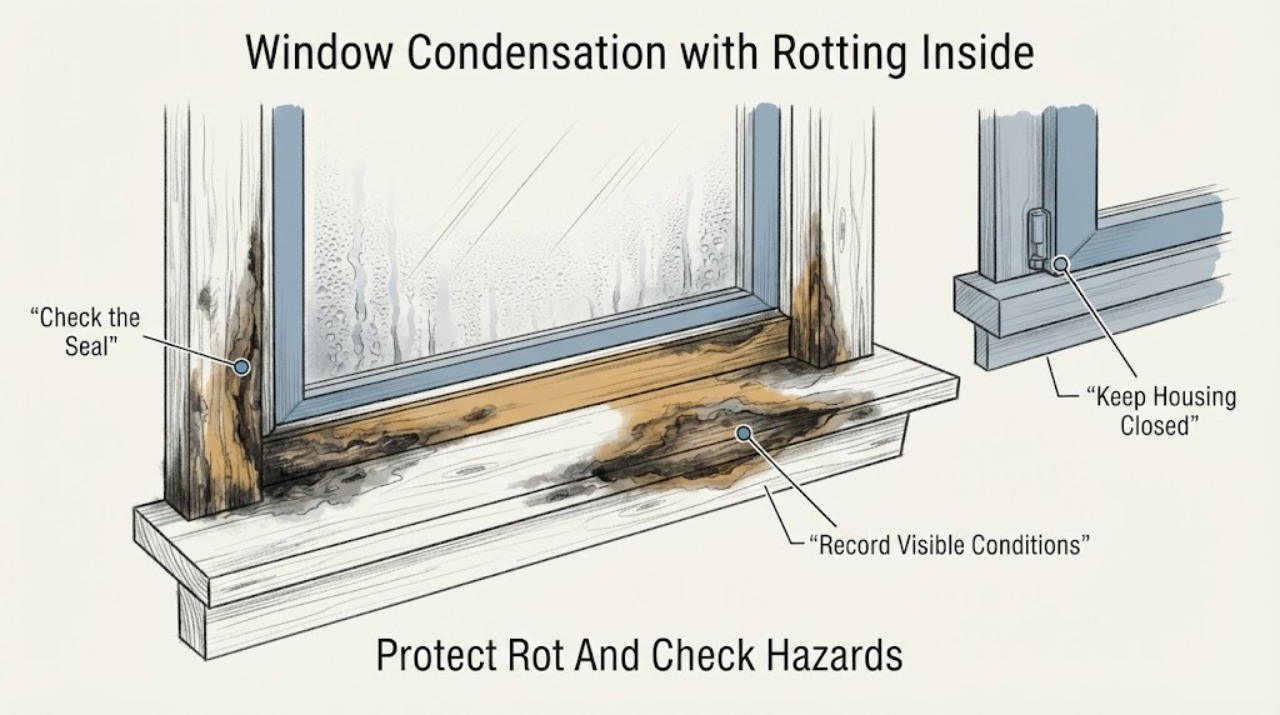
Condensation on the room-side glass can wet a sill over time, but water that enters around the frame or remains inside a wall can also rot wood and damage finishes. Haze between panes points to the insulated-glass seal, while water at a corner, sill, or adjacent wall points to a perimeter, flashing, drainage, or installation issue. Drying the visible surface does not prove the framing is dry.
Use humidity and airflow checks only for room-side moisture
ENERGY STAR recommends managing indoor humidity, exhausting kitchen, bath, and laundry moisture outdoors, and allowing airflow over the glass. Those steps can reduce room-side droplets, but they will not repair rotted framing, a failed insulated-glass seal, or an exterior leak. Keep a short record of humidity, weather, room activities, and the exact place the water returns.
Inspect the sill, frame, and seals without closing drainage
Look at lower corners, the sash or gasket, exterior sealant, sill, and adjacent wall for cracks, staining, softness, movement, or a draft. Pella's installation guidance describes how incomplete flashing, sealant, fastening, or shimming can allow moisture in or distort the frame. Do not cover a weep path or apply a new bead until the source and drainage direction are understood.
Rot, mold, and wet wall materials need a qualified assessment
If a probe or light pressure shows soft wood, if paint is lifting, or if drywall or insulation remains damp, stop cosmetic repair. A qualified window or building-envelope professional can determine whether the damage is limited to a replaceable seal or sash or extends into the sill, framing, flashing, or wall. Repairing the visible trim before the wet assembly is opened can hide ongoing damage.
Safety boundary
Stop conditions
- Stop for soft or crumbling wood, visible mold, persistent wet wall materials, cracked or loose glass, a loose sash, loss of security, or water near electrical components.
- Do not drill sealed glass, pry glazing, remove a sash, sand or paint rot, inject foam into a wet cavity, or conceal damaged material with trim.
- Do not caulk over weep holes, flashing edges, sill drainage, or an active leak before the moisture direction and source are understood.
- Do not rely on humidity control alone when water appears at the frame or wall, between panes, after rain, or inside deteriorating materials.
- Arrange qualified window or building-envelope service when the frame, sill, flashing, insulated glass, or wall requires opening, support, repair, or replacement.
Only after diagnosis
Potential parts
- compatible window gasket or weatherstrip
Consider this category only when inspection confirms a deteriorated or displaced gasket is contributing to drafts or surface condensation and the surrounding frame is sound.
Match the exact window system, profile, material, and location; do not use a thicker gasket that prevents closing or traps water against rotten material. - insulating glass unit
Consider this category only when persistent moisture between panes confirms or strongly indicates a failed sealed glass unit and the frame and sill can safely support replacement.
Confirm the exact dimensions, glazing construction, coating, spacer, safety requirements, and frame condition with a qualified professional before ordering. - compatible exterior sealant
Consider this category only after the water path is identified as a repairable accessible perimeter joint and rot, flashing, and drainage have been assessed.
Use the manufacturer's approved product and application boundary; preserve expansion movement, flashing integration, and sill drainage. - window sill or frame repair material
Consider this category only after a professional confirms that damage is localized and the moisture source has been corrected, rather than replacing sound material over a wet cavity.
Match the frame material, load support, finish, water management, and installation method; extensive rot may require an assembly or wall repair instead.
When checks do not resolve it
Need a professional?
Arrange qualified window, glazing, or building-envelope service for soft or rotting frame or sill material, mold, water at the wall or frame, persistent between-pane moisture, cracked or loose glass, a window that will not close or lock, or a failed sealant, flashing, drainage, or support condition. Professional assessment is needed before painting, caulking, replacing trim, removing glazing, or deciding between a glass-unit, sash, frame, or wall repair.
Safety scope: This article covers drying visible surfaces, documenting moisture, humidity and airflow changes, and ordinary-access inspection only. Do not handle mold aggressively, remove glazing, open the wall, disturb flashing, or conceal rot.
Common questions
FAQ
Can condensation make the inside of a window rot?
Room-side droplets can repeatedly wet a sill and finishes, but rot may also come from water entering at the frame, sill, flashing, or wall. Identify the moisture location and stop cosmetic repairs until a professional traces the path.
How can I tell if moisture is between window panes?
If haze or droplets remain inside the sealed space and cannot be wiped from either surface, an insulating-glass seal failure is likely. Humidity control and exterior caulk will not dry that space; arrange a glazing assessment.
Will a dehumidifier fix a rotten window frame?
It may reduce room-side condensation when indoor humidity contributes, but it cannot repair rotted wood, a failed glass seal, or water entering around the frame. Keep humidity under control while the assembly and wall are assessed.
Should I caulk around a window that is rotting?
Not before the water path and drainage are understood. Caulk can trap moisture or block a weep path. Photograph the defect and arrange qualified window or building-envelope service when rot, staining, or rain-linked water is present.
When should a rotting window be repaired or replaced?
A professional should decide after checking whether damage is limited to a gasket, glass unit, sash, sill, frame, flashing, or surrounding wall. Replacement may be needed when the frame or support is compromised, but do not choose parts or replacement before correcting the moisture source.
Read the exact guide
Official sources
- The Cost of a Bad InstallationPella · Official Pella professional installation guidance; it is general installation context and not a substitute for a particular window's manual.
- Winterize Windows to Keep the Cold at BayPella · Official Pella winterization guidance; use the exact window system's manual before replacing seals or applying sealant.
- Residential Windows, Doors, & SkylightsENERGY STAR · Official ENERGY STAR guidance for residential windows and doors; exact product instructions and building conditions control a particular opening.
Community feedback
Share a repair observation
Share a plain-text repair observation. Accepted observations are published automatically; this page may take a moment to update.