
On this page
Start here
Quick answer
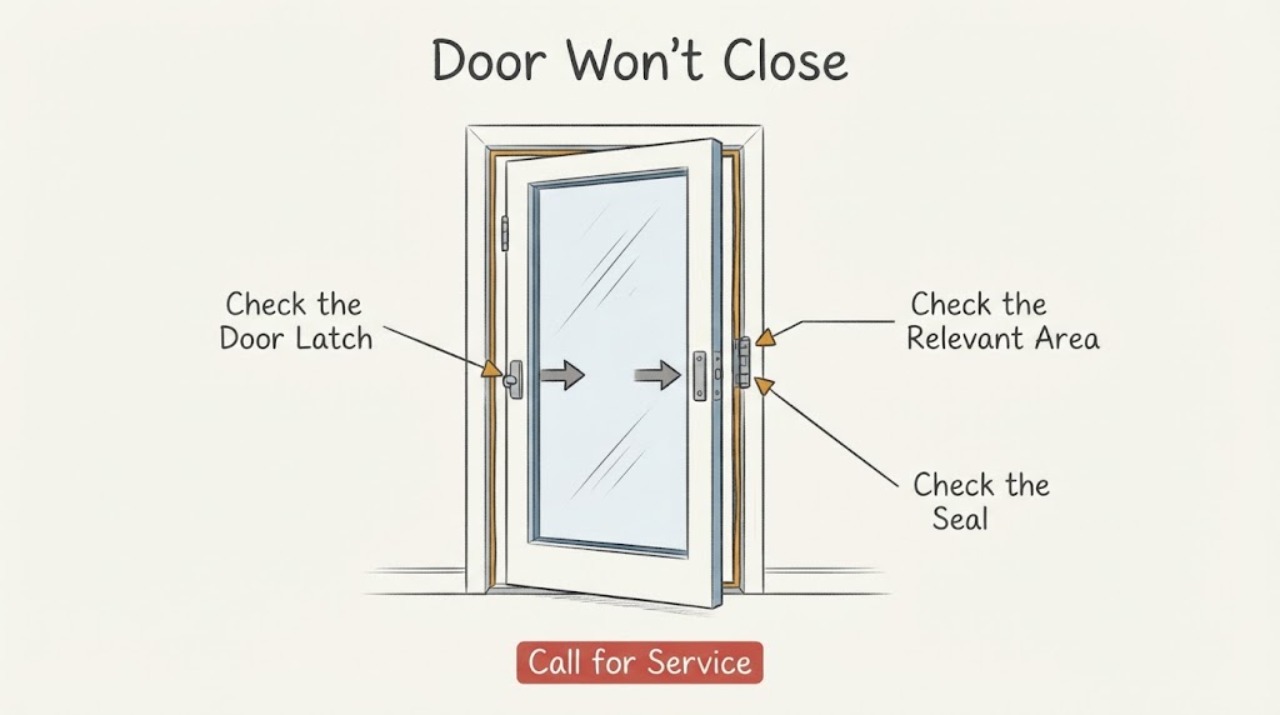
Start by checking whether the door is blocked, sagging on the hinge side, or failing at the latch side. Do not force it, lift a heavy glazed door, remove a hinge pin, or disable a self-closing device. From a safe standing position, look for debris, paint or seal buildup, a loose hinge screw, a bent or worn hinge, a shifted frame, or a door that rubs only in damp weather. If the hinges are loose or worn, the frame is distorted, glass is cracked, the door is heavy or unstable, or a fire or apartment self-closing door no longer closes and latches, stop and request a qualified door or window service visit. Minor surface debris can be removed, and manufacturer-approved hinge lubrication may help only when the hardware and door are stable.
Before you begin
Safety first
- Hinge replacement, frame repair, glazed-door support, closer adjustment, latch alignment, and structural correction require model- and installation-specific qualified work.
Work through in order
Diagnostic checks
Use only checks that match the exact appliance or system and its official guide.
-
Check 1
Screen for a safety boundary before moving the door: check for cracked glass, a loose or falling leaf, a hinge pulled from the frame, exposed sharp metal, a heavy door that no longer stays supported, or a self-closing fire or apartment door that does not close and latch.
Expected result: The door is stable, the glazing and hinges look intact, and it can be moved without lifting or reaching from a height; or a damage, instability, or required self-closing failure is present.
Next step: If any hazard is present, stop using or forcing the door and request a qualified service visit. Notify the property owner or manager for a required self-closing door. Do not disable a closer or prop the door open while waiting.
Why this matters
Why: A stable door permits an external visual check. Damage or loss of support can make a hinge adjustment or pin removal dangerous, and a failed self-closing door can create a fire-safety problem.
-
Check 2
Close the door slowly without force and note the first contact point: hinge-side edge, top or bottom corner, frame stop, threshold, latch or strike, weather seal, or an object in the opening. Compare the gap at the hinge side with the latch side.
Expected result: The door rubs at the hinge side, catches at the top or bottom, meets an obstruction, swings shut but misses the latch, or closes normally after an obstruction is removed.
Next step: Record the contact point and stop repeated closing tests if the door binds, drops, or requires force. Continue only with the low-risk frame and hardware inspection.
Why this matters
Why: Hinge-side rubbing or a changing diagonal gap suggests sag or hinge movement. Top, bottom, seal, or frame contact suggests alignment, swelling, or obstruction. A latch-only failure may not be caused by the hinge.
-
Check 3
Inspect the opening and frame from the floor for loose debris, thick paint, displaced seal material, a floor mat, a swollen timber edge, or another object preventing the door from reaching the closed position. If it is a window-style door, confirm the handle is in the maker's fully open position before closing.
Expected result: A removable obstruction or surface buildup is found; the opening is clear but the door still catches; or the frame appears distorted or damp.
Next step: Remove only loose, accessible debris without cutting or prying against glass. If paint, swelling, damp, or distortion is involved, do not plane, sand, or force the door; arrange qualified repair and address the moisture or structural cause.
Why this matters
Why: A clearable obstruction can stop a sound hinge from closing. A clear opening with continued catching points toward hinge drop, frame movement, swelling, or a latch alignment issue.
-
Check 4
With the door supported normally and fully at rest, visually inspect each hinge for missing or backing-out screws, a bent leaf, corrosion, a shifted knuckle, a worn pin, or a hinge pulled from split or damaged timber. Do not remove the door or hinge pin during this check.
Expected result: The hinge hardware is intact and firmly seated; a screw is visibly loose; the hinge is worn, bent, or corroded; or the frame is split behind the hinge.
Next step: If the hardware is damaged, the frame is split, or the door is heavy or glazed, stop and request a qualified service visit. If a screw is only visibly loose on a stable, lightweight door, follow the maker's maintenance instructions rather than tightening blindly.
Why this matters
Why: A loose or worn hinge can let the door drop and catch on the frame. A split frame or damaged hinge can release the door's weight and requires structural or hardware repair, not a cosmetic adjustment.
-
Check 5
For a stable, accessible hinge with no damage, follow the door or window manufacturer's care instructions for a small amount of approved hinge lubricant at the pivot points. Keep lubricant off glass, seals, flooring, and the latch, and do not use a solvent spray unless the manufacturer specifically allows it.
Expected result: The hinge moves more freely and the door closes without rubbing; the hinge remains stiff; or the door still drops or catches after lubrication.
Next step: If lubrication does not produce a stable improvement, stop and arrange service. Do not force an adjustment screw, remove the hinge pin, or lift the door to realign it as a casual test.
Why this matters
Why: Improved movement supports friction or dryness as a contributor but does not prove the hinge is aligned. Persistent stiffness or a dropped leaf suggests worn hardware, adjustment, or frame movement.
-
Check 6
Perform one gentle closing check and document the result without slamming: note whether the door closes flush, whether the latch engages, whether the hinge-side gap is even, and whether the problem returns with weather, temperature, painting, or use of the closer.
Expected result: The door closes and latches normally; it closes but does not latch; it still rubs or drops; or it is a required self-closing door that remains open.
Next step: If the door does not close and latch reliably, leave it in a safe usable position and request qualified service. Provide the contact point, hinge condition, door type, and any weather or installation history.
Why this matters
Why: A stable close supports a minor obstruction or friction issue that has cleared. Failure to latch, continued rubbing, or a self-closing failure indicates alignment, hinge, latch, closer, or frame work beyond a basic check.
Use your observations
Decision map
Find the observation that best matches what you see, then follow the next safe action.
-
PATH 01Next step
What you see
Cracked glass, unstable door leaf, damaged hinge or frame, exposed sharp metal, or a door that cannot be safely supported
Do this next
Stop moving the door and request qualified door, window, or glazing service. Do not remove hinges or pins.
-
PATH 02Next step
What you see
A self-closing fire or apartment door does not close and latch by itself
Do this next
Do not wedge or disable it. Notify the property owner or manager and request prompt repair of the hinge, closer, latch, or frame.
-
PATH 03Next step
What you see
Loose debris, paint, seal material, or a removable object is the first point of contact
Do this next
Remove only the loose obstruction without force. If the door still catches, arrange service rather than cutting or sanding around the frame.
-
PATH 04Next step
What you see
The hinge side drops, rubs, or has loose, worn, bent, or corroded hardware
Do this next
Keep the door supported and request qualified hinge or frame repair. Do not lift the door or remove a hinge pin as a test.
-
PATH 05Next step
What you see
The door is stable but only stiff at the hinge pivot
Do this next
Use only maker-approved lubricant according to the care guide. If movement or closing does not become stable, arrange service.
Helpful context
Understand the symptom
A door that will not close is often being stopped by an obstruction, has dropped because of hinge movement, or is meeting a frame or latch out of alignment. The location of the contact matters: rubbing at the hinge side suggests sag or a hinge problem, rubbing at the top or bottom suggests frame or movement, and a door that swings shut but will not latch points toward the latch, strike, or closing device. Observe the gap before making an adjustment.
Keep the door supported by its normal hinges while inspecting it. A large glazed door, an exterior door exposed to weather, a door at height, or a self-closing fire door can become unsafe when its hardware is disturbed. Never wedge a required self-closing door open, tape its latch, or disable the closer while diagnosing a closing problem.
For a stable, accessible door, remove only loose surface debris from the frame and check that the handle or latch is in the position required before closing. If the hinge is stiff, follow the door or window maker's care instructions for lubricant; avoid forcing an adjustment screw or using a product that the manufacturer does not approve. A loose, worn, bent, or structurally damaged hinge needs repair rather than repeated lubrication.
If the problem changes with damp weather, follows painting, or appeared after the frame moved, the hinge may not be the only cause. Moisture swelling, paint buildup, frame distortion, and settlement can all change the closing path. Record the contact point and season or event, then have a qualified installer, joiner, glazier, or door technician correct the underlying alignment.
Only after diagnosis
Potential parts
- matching door or window hinge
Consider this only when inspection or a qualified technician confirms the hinge is worn, bent, corroded, or no longer supports the door alignment.
Match the hinge type, size, handing, load, and installation system; confirm fit before ordering. - hinge screws or frame fixings
Consider this only when a stable door has visibly loose or missing fixings and the frame material can safely accept the maker-approved repair.
A split or decayed frame needs structural repair rather than a longer screw chosen by guesswork. - door closer or closing mechanism
Consider this only when a required self-closing door fails to close or latch and service inspection isolates the closer or mechanism.
Fire and self-closing hardware must meet the installation and building requirements for the opening. - latch or strike hardware
Consider this only when the door swings into the frame but misses the latch after hinge and obstruction checks are normal.
Confirm door handing, frame alignment, security requirements, and the existing hardware system before replacement.
When checks do not resolve it
Need a professional?
Call a qualified door or window technician when the hinge is loose, worn, bent, corroded, or pulling from the frame, or when safe surface checks do not restore a reliable close and latch.
Safety scope: Hinge replacement, frame repair, glazed-door support, closer adjustment, latch alignment, and structural correction require model- and installation-specific qualified work.
Have this ready
- Provide the door or window type, hinge side, first contact point, whether the latch engages, hinge and frame condition, glass condition, weather or moisture history, recent painting or installation, and whether the door is required to self-close.
Common questions
FAQ
Why does my door rub on the hinge side and not close?
A loose or worn hinge can let the door drop so it catches the frame. Check the hinge visually without removing pins or lifting the door. Damaged hardware or a split frame needs qualified repair.
Could paint or debris stop a door from closing?
Yes. Surface buildup, loose debris, seals, or a swollen timber edge can change the closing path. Remove only loose accessible debris; do not force the door or sand a structural or glazed door without assessment.
Can I lubricate the hinge when the door is stiff?
Only on a stable door and according to the maker's care guide. Use an approved product sparingly and keep it off seals and flooring. If the hinge remains stiff or the door drops, request service.
Should I remove the hinge pin to realign a door?
Not as a casual test. A door can be heavy or glazed, and removing a pin can release its weight. Have a qualified technician assess and support the door before hinge or frame work.
What if a self-closing door will not close and latch?
Do not wedge it open, tape the latch, or disable the closer. Notify the property owner or manager and request prompt repair because a self-closing door is a fire-safety feature.
Read the exact guide
Official sources
- How to Fix a Window that Won't OpenAnglian Home Improvements · Manufacturer support guidance for frame obstructions, handle position, hinge movement, lubrication, and service boundaries; use the applicable product instructions
- Windows and DoorsCadw, Welsh Government · Official maintenance guidance for sticking casement windows and doors affected by loose or worn hinges, paint buildup, swelling, or frame movement
- Self-Closing Doors Save LivesNew York City Department of Housing Preservation and Development · Government fire-safety guidance for required self-closing doors, intact hinges, latching, obstructions, and reporting defective door hardware
Community feedback
Share a repair observation
Share a plain-text repair observation. Accepted observations are published automatically; this page may take a moment to update.