
Repair problem
Won T Close Troubleshooting Guides
Published FixGraph guidance for diagnosing and responding to won t close.
Matching published guides
Choose a guide that matches the service, equipment, and conditions you are seeing.
-
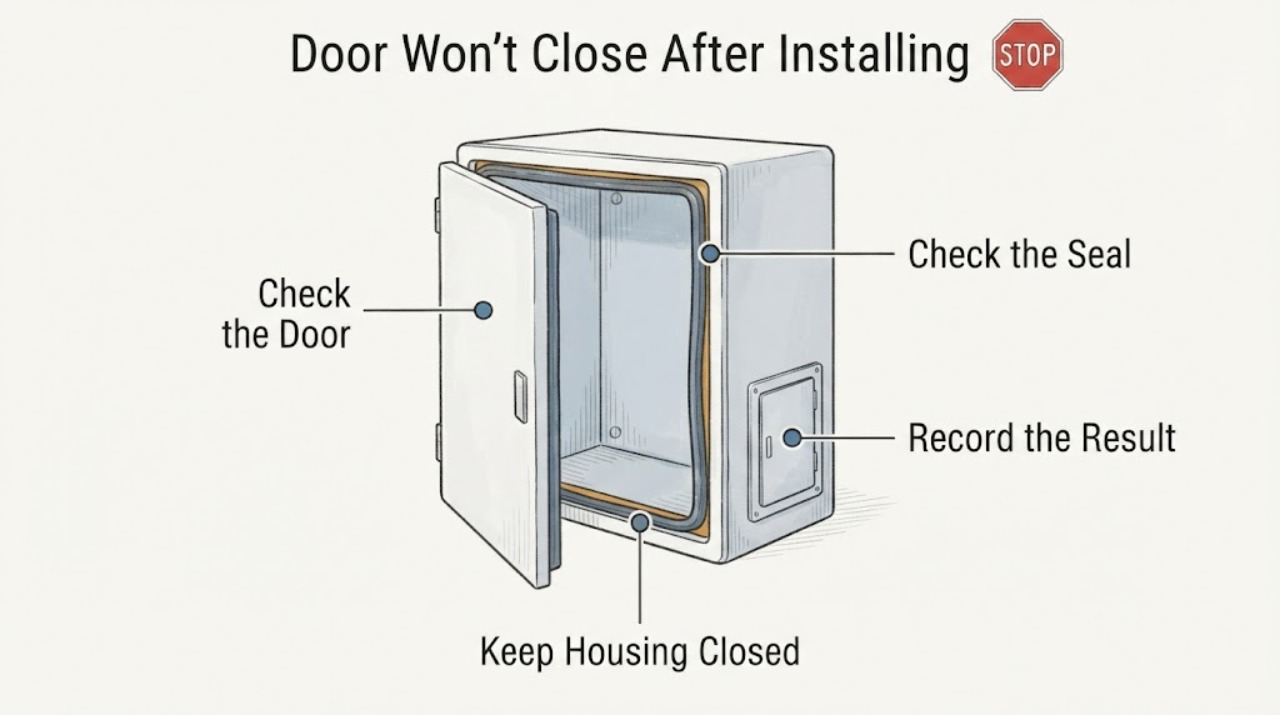
Door Won't Close After Installing Weatherstrip Seal
If the door stopped closing immediately after a weatherstrip seal was installed, do not trim the door, force the latch, or remove hinges first. With the door supported and no pinch, glass, security, or fire-door hazard, compare the new seal with the product instructions: a strip can be too thick for the gap, installed on the wrong face, doubled at a corner, buckled, or seated against the latch path.
-
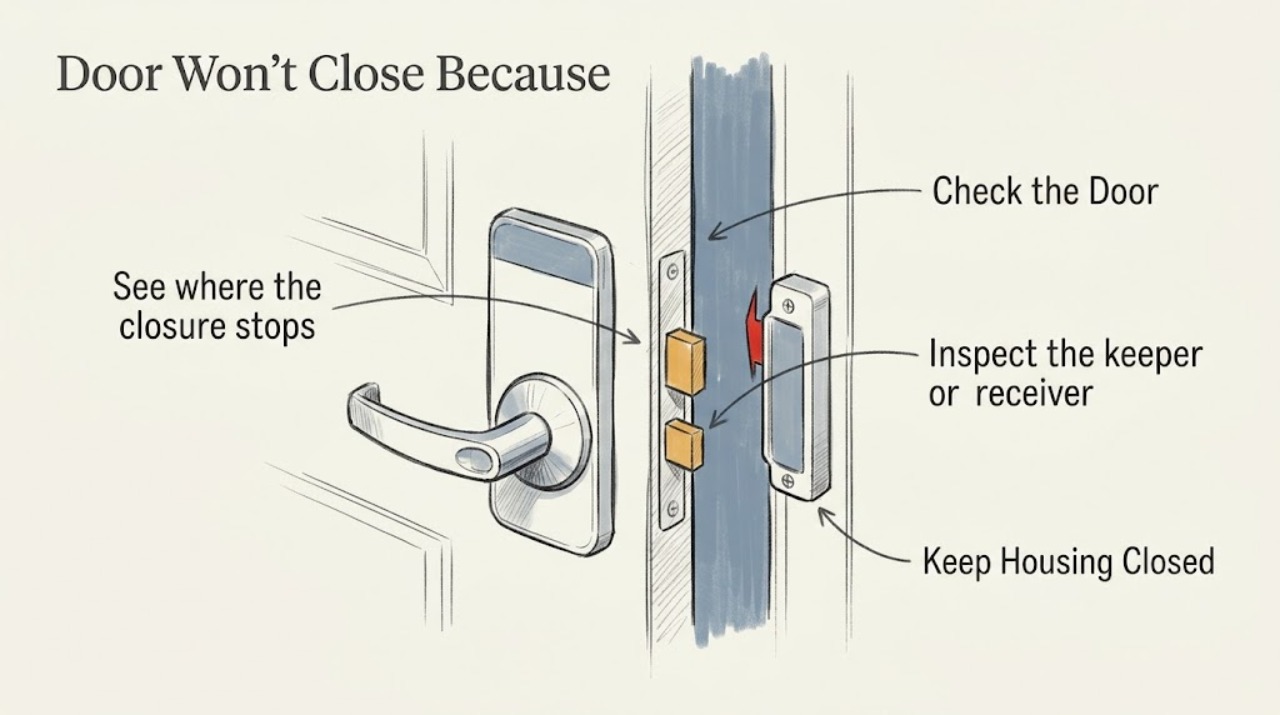
Door Won't Close Because of the Lock: Check Alignment Safely
If a door will not close because its lock or latch does not line up, do not force the handle or throw the deadbolt against resistance. First determine whether the panel reaches the frame and whether the lock works freely with the door open.
-
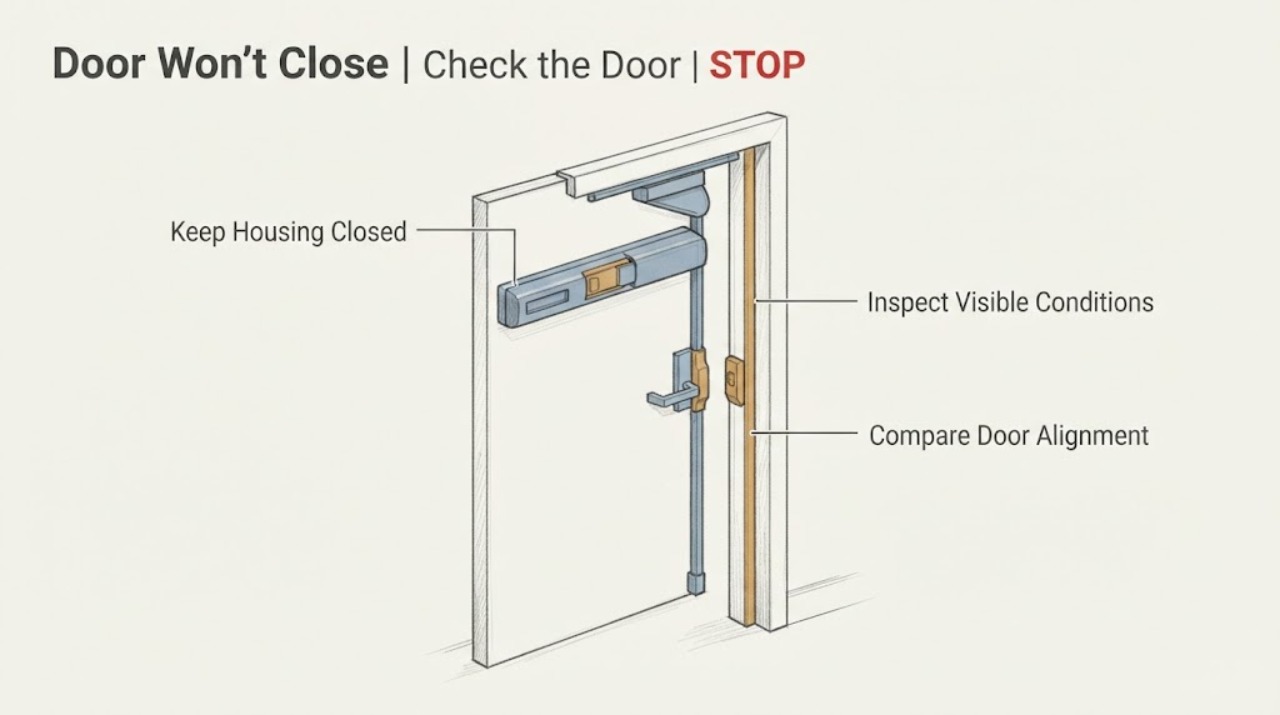
Door Won't Close: Check Frame Alignment, Hinges, and Obstructions
When a door will not close, first find where the panel contacts the frame, sill, weatherstrip, or hardware. A dropped or warped frame, loose or binding hinge, displaced closer, bottom sweep, or latch-side mounting frame can stop closure.
-
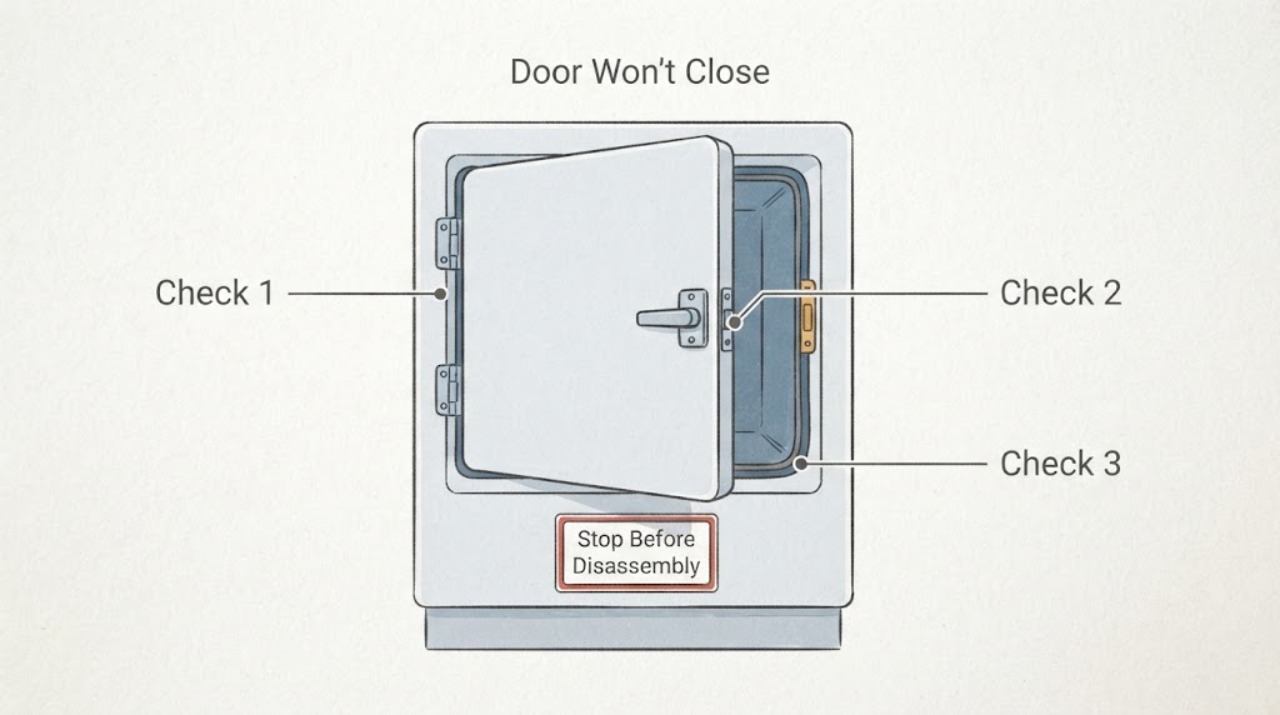
Door Won't Close: Check the Frame, Seal, and Alignment Safely
Do not force a door that will not close. From a safe standing position, close it only until the first contact and note whether the top, bottom, hinge side, latch side, frame, or weatherstrip is stopping it.
-
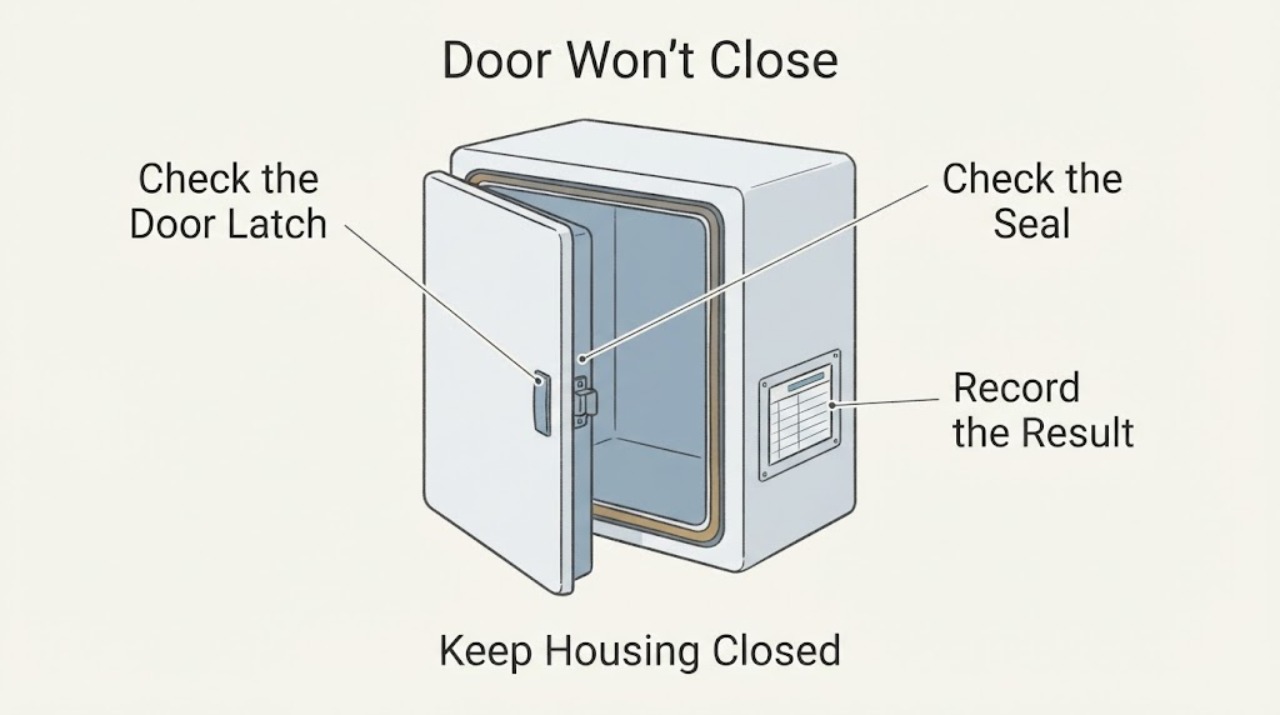
Door Won't Close: Gasket and Alignment Checks
A door that will not close because of its gasket usually has a damaged, displaced, painted, folded, or overly compressed weatherstrip, but the door may also be approaching the gasket out of alignment. Inspect the gasket from hinge side to latch side, look for an uneven contact pattern, and check whether the panel is sagging or the strike is misaligned.
-
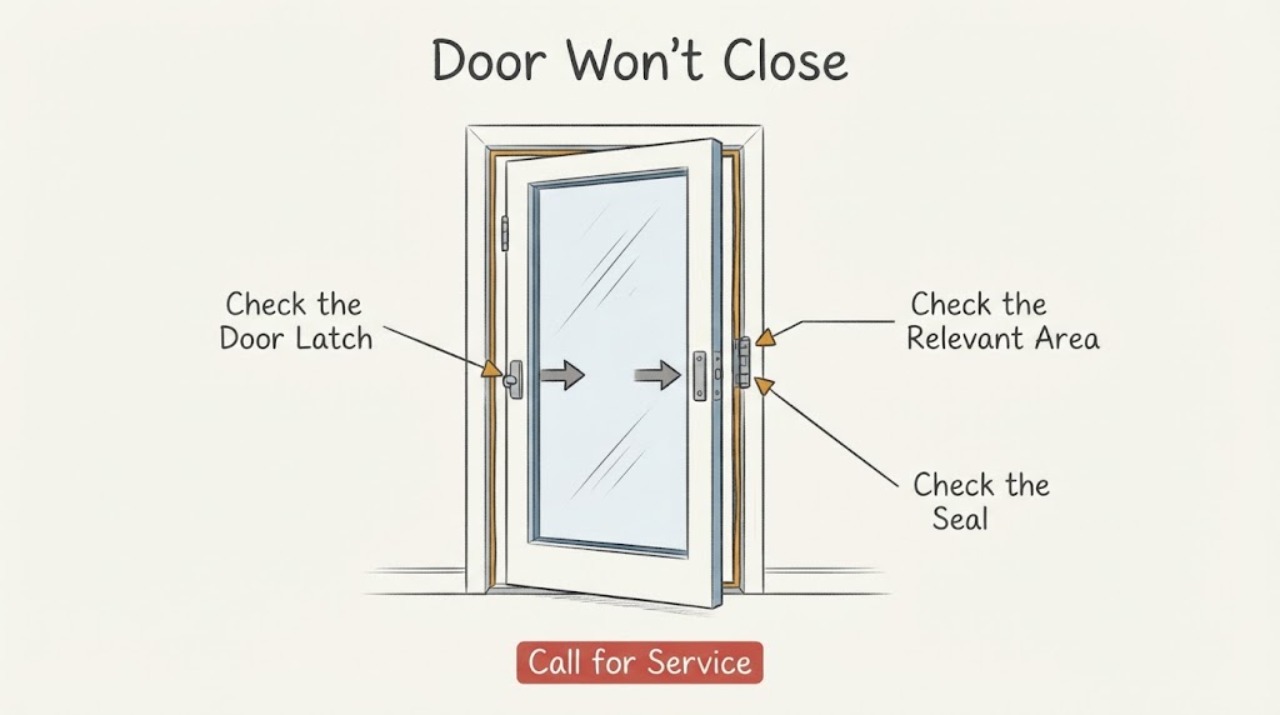
Door Won't Close: Check the Hinge, Frame, and Obstructions Safely
Start by checking whether the door is blocked, sagging on the hinge side, or failing at the latch side. Do not force it, lift a heavy glazed door, remove a hinge pin, or disable a self-closing device.
-
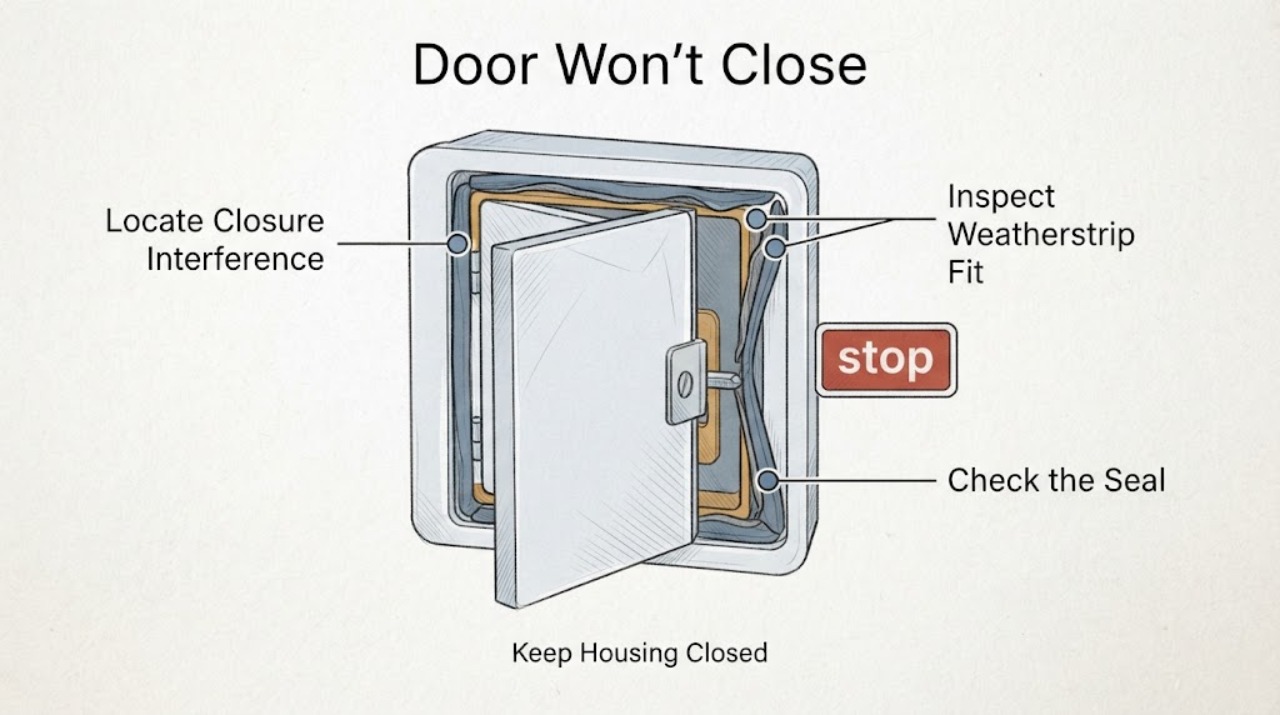
Door Won't Close: check weatherstripping, alignment, and the latch
If a door will not close after weatherstripping was installed or replaced, do not force the latch. First identify where the panel stops: a bulky or mispositioned weatherstrip, loose hinge or hardware, a shifted strike, a raised threshold or sweep, or a frame that is out of square.
-
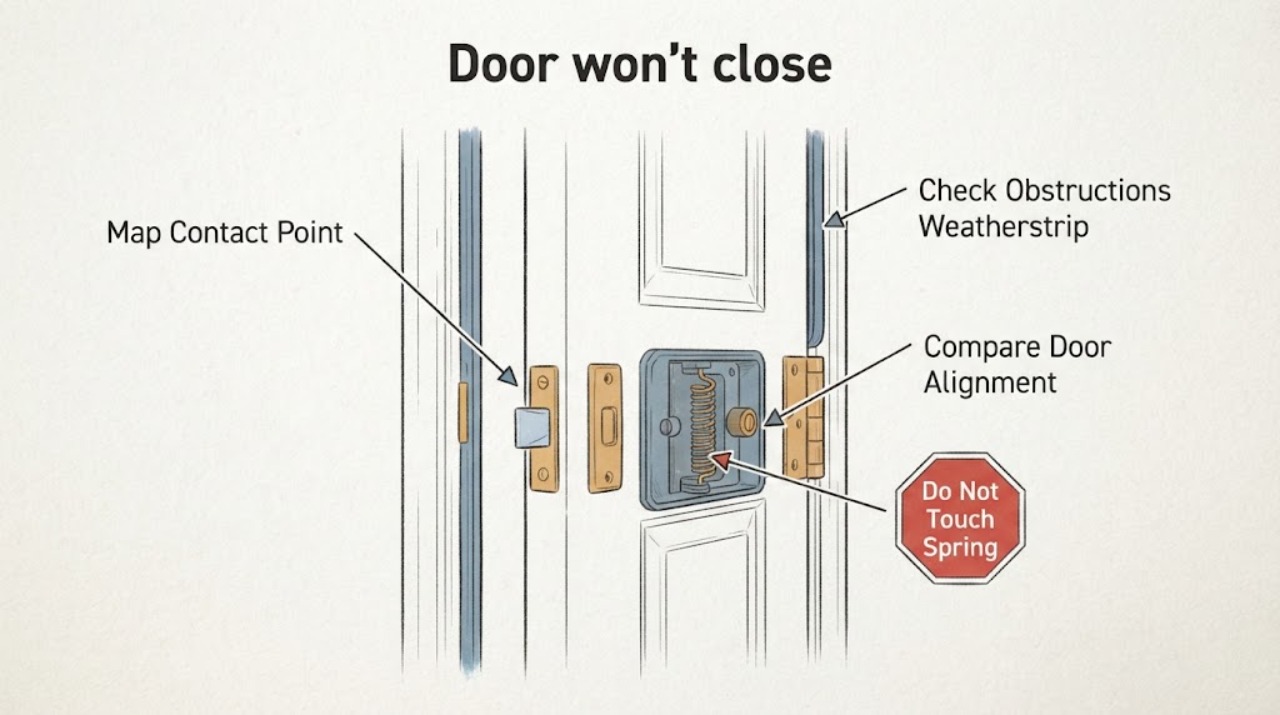
Door won't close: isolate rubbing, hinge sag, weatherstrip, or latch alignment
A door that will not close is usually being stopped by rubbing or a shifted frame, compressed or displaced weatherstripping, hinge sag, an obstruction at the sill, or a latch that no longer lines up with its receiver. Close it slowly without forcing the handle or lock and note the first contact point: top, bottom, hinge side, lock side, weatherstrip, threshold, or latch.
-
Glass Door Won't Close: Check the Panel, Track, and Latch Safely
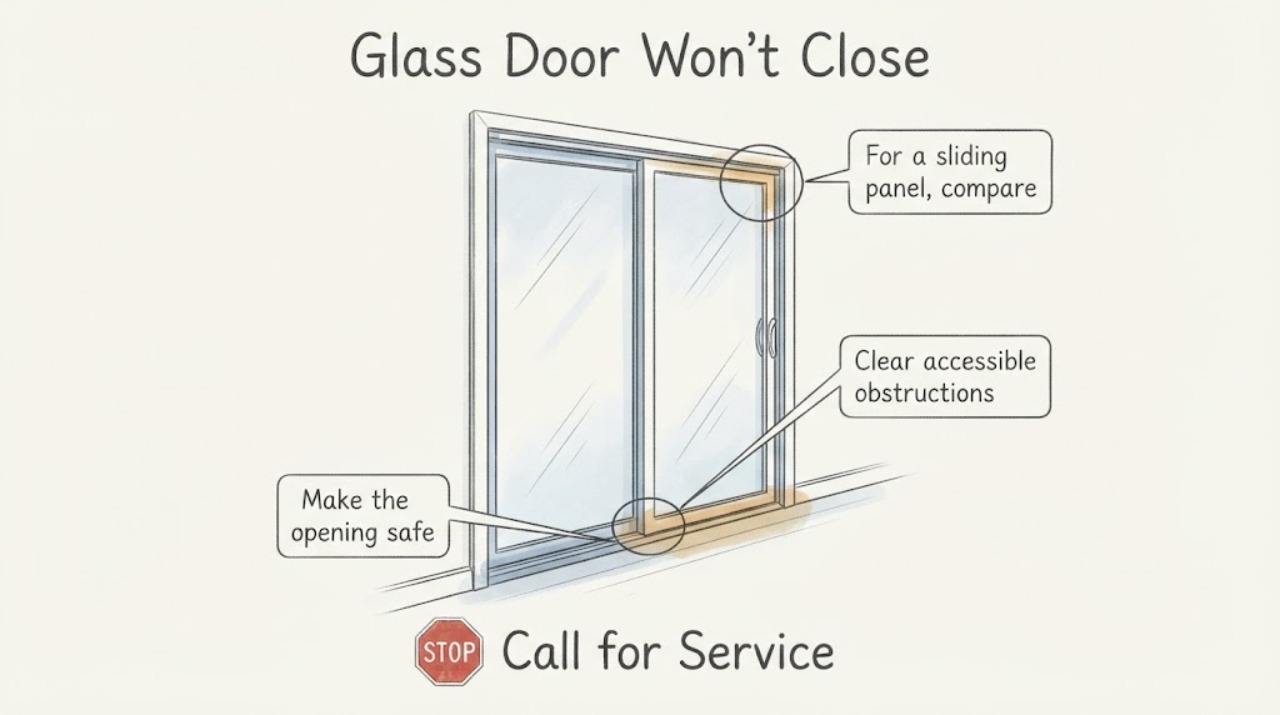
A glass door that will not close is usually being stopped by an obstruction, a panel that has shifted out of alignment, a roller or hinge problem, a closer or latch that is out of position, or damaged glass or hardware. First identify whether it is a sliding patio door, hinged glass door, or storm/screen door, then keep fingers clear and inspect the sill, track, frame, latch area, and glass edges without forcing the panel.
-
Glass Shower Door Won't Close: Check the Hinges, Track, and Seals
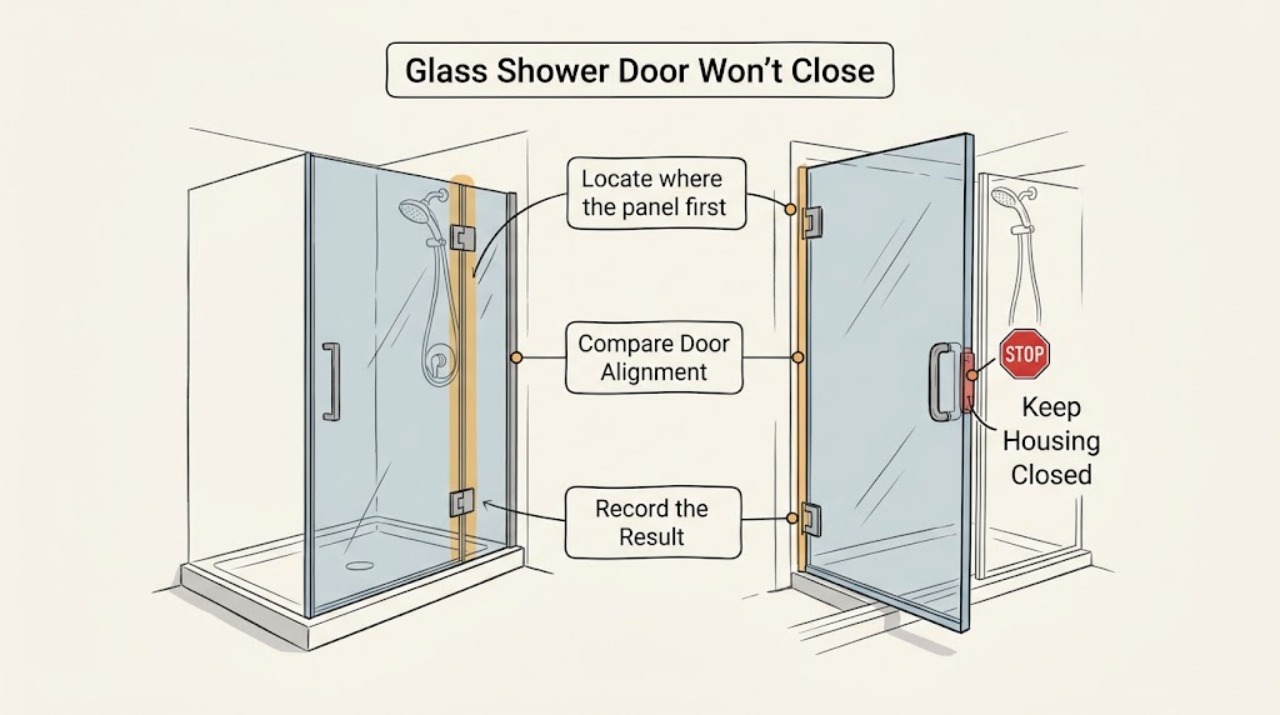
A glass shower door that will not close is commonly being stopped by hinge misalignment or sag, a panel edge touching the bottom track, an unlevel track, a folded seal, or a wrong gap at the strike or fixed panel. Do not force the glass.
-
Screen Door Won't Close: Check the Track, Rollers, and Latch
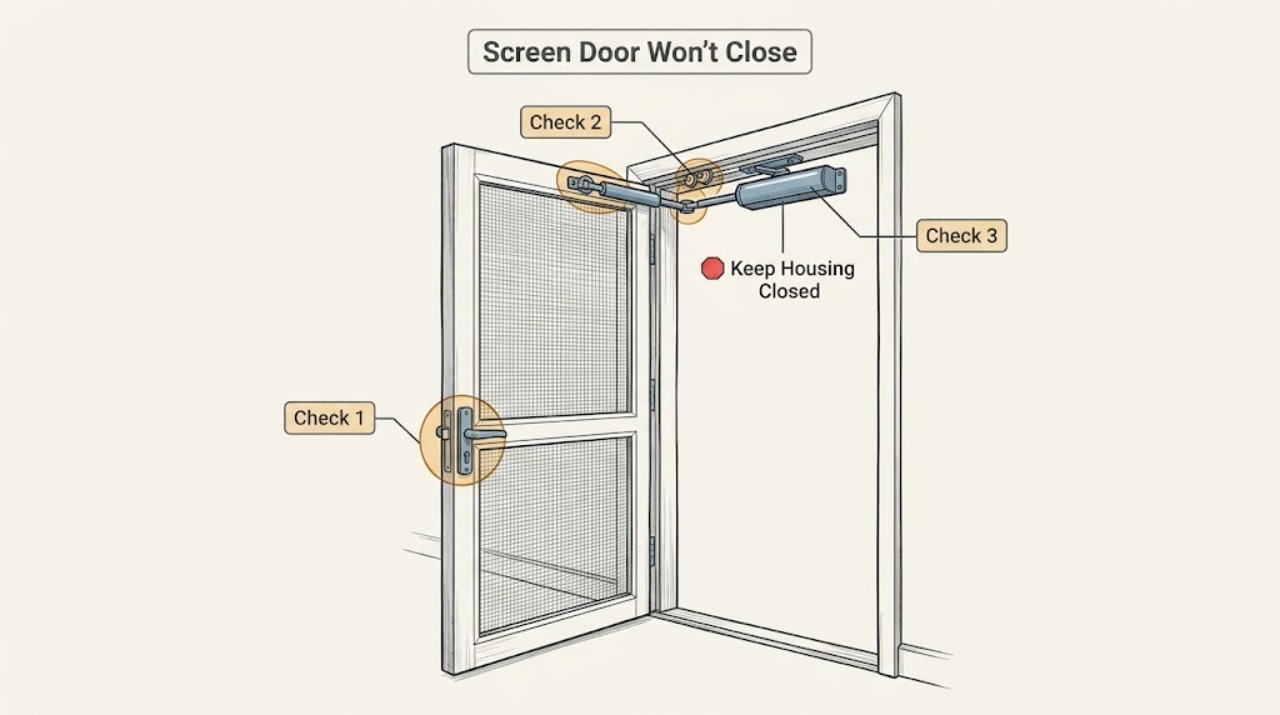
If a screen door will not close, first identify whether it is a sliding screen door that binds in the track or a hinged/retractable screen door that fails to return, align, or latch. From a safe position, check for visible debris in the track or bottom guide, a screen panel sitting out of its channel, a misaligned handle or latch receiver, and a sweep or closer that interferes with the sill.
-
Screen Door Won't Close: Check the Screen, Track, and Latch Safely
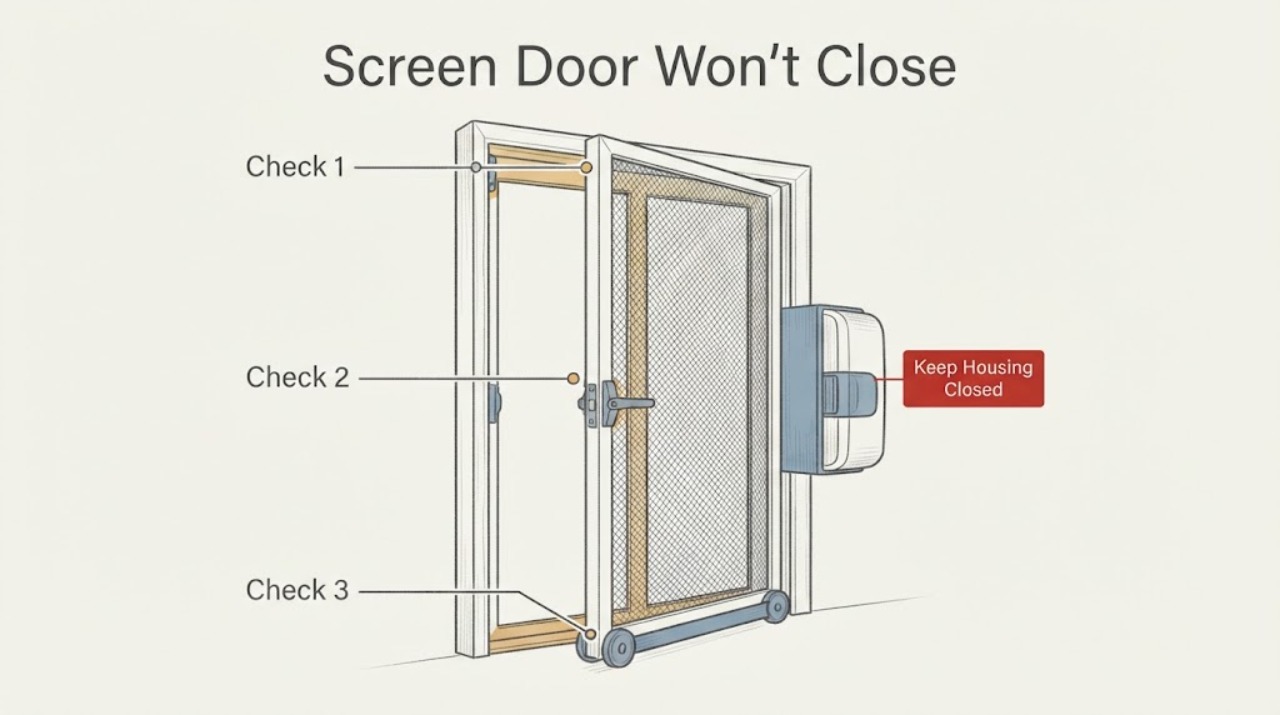
If a door with a screen will not close, do not force the screen or door panel. First determine whether the hinged or sliding door itself is stopping, or whether the screen fabric, cassette, track, bottom guide, pull bar, magnet, latch rail, sweep, or closer is preventing closure.
-
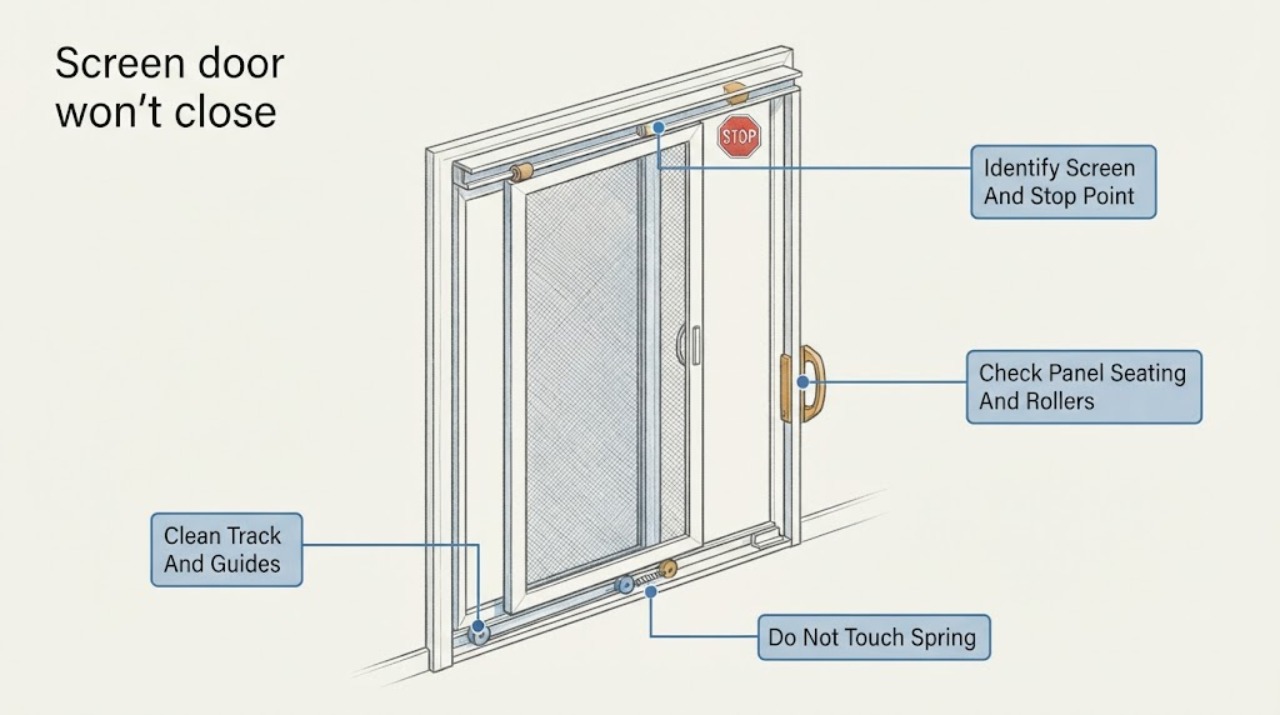
Screen door won't close: check the track, panel alignment, rollers, and latch
A screen door that will not close is usually blocked by debris or a bent track, sitting out of the frame, riding on damaged or misadjusted rollers, or missing the latch, magnet, or receiver. First identify whether it is hinged, sliding, or retractable, then close it slowly and note whether the panel stops at the top, bottom, side, track, or latch.
-
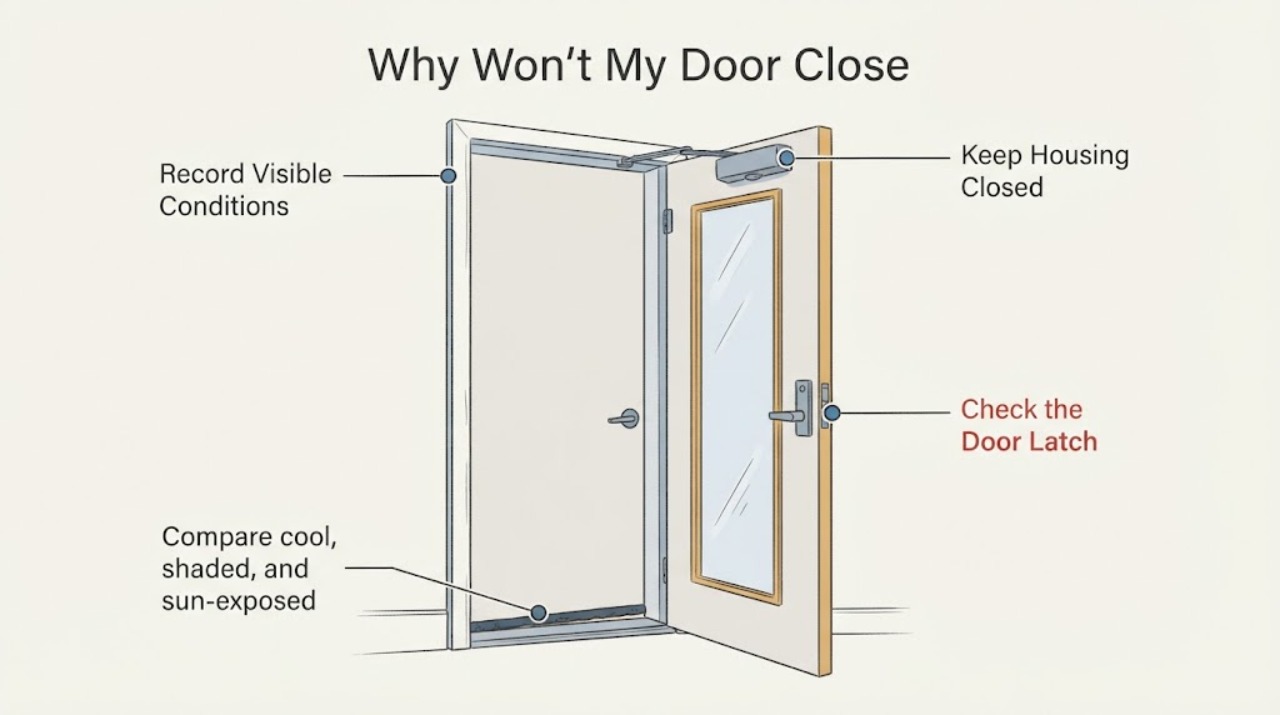
Why Won't My Door Close in the Morning or Daytime?
If a door will not close mainly in the morning or daytime, use the time pattern as a clue rather than forcing the latch. Direct sun and the temperature difference between the two sides of an exterior door can temporarily bow the door or bind the lock; a shifted frame, swollen material, worn hinge, roller, closer, weatherstrip, or track can create a similar symptom.
-
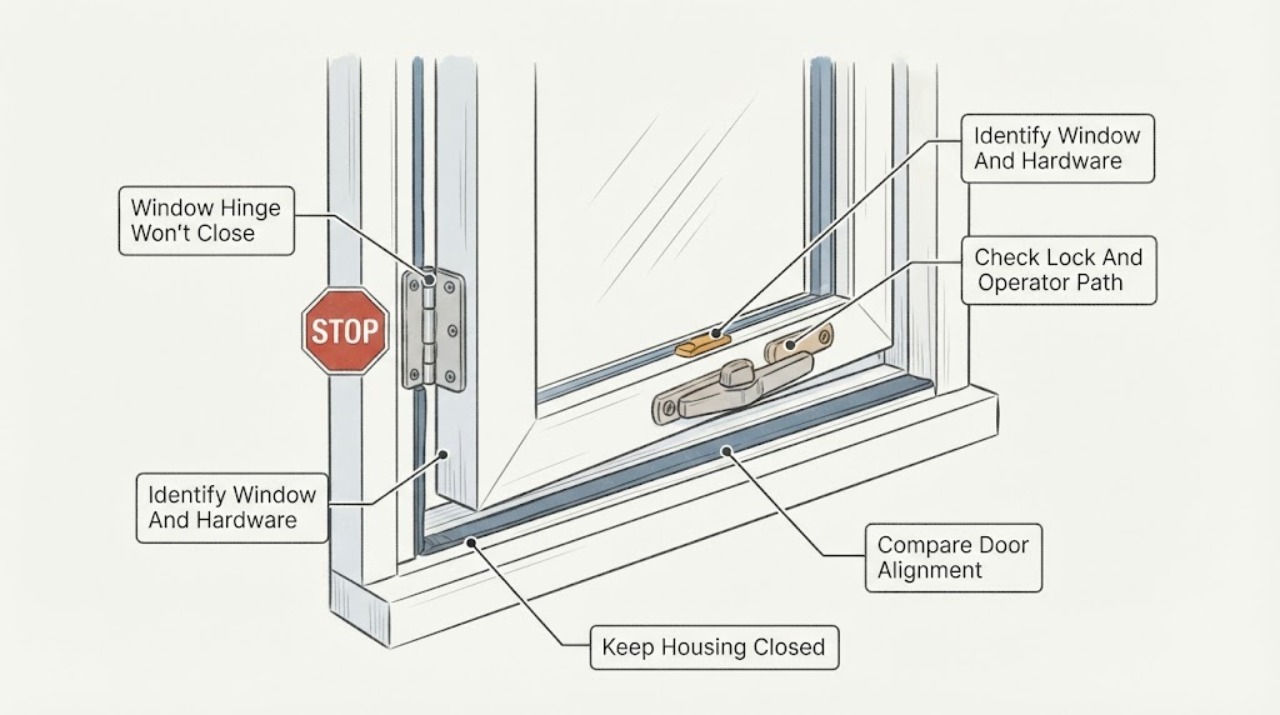
Window Hinge Won't Close: Safe Checks for a Sticking Sash
A window hinge that will not close is often a sash-alignment, obstruction, hinge, operator, lock, or frame problem, and the correct check depends on whether the window is casement, awning, or another hinged design. From a stable position, identify the window type, note where the sash first rubs or stops, check the lock and operator only with gentle normal movement, and look for visible debris, swelling, corrosion, or a displaced hinge without removing covers.
-
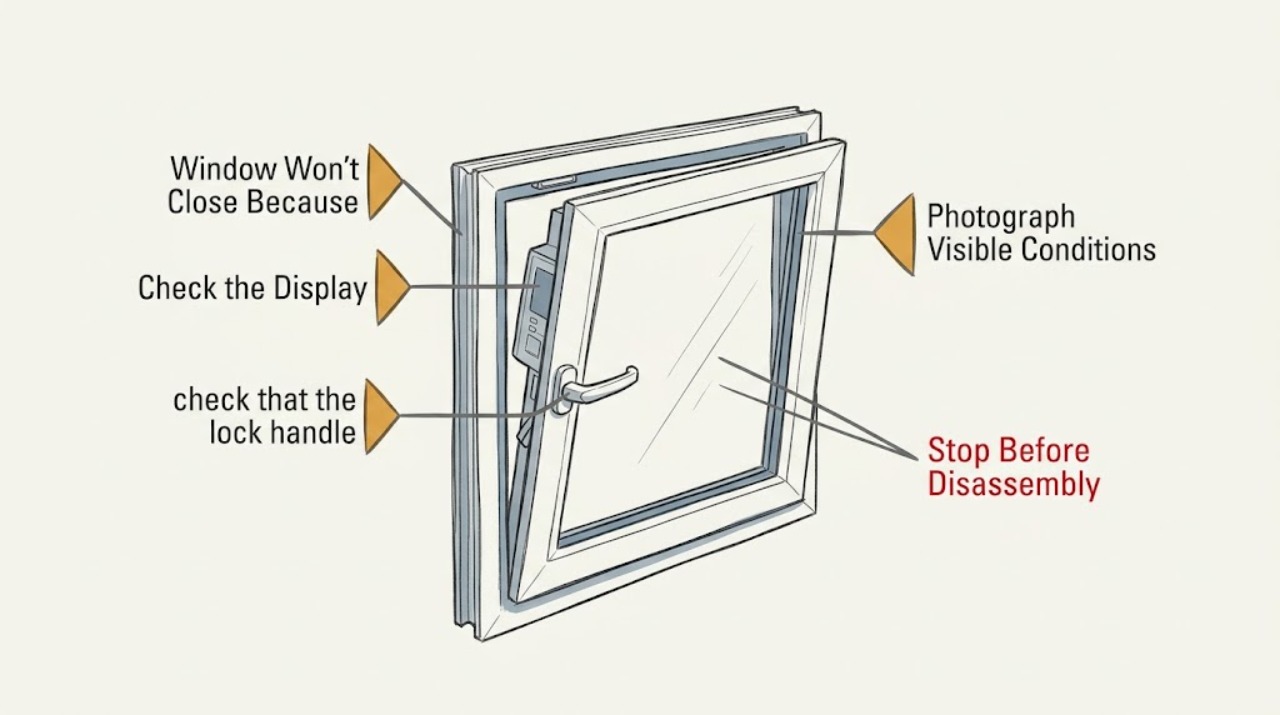
Window Won't Close Because the Lock Won't Engage: Check Alignment and the Keeper Safely
If a window will not close because the lock will not engage, stop forcing the handle and identify the window style and lock parts first. With the sash supported and the area safe, open it only as far as needed to inspect for a visible obstruction, a shifted keeper or strike, a lock cam left in the closed position, or a sash that rubs or sits unevenly in the frame.
-
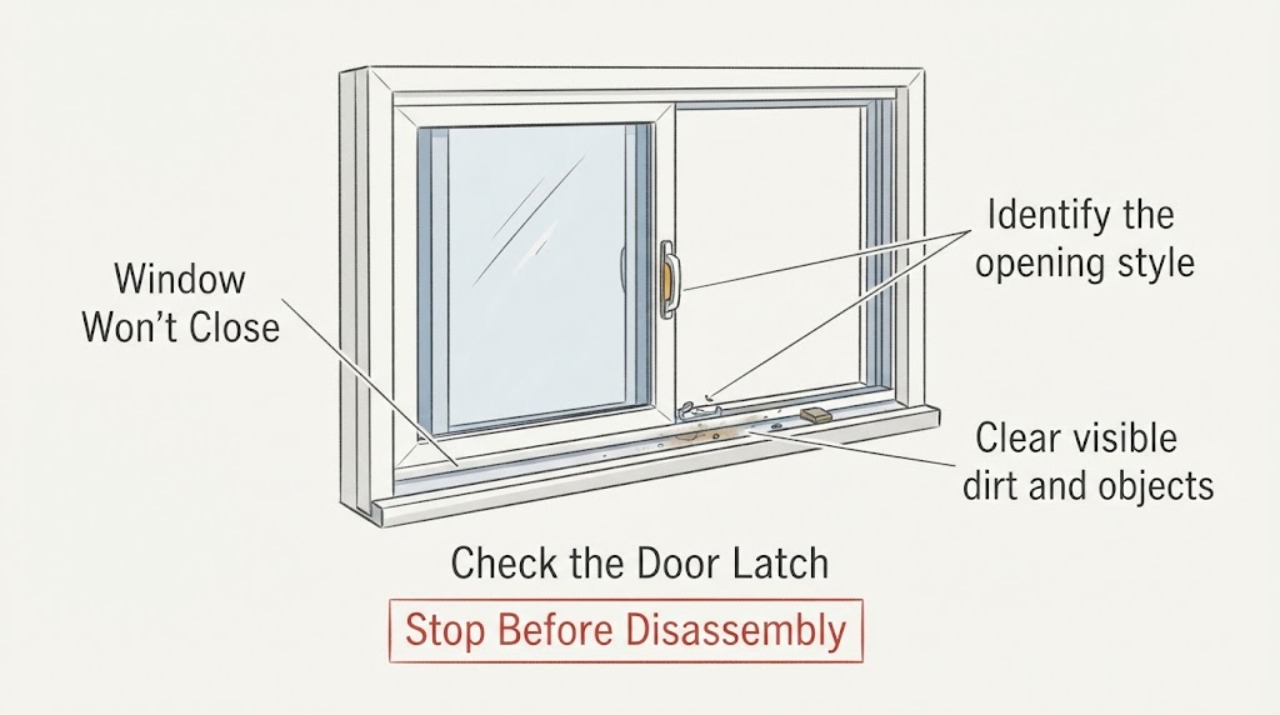
Window Won't Close: Clear the Track and Identify the Binding Point
A window that will not close usually needs the opening style and exact binding point identified before any adjustment. First determine whether it is a horizontal or vertical slider, casement, or tilt-and-turn window.
-
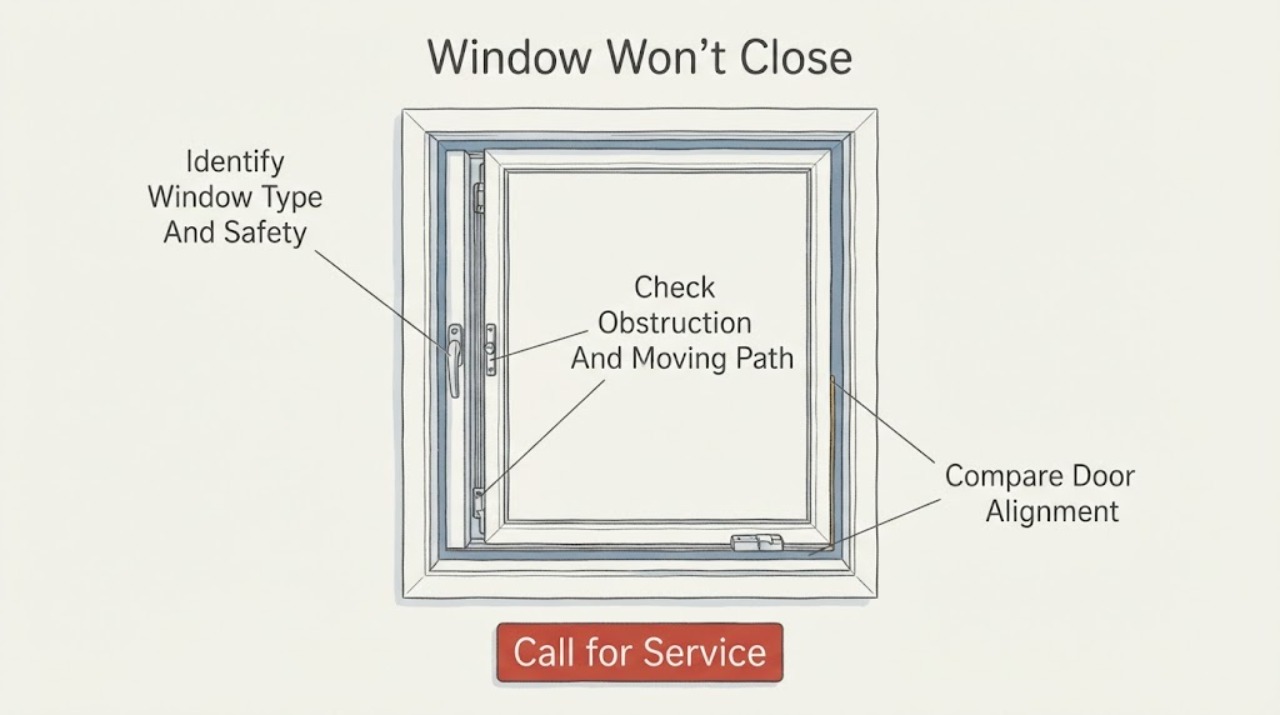
Window Won't Close: Check Obstructions, Sash Alignment, and the Lock Safely
If a window will not close, stop before forcing the sash or lock. From inside, identify whether it is a slider, double-hung, casement, awning, or another type, then look for a curtain, object, dirt, loose weatherstrip, or clothing caught in the moving path.