
Repair problem
Driveway Concrete Settling Troubleshooting Guides
Published FixGraph guidance for diagnosing and responding to driveway concrete settling.
Matching published guides
Choose a guide that matches the service, equipment, and conditions you are seeing.
-
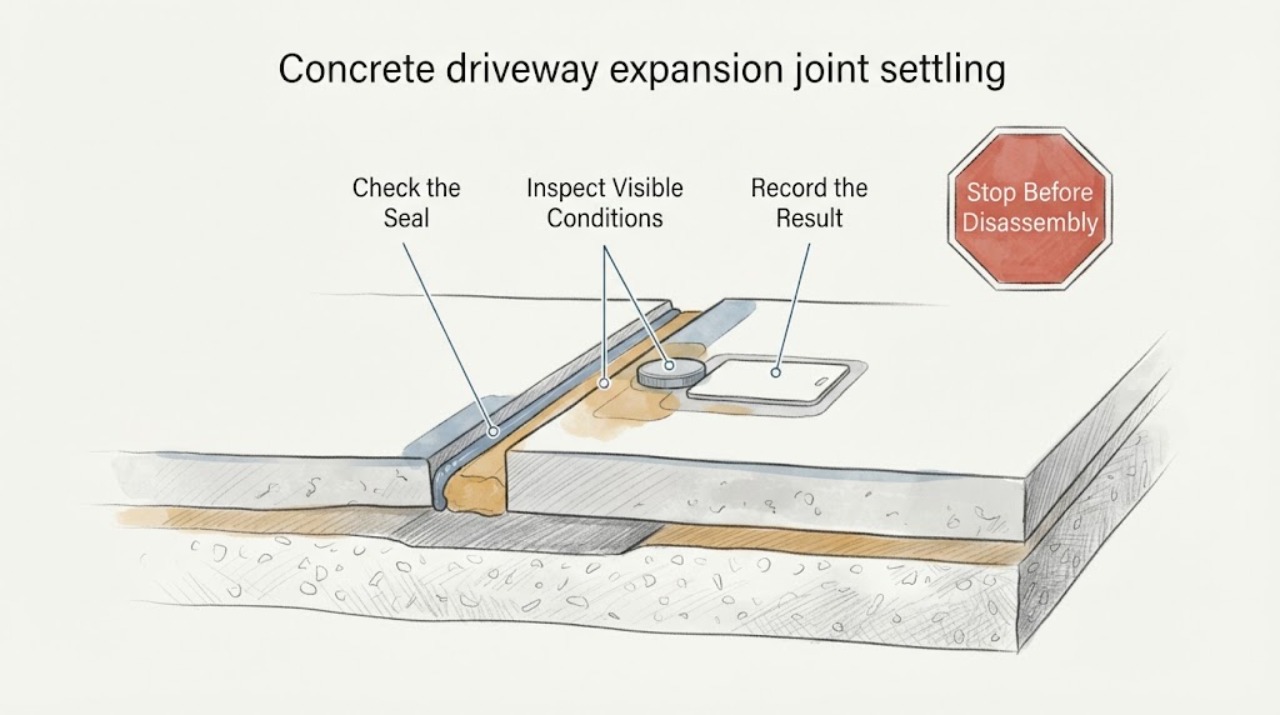
Concrete driveway expansion joint settling: What to Check and What to Do Next
A settled expansion joint should be evaluated as a slab, base, drainage, and joint-movement problem rather than patched from the surface. From the ground, observe whether the change follows the joint, whether adjacent slabs sit at different heights, whether water or soil moves through the joint, and whether the condition is expanding or creating a trip or vehicle hazard.
-
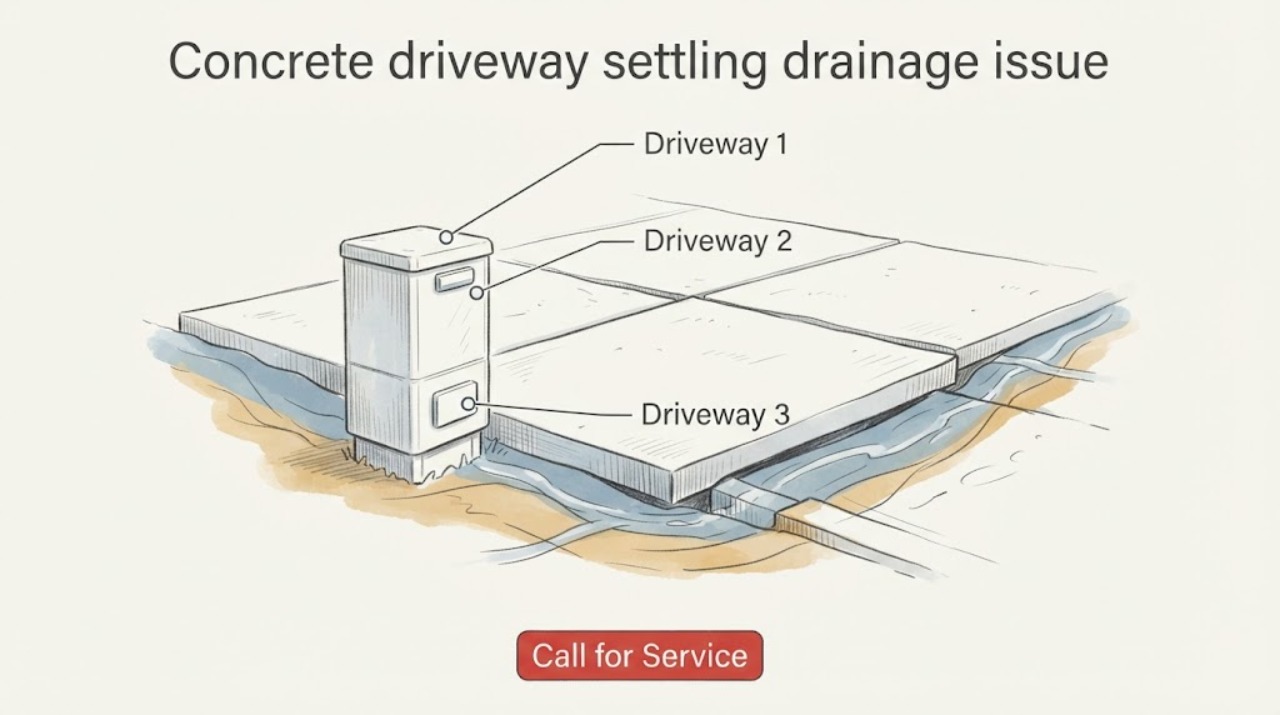
Concrete driveway settling drainage issue: What to Check and What to Do Next
A settling concrete driveway with a drainage issue needs the water path and slab support assessed together. From stable ground, observe low spots, ponding, edge erosion, cracks, joint separation, and where roof or surface water flows. Do not lift, cut, demolish, or inject the slab yourself. A concrete or drainage professional should identify the cause before recommending leveling, stabilization, replacement, or drainage work.
-
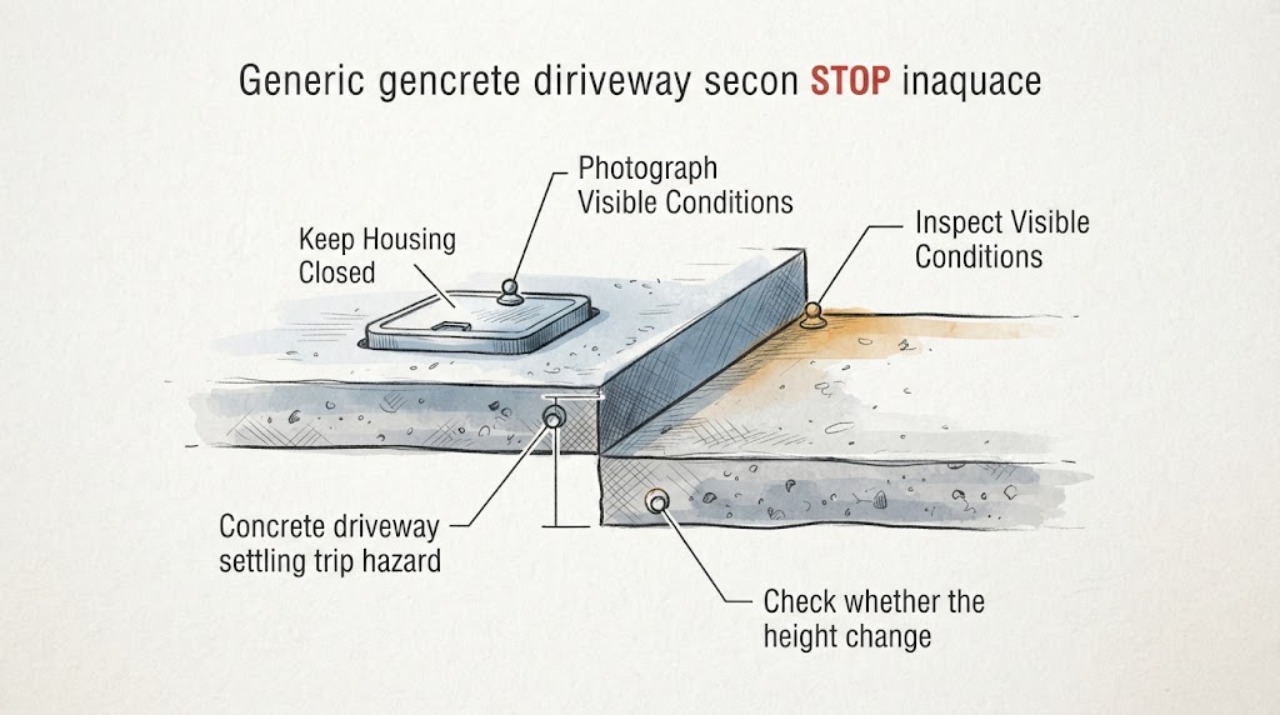
Concrete driveway settling trip hazard: What to Check and What to Do Next
A settled driveway panel is a pedestrian and vehicle-surface hazard, and the visible low edge does not reveal whether soil, drainage, erosion, tree roots, frost, or a failed slab caused it. Keep people and vehicles away from the uneven area, mark or route around it, and document the height change, water path, cracking, and movement from a safe standing position.
-
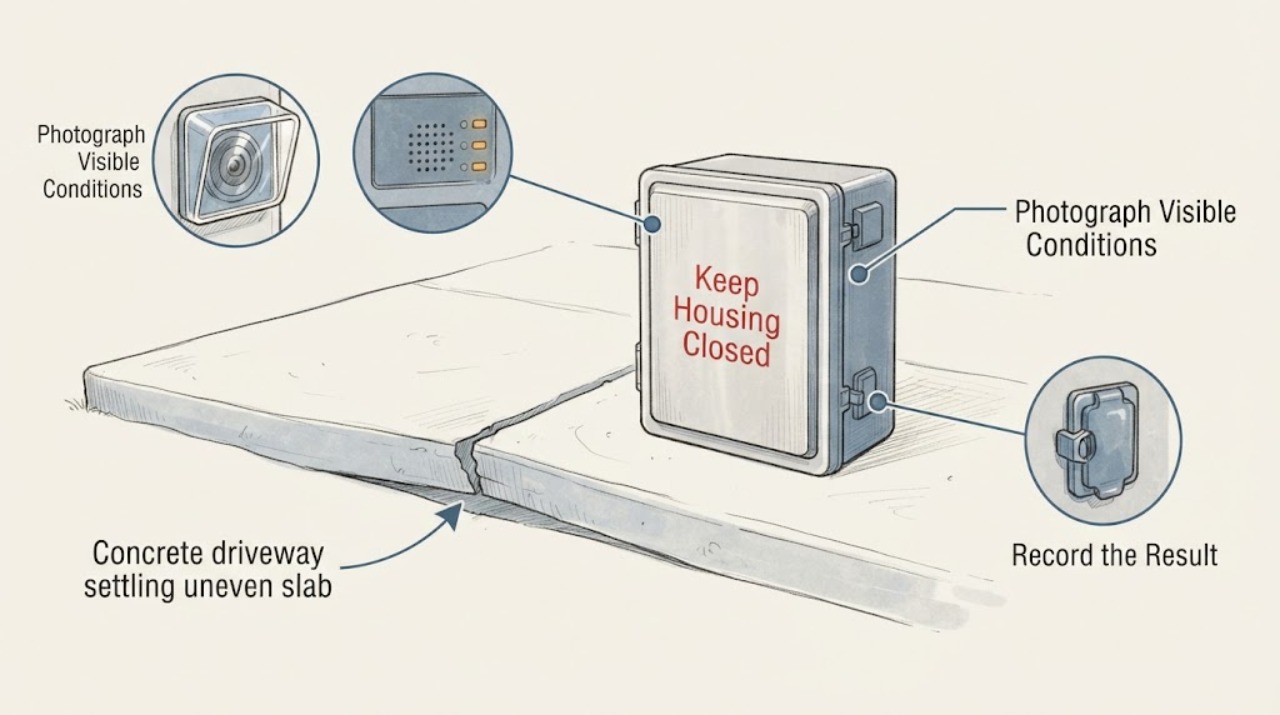
Concrete driveway settling uneven slab: What to Check and What to Do Next
An uneven driveway slab can result from subgrade compaction, drainage or erosion, frost, roots, adjacent work, or slab distress; the visible tilt does not identify the cause. Keep pedestrians and vehicles off the uneven area, document the panel edges, cracks, water path, and movement from safe ground, and do not lift, grind, cut, demolish, excavate, or pour over it yourself.
-
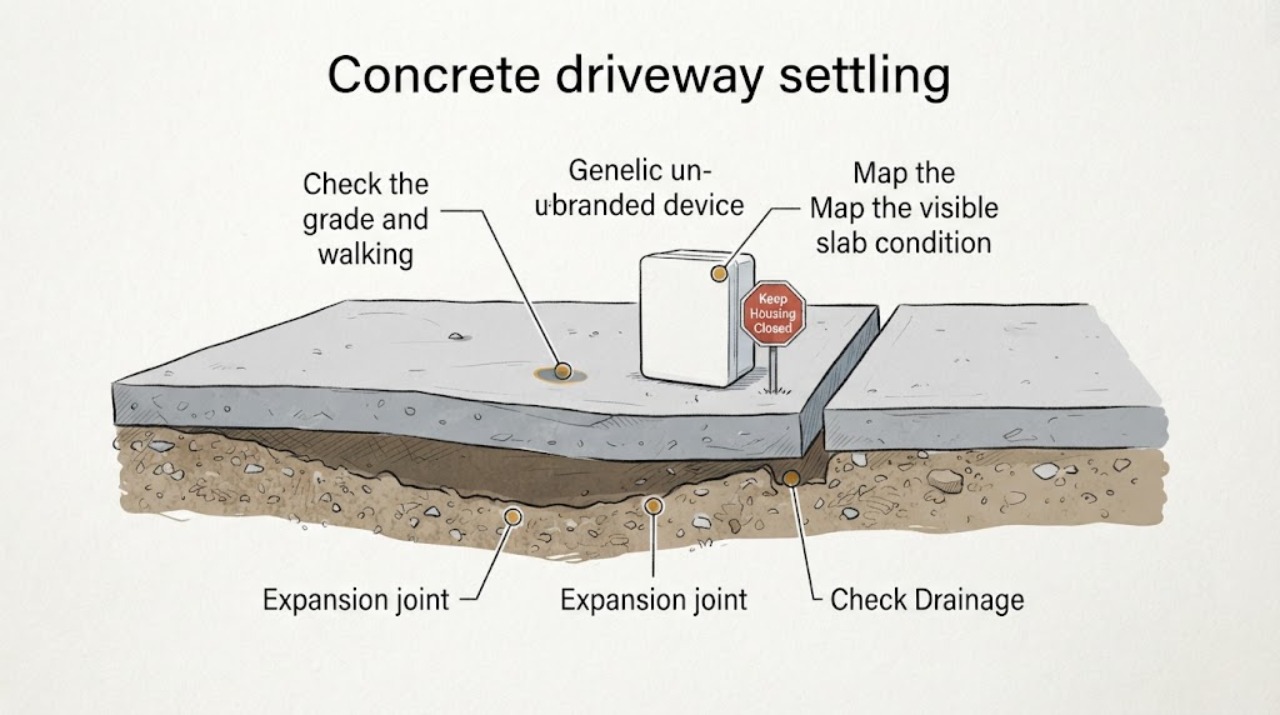
Concrete driveway settling: What to Check and What to Do Next
A driveway slab that has sunk, tilted, or developed a new trip edge is usually a drainage, erosion, support, or soil-movement problem rather than a surface defect to hide. From a safe position, document the slab's profile, cracks, ponding, edge washout, and changes after rain; keep people and vehicles off any unstable area; and arrange a qualified concrete or site-drainage assessment.
-
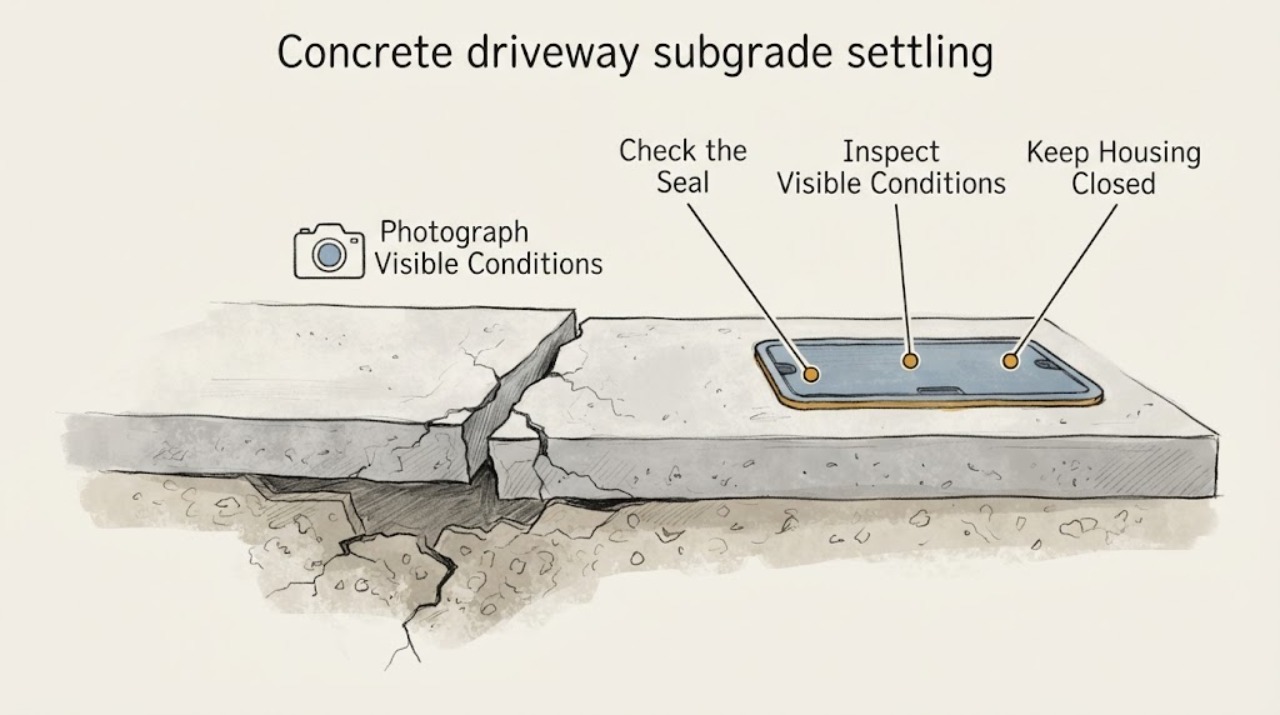
Concrete driveway subgrade settling: What to Check and What to Do Next
A settling concrete driveway can reflect loss of support below the slab, drainage or erosion, poorly compacted fill, a buried utility issue, soil movement, or a surface-only distress. Do not try to lift, break, cut, drill, or excavate the driveway to find the cause.