
Repair problem
Hardwood Floor Buckling Troubleshooting Guides
Published FixGraph guidance for diagnosing and responding to hardwood floor buckling.
Matching published guides
Choose a guide that matches the service, equipment, and conditions you are seeing.
-
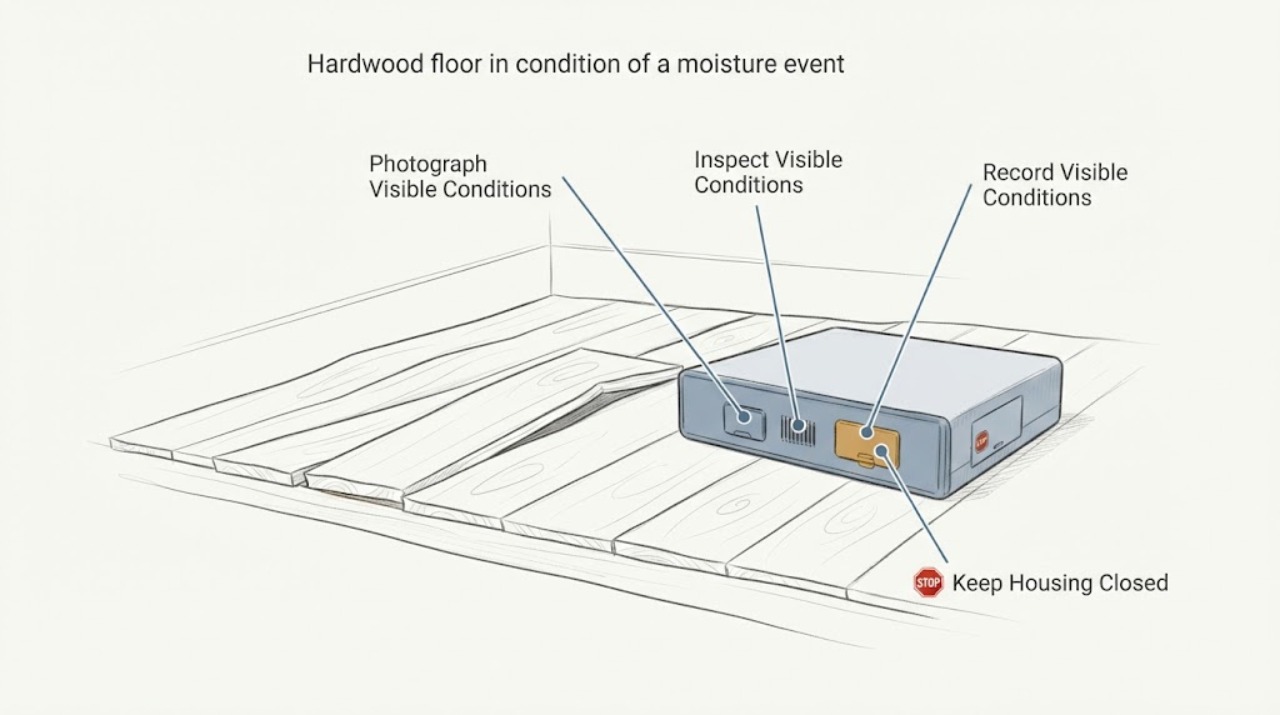
Hardwood floor buckling moisture event: What to Check and What to Do Next
Treat buckled hardwood after a moisture event as a water-source and flooring-system problem, not a board-pressing or quick-patch job. Keep people and heavy loads off the raised area, document the pattern and the suspected source from a safe position, and arrange a qualified flooring or water-damage assessment.
-
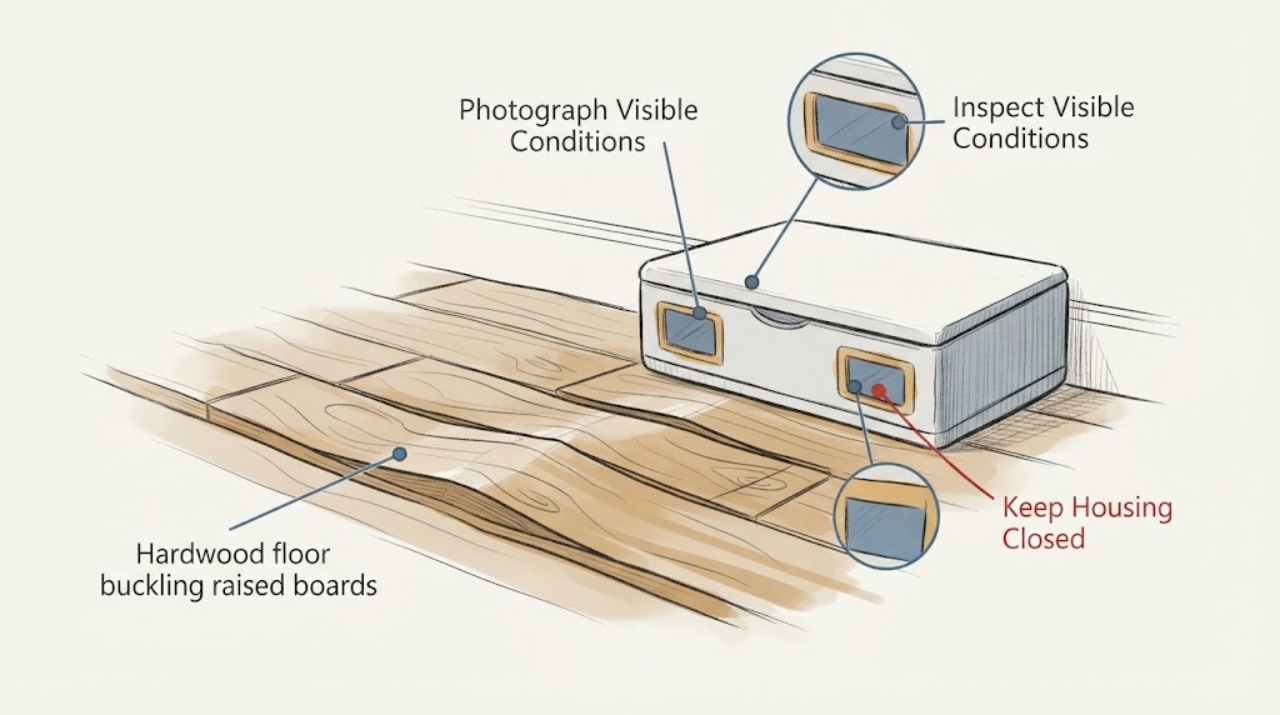
Hardwood floor buckling raised boards: What to Check and What to Do Next
Raised hardwood boards usually mean the floor has responded to moisture or has lost room to move, but the hump does not identify the source or whether the subfloor is affected. Keep people and heavy loads off the raised area, photograph the pattern, look for active water and safe ground-level evidence, and arrange a qualified flooring or water-damage assessment.
-
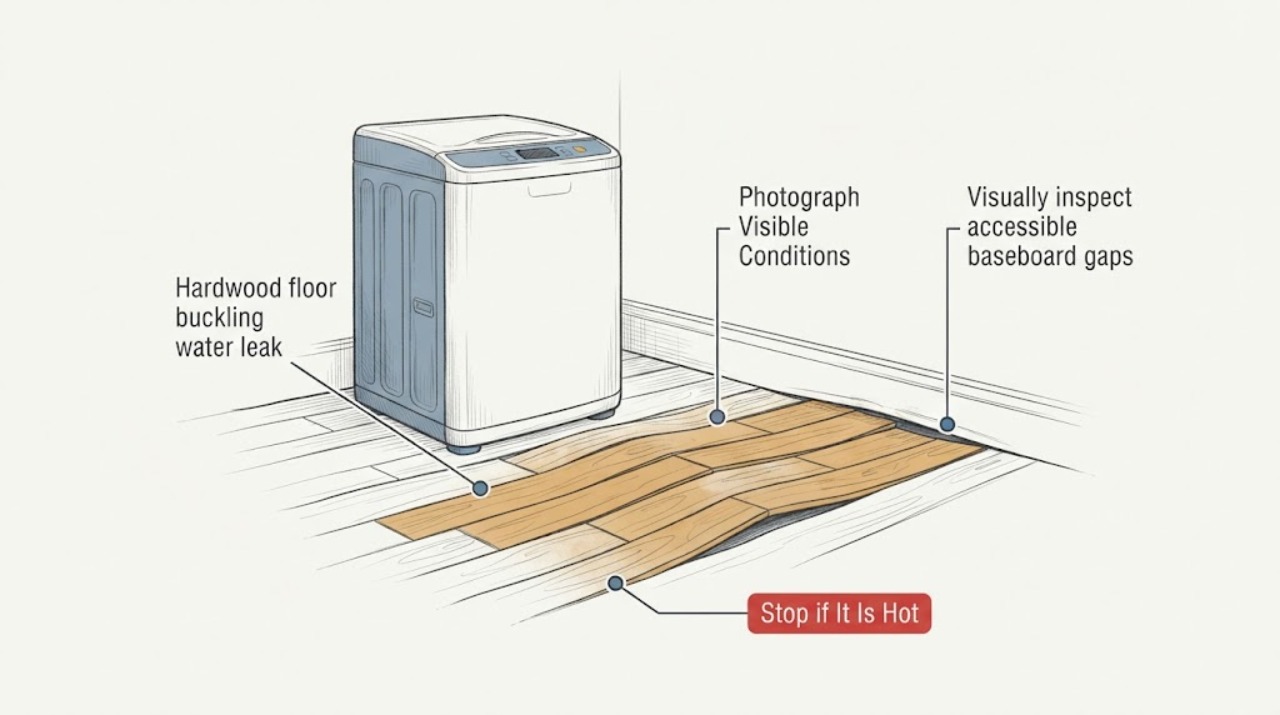
Hardwood floor buckling water leak: What to Check and What to Do Next
Treat hardwood-floor buckling after a water leak as a moisture-damage assessment, not a simple board-level patch. From a safe dry area, document the leak source, standing water, affected room, board movement, finish damage, and any musty odor or visible mold.
-
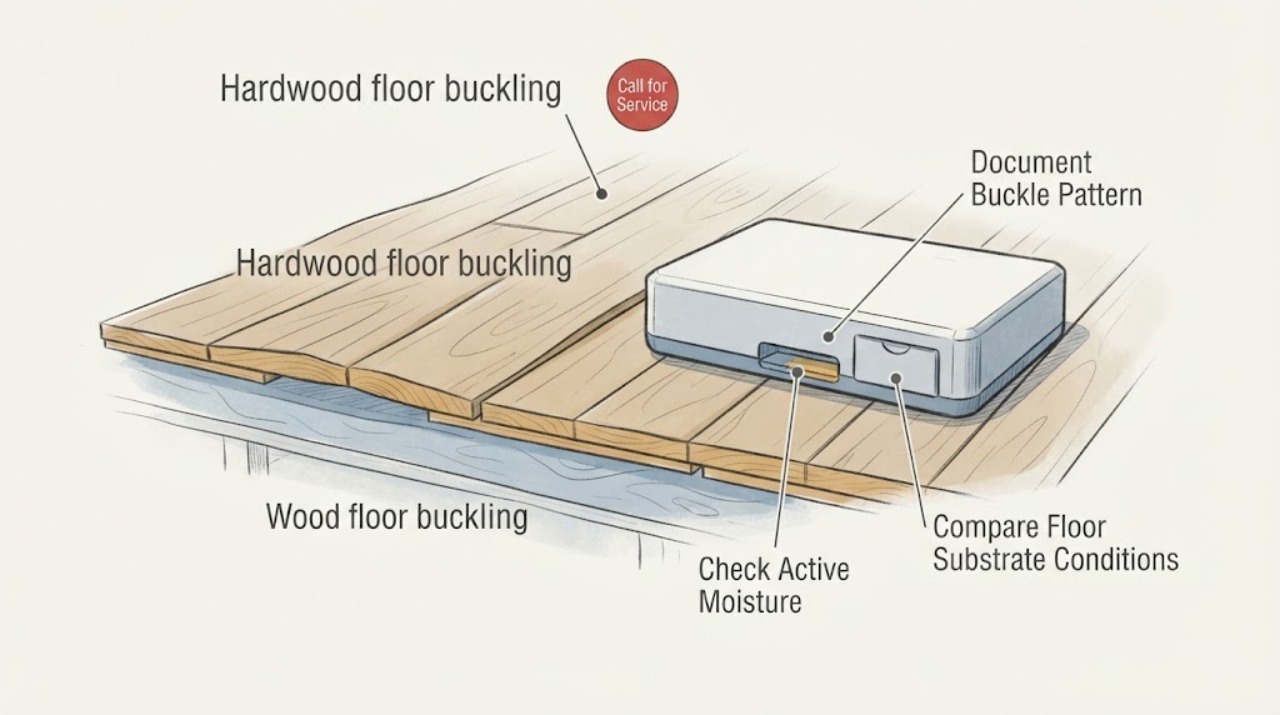
Hardwood floor buckling: What to Check and What to Do Next
Buckled hardwood is usually a moisture and movement problem, not a surface blemish to force flat. Stop adding water, avoid walking on raised boards, and document when the change began and where it is spreading.
-
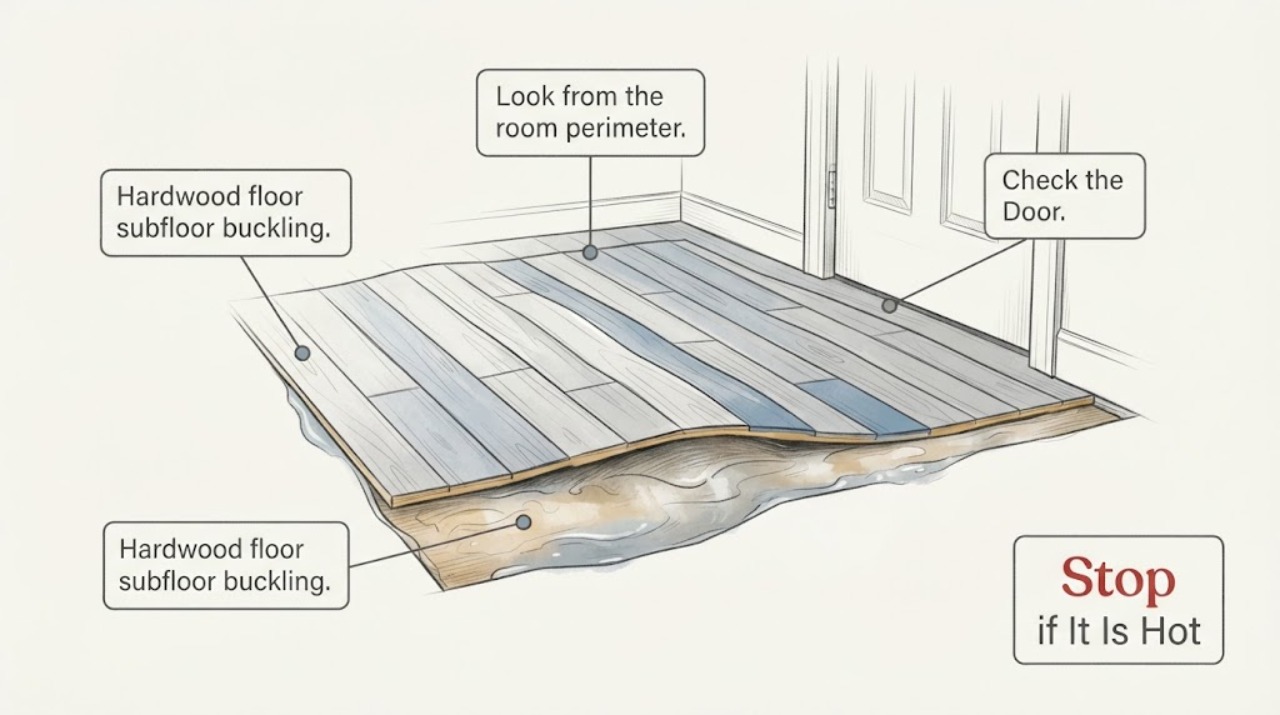
Hardwood floor subfloor buckling: What to Check and What to Do Next
Do not pry up, cut, drill, or lift the hardwood floor to inspect a suspected subfloor problem. From a safe standing position, document the shape and extent of the buckling, visible water or moisture clues, whether it reaches walls or neighboring rooms, and whether it is changing or creating a trip hazard.