
On this page
Start here
Quick answer
Treat hardwood-floor buckling after a water leak as a moisture-damage assessment, not a simple board-level patch. From a safe dry area, document the leak source, standing water, affected room, board movement, finish damage, and any musty odor or visible mold. Stop using the affected area and arrange flooring or water-damage professional assessment when boards are buckled, the subfloor is wet, the leak is active, water may be contaminated, or damage extends beneath the floor. Do not pry up boards, sand, drill, steam-clean, apply heat aggressively, or seal the floor before the wood and subfloor are evaluated and dried.
Work through in order
Diagnostic checks
Use only checks that match the exact appliance or system and its official guide.
-
Check 1
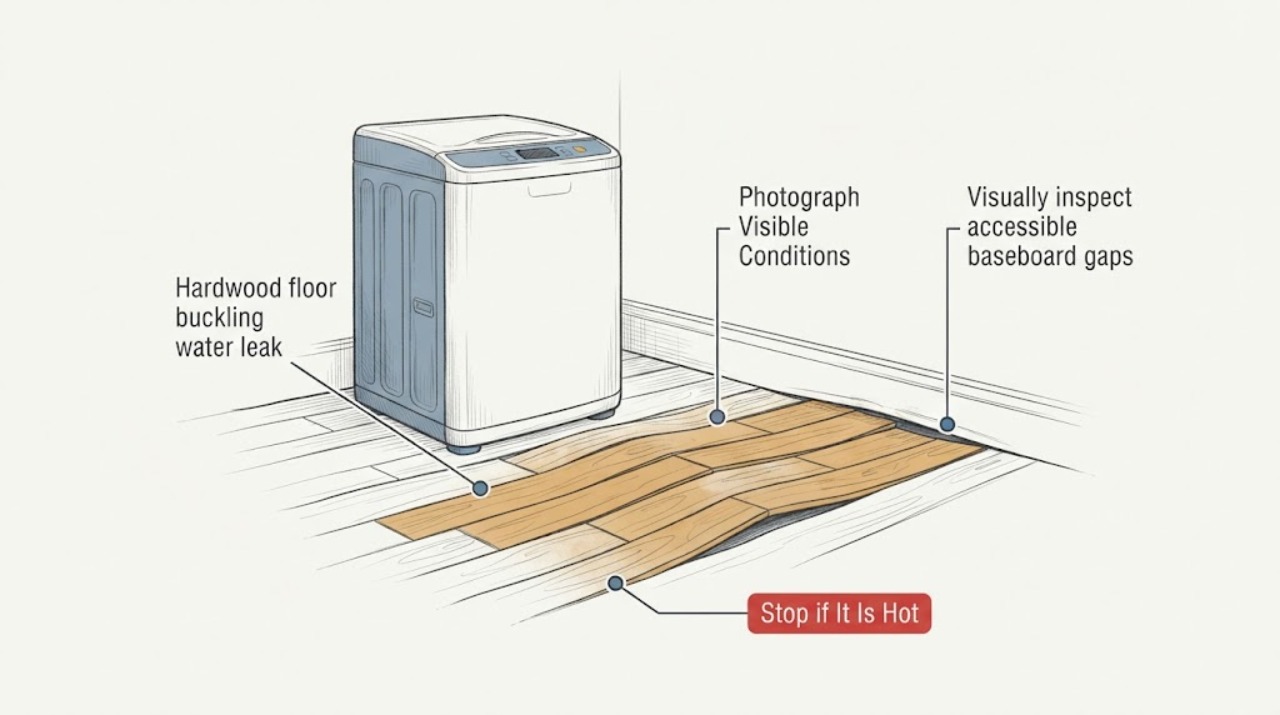
From a dry, stable location, photograph the buckled boards, room perimeter, nearby wall or ceiling, baseboards, transitions, and any visible water path. Note whether water is still entering, where the affected area ends, and whether the water appears clean or may have come from sewage, a drain, or another contaminated source.
Expected result: Record an inactive clean-water event, an active leak, standing water, a broad affected area, or an uncertain or potentially contaminated source.
Next step: If a clearly labeled shutoff is safely accessible, stop the source; otherwise contact the relevant professional. Keep people and pets out of standing or contaminated water and continue only with dry-area observation.
Stop if: Stop immediately if water is near energized equipment, the floor is unstable, the source is contaminated, or entering the area could expose you to electrical, structural, or health hazards.
Why this matters
Why: The response depends on the water source and extent. An active or contaminated event needs prompt professional control, and a local-looking buckle may extend into the subfloor or adjacent materials.
-
Check 2
From the edge of the affected area, observe whether boards are slightly cupped, visibly crowned or buckled, separated at joints, lifted at a transition, cracked, stained, or detached from the surface beneath. Do not walk across raised boards, press them flat, pry edges, or move heavy furniture over them.
Expected result: Classify the visible condition as limited finish or edge change, broad swelling or buckling, lifted or separated boards, or unknown because access is unsafe.
Next step: Keep a safe boundary around any raised or unstable boards and give the classification and photos to a flooring professional. Do not choose a repair kit based on appearance alone.
Stop if: Stop entering the area if boards shift, edges are sharp, the subfloor feels soft, or the buckled surface could trip or collapse.
Why this matters
Why: Buckling and separation indicate more than a superficial finish mark. The NWFA notes that water damage varies in severity and that repair options must be determined for each case.
-
Check 3
Visually inspect accessible baseboard gaps, floor transitions, vents, and adjacent rooms for dampness, swelling, staining, odor, or moisture migration. If you already own a suitable moisture meter, use it only on accessible, non-damaged surfaces according to its instructions; do not drill or insert probes into finished boards or hidden layers.
Expected result: Note dry-looking edges, continuing dampness, moisture readings that differ from nearby unaffected flooring, wet subfloor indications, or visible mold or musty odor.
Next step: Share the observations and any non-invasive readings with the flooring or water-damage professional. Do not close gaps, refinish, or seal while moisture remains uncertain.
Stop if: Stop if mold is visible, odors are strong, the meter requires damaging the floor, or moisture is near electrical equipment or hidden building cavities.
Why this matters
Why: A dry surface does not prove the substrate is dry. NWFA guidance emphasizes understanding flooring, substrate, and ambient moisture before repair, while EPA guidance recommends drying wood carefully and consulting professionals for larger or contaminated water damage.
-
Check 4
Observe the room's ventilation, humidity, temperature, and access without moving the buckled floor or applying heat. Record whether the leak has stopped, whether the room can be safely ventilated, and whether drying equipment is already operating under professional or manufacturer guidance.
Expected result: The area is dry and safely accessible, remains damp, has high humidity or poor airflow, or has suspected mold or contaminated water.
Next step: For clean-water damage, ask the professional which controlled drying method applies. For suspected contamination, mold, or hidden moisture, stop and request experienced remediation or restoration assessment.
Stop if: Do not operate fans or heaters in suspected contaminated conditions, and do not apply direct or aggressive heat to hardwood.
Why this matters
Why: Drying strategy depends on water cleanliness, material type, and hidden moisture. EPA cautions that hardwood needs careful heat use and that fans should not be used before contaminated water concerns are addressed.
-
Check 5
Prepare the flooring service request with photos, leak source and timing, affected room and boundaries, visible distortion, moisture or odor observations, flooring type if known, and any meter readings taken without damage. Ask the professional to evaluate the boards, finish, adhesive or fastener system, subfloor, and moisture source before recommending repair or replacement.
Expected result: The professional confirms drying only, localized repair after drying, removal and replacement of affected flooring, subfloor work, or broader water and mold remediation.
Next step: Follow the documented professional plan and keep the affected area unused until the floor and substrate are confirmed dry and safe for the next stage.
Stop if: Stop DIY work if the plan would require prying boards, sanding, drilling, steam cleaning, structural repair, or disturbing suspected mold.
Why this matters
Why: A buckled floor cannot be safely diagnosed from the top surface alone. Repair scope should follow the source, moisture condition, substrate condition, and degree of distortion.
Use your observations
Decision map
Find the observation that best matches what you see, then follow the next safe action.
-
PATH 01Safety boundary
What you see
Is water still entering, standing in the room, near energized equipment, or suspected to be contaminated?
Do this next
Leave the unsafe area, stop the source only through a safe known control if possible, and request prompt water-damage or building-professional help.
Why this path and its safety boundary
Safety stop: Do not walk through contaminated or electrically unsafe water.
-
PATH 02Safety boundary
What you see
Are boards visibly buckled, lifted, separated, shifting, or creating a trip hazard?
Do this next
Keep the area out of service and arrange flooring professional assessment before moving boards or furniture.
Why this path and its safety boundary
Safety stop: Do not press, flatten, pry, sand, or refasten damaged flooring.
-
PATH 03Safety boundary
What you see
Is there dampness, a musty odor, visible mold, wet subfloor indication, or moisture migration after the leak stopped?
Do this next
Request controlled drying and, when mold or contaminated water is suspected, experienced remediation assessment before sealing or refinishing.
Why this path and its safety boundary
Safety stop: Do not seal, refinish, or close the assembly while hidden moisture is uncertain.
-
PATH 04Safety boundary
What you see
Has a flooring professional confirmed the source is controlled and the flooring and subfloor are dry enough to select repair scope?
Do this next
Follow the documented plan for localized repair, replacement, or continued drying and keep the area protected during the work.
Why this path and its safety boundary
Safety stop: Stop DIY repair when the floor is buckled, the subfloor is wet, or source and moisture conditions remain uncertain.
Helpful context
Understand the symptom
Wood flooring swells when it takes on moisture, and buckling can range from minor cupping to severe distortion. The National Wood Flooring Association says water-damage cases must be considered individually and that moisture in the flooring, substrate, and surrounding space should be understood before repair options are assessed.
The first safe goal is to stop additional water and document conditions, not to flatten the boards. If the source is active, shut it off only through a normal, clearly labeled control that you can safely reach; otherwise contact the appropriate water or building professional. Avoid disturbing wet porous materials or suspected mold.
Fans, dehumidification, and gentle drying may be part of a professional plan for clean water, but heat and airflow can damage wood or spread contamination when used incorrectly. A moisture meter or floor-repair kit is conditional and cannot determine whether the subfloor, adhesive, finish, or structure also needs work.
Only after diagnosis
Potential parts
- Moisture meter
Consider a moisture meter only as an observation aid when the device is suitable for the flooring and can be used without damaging finished boards or hidden layers.
Readings require the correct meter setting and interpretation for the wood and substrate; a consumer reading does not replace professional assessment. - Floor repair kit
Consider a repair kit only after the leak is controlled, the flooring and substrate are dry, and a professional or applicable manufacturer guidance confirms a localized non-structural repair.
Match the floor construction, finish, board profile, and repair method; a kit cannot correct buckling, wet subfloor, ongoing moisture, or mold.
Common questions
FAQ
Why does hardwood flooring buckle after a water leak?
Wood absorbs moisture and can swell, cup, separate, or buckle. The visible distortion may also reflect moisture in the substrate, movement, or an ongoing leak, so the source and the flooring system need assessment before repair.
Should I push buckled boards back down?
No. Keep the area unused and do not press, pry, sand, drill, or refasten the boards. Flattening can hide wet substrate or create additional damage; have a flooring professional assess the condition after the source is controlled.
Can I dry buckled hardwood with a heater or fan?
Drying methods depend on water cleanliness, material, and hidden moisture. EPA advises care with heat on hardwood, and fans should not be used before contaminated-water concerns are addressed. Ask a water-damage professional for the controlled drying plan.
Will a moisture meter tell me whether the floor can be repaired?
A suitable meter can provide an observation aid on accessible surfaces, but readings need the correct setting and interpretation and may not reveal all substrate damage. Do not drill or probe finished flooring; use professional assessment for repair scope.
When should I request hardwood-floor water-damage help?
Request help promptly for active or contaminated water, standing water, visible buckling, wet subfloor signs, mold or musty odor, unstable boards, broad swelling, or any uncertainty about the source and moisture condition. Provide photos, leak details, and safe observations.
Read the exact guide
Official sources
- National Wood Flooring Association Installation GuidelinesNational Wood Flooring Association · Supports evaluating water-damaged hardwood individually and considering moisture in flooring, substrate, and surrounding conditions before repair.
- Flood Cleanup to Protect Indoor Air and Your HealthU.S. Environmental Protection Agency · Supports distinguishing clean from potentially contaminated water and avoiding fans, heat, or DIY cleanup when hazards or mold concerns remain.
- Mold Course Chapter 4: General Remediation IssuesU.S. Environmental Protection Agency · Supports removing moisture promptly, using care with heat on hardwood, and escalating complex or contaminated water and mold conditions.
Community feedback
Share a repair observation
Share a plain-text repair observation. Accepted observations are published automatically; this page may take a moment to update.