
Repair problem
Kitchen Cabinet Replacement Troubleshooting Guides
Published FixGraph guidance for diagnosing and responding to kitchen cabinet replacement.
Matching published guides
Choose a guide that matches the service, equipment, and conditions you are seeing.
-
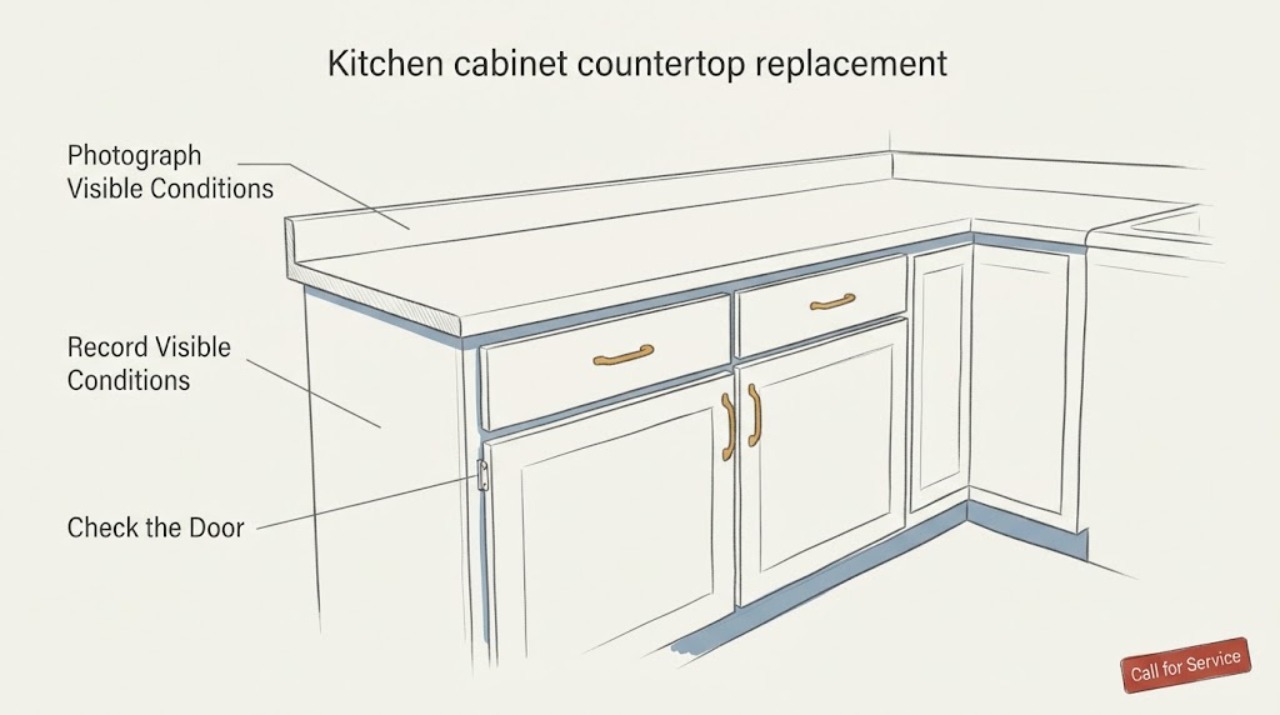
Kitchen cabinet countertop replacement: What to Check and What to Do Next
A kitchen countertop replacement should begin with a documented scope and a professional site measure, not countertop removal. From a safe, clear kitchen, photograph visible cracks, swelling, stains, cabinet movement, wall or backsplash constraints, sink and cooktop locations, and all utility interfaces.
-
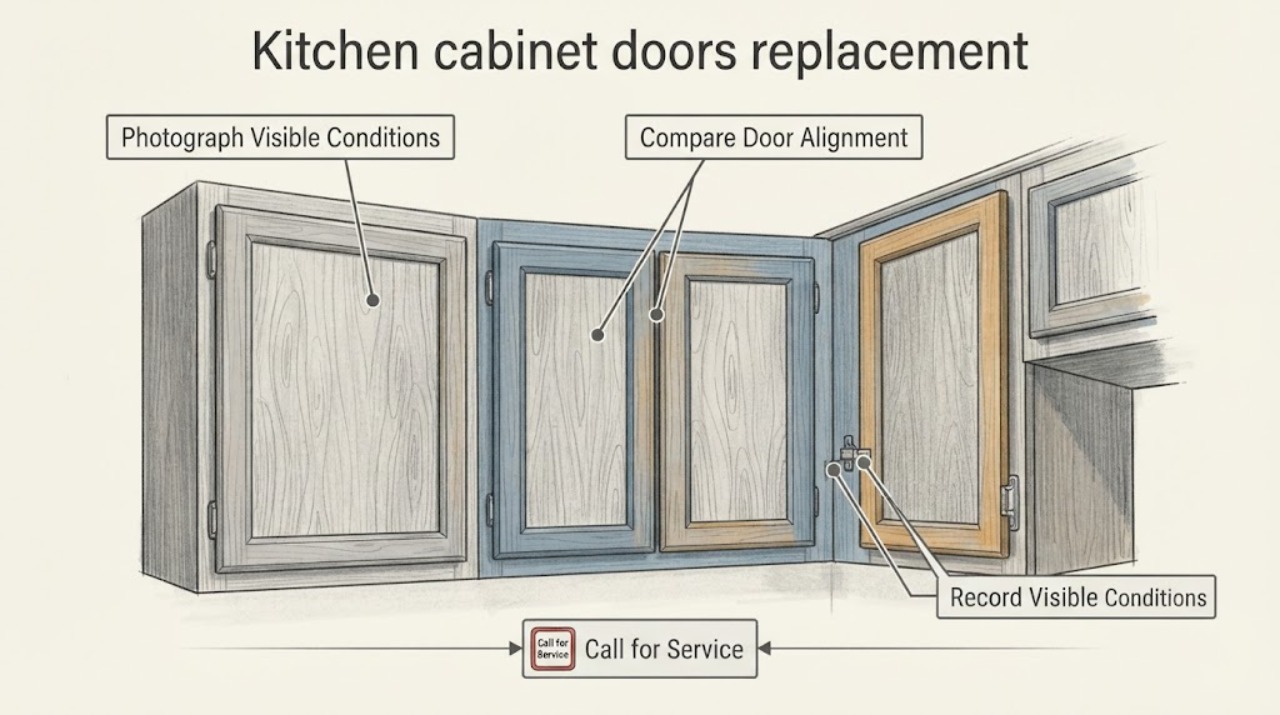
Kitchen cabinet doors replacement: What to Check and What to Do Next
Replacing kitchen cabinet doors is usually a planning and fitment project rather than a one-size-fits-all swap. First document the cabinet layout, door dimensions, overlay, hinge style, finish, and visible damage from safe positions.
-
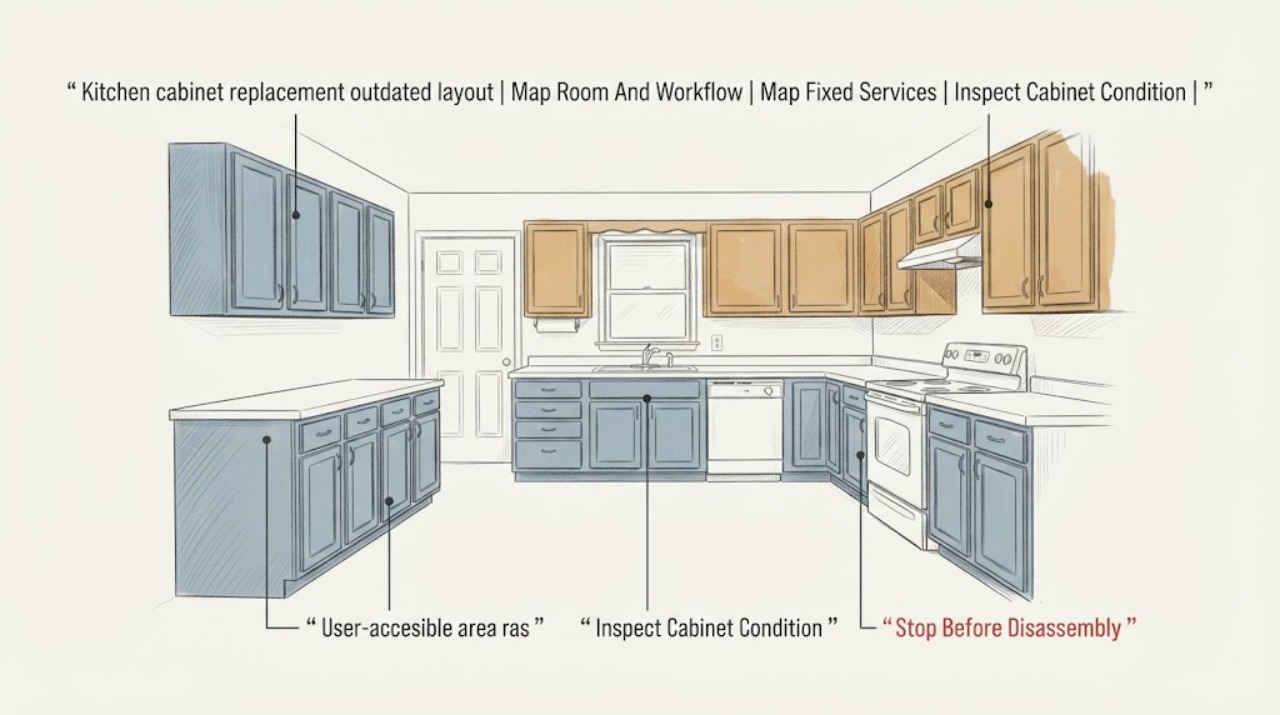
Kitchen cabinet replacement outdated layout: What to Check and What to Do Next
Replace kitchen cabinets because the layout no longer works only after separating a storage problem from a room, appliance, utility, moisture, or safety constraint. Measure the existing room and traffic paths, map doors, windows, appliances, plumbing, electrical locations, and range-hood exhaust, then inspect cabinet boxes and the wall and floor around sinks for movement or moisture.
-
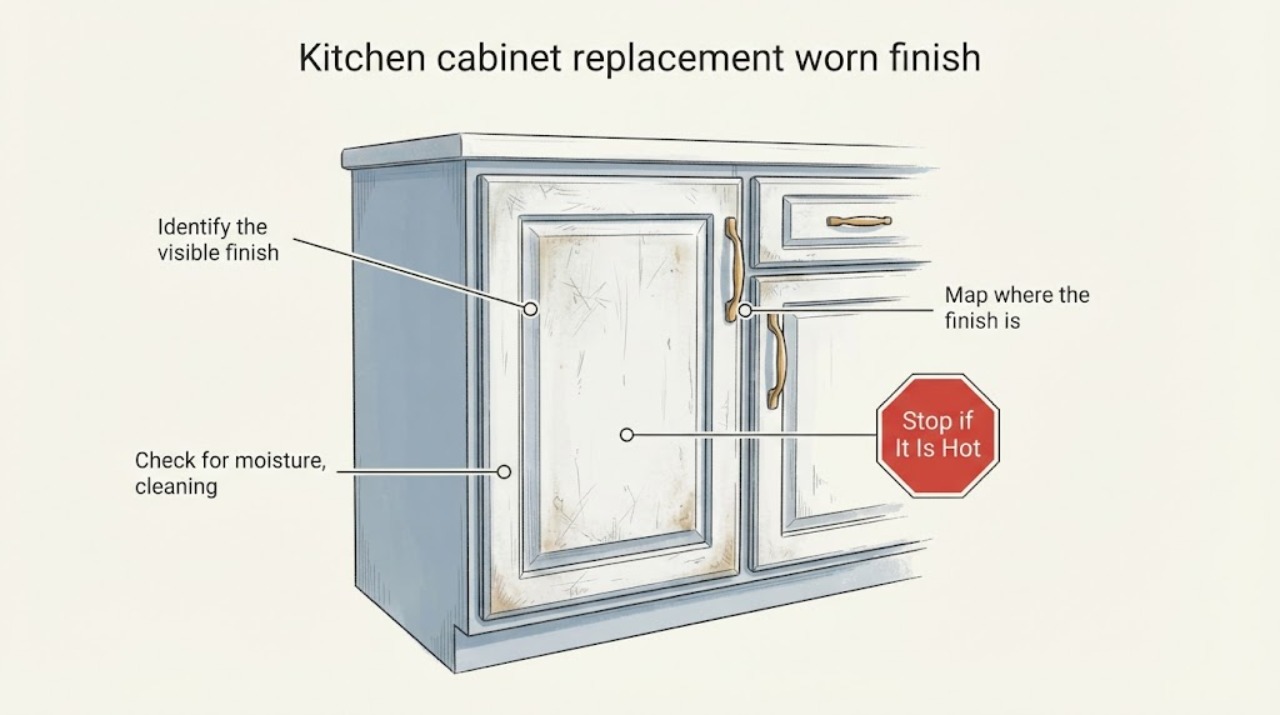
Kitchen cabinet replacement worn finish: What to Check and What to Do Next
Before replacing cabinets because the finish looks worn, determine whether the problem is surface soil, a small scuff, widespread finish failure, moisture or heat damage, or damage to the door, box, or hardware. Photograph the finish and identify the door style and material from a safe visual inspection; use only gentle care while deciding.
-
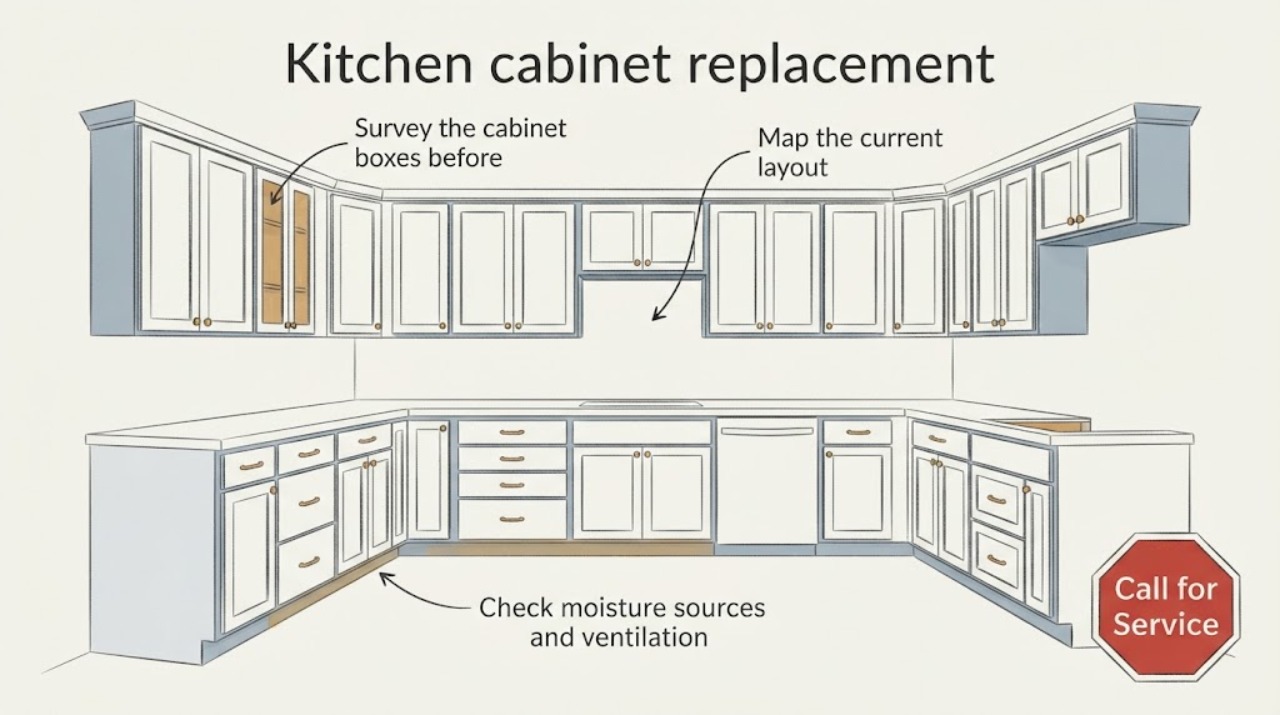
Kitchen cabinet replacement: What to Check and What to Do Next
Start a cabinet replacement project by documenting the existing boxes, moisture and damage, kitchen layout, appliance openings, and visible plumbing, electrical, and ventilation constraints. A sound box may only need doors or hardware, while warped, delaminated, chronically wet, or poorly supported cabinets can justify a broader professional scope.