
Repair problem
Missing Or Damaged Shingles Troubleshooting Guides
Published FixGraph guidance for diagnosing and responding to missing or damaged shingles.
Matching published guides
Choose a guide that matches the service, equipment, and conditions you are seeing.
-
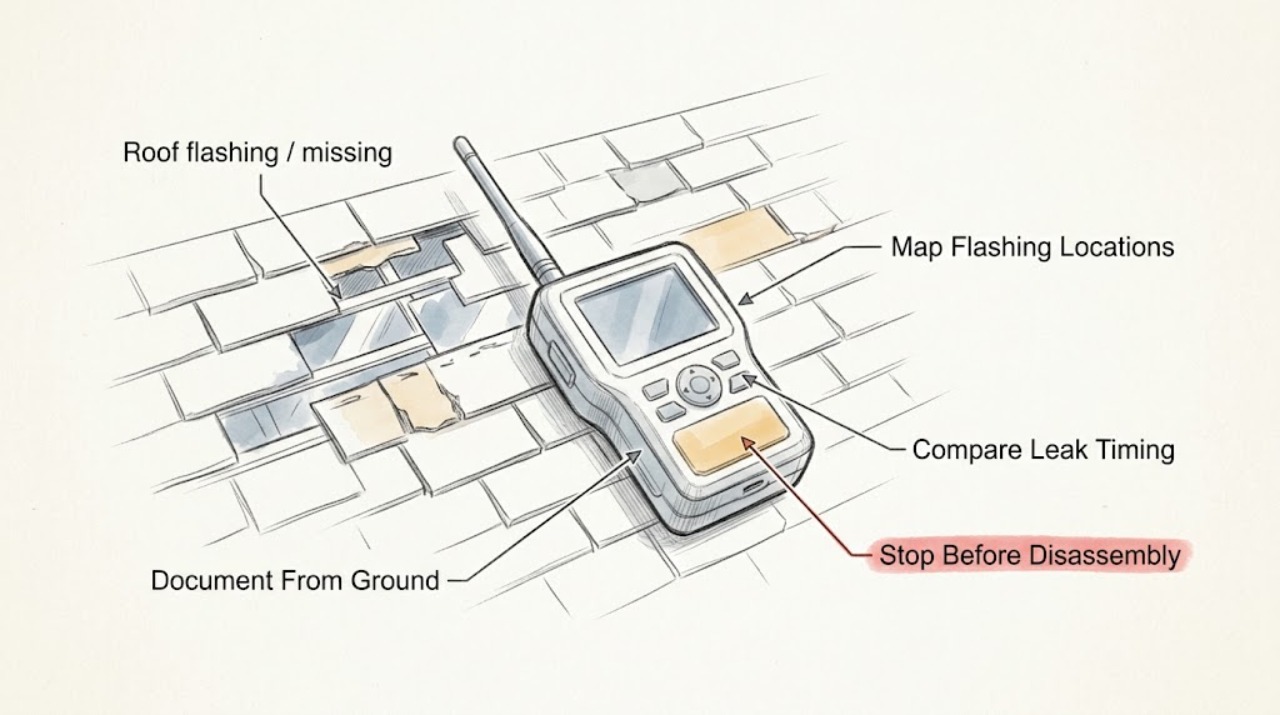
Roof flashing / missing or damaged shingles: What to Check and What to Do Next
Treat missing or damaged shingles and questionable flashing as a roof-water-entry problem until a qualified roofer confirms otherwise. From the ground and from safe interior locations, document missing or shifted shingles, exposed metal, stains, dampness, and when the symptom appears.
-
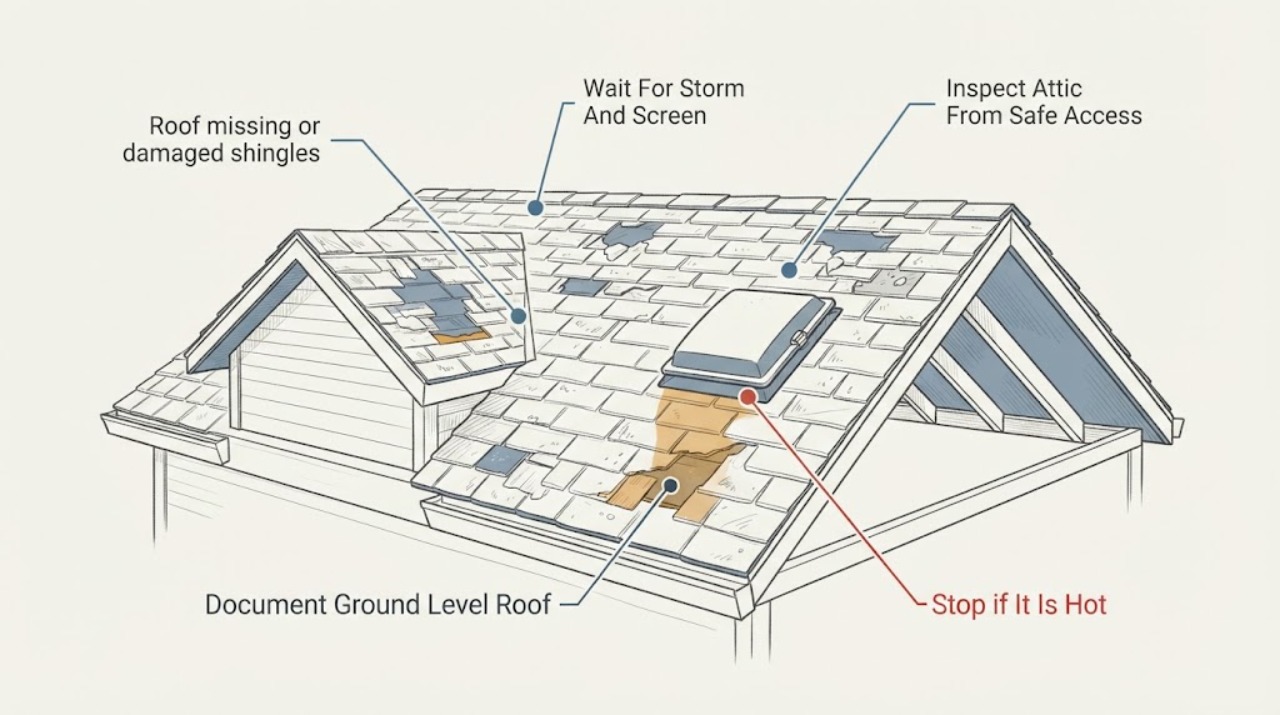
Roof missing or damaged shingles hail damage: What to Check and What to Do Next
After hail, missing shingles need prompt weather protection, but a dented gutter or a few loose granules do not by themselves prove that every shingle needs replacement. Stay indoors until the storm and lightning have passed.
-
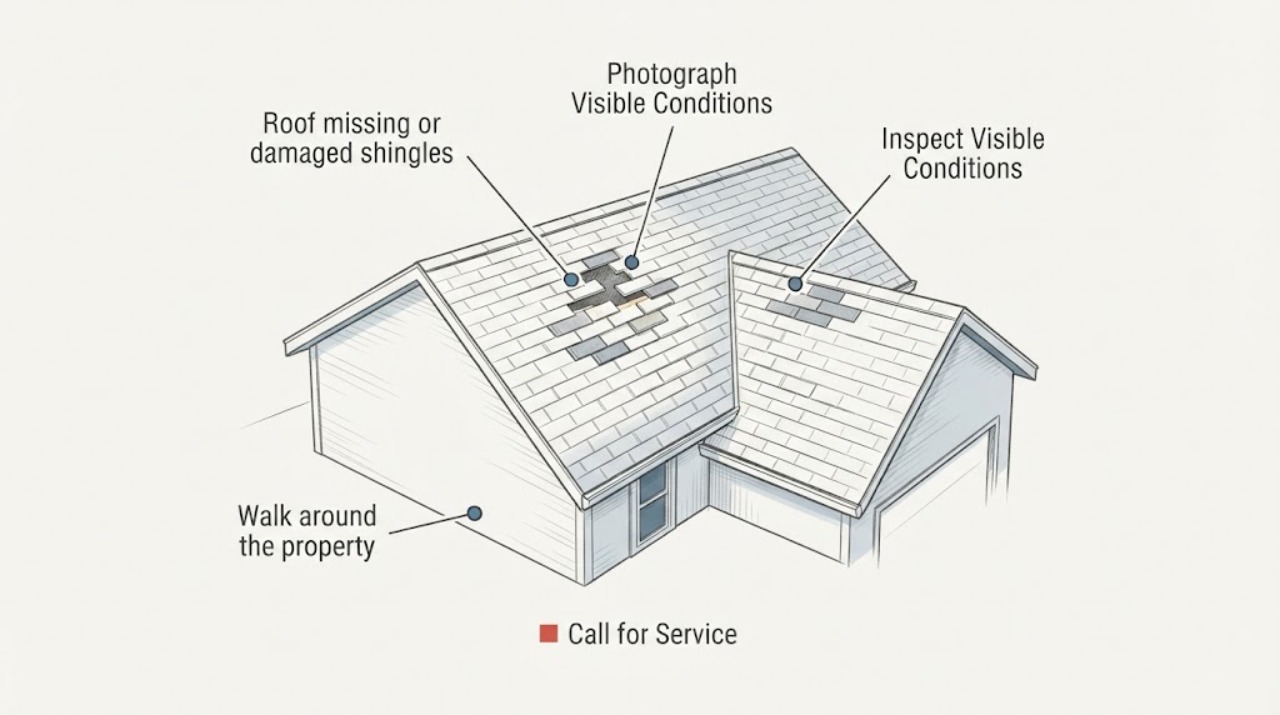
Roof missing or damaged shingles visible gap: What to Check and What to Do Next
A visible gap from a missing or badly damaged shingle can let wind-driven rain reach the roof layers, so document it and arrange a roofing inspection promptly. Stay on the ground or at a safe interior observation point: use binoculars or a camera from the ground to record the gap, then check ceilings and a safely reachable attic area for stains, dampness, daylight, sagging, or active dripping.
-
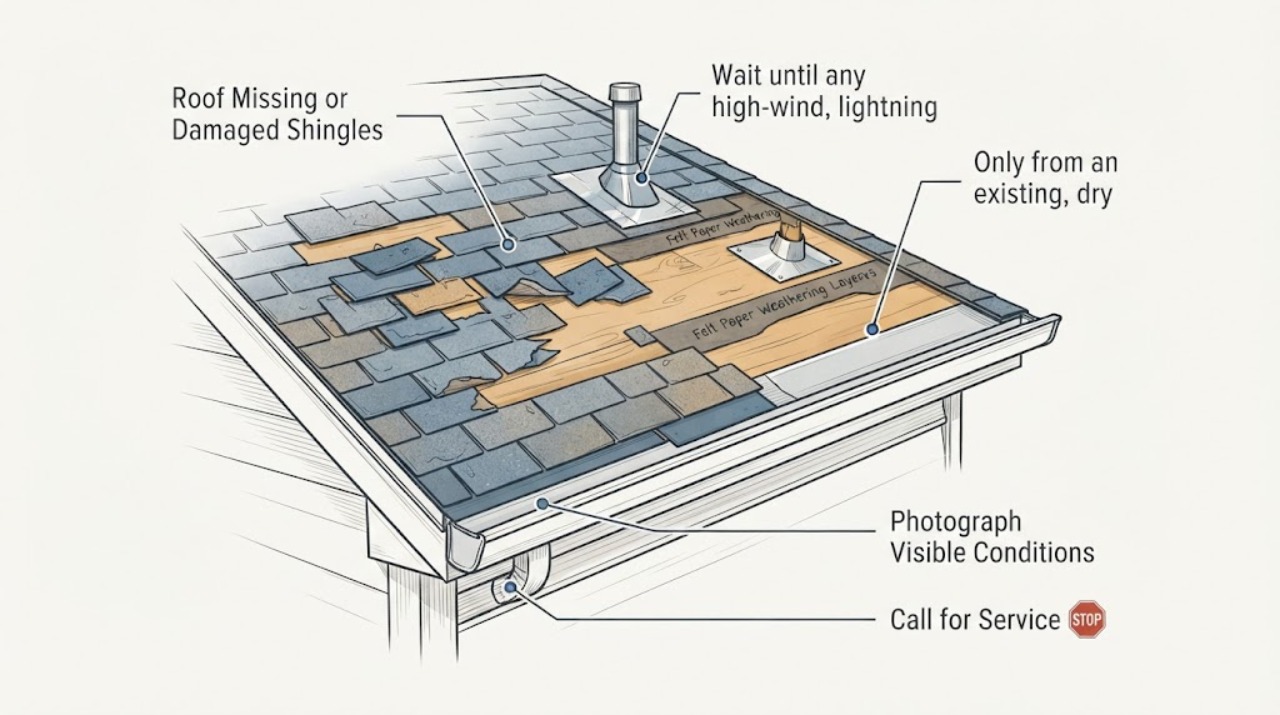
Roof Missing or Damaged Shingles Wind Damage: What to Check and What to Do Next
High winds can lift, crease, tear, or remove shingles, especially at roof edges, and can also disturb flashing, soffits, fascia, or penetrations. Wait until the storm and any warning have ended, then document the roof only from the ground and, if it is genuinely safe, look from an existing attic access point for daylight, wet insulation, water tracks, or a sagging ceiling.
-
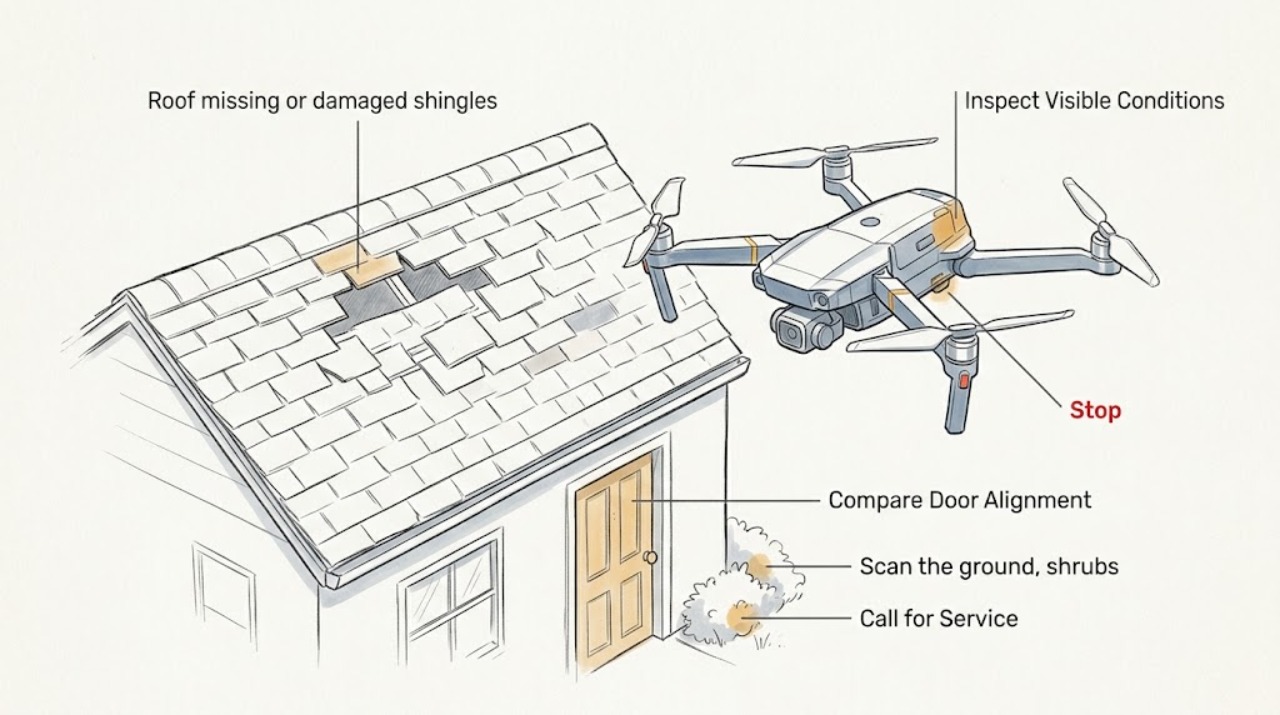
Roof missing or damaged shingles: What to Check and What to Do Next
Do not climb onto a roof or ladder to confirm missing or damaged shingles. From a dry, safe position on the ground and from inside the home, look for missing patches, lifted or curled shingles, exposed underlayment, fallen pieces, ceiling stains, active drips, or a sagging ceiling.