
On this page
Start here
Quick answer
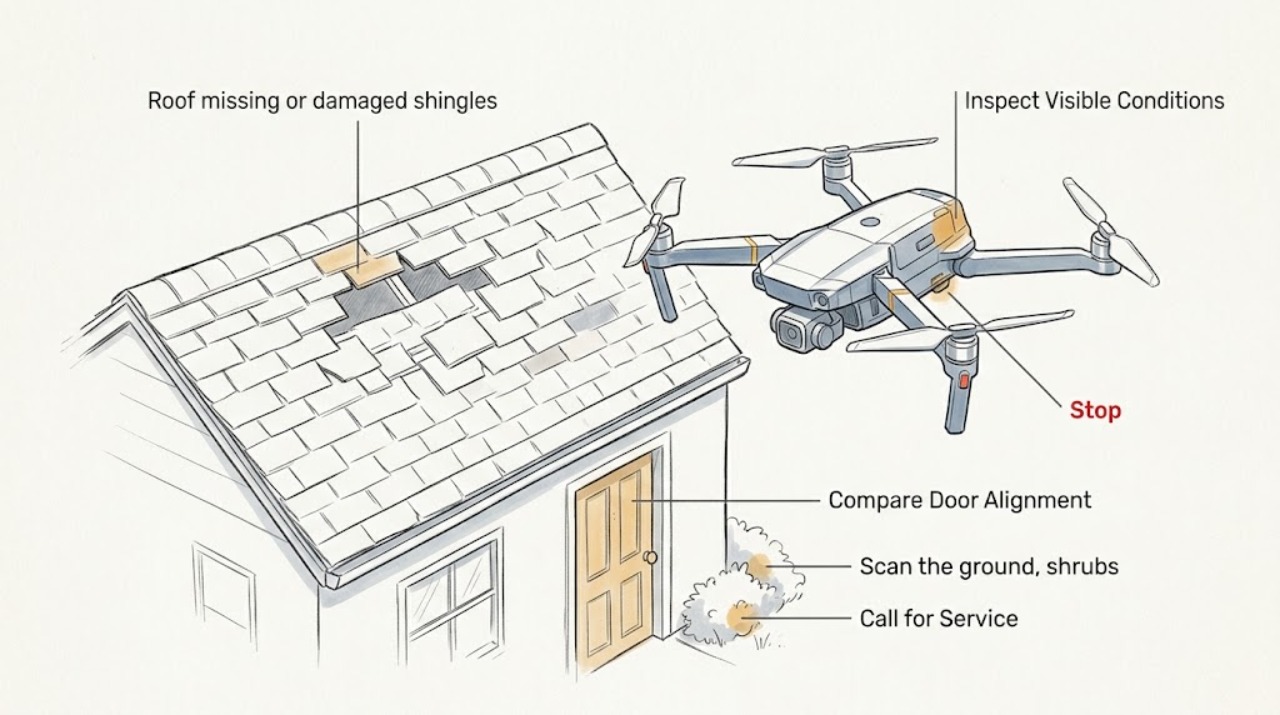
Do not climb onto a roof or ladder to confirm missing or damaged shingles. From a dry, safe position on the ground and from inside the home, look for missing patches, lifted or curled shingles, exposed underlayment, fallen pieces, ceiling stains, active drips, or a sagging ceiling. Document what you can see without touching loose material, and keep people away from falling debris or water near electrical equipment. A missing or damaged shingle needs a qualified roofing inspection; an active leak, sagging ceiling, exposed roof opening, loose material overhead, or storm-damaged utility area needs immediate isolation and professional escalation. Never cover, nail, seal, or patch a storm-damaged roof yourself.
Work through in order
Diagnostic checks
Use only checks that match the exact appliance or system and its official guide.
-
Check 1
From a dry room, look at ceilings and upper walls below the suspected roof area. Note new stains, dampness, active dripping, peeling finish, a bulge, or a ceiling that appears to sag; do not touch a wet light fixture or other electrical equipment.
Expected result: There is no interior change, or there is a water stain, active leak, sagging surface, or moisture near a light, receptacle, or other electrical device.
Next step: Photograph and date the interior evidence from a safe, dry position. Keep people out of the affected area and contact a qualified roofer promptly; for electrical danger, use the appropriate emergency or electrical-safety route without touching the wet equipment.
Stop if: Stop the inspection immediately for active dripping, a bulging or sagging ceiling, smoke, sparks, or water contacting electrical equipment.
Why this matters
Why: No visible interior symptom does not rule out exterior damage. A stain or damp area suggests water has reached the interior, while sagging or water near electrical equipment raises an immediate safety concern beyond a routine shingle check.
-
Check 2
When the weather is calm and dry, walk only on a normal ground-level path around the property and look up at the roof from several safe angles. Observe missing areas, shingles that look lifted, curled, cracked, torn, buckled, or out of alignment, and any exposed layer beneath them; do not approach the eave or use a ladder.
Expected result: The shingle pattern looks continuous, or a patch is visibly missing or a shingle edge is raised, distorted, cracked, or exposing a darker underlying layer.
Next step: Record the roof plane and approximate location using a ground-level photograph or written note. Request a qualified roof inspection rather than attempting to reach or press the shingle.
Stop if: Stop and move away if the roof edge, material, or debris appears loose or if wind, rain, lightning, ice, or poor visibility develops.
Why this matters
Why: A continuous pattern lowers the chance of an obvious missing-shingle defect from that viewpoint but does not certify the roof. A visible gap or damaged shingle can admit wind-driven rain and needs a professional assessment of the surrounding roof system.
-
Check 3
Scan the ground, shrubs, and hard surfaces around the house for fallen shingles, fragments, loose nails, or unusual granules without standing beneath a visibly unstable roof section or handling sharp debris.
Expected result: No roofing debris is visible, or pieces of shingle, fasteners, or concentrated granules are present after wind, hail, or falling debris.
Next step: Photograph the material in place and keep children, pets, and visitors away. Tell the roofer what was found and where; leave hazardous or overhead debris for the professional.
Stop if: Stop if material is falling, hanging overhead, sharp, or near a downed line, and do not touch or move it.
Why this matters
Why: Fallen material can help identify a recent roof event even when the roof surface is difficult to see. Sharp fragments and overhead instability create a cleanup hazard, not a repair task for the homeowner.
-
Check 4
From the ground, observe gutters, downspouts, fascia, soffit, visible flashing, and roof penetrations such as vents or skylights for a new gap, bent section, detached piece, sagging, or storm debris; do not clean, pull, seal, or reach toward any roof component.
Expected result: The edge and accessories look intact, or a gutter, flashing piece, vent cover, soffit, or other roof-adjacent component is visibly damaged or displaced.
Next step: Include the affected accessory and its position in the inspection request. Keep the area below clear and let a roofer determine whether the shingle field, flashing, or underlying structure also needs assessment.
Stop if: Stop if the component is hanging, the area is wet or icy, or checking it would require a ladder, roof access, or contact with overhead material.
Why this matters
Why: Roof water can enter at an edge or penetration even when a missing shingle is not obvious. A detached or hanging component may fall and can indicate damage wider than one shingle.
-
Check 5
Compare the visible condition with the recent weather and your pre-event photos or inspection records, and make a short evidence log: date, safe viewing locations, roof areas seen, interior symptoms, debris, and whether the weather was calm during observation.
Expected result: The damage appears new after wind, hail, or impact, the condition is progressing, or the timing and cause are uncertain.
Next step: Share the evidence log and safe-distance photos with a qualified roofer and ask for an inspection and repair-or-replacement assessment. If weather is still active, wait in a safe place and do not attempt temporary roof work.
Stop if: Stop all outdoor checking during active severe weather or whenever the site has falling material, downed lines, unsafe footing, or an immediate access hazard.
Why this matters
Why: A dated record helps a roofer separate storm evidence from older wear without requiring the homeowner to diagnose the roof. Uncertain timing or wider damage is a reason for a professional inspection, not a reason to test the roof by walking on it.
Use your observations
Decision map
Find the observation that best matches what you see, then follow the next safe action.
-
PATH 01Safety boundary
What you see
There is active water entry, a bulging or sagging ceiling, or water near a light, receptacle, or other electrical equipment.
Do this next
Keep occupants away from the affected area, avoid touching wet electrical equipment, and seek prompt qualified roofing and electrical or emergency assistance as appropriate.
Why this path and its safety boundary
Safety stop: Stop all roof and ceiling inspection; do not climb, puncture the ceiling, move wet fixtures, or attempt a patch.
-
PATH 02Safety boundary
What you see
Missing, lifted, cracked, curled, or torn shingles are visible from the ground, but there is no active interior leak.
Do this next
Arrange a qualified roofing inspection promptly and provide the roof-plane location, weather timing, ground debris, and interior observations. Keep the area below the roof clear.
Why this path and its safety boundary
Safety stop: Do not press, nail, seal, replace, or cover a shingle from a ladder or roof.
-
PATH 03Safety boundary
What you see
The roof looks intact from safe viewpoints and no interior symptoms are present, but a storm or impact occurred.
Do this next
Keep the dated ground-level record and schedule a professional assessment if concern remains, especially when parts of the roof are hidden from view or debris was found.
Why this path and its safety boundary
Safety stop: Do not treat a limited view as a certification of roof condition or perform a closer inspection during unsafe weather.
-
PATH 04Safety boundary
What you see
Loose material, a damaged roof edge, downed line, or unstable debris is visible.
Do this next
Move away, keep people and vehicles out of the fall area, and contact the qualified roofing or utility emergency route needed for the hazard.
Why this path and its safety boundary
Safety stop: Do not touch, pull, move, tarp, or inspect the material from a ladder.
-
PATH 05Safety boundary
What you see
Wind, rain, lightning, ice, or another active weather condition is present.
Do this next
Wait in a safe location and make only interior observations that do not involve wet electrical equipment; schedule professional inspection after conditions are safe.
Why this path and its safety boundary
Safety stop: Never climb, cover, nail, or seal the roof during a storm or while surfaces are wet or unstable.
Helpful context
Understand the symptom
Why a ground view is enough to decide the next step
A roof can look mostly intact while one missing shingle, lifted edge, damaged flashing area, or impact mark lets water reach the layers below. The useful homeowner decision is not to identify the exact repair from a risky position; it is to record visible evidence, check whether water is entering, and give a roofer enough information to assess the roof safely.
Safety boundary
Roof surfaces may be steep, slippery, deteriorating, or close to power lines, and storm damage can leave unstable materials overhead. Keep the inspection at ground level or in a safe interior location. Do not inspect during wind, rain, lightning, or other active severe weather, and do not use a tarp, nails, sealant, ladder, or roof tool as a do-it-yourself repair.
Only after diagnosis
Potential parts
- roof tarp
Only relevant when a qualified roofing or emergency-response professional determines that temporary weather protection is needed; it is not a do-it-yourself roof-access instruction.
The professional must select the protection method for the roof material, damage, wind, and structural condition; do not buy or install one based only on a ground view. - roofing sealant
Only relevant if a qualified roofer identifies a sealant-compatible detail as part of an approved repair; sealant is not a substitute for missing shingles or damaged sheathing.
Confirm the roof material, manufacturer guidance, weather conditions, and professional repair scope before any product is selected. - binoculars
Only relevant for improving a safe, ground-level view when the weather is calm and dry; binoculars cannot confirm structural integrity or make roof access safe.
Use only from stable ground away from edges, traffic, loose debris, and utility hazards; do not use them as a reason to approach or climb.
When checks do not resolve it
Need a professional?
Request a professional roof inspection after any visible shingle loss or damage, after a storm or impact, or when interior staining or active water entry suggests hidden roof damage.
Have this ready
- Provide the safe viewing locations, approximate roof plane, date and weather context, ground-level photos of missing or damaged areas, fallen material, edge components, and interior stains or drips. Do not place yourself under loose material to obtain a closer photo.
Common questions
FAQ
Can I inspect missing shingles from the ground?
Yes, use only safe ground-level viewpoints in calm, dry weather. Look for missing patches, lifted or curled edges, exposed layers, fallen pieces, and interior water signs. Do not climb or use a ladder to get closer; a roofer should confirm the condition.
Should I put a tarp over a missing shingle?
No. Do not climb, nail, seal, or place a tarp on a damaged roof yourself. Keep the area clear and request qualified emergency roof protection when water entry or exposed damage requires it; tarp work can involve fall, electrical, and structural hazards.
What makes missing shingles urgent?
Active water entry, a sagging or bulging ceiling, water near electrical equipment, falling or hanging material, a downed line, or continuing severe weather requires immediate isolation and professional escalation. Even without a visible leak, missing or damaged shingles warrant a prompt roof inspection.
Read the exact guide
Official sources
- How to Identify Roof Damage and What to Look ForGAF · This roofing manufacturer guide lists interior stains or leaks, missing or damaged shingles, sagging, and ground-level viewing as signs to document and discuss with a professional; the article omits its optional ladder instructions.
- Roof Inspection, Tarping, and RepairOccupational Safety and Health Administration · OSHA describes roof work as involving fall, slipping, deterioration, tool, and utility-line hazards and identifies the page as guidance for experienced inspectors and construction workers, supporting the homeowner ground-level boundary.
- Roof Tarping (Blue Roof) SafetyOccupational Safety and Health Administration · This safety fact sheet warns of falls and electrocution around damaged roofs, says not to install a tarp during wind or rain, and describes ground-level debris precautions for trained workers.
Community feedback
Share a repair observation
Share a plain-text repair observation. Accepted observations are published automatically; this page may take a moment to update.