
Repair problem
Rodent Infestation Attic Troubleshooting Guides
Published FixGraph guidance for diagnosing and responding to rodent infestation attic.
Matching published guides
Choose a guide that matches the service, equipment, and conditions you are seeing.
-
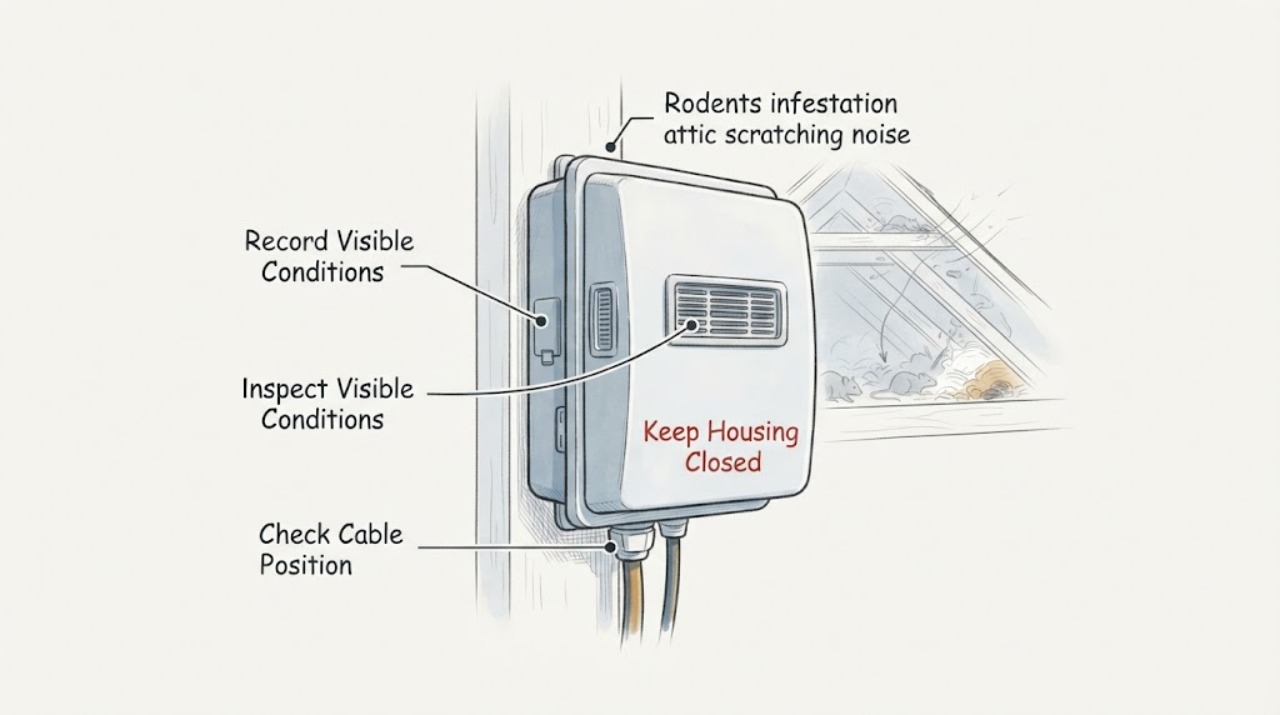
Rodents infestation attic scratching noise: What to Check and What to Do Next
Scratching in an attic is a clue, not proof of rodents; confirm it with droppings, gnaw marks, nesting material, urine odor, or a repeatable path of activity. Start with a safe observation from the living space, attic hatch, or ground, then check likely entry points around eaves, vents, roof joints, and utility penetrations without climbing onto the roof or disturbing waste.
-
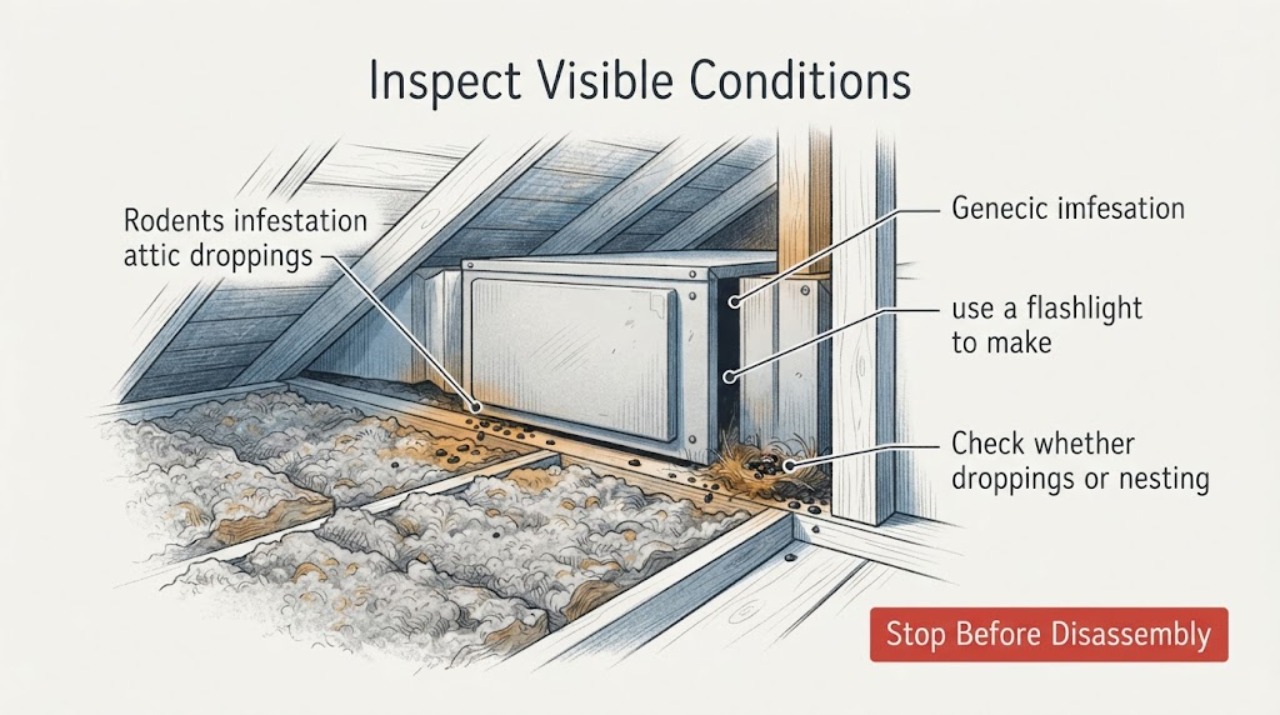
Rodents infestation attic droppings: What to Check and What to Do Next
Droppings in an attic are evidence of rodent activity, but the safest next step depends on how much material is present and what it touches. From a safe standing point, look for additional droppings, nests, gnaw marks, urine staining, damaged insulation, and paths toward vents or the roofline.
-
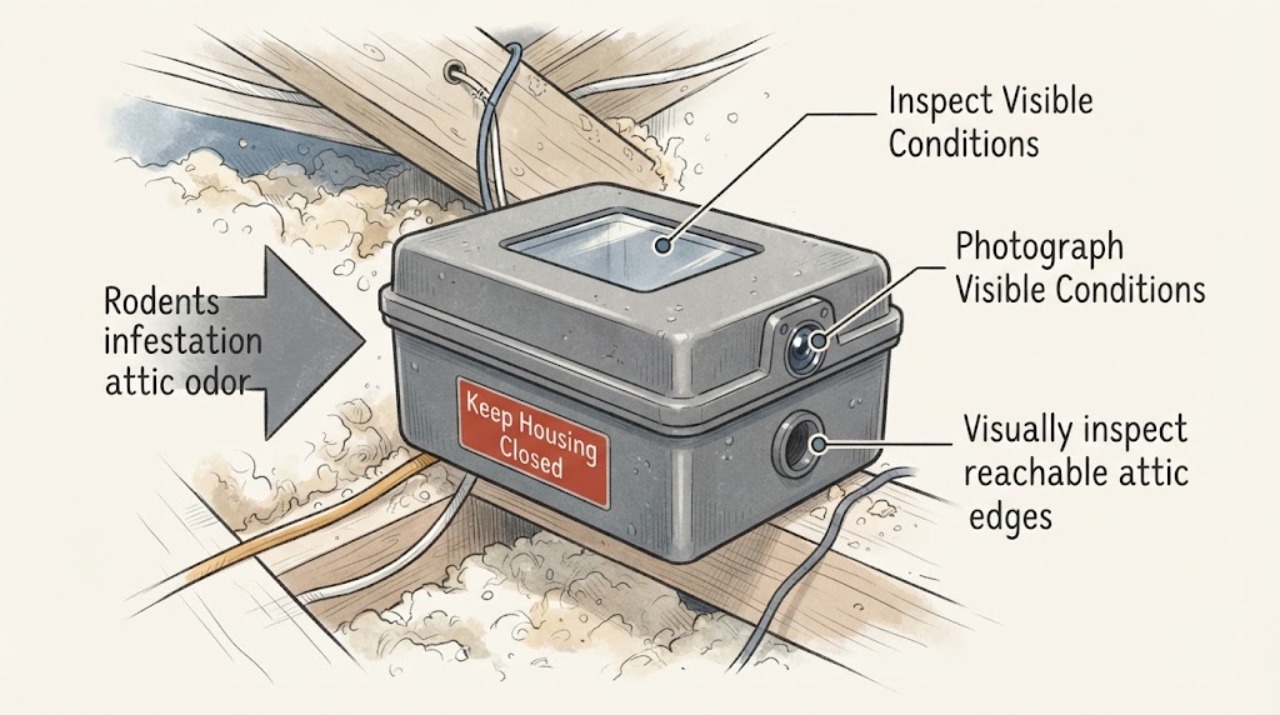
Rodents infestation attic odor: What to Check and What to Do Next
An odor in an attic with suspected rodents can come from urine, droppings, nesting material, a dead rodent, or another hidden moisture or animal source, so smell alone cannot locate or size the infestation. From the attic access point or another safe position, record where the odor is strongest and look for droppings, gnaw marks, nests, disturbed insulation, and entry gaps.
-
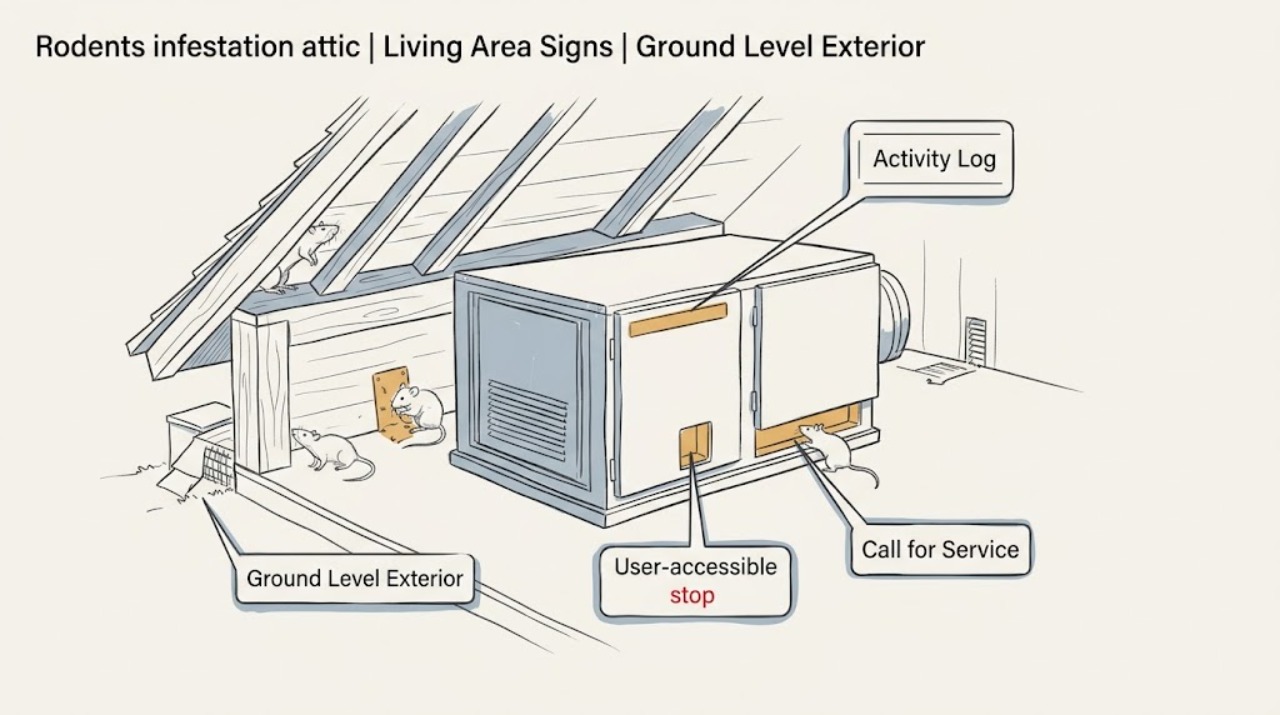
Rodents infestation attic: What to Check and What to Do Next
Scratching, stale odor, droppings, nesting material, or gnaw marks near an attic can indicate rodent activity, but one sign does not prove that animals are still present. Do not enter the attic, touch an animal, droppings, nests, insulation, or wiring, and do not put out poison or traps for this professional-service topic.
-
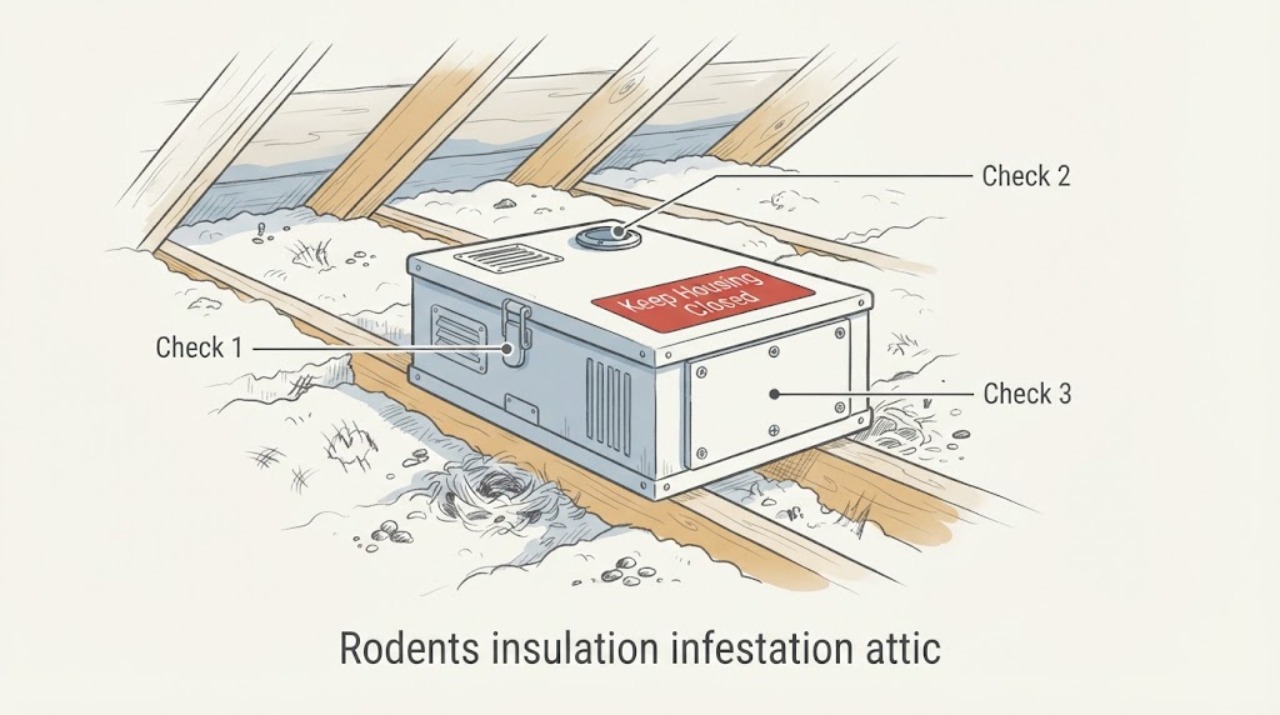
Rodents insulation infestation attic: What to Check and What to Do Next
Rodent signs in attic insulation need a contamination and access assessment, not ordinary surface pest treatment alone. From a safe location, document whether insulation is displaced or soiled, whether droppings or nesting are visible, and whether ducts, wiring, roof leaks, or entry gaps are nearby.